fbpx

Prefabricated Buildings UK
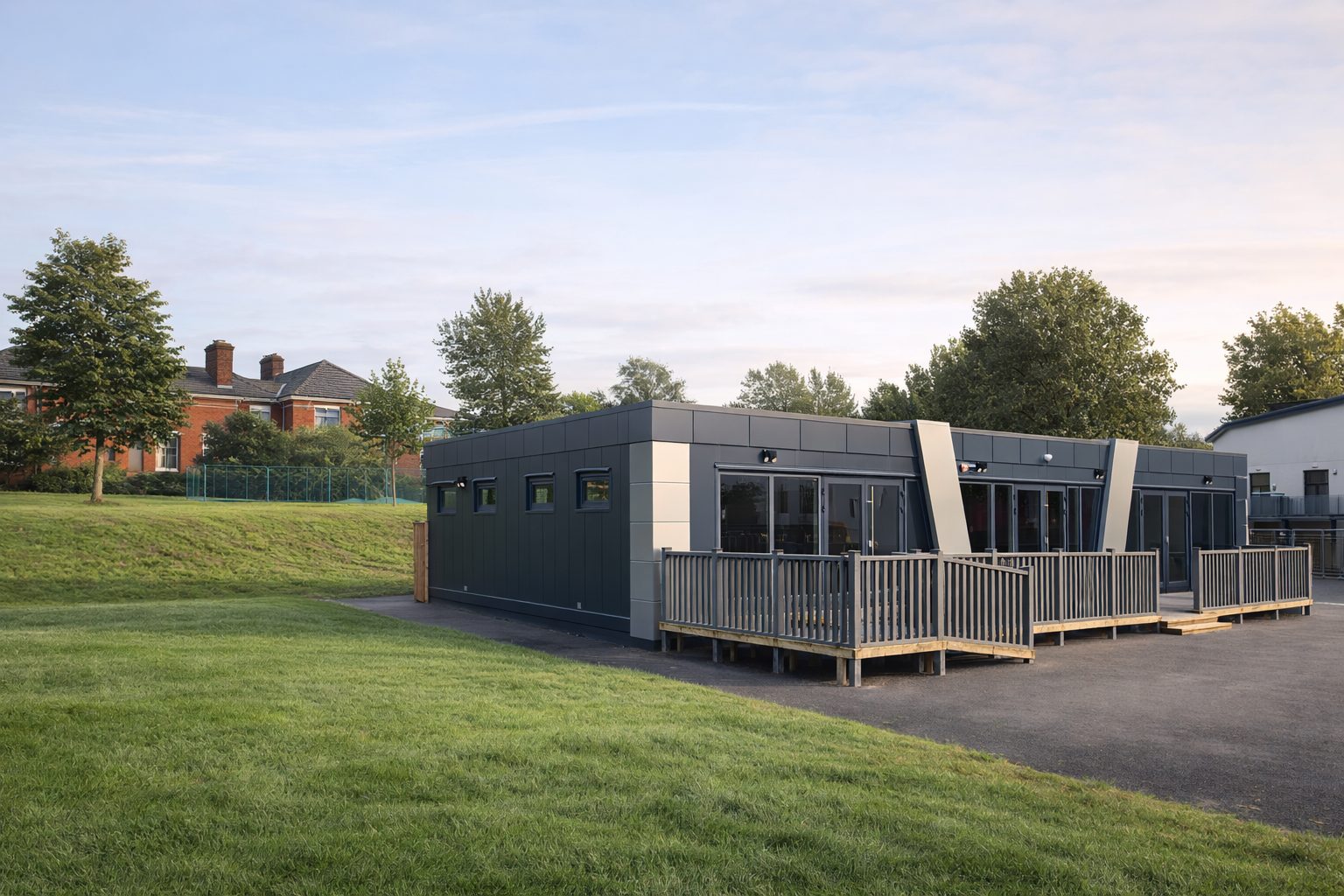
Prefabricated buildings UK used across commercial and public-sector projects

Offsite Construction Solutions

Prefabricated Buildings UK

Prefabricated buildings offer a practical offsite construction route for commercial, education and public-sector projects across the UK. Specifically, each structure is manufactured in a controlled factory environment before delivery to site.

As a result, clients benefit from faster programmes and consistent build quality. Furthermore, this approach suits buyers comparing build methods before moving into detailed specification and procurement.

This page focuses on long-term prefabricated building solutions. Alternatively, view our portable cabins for short-term hire or temporary requirements.

Why This Page Exists

Built for Serious UK Project Buyers

This page serves professionals who need prefabricated buildings for real projects. Instead of generic content, you will find specification-led guidance relevant to UK procurement.

Commercially Focused

We serve buyers who compare prefabricated building options for real UK projects. In particular, this content targets commercial, education and public-sector decision-makers.

As a result, you will not find generic lifestyle or consumer prefab material here.

Specification-Led

Our approach centres on systems, procurement logic and delivery programmes. Moreover, we address long-term project suitability rather than vague product claims.

Consequently, every detail supports informed decision-making at specification stage.

UK Project Context

All content relates directly to UK procurement routes and regulations. Furthermore, we cover education, healthcare, commercial and public-sector contexts specifically.

Therefore, the guidance here reflects real market conditions and compliance requirements.

Overview

Prefabricated Buildings UK for Commercial and Public-Sector Use

Clients choose prefabricated buildings when projects require controlled manufacturing and faster delivery. In addition, this route provides more predictable build quality compared to traditional methods.

Specifically, education, healthcare, business and public-sector teams specify prefabricated solutions where programme certainty matters most.

For a broader view, explore our modular buildings page. Afterwards, return here to compare prefabricated routes in detail.

Types of Prefabricated Building Systems

Prefabricated building systems include steel-framed modules, timber-led structures and hybrid approaches. Furthermore, each system offers distinct advantages depending on the project brief.

The right choice depends on intended use, design goals and planning context. Moreover, programme length and long-term performance requirements also play a key role.

Consequently, we recommend selecting the system by project fit. This avoids forcing one construction method across every brief.

Key Advantages

Benefits of Prefabricated Construction

Clients choose prefabricated construction because it delivers better manufacturing control and less site disruption. As a result, projects benefit from a clearer delivery sequence. Furthermore, this approach suits briefs where quality, speed and coordination all need to align.

Programme Efficiency

Offsite manufacture runs in parallel with site preparation work. Consequently, total delivery time reduces compared with traditional site-only build routes.

In addition, fewer weather delays and a controlled production environment keep the programme on track.

Quality Consistency

Factory conditions deliver repeatable build quality across every unit. Moreover, tighter process management reduces defects and rework on site.

Therefore, clients receive buildings that meet specification consistently from the first unit to the last.

Flexible Specification

You tailor layouts, façades, finishes and energy performance to the intended building use. Similarly, structural systems adapt to suit each project brief.

As a result, every prefabricated building meets the exact requirements of its sector and site context.

Sector Applications

Prefabricated buildings UK installed for education and healthcare projects, showing modular classrooms on a school campus
Prefabricated buildings for education and healthcare-led environments — offsite building solutions suitable for teaching accommodation, healthcare support space and structured long-term project use in the UK.

Prefabricated Buildings for Education Projects

Schools and colleges use prefabricated buildings for teaching space, support accommodation and campus expansion. Specifically, this approach suits projects where delivery certainty and long-term performance both matter.

In addition, offsite manufacture reduces disruption to live school environments during term time.

If your requirement is specifically classroom-led, see our modular classrooms solution page for detailed options.

Healthcare and Commercial Use Cases

Healthcare and commercial clients also select prefabricated building methods for programme control and quality assurance. Furthermore, operational performance improves when teams occupy purpose-built, factory-finished spaces.

Typical applications include clinics, offices, support buildings and other functional spaces. Consequently, these sectors represent some of the strongest use cases for prefabricated buildings in the UK.

Technical Detail

Specifications and Options

We develop prefabricated commercial buildings around structure, insulation and façade treatment. In addition, internal finishes, window and door strategy and service coordination form part of every specification.

Furthermore, accessibility requirements integrate into the design from the outset rather than as an afterthought.

  • Steel or timber structural options — matched to load, span and programme requirements
  • External cladding and façade variation — composite panels, timber, render or brickslip finishes
  • Insulation and energy-performance pathways — Part L 2021 compliance as standard
  • Internal planning tailored to building use — offices, classrooms, clinics or welfare layouts

Sizes, Layouts and Expansion

Layouts range from compact single prefabricated units to larger multi-module developments. Consequently, you select the footprint that matches your site and operational brief.

Moreover, expansion and phased delivery suit projects where long-term site strategy or growth planning forms part of the programme. As a result, you invest only in the capacity you need at each stage.

  • Single units from 15 m² to 60 m²
  • Multi-module complexes from 300 m² to 2,000 m²+
  • Phased delivery aligned to programme milestones
  • Future expansion designed in from day one

Logistics & Programme

Delivery and Installation

Delivery planning for prefabricated buildings covers site access, lifting strategy and foundation readiness. In addition, we coordinate with other project stakeholders to align every stage.

As a result, early planning supports smoother installation and better overall programme control. Furthermore, it reduces the risk of delays caused by late-stage coordination issues.

Consequently, the most effective prefabricated building routes emerge when teams address site preparation, transport and installation early enough to shape the full delivery sequence.

  • Site access survey — confirmed before manufacture begins
  • Lifting and crane strategy — planned around module weight and site constraints
  • Foundation readiness — prepared in parallel with offsite manufacture
  • Stakeholder coordination — aligned across client, contractor and site teams
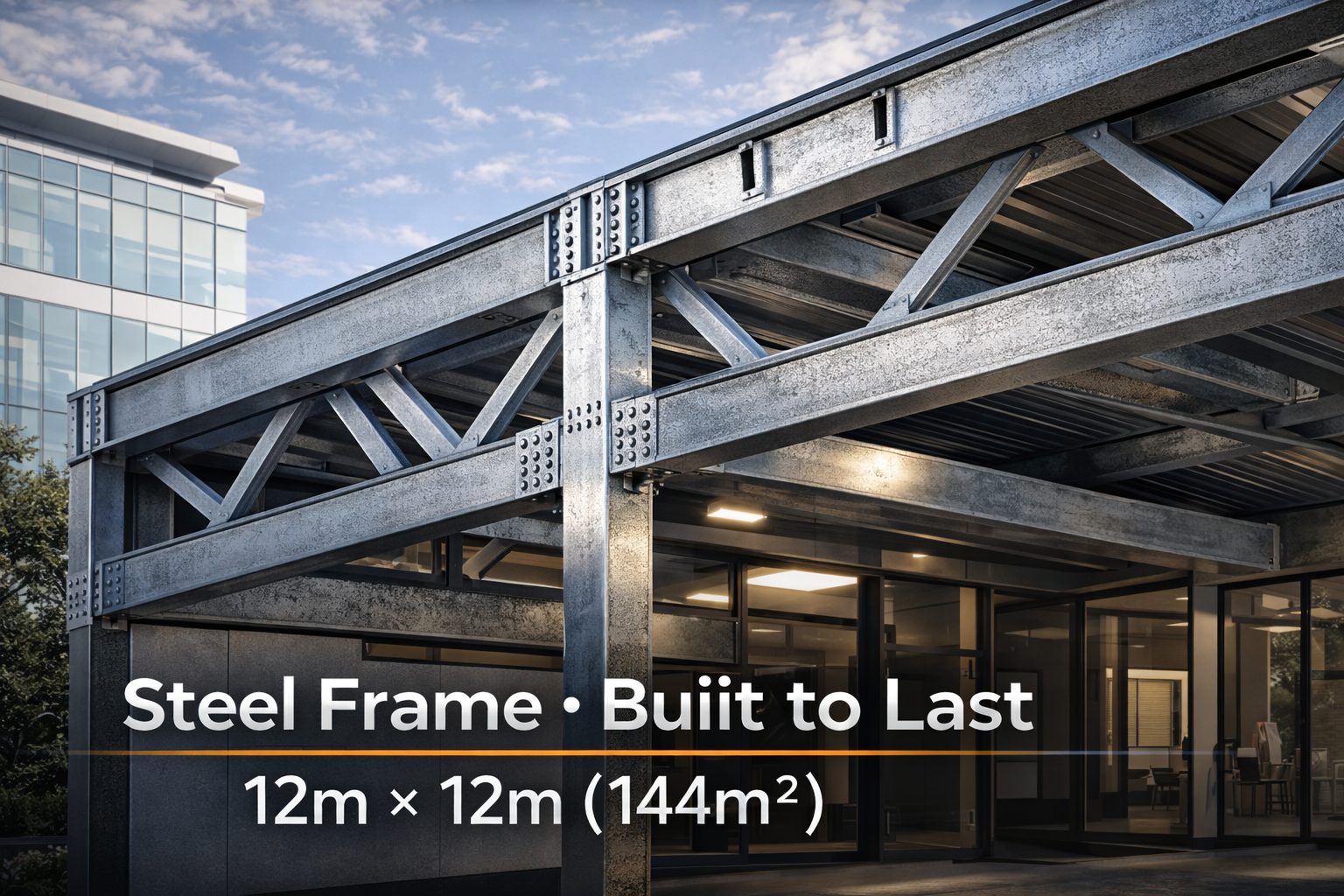
Prefab construction UK steel frame during offsite manufacturing process, showing controlled factory assembly of a prefabricated building module
Offsite manufacturing quality in prefabricated construction — controlled manufacturing and structural assembly processes used in high-quality prefabricated and offsite building delivery across the UK.

Your Supplier Partner

Prefabricated Building Supplier UK

KC Modular Buildings delivers prefabricated building projects across education, healthcare, commercial and public-sector categories. Specifically, we match each project to the right construction system and delivery route.

Furthermore, the right approach depends on the intended building use, design brief and wider project delivery strategy.

Scope of Supply

We design, manufacture and install modular buildings. However, groundworks, utility connections and external works remain the responsibility of others unless agreed in writing.

In addition, we coordinate with your principal contractor and design team. As a result, this supports a smooth handover into groundworks and service connections.

Offsite Construction Context

Prefabricated buildings form part of the wider shift toward offsite construction and better-controlled build methods. Consequently, more UK clients now specify offsite routes for programme certainty and quality assurance.

Moreover, government policy actively supports modern methods of construction across education, healthcare and housing sectors.

For broader UK context, see the UK Government guidance on modern methods of construction

Route Comparison

Prefab vs Modular vs Portable

Clients often compare prefabricated buildings with modular and portable routes. However, the correct option depends on programme, specification level and intended lifespan.

In addition, how the finished building serves its users shapes the decision. For long-term, specification-led projects, also review our permanent modular buildings page for a separate route comparison.

Prefabricated Buildings

Prefabricated buildings suit offsite-led delivery where controlled manufacture and project efficiency drive the decision. Consequently, clients gain faster programme times and consistent build quality.

Furthermore, this route works well for medium- to long-term use across education, healthcare and commercial sectors.

Long-Term Modular Routes

Broader modular solutions apply where project scale, layout complexity and long-term building strategy all require a more comprehensive approach. As a result, these routes support multi-phase campus and estate developments.

Similarly, higher specification levels and extended design life make this the preferred option for permanent installations.

Temporary Accommodation

Short-term projects prioritise flexibility and rapid deployment over permanent specification. Therefore, portable and hire-based units suit construction welfare, site offices and interim accommodation needs.

In contrast, these units typically serve a defined programme period rather than a long-term operational role.

Factor Prefabricated Long-Term Modular Temporary
Typical Lifespan 25–60 years 50–75+ years 5–15 years
Specification Level Medium–High High Standard
Programme Speed Fast Medium Fastest
Customisation Flexible Fully Bespoke Limited
Best For Schools, clinics, offices Campus, estate, permanent Site welfare, interim use

Common Questions

Frequently Asked Questions About Prefabricated Buildings

Q1.What are prefabricated buildings?

Prefabricated buildings are structures manufactured offsite in a controlled factory environment. KC Modular Buildings produces steel-framed, timber-framed and hybrid prefabricated units for commercial, education, healthcare and public-sector use across the UK.

As a result, clients receive buildings with consistent quality, faster delivery and reduced site disruption.

Q2.Are prefabricated buildings suitable for commercial projects?

Yes. Commercial clients across offices, retail, hospitality and industrial sectors use prefabricated buildings for programme certainty and build quality.

Furthermore, offsite manufacture runs in parallel with site preparation. This reduces total project time by up to 50% compared with traditional construction.

Q3.Can prefabricated buildings be customised?

Yes. KC Modular Buildings tailors layouts, façades, finishes, cladding systems and internal arrangements to each project brief.

Specifically, clients choose from steel or timber frames, composite panel or render façades, and bespoke internal configurations for offices, classrooms, clinics or welfare facilities.

Q4.Do prefabricated buildings meet UK building regulations?

Yes. All KC Modular prefabricated buildings comply with relevant UK building regulations. These include Part L (energy efficiency), Part M (accessibility) and Part B (fire safety).

Moreover, the company holds ISO 9001, ISO 14001, ISO 1090 and ISO 3834 certifications. In addition, Constructionline Bronze and SSIP accreditation provide further assurance.

Q5.How long does it take to deliver a prefabricated building?

Typical lead times range from 5 to 16 weeks depending on the system and specification. ISO frame units take 5 to 7 weeks. Bespoke steel-framed buildings take 10 to 16 weeks.

Consequently, prefabricated routes deliver significantly faster than traditional site-built alternatives. Similarly, timber-framed lodges take 7 to 12 weeks from order.

Q6.What warranty do prefabricated buildings come with?

KC Modular Buildings provides a 15-year structural warranty on load-bearing elements. In addition, panels and roofing carry 5 to 10 year cover. Windows and doors carry 5 years.

Furthermore, internal workmanship carries 12 months of protection. As a result, clients receive longer warranty cover than most competitors offer.

Get Started

Need a Quote for Prefabricated Buildings UK Projects?

Ready to move forward? Request a quote for your prefabricated building project today. Alternatively, download our brochure first for a broader overview of available systems and options.

Furthermore, our team responds within 24 hours with no obligation. As a result, you receive clear pricing and programme guidance before committing.

✓ No obligation ✓ 24-hour response ✓ ISO 9001 certified ✓ UK-wide delivery