
Modular Welfare Units UK | Buy, Hire & Bespoke Welfare Buildings
Modular welfare units UK
Modular welfare units to buy, hire or specify for UK sites
Factory-built welfare buildings for construction, civil engineering, infrastructure, industrial and commercial sites. Specify toilets, showers, changing space, drying rooms, canteens, rest areas and office-linked welfare in a route that fits your programme.
Welfare compliance depends on workforce size, site conditions, installation, utilities and maintenance. KC welfare units are specified to support HSE and CDM 2015 welfare requirements when the correct system and layout are selected for the project.
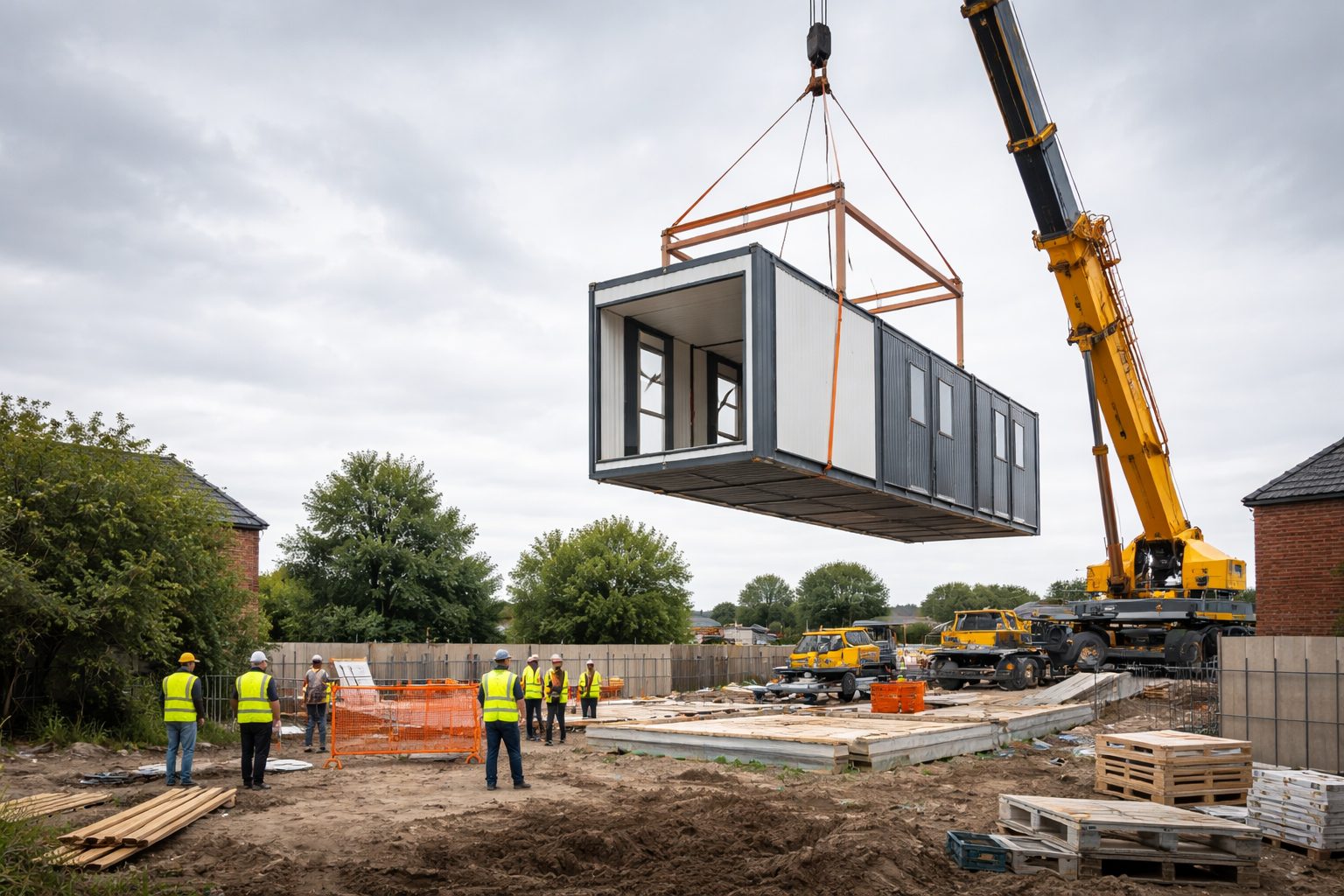
Buy or hireRoutes for short-term and long-term sites
5 systemsTemporary, permanent, bespoke, sanitary and combo
UK-wideDelivery planning across mainland UK
HSE/CDMSpecified around welfare requirements
Quote supportWorkforce, layout and access review
Short answer
A modular welfare unit is a factory-built facility used to provide essential site welfare such as toilets, washing facilities, drinking water, changing space, storage, drying rooms and rest areas. KC Modular Buildings supplies welfare routes for hire, purchase and bespoke projects, with final compliance determined by the specification, workforce size, site services and installation conditions.
For temporary sites
Hire or fast-deploy welfare
Best for short-term projects, temporary site setups, emergency welfare requirements and flexible programmes where units may need to be relocated.
For long-term sites
Permanent welfare buildings
Best for depots, schools, councils, commercial estates and construction compounds that need durable welfare with a longer planned lifespan.
For complex briefs
Bespoke welfare complexes
Best for large workforces, infrastructure sites, public-sector estates and layouts needing combined welfare, office, medical, laundry or specialist rooms.
Compliance and specification
Welfare units specified around HSE and CDM 2015 duties
CDM 2015 Schedule 2 sets the minimum welfare facilities expected on construction sites. The correct welfare unit should be selected around the number of workers, type of work, shift pattern, site layout and available services.
Core welfare provision to plan for
- Sanitary conveniences, including suitable toilet provision
- Washing facilities with suitable water and drying provision
- Drinking water access
- Changing rooms and lockers where the work requires them
- Facilities for rest, eating and warming food
- Ventilation, heating, lighting, cleaning and maintenance arrangements
A welfare unit should not be sold as “compliant” in isolation. Compliance depends on the final layout, workforce numbers, accessibility needs, site services, cleaning regime and whether the unit is maintained correctly.
External guidance sources
For official context, review the Health and Safety Executive welfare guidance and CDM 2015 Schedule 2. These references should support the specification conversation rather than replace project-specific advice.
- HSE construction welfare overview
- HSE CIS59 welfare facilities guidance
- CDM 2015 Schedule 2 minimum welfare facilities
ToiletsSpecify to workforce and usage pattern
Rest areasHeated, seated and suitable for breaks
WashingHot/cold or warm water where required
AccessConsider Part M and Equality Act duties
Product range
Five welfare unit routes from one modular supplier
The best system depends on whether your site needs a short-term hire unit, a permanent welfare building, a sanitary module, a combined welfare unit or a fully bespoke welfare complex.
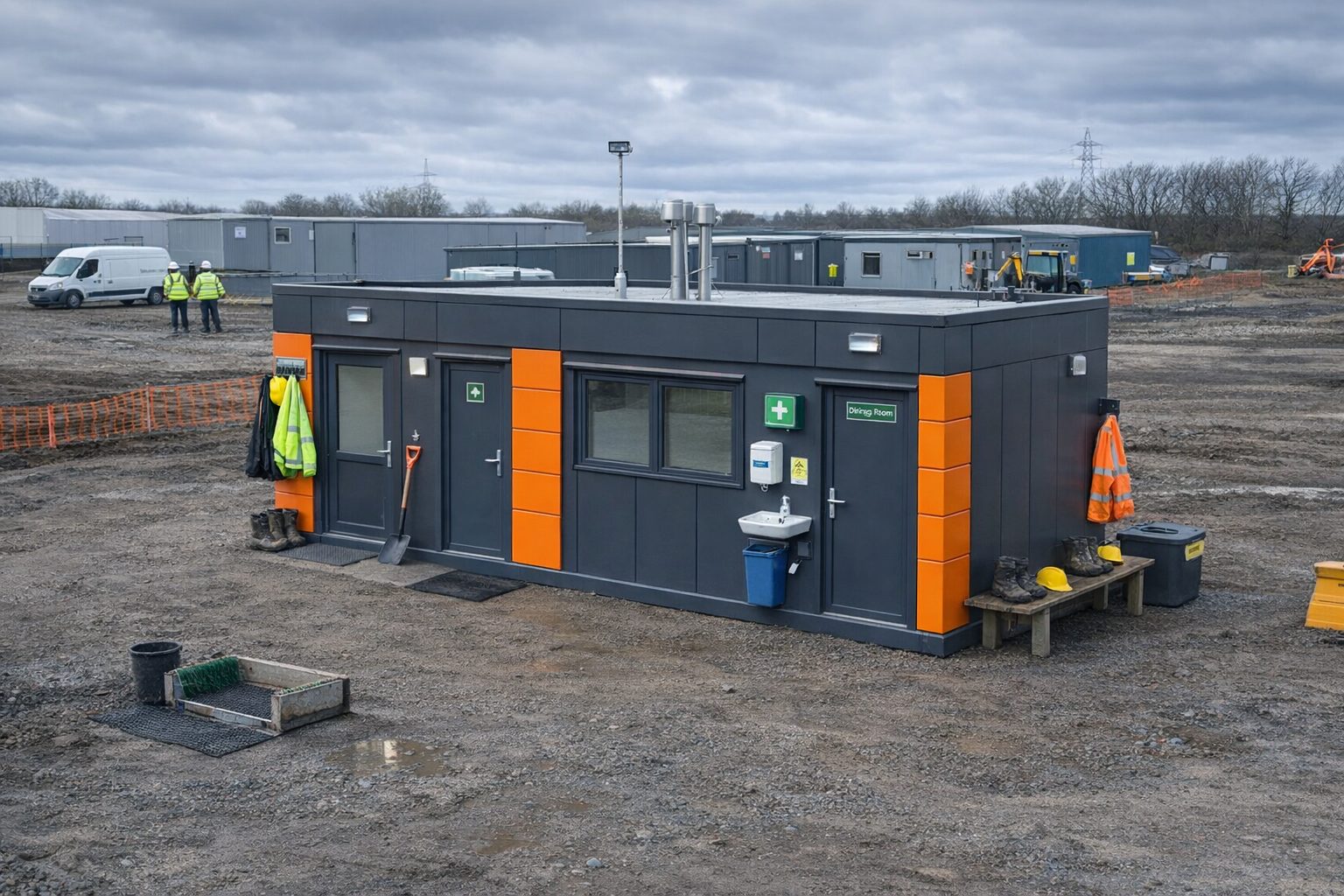
System 1
ISO frame welfare units
Hire or purchase route for toilets, showers, canteen space, drying rooms and quick site welfare layouts.
Best forRapid deployment
RouteHire or buy
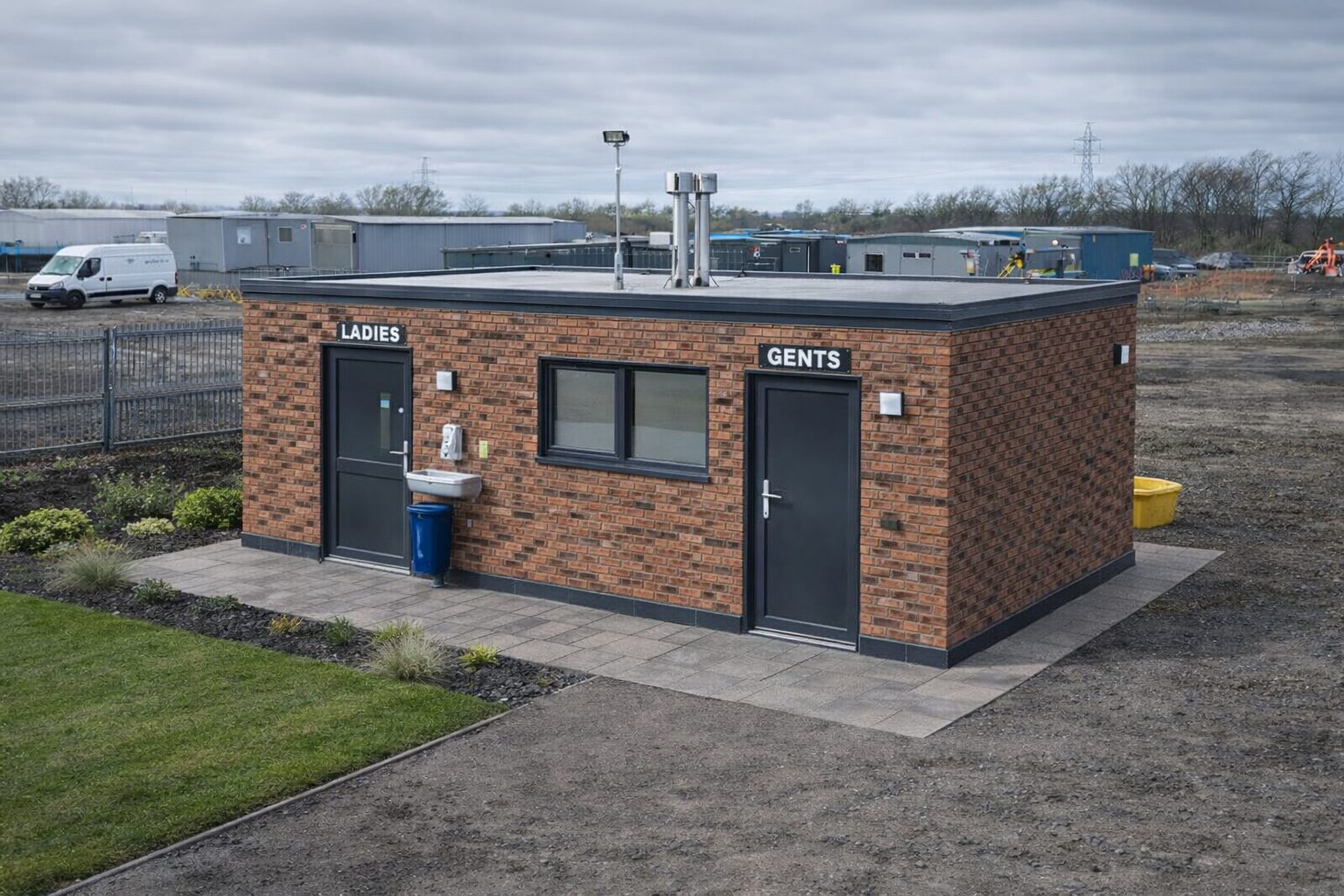
System 2
Permanent welfare buildings
Longer-term welfare facilities with enhanced exterior finish, accessibility options and building-performance review.
Best forLong-term use
RoutePurchase
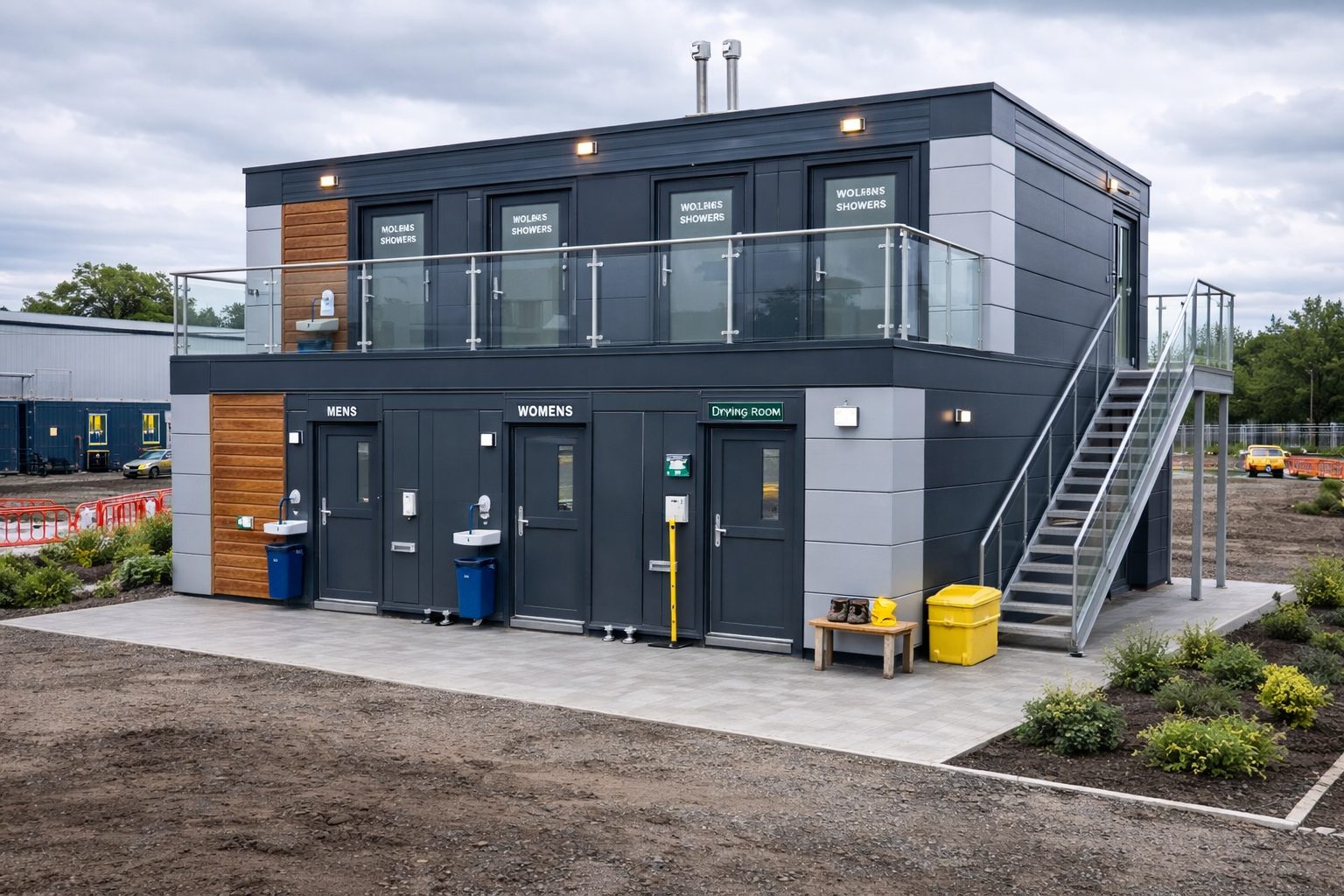
System 3
Bespoke modular welfare
Custom room schedules for larger workforces, infrastructure sites, medical rooms, laundries, canteens and welfare villages.
Best forComplex briefs
RouteBespoke project
System 4
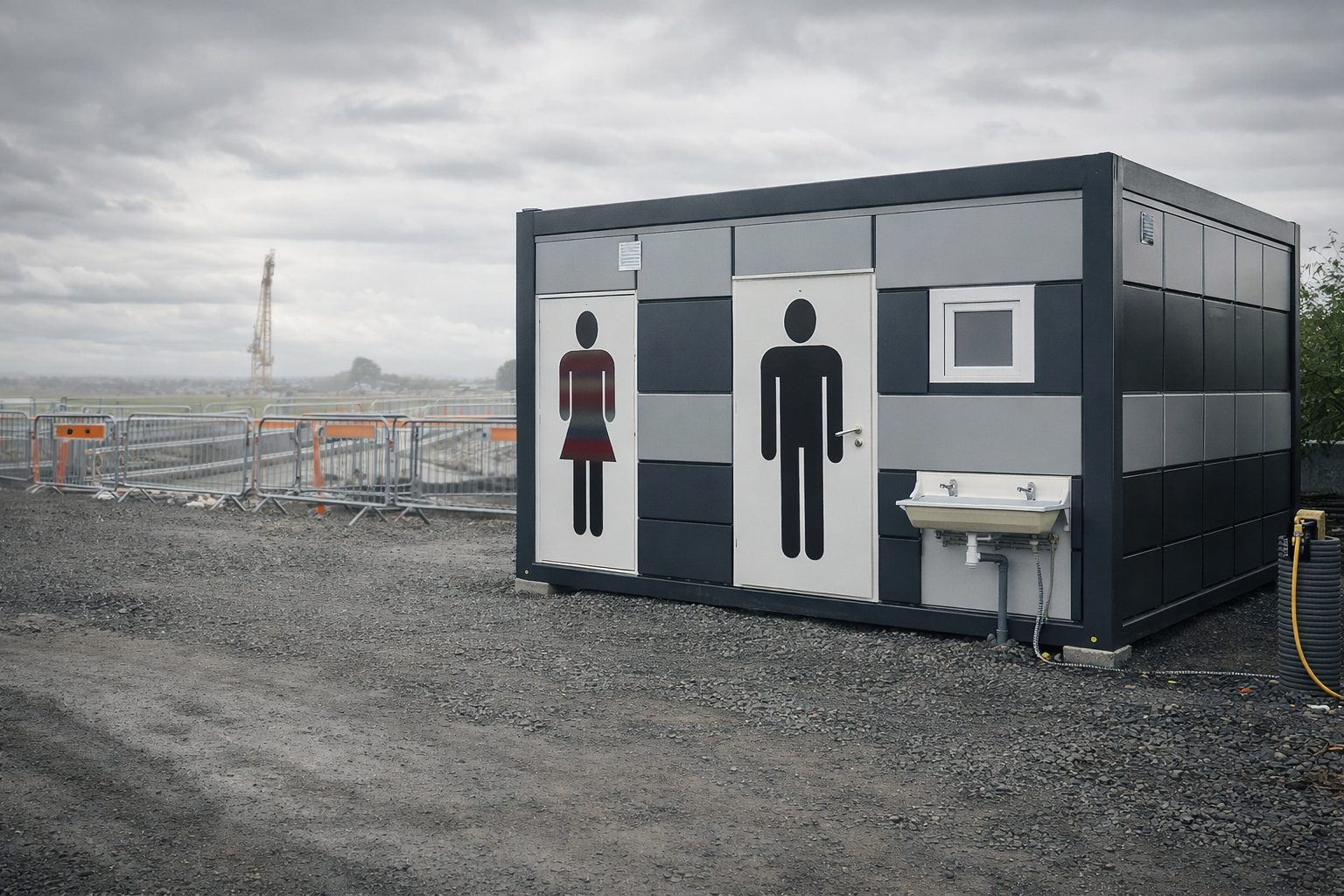
Sanitary container units
Toilet, shower and accessible sanitary modules for construction, public-sector, sport, leisure, event and public-use settings.
Best forToilets and showers
RouteBuy or hire
System 5
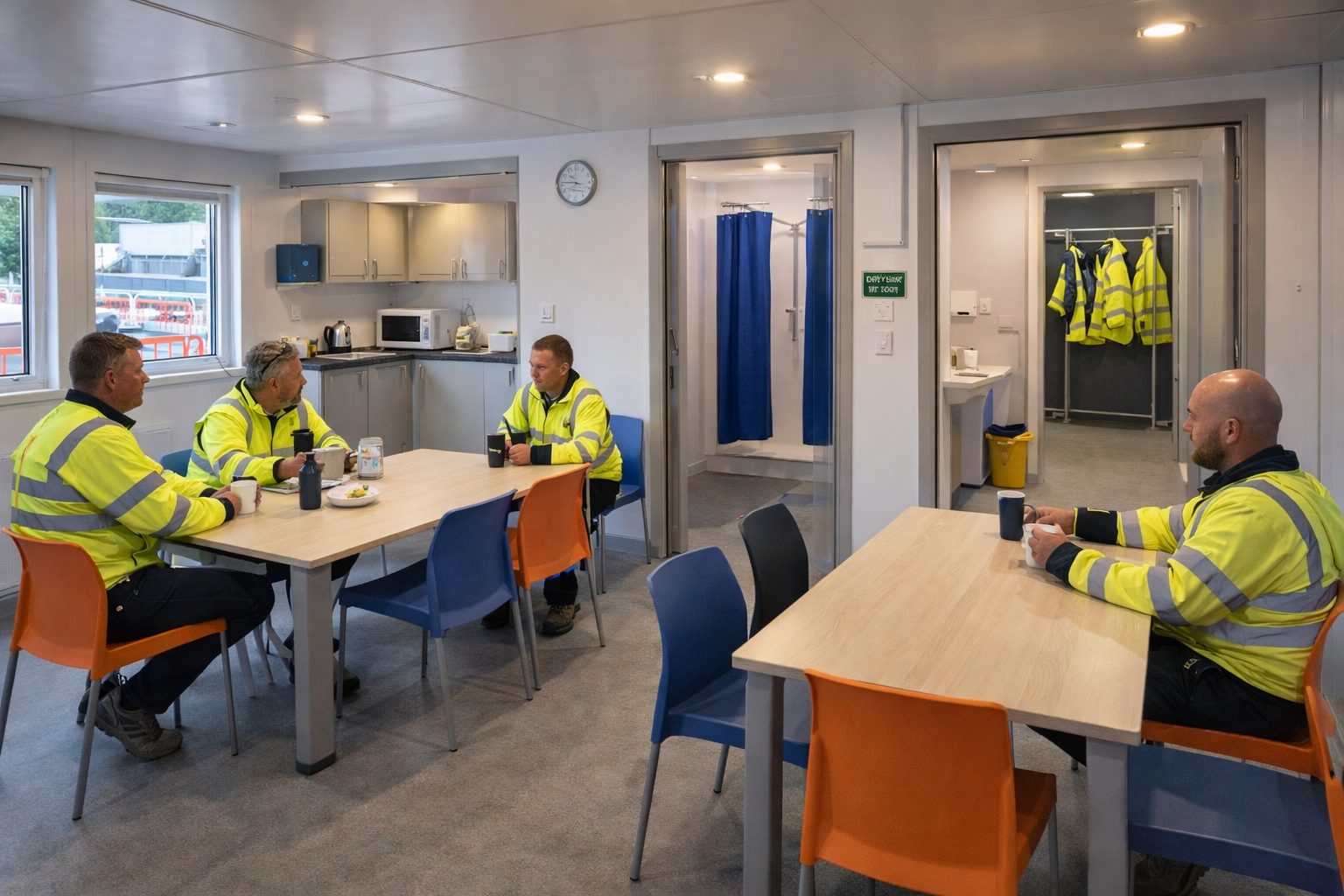
Combo welfare units
All-in-one welfare units combining WC, washing, drying, canteen/rest and optional office space in a single modular layout.
Best forSingle-unit welfare
RouteBuy or hire
Quote support
Not sure which route fits?
Send your workforce size, site postcode, required rooms, access photos and target date. KC can recommend a welfare route before a detailed quote is prepared.
System comparison
Compare modular welfare unit routes
Use this table to narrow the route before requesting a quote. Final recommendation should be confirmed after site access, utilities and workforce requirements are reviewed.
| Route | Best for | Typical facilities | Main checks before quote |
|---|---|---|---|
| ISO frame welfare units | Temporary sites, fast deployment and repeatable layouts | Toilets, showers, canteen, drying room, office-linked welfare | Hire period, availability, hardstanding, services and lifting access |
| Permanent welfare buildings | Long-term sites, depots, councils, schools and commercial estates | Permanent welfare rooms, accessible WCs, staff facilities and enhanced finishes | Planning, Building Regulations, fire strategy, foundations and utilities |
| Bespoke welfare complexes | Large workforces, infrastructure and complex room schedules | Medical rooms, laundries, canteens, changing, showers, offices and welfare villages | Design brief, phasing, services, approvals, site logistics and installation method |
| Sanitary container units | Toilet, shower and public-use sanitary provision | Male, female, accessible, anti-vandal or project-specific sanitary layouts | Drainage, water, cleaning access, footfall, accessibility and maintenance |
| Combo welfare units | All-in-one site welfare where space and speed matter | WC, washing, shower, drying, canteen/rest and optional office space | Workforce size, room balance, delivery route, services and hire/buy route |
System details
Choose a welfare system by project need
System 1 — ISO frame welfare units for hire or purchase
Suitable for temporary site welfare, short-to-medium projects and repeatable welfare layouts that may need to be relocated. Configurations can include toilets, washing, showers, canteen/rest space, drying rooms and office-linked welfare.
- Good route for fast deployment where a standard configuration is suitable
- Can support hire, purchase or repeat-use project programmes
- Works best when site access, hardstanding and services are clear
System 2 — permanent modular welfare buildings
Suitable for longer-term sites, depots, public-sector estates, education, leisure and commercial locations where the building will remain in use for a substantial period and needs a more finished exterior.
- External finish, accessibility, services and energy performance should be designed early
- Planning, Building Control and fire strategy may be required
- Best where the brief is stable before manufacture starts
System 3 — bespoke modular welfare buildings
Suitable for larger workforces and more complex operational briefs. This route is strongest when you need a custom room schedule, linked or multi-module layouts, medical rooms, laundries, offices, canteens or welfare village planning.
- Custom layouts can be developed around workforce flow and room schedules
- Better for strategic projects than urgent standard hire needs
- Requires stronger design coordination before manufacture
System 4 — sanitary container units
Suitable for dedicated toilet, shower and washroom provision across construction, public-sector, leisure, sports, education and event environments. Specification should reflect footfall, accessibility, cleaning and maintenance requirements.
- Good for sanitary-led requirements rather than complete welfare buildings
- Accessible layouts and robust public-use finishes can be specified
- Drainage, water, ventilation and cleaning access are critical
System 5 — combo welfare units
Suitable where one compact unit needs to provide several welfare functions. A combo unit can reduce the number of separate buildings needed on a tight site, but the layout must still suit the workforce and usage pattern.
- Combines several welfare functions in one modular footprint
- Can suit smaller and medium-size construction sites
- Room balance should be matched to workforce numbers and shift pattern
Quote information
What KC needs to quote correctly
A good welfare quote depends on the site, workforce and services. Sending the right information early reduces redesign, cost uncertainty and installation risk.
Send this information
- Site postcode and delivery address
- Project duration and target delivery date
- Approximate number of workers and shift pattern
- Facilities needed: toilets, showers, changing, canteen, drying, office or first aid
- Hire, purchase or hire-to-buy preference
- Access photos, hardstanding/foundation details and lifting restrictions
- Power, water, waste, drainage and generator requirements
- Any planning, Building Control, fire or accessibility requirements already known
What affects cost and programme
- Standard vs bespoke layout
- Number of rooms and sanitary fittings
- External finish and insulation level
- Fire, accessibility and energy-performance requirements
- Transport distance, lifting method and site access
- Utility connections and groundworks
- Availability of stock units or factory production slot
- Approvals, landlord consent or local authority requirements
Trust and documentation
Keep the page credible by proving every strong claim
The original page uses strong statements about certifications, delivery speed, warranties, pricing and delivered-unit counts. Those claims are commercially useful, but they should only remain live where KC has current evidence.
Certification evidence
Keep visible certification claims only if current certificates can be supplied for ISO, Constructionline, SSIP, Acclaim or any other listed accreditation.
Price evidence
Use “from” prices only where the current minimum product, hire term, specification and exclusions are clearly documented.
Delivery evidence
Use 48-hour or 48–72-hour delivery language only with stock, location, site-readiness and transport conditions stated clearly.
FAQ
Modular welfare units — frequently asked questions
Answers for site managers, contractors, public-sector buyers and commercial teams planning welfare provision.
What welfare facilities are required on a UK construction site?
CDM 2015 Schedule 2 requires suitable welfare facilities for construction sites. In practical terms this means sanitary conveniences, washing facilities, drinking water, changing rooms and lockers where needed, and suitable rest areas. The exact provision should be specified around workforce size, site conditions and the nature of the work.
How quickly can KC supply a modular welfare unit?
Fast-delivery welfare options may be available for standard or hire units, subject to stock, site access, transport, lifting arrangements and specification. Bespoke and permanent welfare buildings normally need a longer design, approval and manufacturing programme.
Can welfare units be bought or hired?
Yes. Welfare units may be available to buy or hire depending on the system, size, specification and availability. Hire usually suits temporary or project-based sites, while purchase can make sense for long-term or repeat use.
Do modular welfare units need planning permission?
Planning requirements depend on site location, duration, size, appearance, intended use and local authority position. Temporary construction-site welfare and permanent welfare buildings should both be checked before installation.
Can welfare units include toilets, showers, canteens and drying rooms?
Yes. Welfare units can be configured with toilets, washrooms, showers, canteens, rest areas, drying rooms, changing spaces, offices and first-aid areas, subject to the selected system and specification.
Are accessible welfare units available?
Accessible welfare layouts can be specified where required, including wider access, ramped or level entry, accessible WC layouts, grab rails and low-level fittings. The final design should be checked against the relevant Building Regulations and project requirements.
What information is needed for a quote?
Send the site postcode, workforce size, project duration, preferred hire or purchase route, required facilities, utility availability, access details, photos of the proposed location and any planning or compliance constraints already known.
Can modular welfare units be linked or stacked?
Some modular welfare systems can be linked side-by-side or stacked, subject to the structural system, access, foundations, fire strategy, escape routes, installation method and engineering review.
What should be checked before ordering?
Confirm site access, delivery route, lifting requirements, power, water, waste, drainage, foundation or hardstanding, workforce numbers, welfare ratios, fire strategy, Building Regulations, planning position and maintenance responsibilities.
Request a modular welfare unit quote
Tell KC Modular Buildings your workforce size, project duration, welfare rooms, site postcode, utility position and target delivery date. The team can recommend the most suitable welfare route and prepare a quote based on your site requirements.
Phone: 01782 561 110
Email: [email protected]