Home / FAQ / Temporary vs Permanent Modular Classrooms
Education route guide
Temporary vs Permanent Modular Classrooms: Which Should Your School Choose?
A practical comparison for headteachers, estates managers, academy trusts and local authorities choosing between temporary classrooms for schools, a relocatable classroom, hire or buy modular classroom routes and a permanent modular school building.
Temporary modular classrooms are generally best for time-limited capacity or decant requirements. Permanent modular classrooms are better suited to long-term estate expansion. The correct route depends on intended use, approvals, specification, relocation plans and whole-life cost, not simply whether the building is factory-built.
A temporary vs permanent modular classroom decision should start with the school’s actual estate problem. If the requirement is linked to a refurbishment, a one-year bulge intake or an uncertain pupil forecast, temporary classrooms for schools or a relocatable classroom route may be sensible. If the requirement will remain for many years, a permanent modular school building or bespoke modular route is usually more defensible.
Important: temporary does not mean planning-free, and permanent does not mean slow by default. Planning, Building Regulations, fire, acoustic, ventilation, access and service requirements still need project-specific review.
AEO summary
Temporary vs permanent modular classroom: direct answers
Use this table when stakeholders ask whether to choose a portable classroom vs modular building route, whether to hire or buy modular classroom space, or when a permanent modular school building becomes the better long-term answer.
Question
Direct answer
Best next step
Are modular classrooms temporary or permanent?
They can be either. A temporary vs permanent modular classroom decision depends on intended use, approvals, specification, relocation plans and whole-life cost, not just the fact that the building is factory-built.
Define the required duration, pupil numbers, location and whether the building may need to move later.
Should a school hire or buy modular classroom space?
A hire or buy modular classroom decision usually favours hire for short-term decant, bulge intake or uncertain funding, and purchase for confirmed long-term estate need.
Compare capital budget, hire duration, ownership, removal cost and future relocation value.
What is the difference between a portable classroom vs modular building?
A portable classroom is usually a relocatable classroom route for faster temporary capacity. A modular building can also be permanent, bespoke, multi-room, façade-led and designed around long-term school use.
Avoid using the words portable, temporary and modular as if they always mean the same thing.
When does a permanent modular school building make more sense?
A permanent modular school building is stronger where the school needs durable expansion, campus integration, long-term compliance evidence and predictable maintenance over many years.
Portable classroom vs modular building, hire or buy modular classroom, and temporary classrooms for schools
Most school teams are not simply asking for a product name. They are asking whether a portable classroom vs modular building route fits the intended use, whether to hire or buy modular classroom space, and whether temporary classrooms for schools can solve the problem without creating future estate risk.
Portable classroom vs modular building
Use a portable classroom vs modular building comparison when the school is unsure whether speed and relocation matter more than long-term integration.
Hire or buy modular classroom
Use a hire or buy modular classroom comparison when the school must decide between revenue budget flexibility and long-term ownership.
Relocatable classroom
A relocatable classroom is useful when future movement is part of the estate plan, but services and foundations still need designing for that possibility.
Temporary classrooms for schools
Temporary classrooms for schools are strongest for decant, bulge intake and short-term timetable pressure, provided approvals and site logistics are confirmed early.
Main comparison
Temporary vs permanent modular classroom comparison table
The right pathway is rarely decided by one factor. A school may prefer a temporary route for speed, but a permanent route may be safer where appearance, service connections, fire strategy and whole-life cost matter more than first install speed.
Decision factor
Temporary modular classroom
Permanent modular classroom
Buyer note
Typical use
Decant space, bulge year, temporary classrooms for schools, refurbishment support or a short-term pupil-number pressure.
Long-term estate expansion, new teaching blocks, specialist rooms, academy-trust rollouts or multi-room school buildings.
The right route follows the estate strategy, not the label on the building.
Procurement route
Often hire, long-term hire, hire-to-buy or quick purchase where stock and specification are available.
Usually purchase or capital project route, sometimes phased by block or campus zone.
The hire or buy modular classroom decision changes cash flow, ownership and future flexibility.
Relocation
A relocatable classroom can be removed or moved if access, foundations, services and condition allow.
May be technically relocatable, but usually designed around a fixed campus position and longer-life interfaces.
Relocation should be designed in from day one; it is not automatic.
Foundations
May use lighter or simpler foundation assumptions, subject to ground conditions and approvals.
Usually needs more detailed foundations, structural calculations and long-term drainage/service planning.
Ground investigation and school-site access can change both routes.
External appearance
May prioritise speed, function and safe campus access over full architectural integration.
Often needs stronger façade design, planning presentation and connection to existing school buildings.
External appearance can be decisive on visible or sensitive sites.
Fire, acoustics and ventilation
Still needs a safe, comfortable learning environment for the agreed use and duration.
Normally expects a fuller long-term fire, acoustic, ventilation and energy strategy.
Temporary does not mean low standard; permanent usually needs deeper evidence.
Whole-life cost
Can look lower at the start, especially where the need is short. Long hire periods can become expensive.
Higher capital commitment, but better fit when the requirement will remain for years.
Compare total cost over the expected use period, not only first-year spend.
When it may not be best
Not ideal where the school already knows the need is long-term and appearance, durability or integration are critical.
Not ideal where demand is uncertain, funding is short-term or a building must be removed after a project phase.
A balanced route can save redesign, not just money.
Temporary pathway
When temporary classrooms for schools make sense
Temporary classrooms for schools work best when the problem is time-limited and the school needs capacity without committing to a long-term building. This may include decant space during refurbishment, an intake bulge, a temporary SEND room, a short-term staff or intervention space, or a trial layout before a capital scheme is approved.
A relocatable classroom is strongest when the school or trust expects future change. However, relocatable does not mean “drop anywhere”. It still needs safe access, foundations, service connections, heating, ventilation, fire safety, access and safeguarding planning.
Where a temporary route can be the wrong answer
The school already knows the need will remain beyond the hire period.
The building sits in a prominent location and needs façade integration with the existing estate.
Specialist spaces, WCs, circulation or services make a standard portable unit inefficient.
The long-term hire cost approaches or exceeds the value of buying.
Permanent pathway
When a permanent modular school building is the better route
A permanent modular school building makes more sense where the school is adding long-term capacity, replacing older accommodation, creating specialist teaching space or developing a multi-room block. The route is still factory-built, but the specification usually carries more design, approval and evidence work.
Permanent does not have to mean traditional construction. On the KC classroom pillar, the long-life education routes include ISO frame permanent classrooms, bespoke modular classrooms and timber-led education options, each with different lead-time, lifespan and specification intent. The older KC classroom page also describes temporary ISO frame classrooms, permanent ISO frame classrooms, bespoke modular classrooms, luxury lodge classrooms and container conversion classrooms as different routes with different lead times and best-fit use cases.
Where permanent or bespoke construction wins
The building must connect into existing circulation or site levels.
The school needs science, SEND, nursery, hygiene, WCs, stores, data-heavy rooms or staff areas.
External appearance affects planning, neighbours, governors or trust-brand expectations.
The project needs a stronger fire, acoustic, ventilation, energy and access strategy.
Commercial decision
Hire or buy modular classroom: how to choose
The hire or buy modular classroom decision is partly financial and partly operational. Hire can be useful when the requirement is short, but long hire periods can become expensive once delivery, installation, removal, services, maintenance, damage terms and reinstatement are included.
Buying can be stronger where the requirement is confirmed, the school expects long-term use, or the trust may redeploy the building later. Before deciding, compare whole-life cost, not only first-year budget.
Cost factor
Why it matters
Temporary route effect
Permanent route effect
Capital cost vs hire cost
A lower monthly hire can be attractive, but total hire over several years may exceed purchase value.
Can protect cash when need is short or uncertain.
Usually better where long-term use is confirmed.
Removal and reinstatement
Temporary buildings may need removal, making-good and service disconnection at the end.
Must be budgeted from the start.
Less relevant where the building remains in use.
Maintenance and warranty
Ownership and hire agreements allocate maintenance differently.
Check what the hire package includes and excludes.
School or owner usually plans maintenance as part of the estate.
Future flexibility
A relocatable classroom can support future phases if the building is specified accordingly.
High value where estate needs may change.
Permanent layouts can still allow future extensions, but the initial design must allow for them.
For numbers, use the separate Modular Classroom Cost Guide UK. This page is deliberately route-led rather than price-led, because the specification decision should come before the final budget.
Terminology
Portable classroom vs modular building: not the same thing
A portable classroom is usually a standardised, relocatable classroom route. A modular building is a wider category. It can include temporary portable classrooms, permanent modular school buildings, bespoke multi-room education blocks, timber-led outdoor-learning buildings and container conversions.
This matters because a buyer searching “portable classroom vs modular building” may be comparing two different levels of commitment. A portable classroom can solve immediate pressure. A modular building can become a long-term part of the school estate when designed around the right specification and approval route.
KC routing rule: use portable where speed, standardisation and possible relocation dominate. Use permanent or bespoke modular where lifespan, campus integration and evidence requirements dominate.
Approvals and performance
Planning, Building Regulations and education performance checks
Approvals can decide the route as much as cost. GOV.UK states that Building Regulations approval is different from planning permission and that a project might need both. In education, the DfE building-bulletins collection covers guidance on acoustics, fire safety, ventilation, thermal comfort, indoor air quality and area guidance.
For acoustics, BB93 is official guidance supporting design and performance standards for school buildings. That is why a temporary vs permanent modular classroom brief should define room use, occupancy, ventilation strategy, acoustic expectations and evidence requirements early.
Workstream
Why it changes the decision
Questions to confirm
Planning route
Temporary does not automatically mean planning-free. The site, duration, visual impact, neighbours, access and local policy still matter.
Is the building temporary or long-term? Will it affect playing space, access, neighbours or protected areas?
Building Regulations / Building Control
A classroom may need Building Regulations approval regardless of whether the route is temporary or permanent.
Which parts apply to the agreed use, including fire, access, ventilation, energy and structure?
School design guidance
Education projects often reference DfE building bulletins such as acoustics, ventilation, fire-safety and area guidance.
Which guidance is contractual, expected by the client, or required for the project brief?
Safeguarding and site logistics
Live school sites need controlled access, contractor segregation and carefully planned delivery windows.
Can delivery, cranage and installation happen safely around pupils, staff and visitors?
Services and commissioning
Temporary classrooms still need power, heating, ventilation, water, drainage, data and commissioning where relevant.
Which services are existing, which need extension, and who owns final connection scope?
KC route selector
Which KC classroom route fits temporary, permanent or bespoke use?
KC’s modular classrooms pillar should remain the commercial hub for classroom systems. This guide routes the decision: temporary vs permanent modular classroom first, then the specific product or system route.
KC route
Best fit
Temporary/permanent logic
Linked KC page
ISO frame / schools and nurseries route
Repeatable capacity, relocatable classroom layouts, temporary classrooms for schools and fast teaching-space deployment.
Usually the first route to review where speed, relocation and hire-or-buy flexibility matter.
Some older KC classroom pages still contain broader “DfE compliant” language. The safer publication model is project-specific: classroom buildings should be described as designed to meet the applicable education and Building Regulations requirements for the agreed brief and evidence route.
Quote checklist
What KC needs to recommend temporary or permanent
Send this information before asking for a route recommendation. It helps KC decide whether temporary classrooms for schools, a relocatable classroom, a hire or buy modular classroom route, or a permanent modular school building is the better fit.
1. Intended use
Intended use: general teaching, SEND, nursery, IT, science, dining, admin or decant space.
2. Expected duration
Expected duration: weeks, terms, academic years or permanent estate expansion.
3. Decision route
Decision route: temporary vs permanent modular classroom, hire, buy or hire-to-buy.
4. Occupancy
Occupancy: normal pupil count, maximum occupancy, staff count and support staff.
5. Site plan
Site plan: preferred location, access route, playground impact and existing buildings.
6. Services
Services: power, heating, ventilation, water, drainage, data, alarms and fire interfaces.
7. Specification
Specification: façade, acoustic target, ventilation strategy, energy intent and accessibility requirements.
Commercial position: capital budget, revenue budget, grant funding or leasing assumptions.
10. Future plan
Future plan: relocation, extension, resale, removal or integration into a permanent campus plan.
Visual references
Classroom and education building references
A focused set of KC classroom, school and modular education images. Captions are planning guidance, not fixed specification or case-study claims.
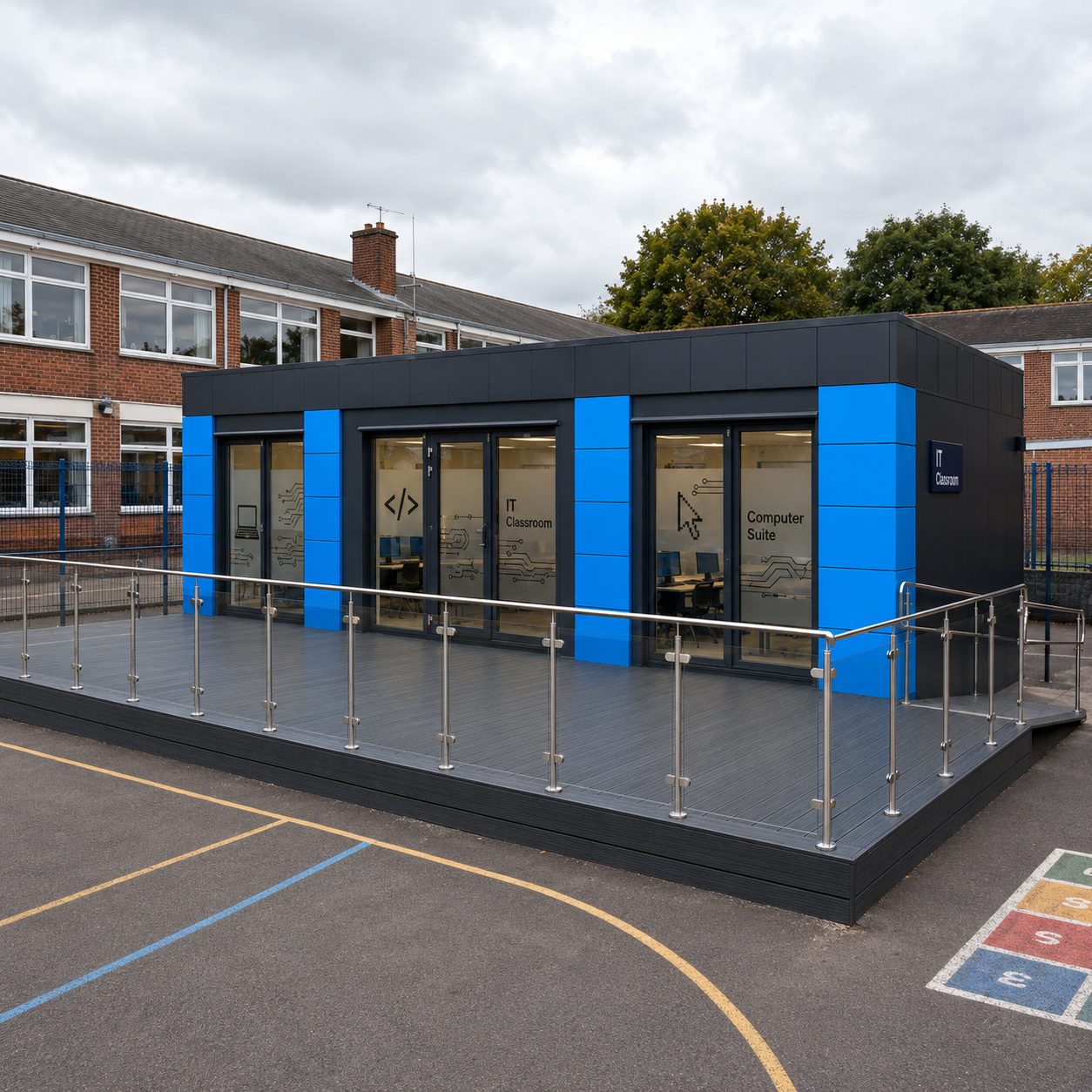
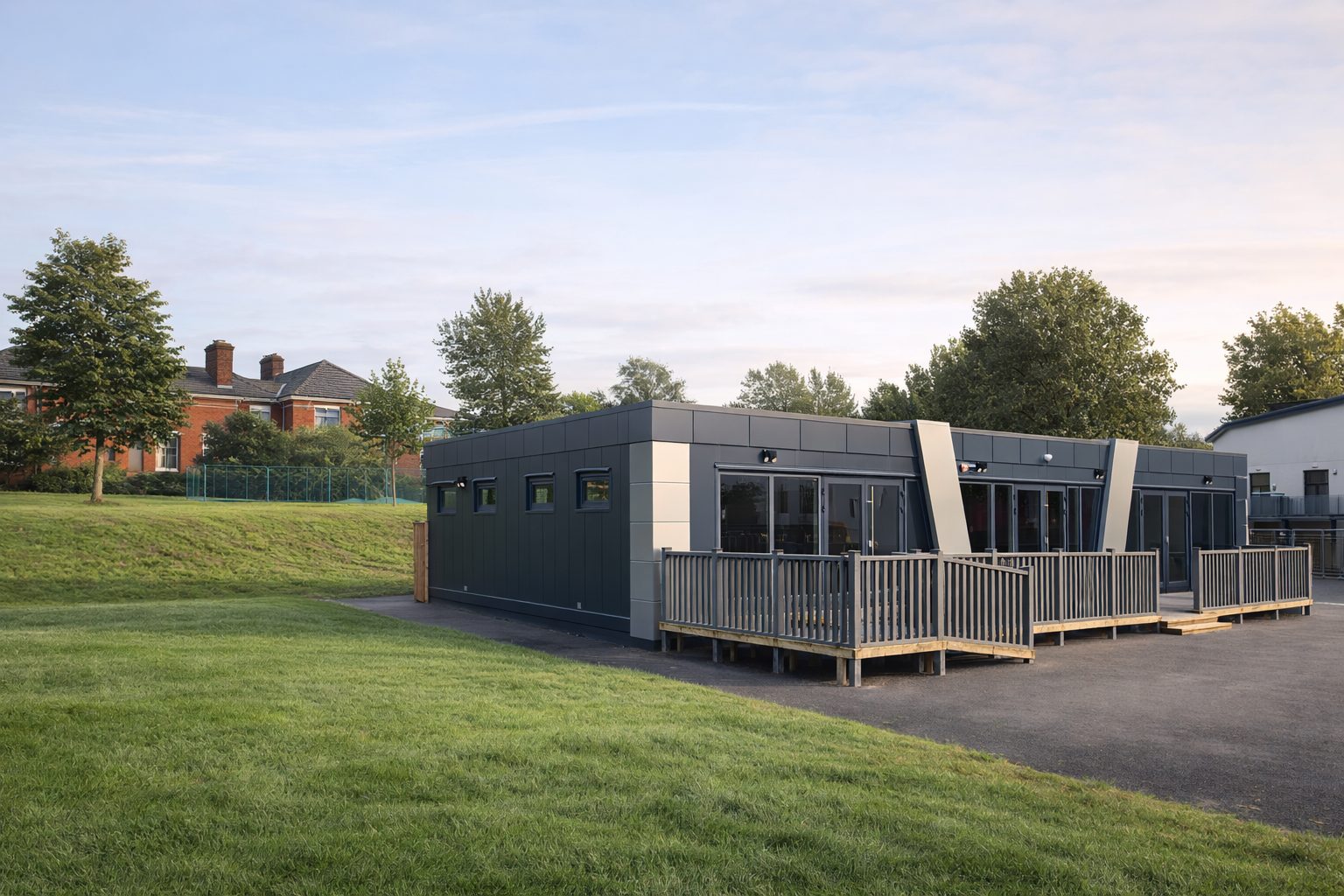
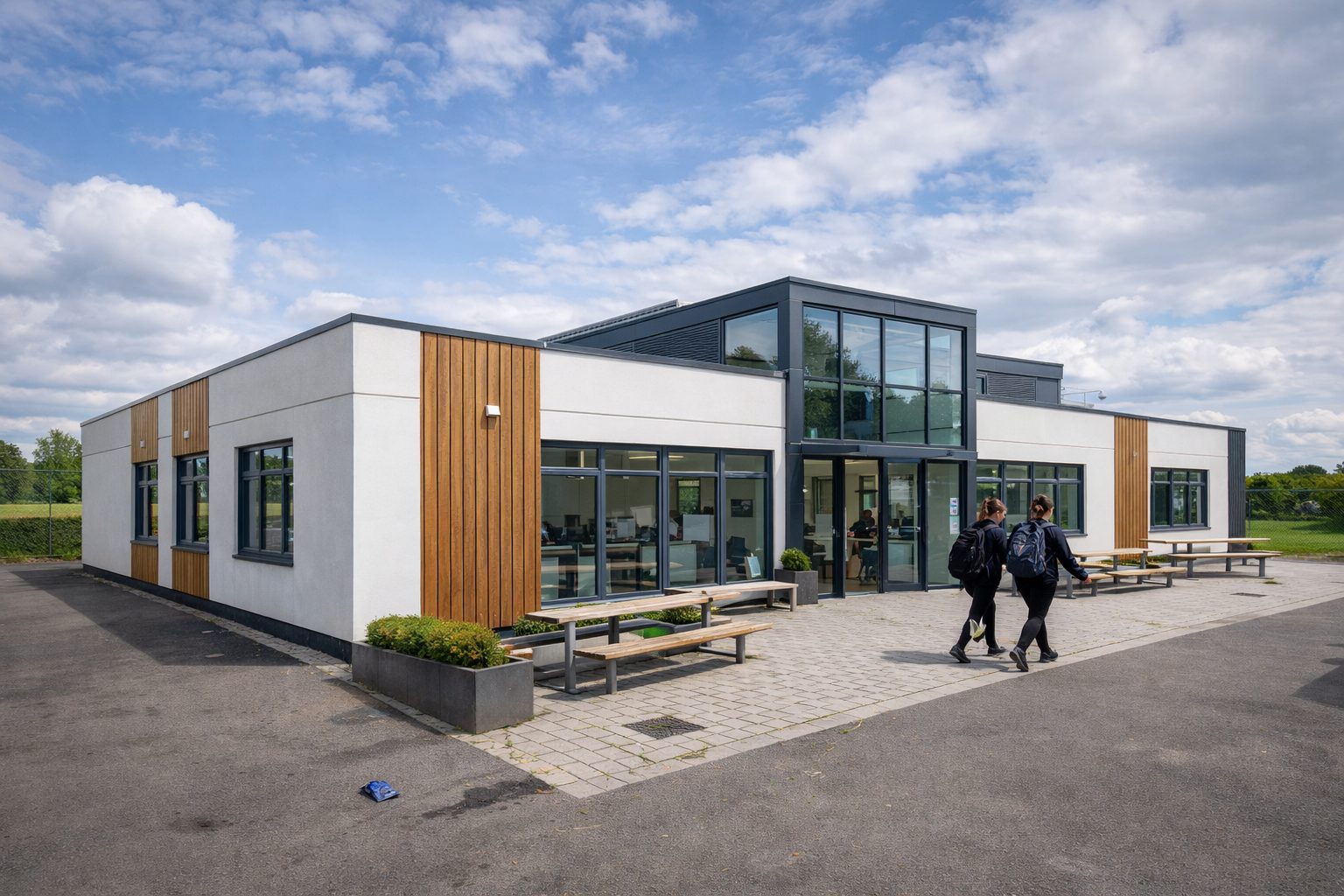
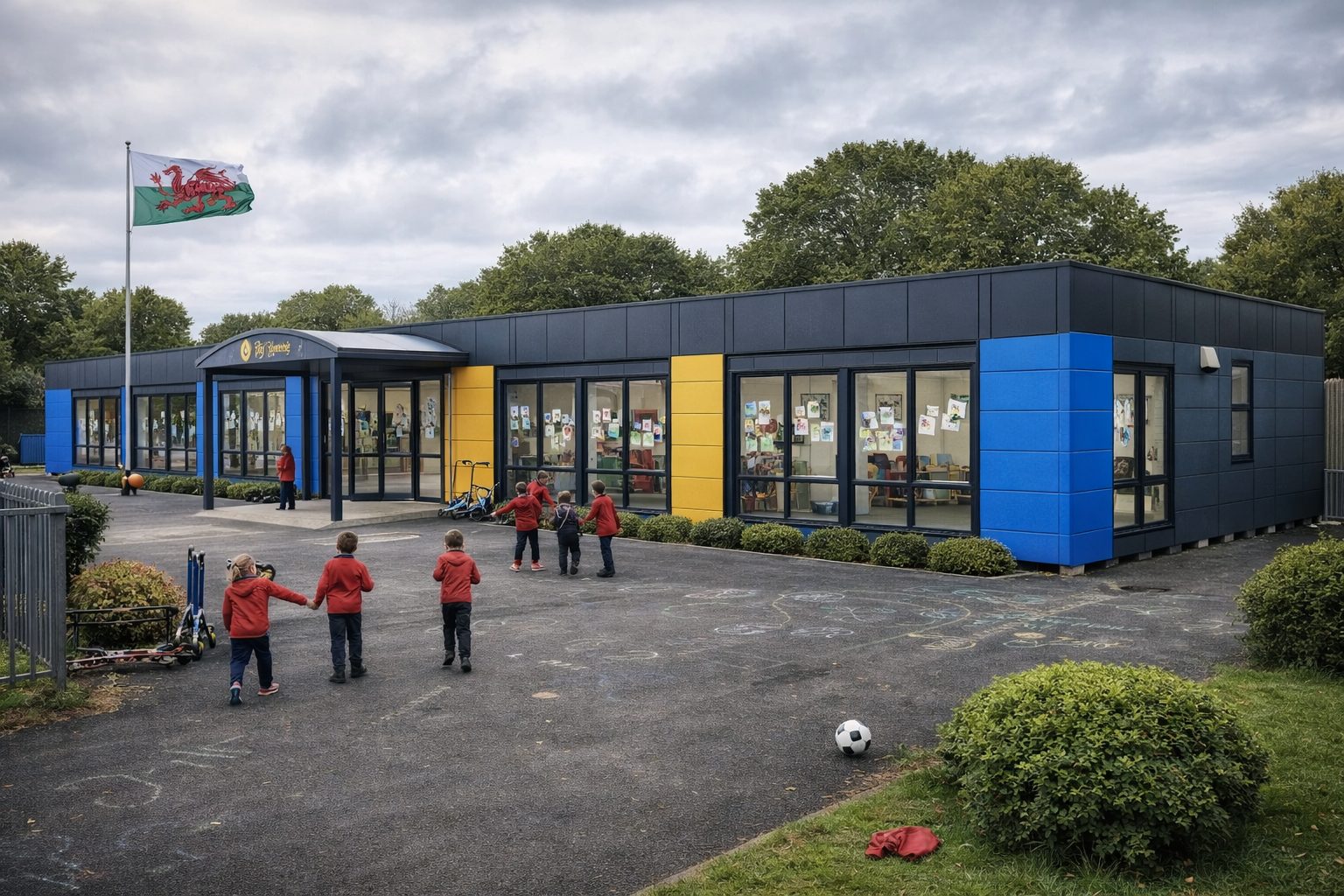
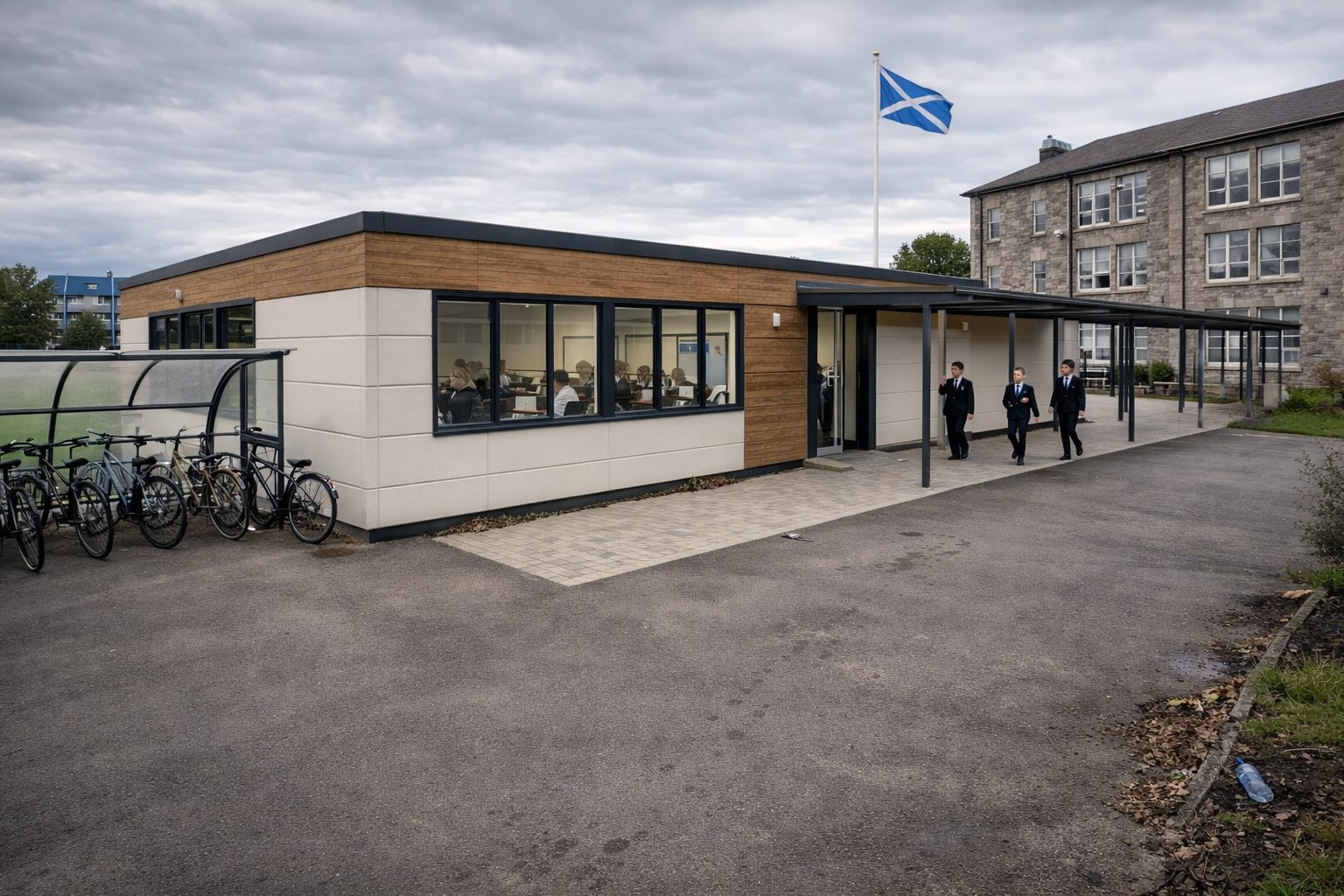
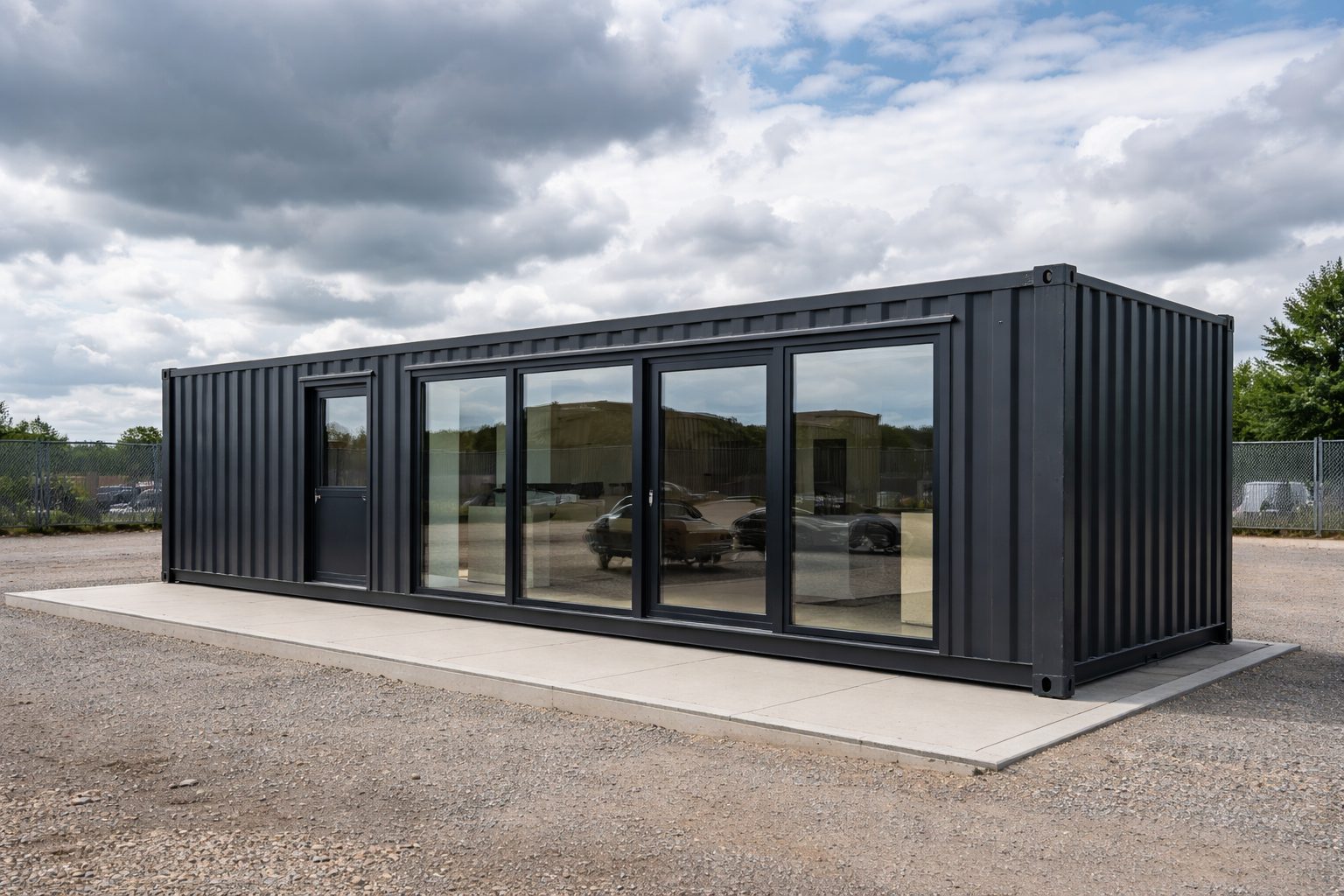
ISO frame classroom routes can suit repeatable or relocatable capacity when the school needs a defined programme.A portable classroom can be the right route for short-term pressure, but specification still matters.Permanent modular school building routes need a stronger view of lifespan, campus integration and compliance evidence.Bespoke classrooms can be the better answer when circulation, specialist rooms or external appearance drive the brief.Timber-led classroom routes can support outdoor learning, wellbeing and premium education settings when the site brief fits.Container routes can be useful for specific teaching or creative spaces, but education suitability and compliance scope still need review.
People also ask
FAQ: temporary vs permanent modular classroom choices
Are modular classrooms temporary or permanent?
Modular classrooms can be temporary or permanent. A temporary vs permanent modular classroom decision depends on intended duration, approvals, site constraints, specification, relocation plans and whole-life cost. Factory-built construction does not automatically make a classroom short-term.
Should a school hire or buy modular classroom space?
A school should usually hire where the need is short, uncertain or linked to a decant period. A school should usually buy where the classroom supports confirmed long-term capacity, a permanent modular school building route or a known estate expansion plan.
What is the difference between a portable classroom vs modular building?
A portable classroom is normally a relocatable classroom route used for fast or temporary teaching space. A modular building is broader and can include temporary, permanent, bespoke, multi-room and façade-led school buildings.
When is a relocatable classroom the right choice?
A relocatable classroom is useful where the school may move the unit later, use it for a temporary intake bulge, or redeploy it across a trust estate. Relocation still depends on access, foundations, services and the condition of the building.
When is a permanent modular school building better?
A permanent modular school building is usually better for long-term estate expansion, multi-room classroom blocks, visible campus locations, specialist teaching spaces and projects needing deeper design, fire, acoustic, ventilation and energy evidence.
Do temporary classrooms for schools need planning permission?
Temporary classrooms for schools may still need planning permission. The decision depends on the site, use, duration, appearance, access, local policy and the planning authority. Temporary does not automatically mean exempt.
Do modular classrooms need Building Regulations approval?
A modular classroom may need Building Regulations approval depending on the work and final use. GOV.UK states that Building Regulations approval is different from planning permission and a project may need both.
Can a temporary modular classroom become permanent later?
Sometimes, but it should not be assumed. The classroom may need review against planning, foundations, service connections, energy performance, fire strategy, accessibility, acoustics, ventilation and long-term maintenance requirements.
Does a hire or buy modular classroom decision change the specification?
Yes. Hire routes often use more standardised stock and contract terms, while purchased or permanent routes allow more scope for tailored façades, layouts, M&E, toilets, data, storage and campus integration.
What information does KC need to recommend temporary or permanent?
KC needs the intended use, pupil numbers, duration, site location, access, services, planning position, budget route, specification expectations and whether future relocation or expansion is part of the estate plan.
Unsure whether to choose temporary, relocatable or permanent?
KC can review the intended use, school-site constraints, programme, services, approvals and budget route before you commit to a specification. That gives governors, estates teams and academy trusts a clearer comparison before procurement starts.
Reviewed by Krzysztof Cichowicz, Director. Last reviewed 16 July 2026. Final project route, compliance wording and commercial assumptions should be verified against the current KC quotation and the relevant professional advice.