
Home › Solutions › Holiday Lodges
Holiday Lodges UK
Holiday lodges UK provide a modern alternative to traditional static caravans and park accommodation. Therefore holiday parks, developers and private owners can create high-quality living spaces that suit both short-term stays and long-term use.
In practice, modular lodge buildings combine residential comfort with efficient offsite construction. However the final design still depends on site context, planning requirements and the level of interior finish required.
Luxury modular lodges for parks and private land
Timber modular lodges are often selected for their natural appearance and premium feel. Meanwhile bespoke modular lodge buildings can be designed for higher-end developments or unique architectural layouts.
As a result, holiday lodges can be tailored for rental income, leisure use or full-time residential living depending on the project goals.
Typical quote response within 48h (Mon–Fri)
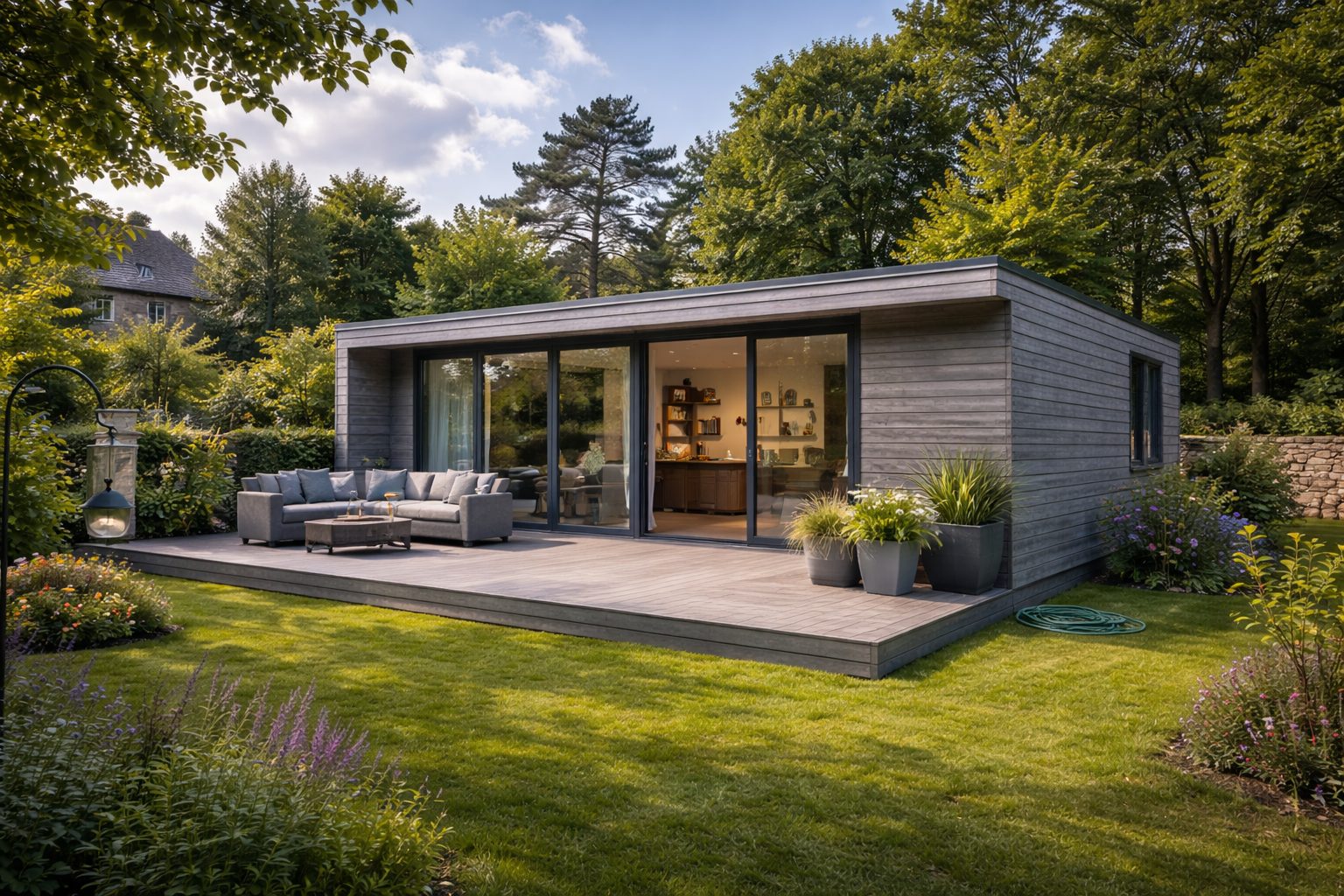
Description: A luxury modular lodge designed for residential and leisure use in Harrogate, North Yorkshire, showing modern exterior design and landscaped surroundings.
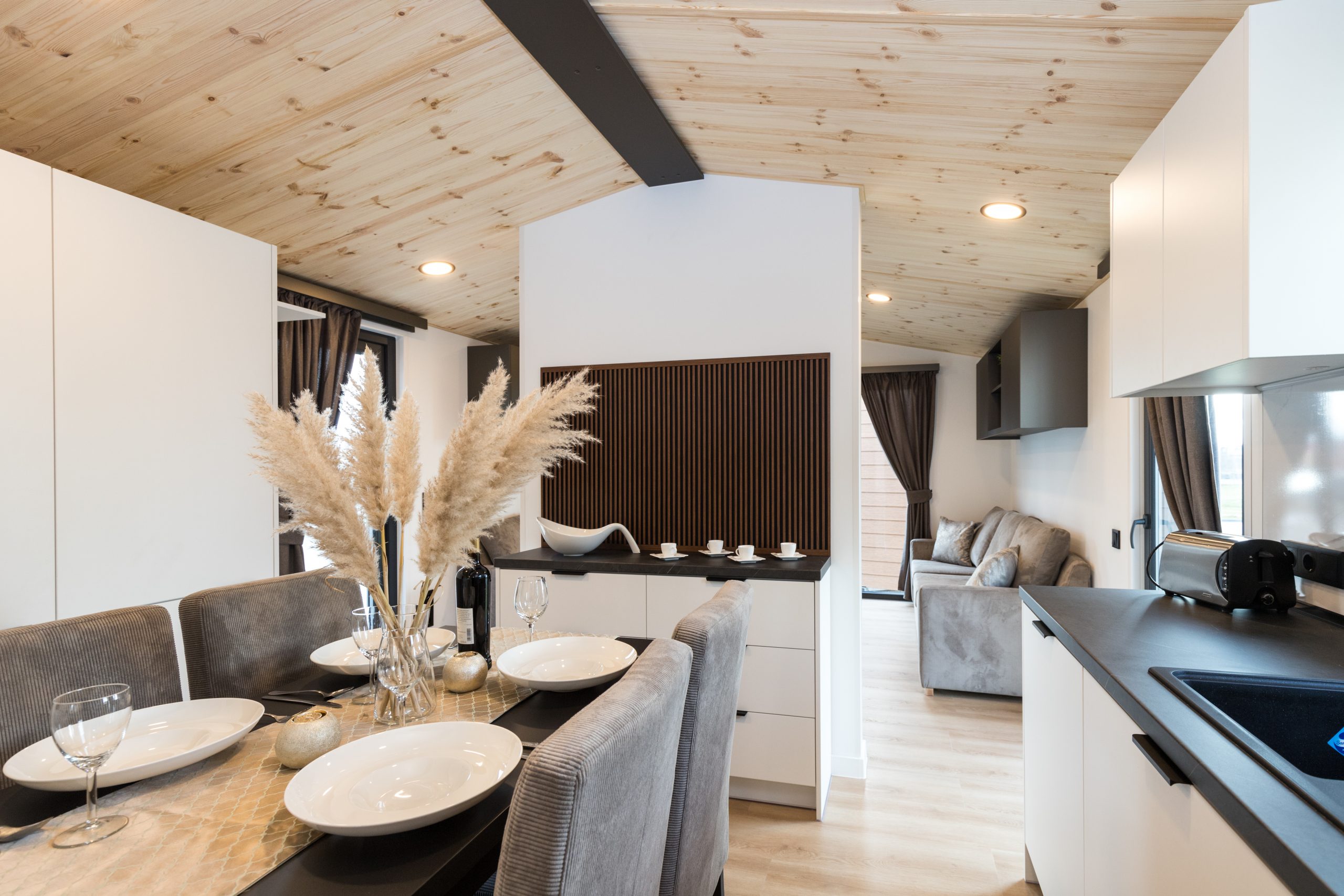
Description: High-quality interior of a modular holiday lodge featuring open-plan living space and contemporary finishes for comfort and usability.
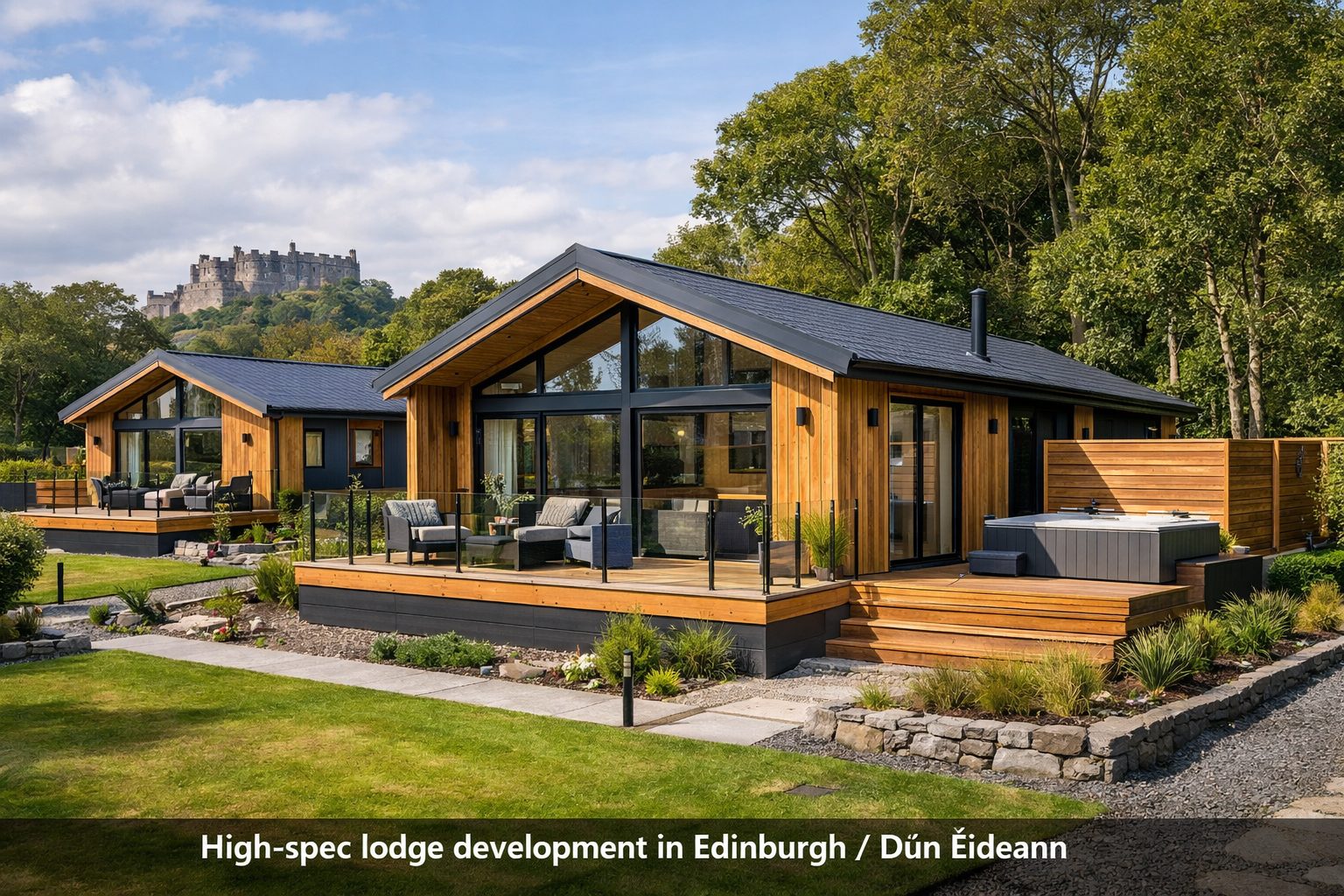
Description: A timber modular lodge project in Edinburgh, Scotland, designed for park accommodation and premium residential use.
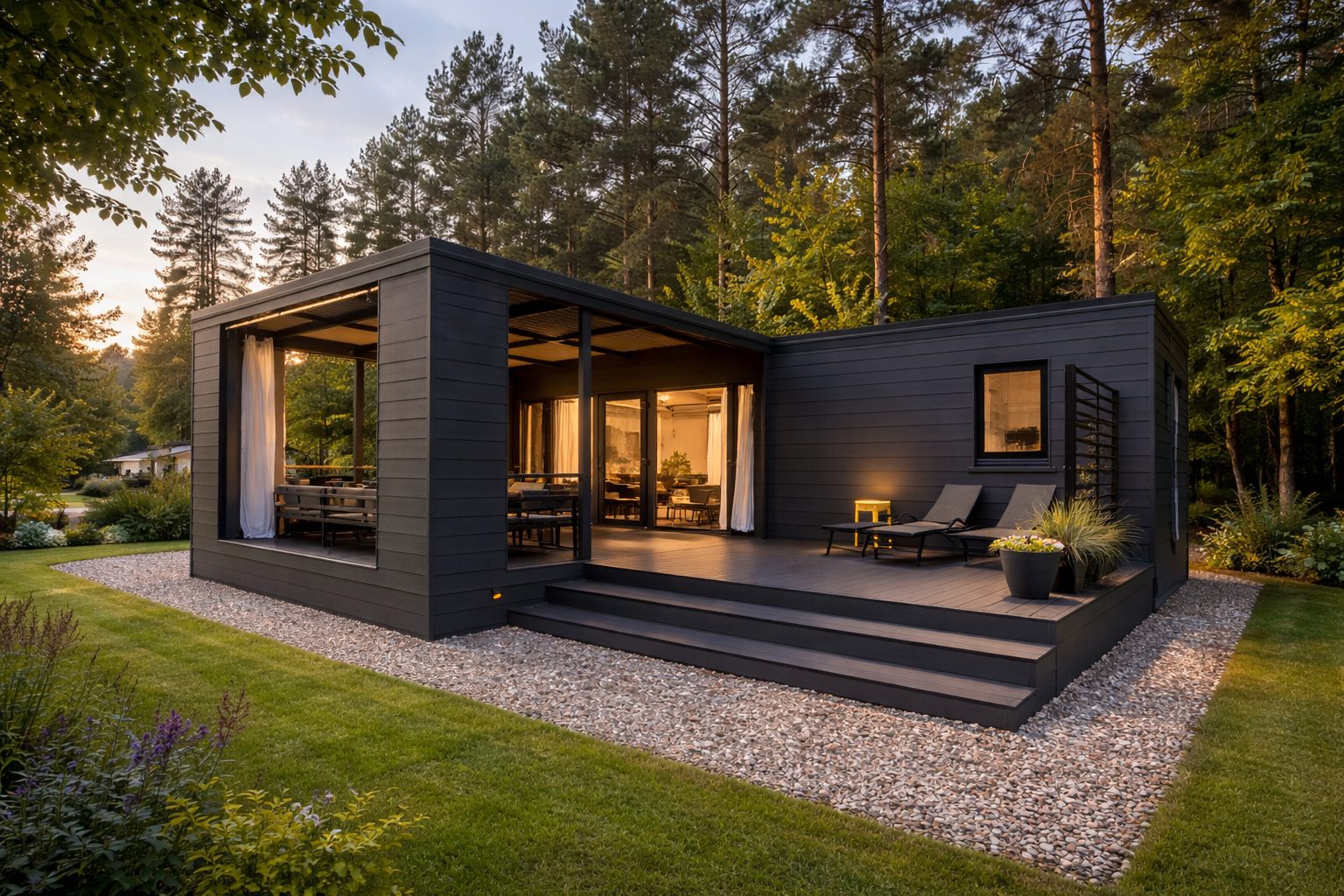
Description: A luxury modular lodge positioned in a countryside environment, demonstrating how modular buildings can provide high-end holiday accommodation.
When parks and buyers want better lodge accommodation
Many holiday parks and private buyers want accommodation that feels more premium than a standard caravan. Therefore holiday lodges UK are often chosen when comfort, appearance and guest experience need to improve at the same time.
In practice, lodge projects are usually driven by one of three needs. However each route still depends on the site, the target guest profile and the level of finish required. As a result, the best lodge solution is normally agreed once the use case is clear.
- Upgrading park accommodation to a higher-value lodge offer
- Creating premium rental stock for short-stay guests or holiday lets
- Adding private leisure living space on suitable land or holiday sites
- Improving energy performance and year-round usability
- Replacing older accommodation with a stronger visual standard
Moreover modular lodge construction helps reduce on-site disruption while still allowing premium internal layouts and stronger exterior presentation.
Key features of modular holiday lodges
Holiday lodges are designed to provide a higher standard of accommodation compared with traditional park units. Therefore modular lodge buildings focus on comfort, durability and visual appeal. However the final specification depends on whether the lodge is used for rental, leisure or residential purposes.
Modern lodges are designed to feel like permanent homes. As a result open-plan living areas, kitchens and bedrooms provide a more comfortable stay for guests or owners.
Improved insulation and glazing allow lodges to be used throughout the year. Therefore they are suitable for both seasonal and extended stays.
Timber cladding, modern glazing and architectural detailing improve visual appeal. Moreover this helps parks increase the perceived value of their accommodation.
Layouts can range from compact one-bedroom units to multi-room lodges. As a result different guest types and occupancy levels can be accommodated.
Many lodges are designed for short-term rental use. Therefore durability, ease of maintenance and guest experience are considered from the start.
Offsite manufacturing improves build consistency and reduces on-site disruption. However installation still depends on site access and preparation.
Choose the right holiday lodge pathway
The best lodge projects start with the correct build route. Therefore we separate timber lodge systems, bespoke modular lodge buildings and premium modular lodge environments so buyers can compare the right options early. However the final choice still depends on planning context, park standards and the target guest experience.
1) Timber Modular Holiday Lodges
Timber lodges are often the strongest fit for holiday parks and private leisure use. As a result buyers get a warmer external appearance, a premium residential feel and a lodge style that suits park environments well.
- Best use: holiday parks, leisure sites and premium private lodge projects
- Typical strengths: natural appearance, strong comfort levels and year-round usability
- Main advantage: a lodge-led aesthetic with residential-style living quality
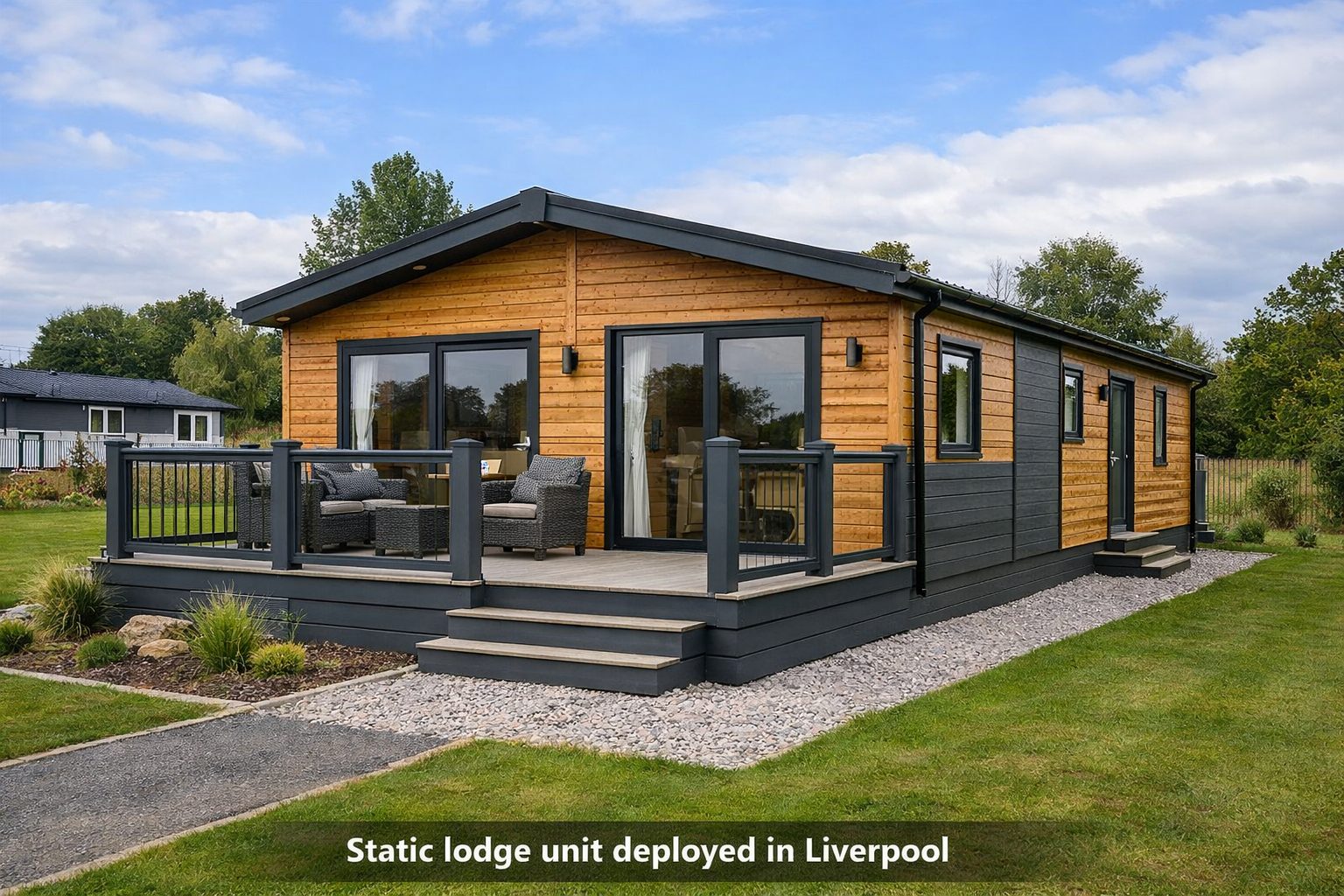
Description: A timber modular holiday lodge with composite cladding in Liverpool, Merseyside, showing a premium park lodge solution designed for leisure accommodation and long-stay comfort.
2) Bespoke Modular Lodge Buildings
Bespoke lodge buildings are best suited to higher-end projects where layout flexibility and architectural presentation matter more. Therefore they are often chosen for premium developments and stronger rental-led accommodation offers.
- Best use: premium holiday parks, unique lodge developments and high-value rental stock
- Typical strengths: design flexibility, upgraded finishes and stronger visual impact
- Main advantage: a more tailored lodge product for higher-value accommodation
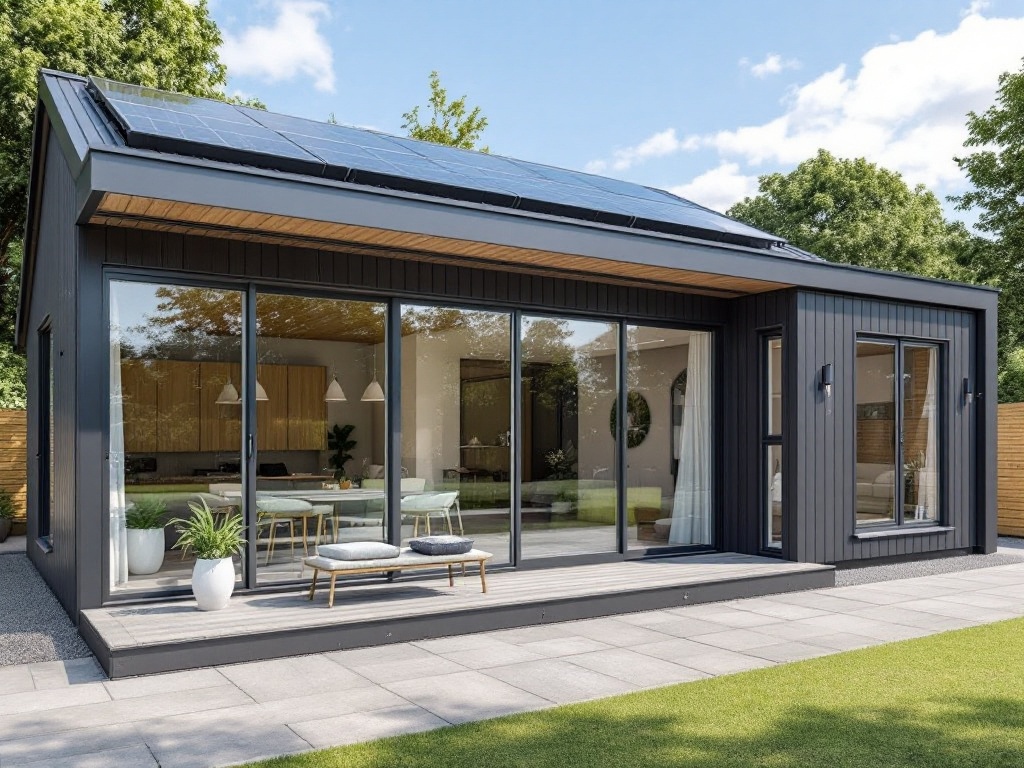
Description: A bespoke modular lodge reference image illustrating premium internal styling and a higher-end accommodation approach suited to holiday lodge projects in the United Kingdom.
3) Premium Modular Lodge Environments
Some projects require more than standard park accommodation. However premium modular lodge environments can provide a higher level of finish, a stronger guest experience and a more distinctive lodge offer for luxury leisure use.
- Best use: luxury holiday accommodation, boutique park settings and destination leisure projects
- Typical strengths: upgraded finishes, stronger branding potential and premium guest appeal
- Main advantage: a higher-value lodge offer for premium accommodation markets
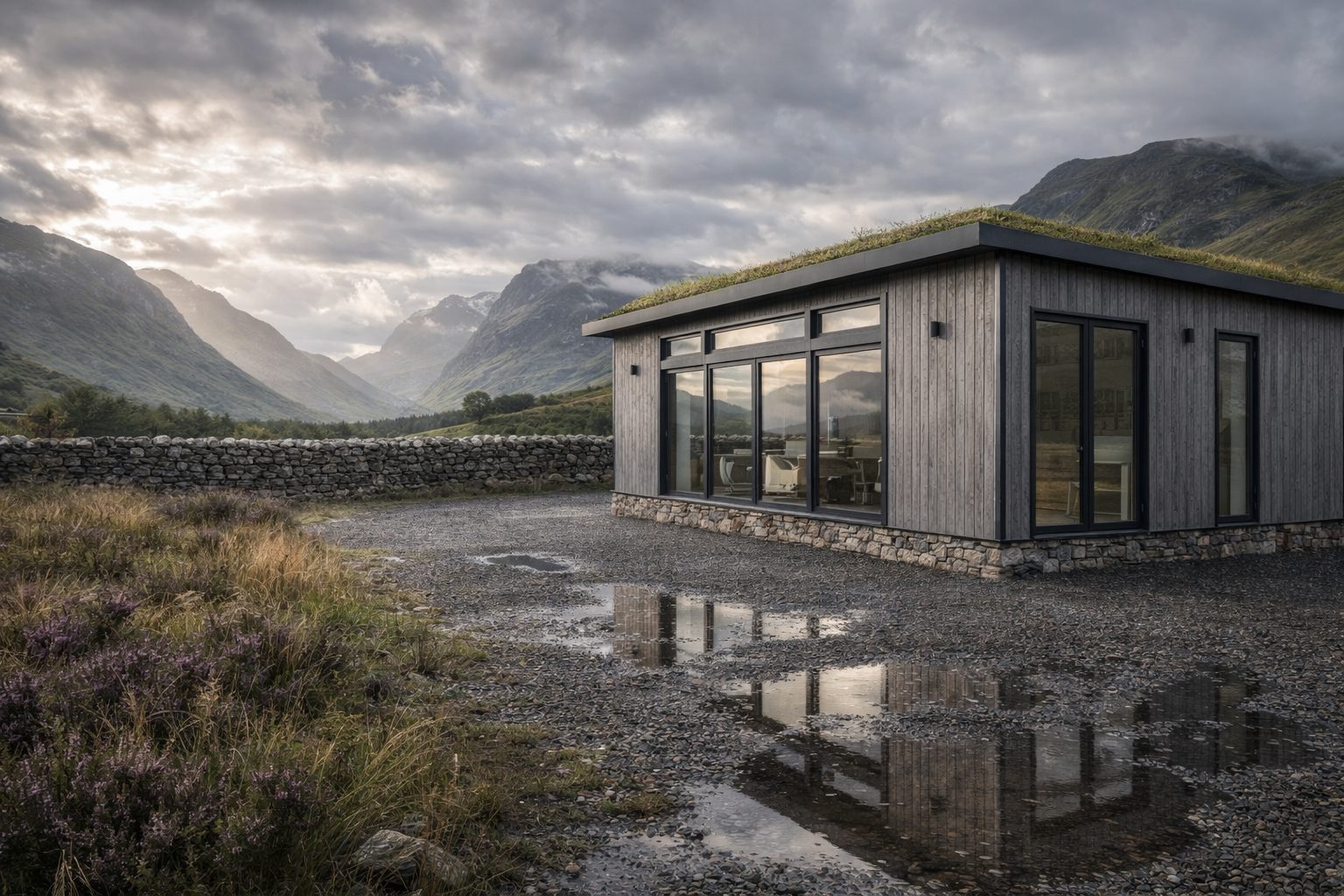
Description: A premium modular lodge building in the Scottish Highlands showing a high-end leisure accommodation style suitable for boutique holiday lodge projects and destination park developments.
Moreover holiday lodges UK are easier to specify once the target market, site standard and finish level are agreed early. As a result the lodge route can be matched more accurately to both guest expectations and project goals.
Typical holiday lodge construction specification
Lodge buildings are expected to deliver both comfort and durability. Therefore modular holiday lodges UK are typically designed with high insulation levels, weather protection and long-term usability in mind.
However the final specification depends on planning conditions, lodge usage and finish level. As a result, lodge design is usually confirmed once the site and target use are agreed.
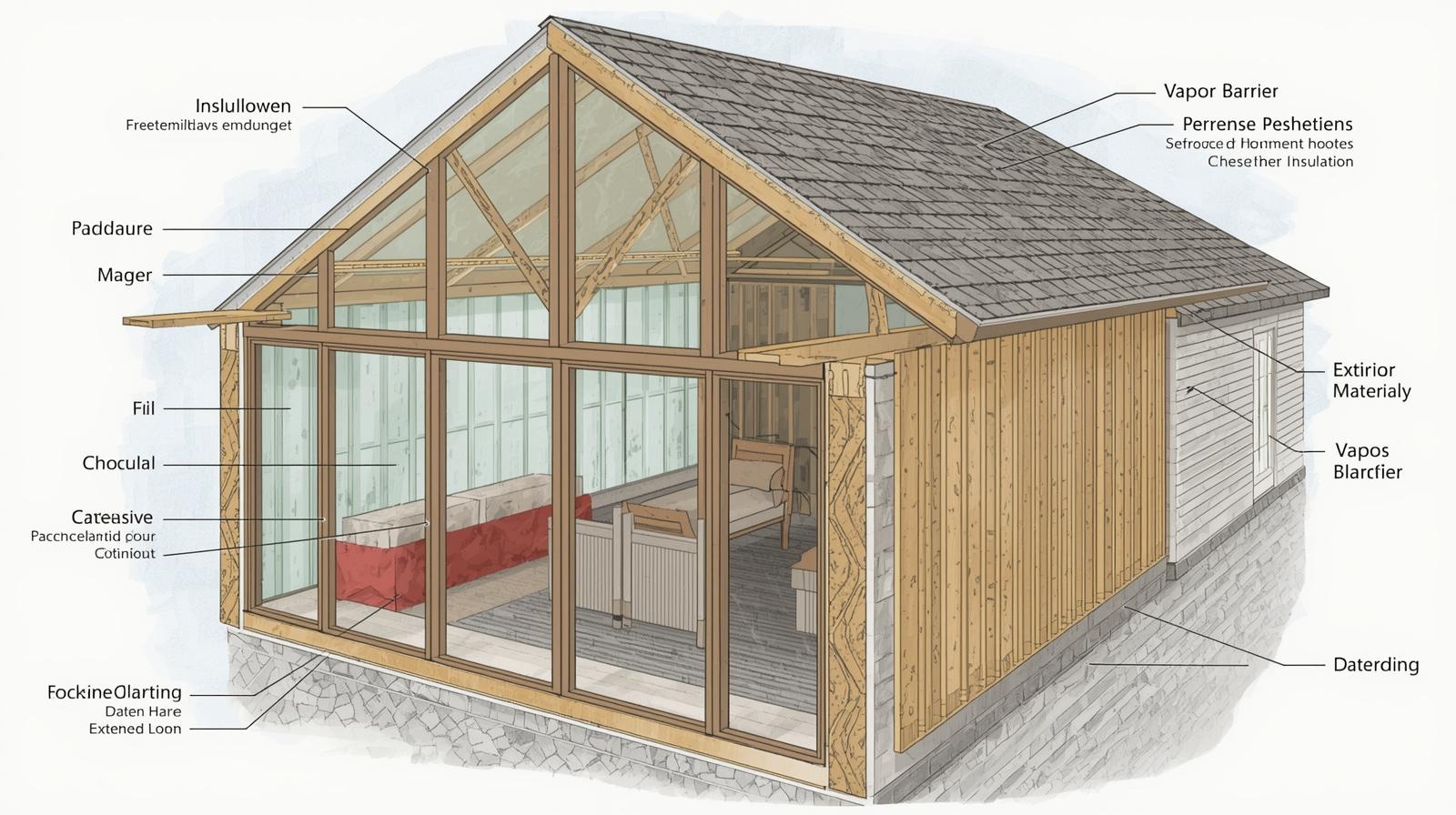
Description: A technical cross-section diagram showing insulation layers, structural framing and cladding used in modular holiday lodge construction for improved thermal performance and durability in UK conditions.
From lodge concept to completed installation
Holiday lodge projects usually involve more than choosing a building style. Therefore we use a structured delivery flow that helps buyers align lodge design, site planning and installation timing. However access, planning conditions and park standards still influence the final programme. The 14-widget money-page pattern and image requirements used here follow the KC page blueprint standard, while image metadata rules require ALT, Caption and Description for each slot. :contentReference[oaicite:0]{index=0} :contentReference[oaicite:1]{index=1}
Confirm whether the lodge is for holiday park rental, private leisure use or long-term accommodation. As a result, the design route becomes clearer from the start.
Timber lodge systems suit many park environments, while bespoke modular routes may suit higher-end developments. Therefore the building route is matched to the target guest and site standard.
Living areas, bedrooms, kitchens and bathrooms are planned early. Meanwhile finish level, insulation strategy and exterior appearance are aligned with the intended lodge use.
Site access, planning conditions and connection requirements are reviewed before manufacture. Therefore installation risk is reduced later in the process.
Offsite production improves build consistency and protects finish quality. In practice, this also reduces the amount of work required on site.
The completed lodge is delivered, positioned and prepared for final use. As a result, the project moves from concept to usable accommodation with a more controlled installation process.
Holiday lodge projects and real-world applications
Holiday lodges are used across a wide range of leisure and accommodation projects. Therefore modular lodge buildings can support holiday parks, rental developments and private leisure sites. However each project type requires different layouts, finishes and positioning strategies.
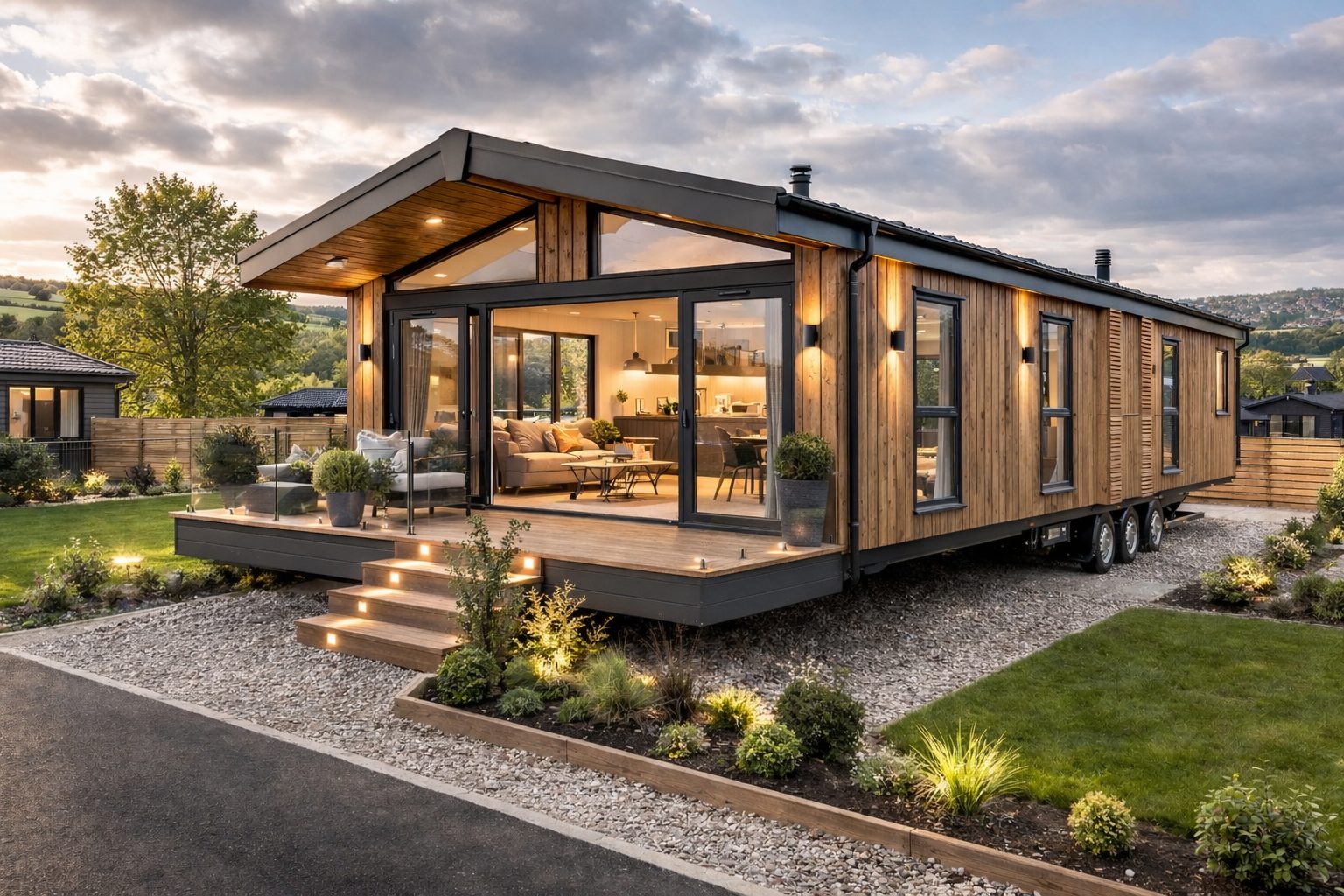
Holiday park lodge accommodation
Many parks upgrade older accommodation with modular lodges to improve guest experience. As a result, operators can increase both occupancy rates and the perceived value of their park offering.
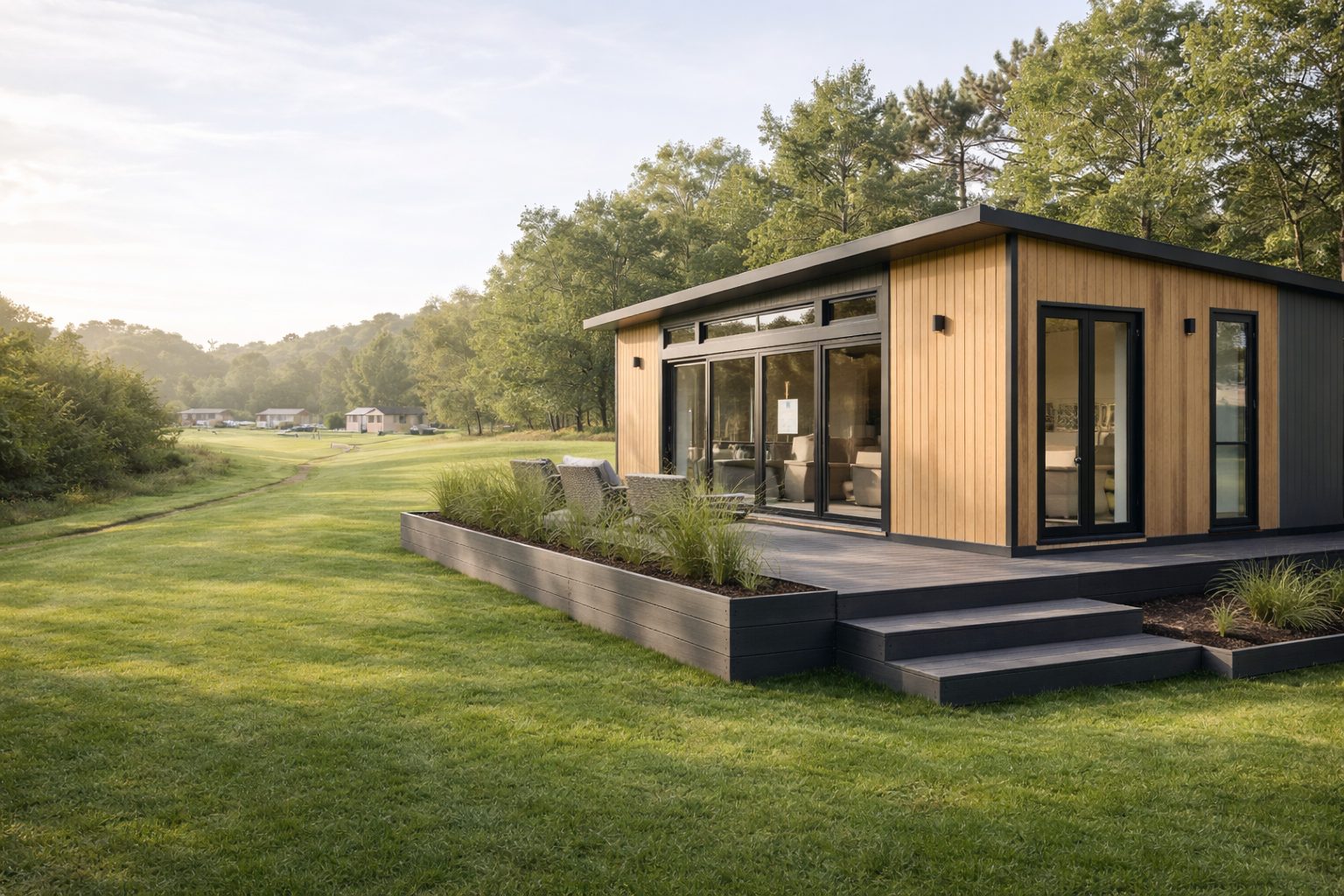
Description: A timber frame holiday lodge installed in Leeds, West Yorkshire, showing modern park accommodation designed for comfort and long-term use.
Luxury lodge rental units
Some developments focus on premium short-stay accommodation. Therefore high-quality lodge interiors and finishes help create a stronger guest experience and improved rental potential.
Description: A luxury modular lodge designed for short-stay rental use, combining modern interiors with high-quality external presentation.
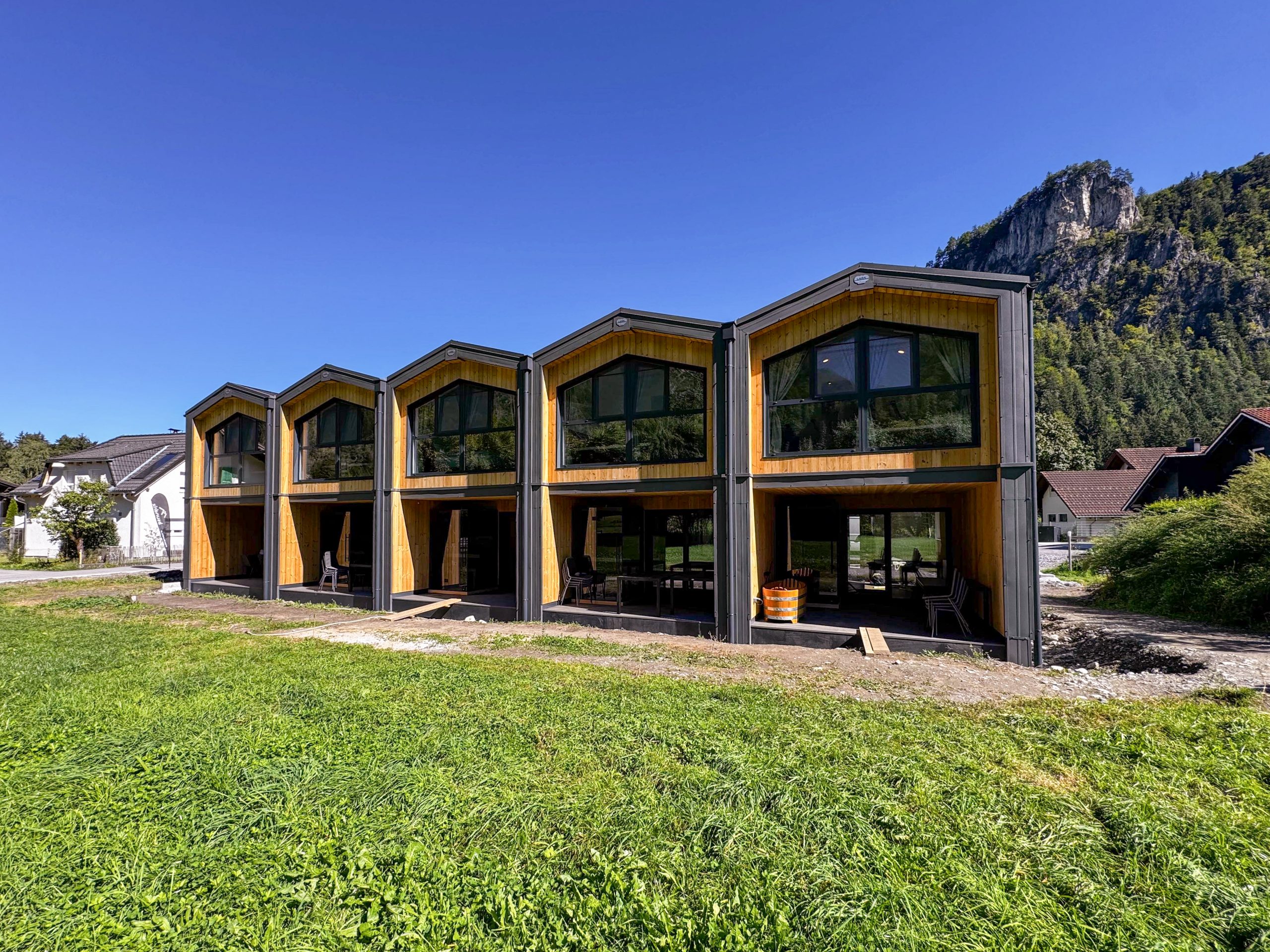
Multi-unit lodge developments
Larger sites may include multiple lodge units arranged across a development. However modular construction allows these layouts to be scaled efficiently as the project grows.
Description: A group of modular timber lodge units installed in a leisure environment, demonstrating how multi-unit developments can be delivered using modular construction.
Moreover holiday lodges UK can be configured as single units or full developments depending on the site, the target market and long-term operational goals.
Holiday Lodges UK vs Traditional Park Accommodation
Buyers often compare holiday lodges UK with static caravans and older park accommodation before making an investment decision. Therefore the table below highlights the main differences in comfort, appearance and long-term value. However the final choice still depends on the target guest, site rules and budget pathway.
| Decision factor | Holiday lodges | Traditional park accommodation |
|---|---|---|
| Guest comfort | Holiday lodges usually provide a more residential feel, larger living areas and stronger insulation performance. | Older accommodation may offer a lower comfort level and a more limited internal layout. |
| Visual appeal | Modern lodge designs often have stronger external finishes, better glazing and a higher-value appearance. | Traditional units may look more standard and less distinctive in premium park settings. |
| Year-round usability | Higher insulation levels and better detailing can improve all-season use. As a result, lodges are better suited to extended occupancy. | Some traditional park units may be more limited in colder periods depending on their build standard. |
| Rental potential | Premium lodge accommodation can support stronger nightly rates and a more attractive guest offer. | Standard park accommodation may compete more on price than on quality or experience. |
| Best-fit projects | Holiday parks, premium leisure developments, private retreat spaces and upscale rental accommodation. | Standard park accommodation where a lower-spec offer remains acceptable for the target market. |
Common holiday lodge layout options
Lodge layouts can vary depending on guest expectations, occupancy levels and site positioning. Therefore holiday lodges UK are often designed with flexible internal arrangements that suit both short-stay rentals and longer leisure use. However the most effective layout is usually confirmed once the target guest profile is clear.
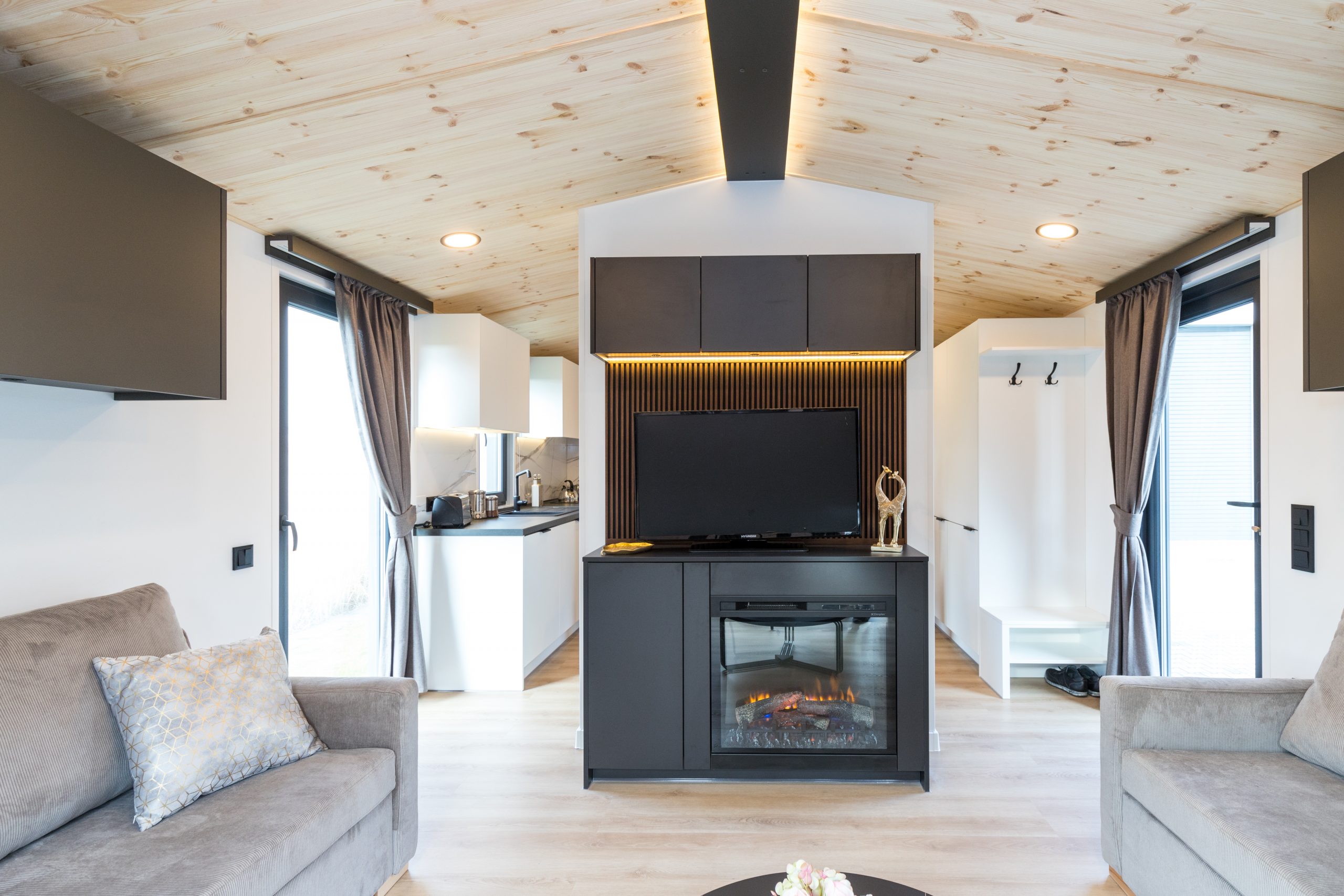
Open-plan lodge living
Many modern lodges use an open-plan layout to create a more spacious feel. As a result, living, dining and kitchen areas connect naturally, which improves both comfort and usability.
- Open-plan living and dining space
- Integrated kitchen layout
- Improved natural light and flow
- Suitable for short stays and family use
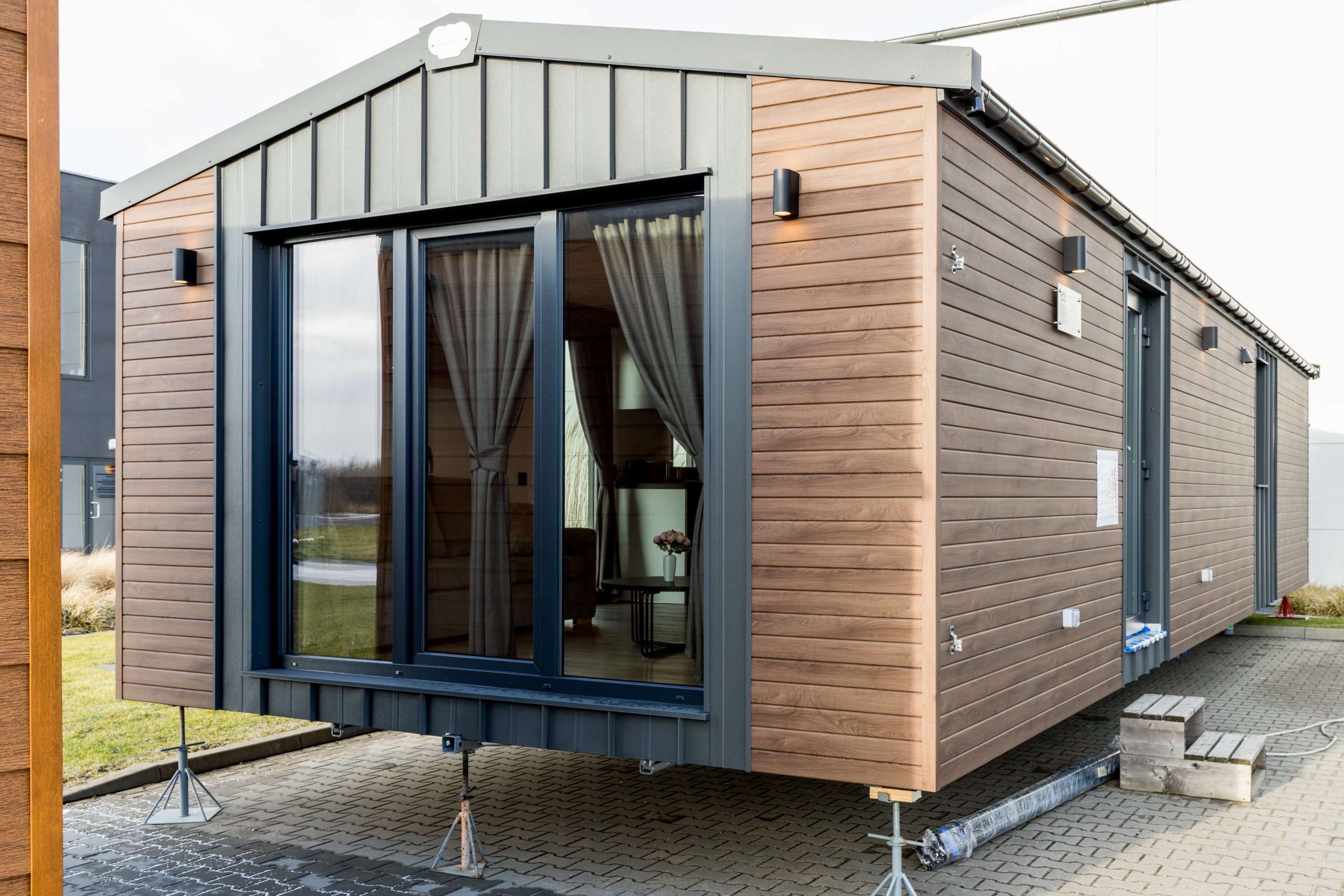
Description: A modern open-plan interior inside a modular holiday lodge showing combined living, dining and kitchen areas designed for comfort and guest usability.
Multi-room lodge layouts
Larger lodges often include multiple bedrooms and separate living areas. Therefore they can support higher occupancy levels and longer stays within holiday park environments.
- Multiple bedrooms for families or groups
- Separate living and sleeping zones
- Bathroom and en-suite options
- Layouts suited to extended stays
Description: A modular holiday lodge interior showing bedroom and living space separation, designed for family use and longer occupancy stays.
Moreover holiday lodges UK can be tailored to match different park standards and guest expectations. As a result, layout planning becomes a key part of the overall lodge design process.
UK coverage for holiday lodges and park accommodation projects
Location influences planning context, lodge style and site logistics. Therefore it helps to include the site postcode and intended lodge use in the quote request from the start. However, if the park or plot is still being finalised, we can still advise on the typical information needed for early lodge planning.
Compliance, performance and build quality
Holiday lodges must balance comfort, durability and compliance requirements. Therefore modular lodge construction focuses on insulation performance, structural quality and practical installation. However final compliance pathways still depend on site conditions, planning context and the intended use of the lodge.
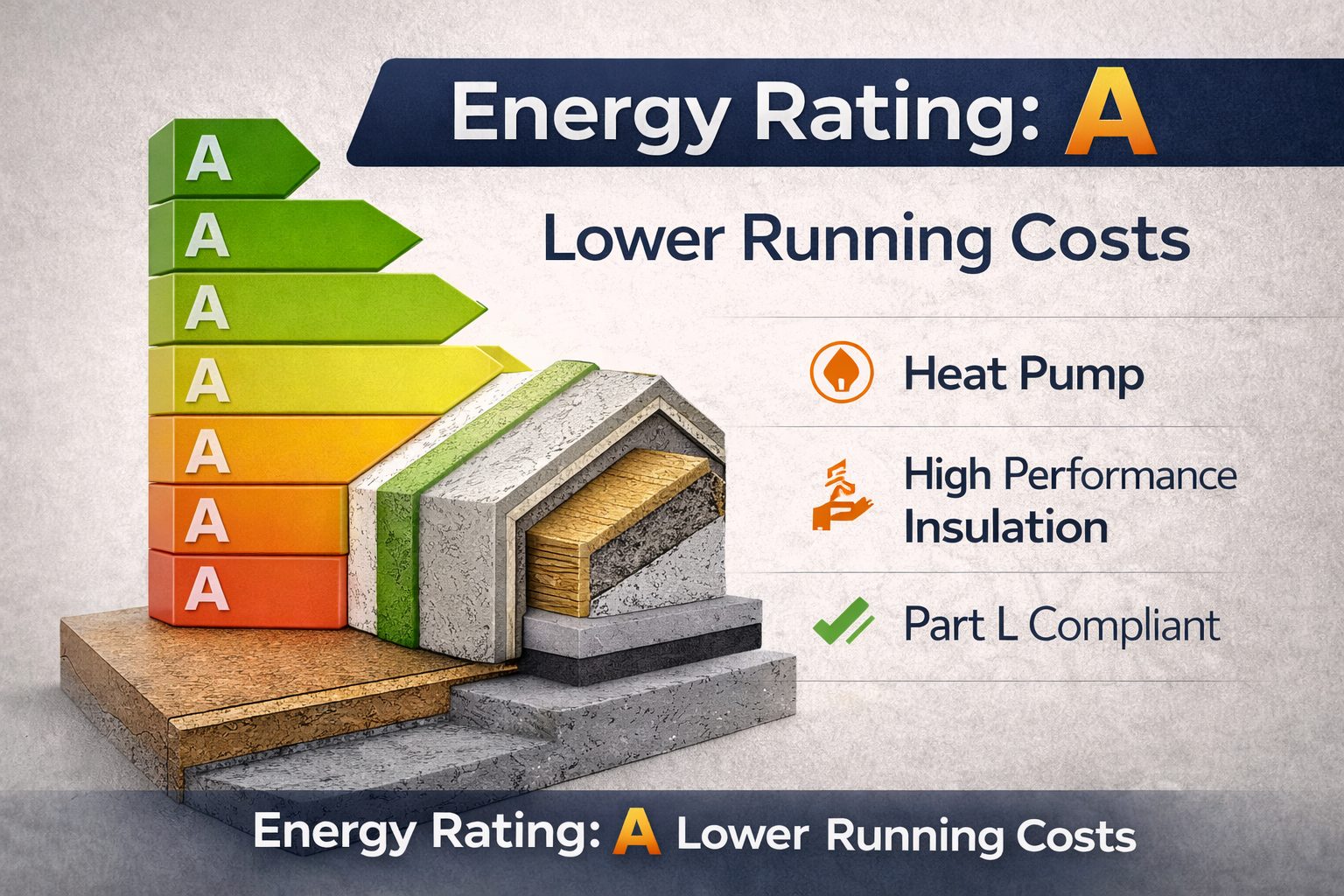
Energy performance pathway
Permanent lodge buildings can be designed to follow a pathway intended to achieve A Energy Performance under Part L 2021. As a result, lodges can support year-round use and improved internal comfort levels.
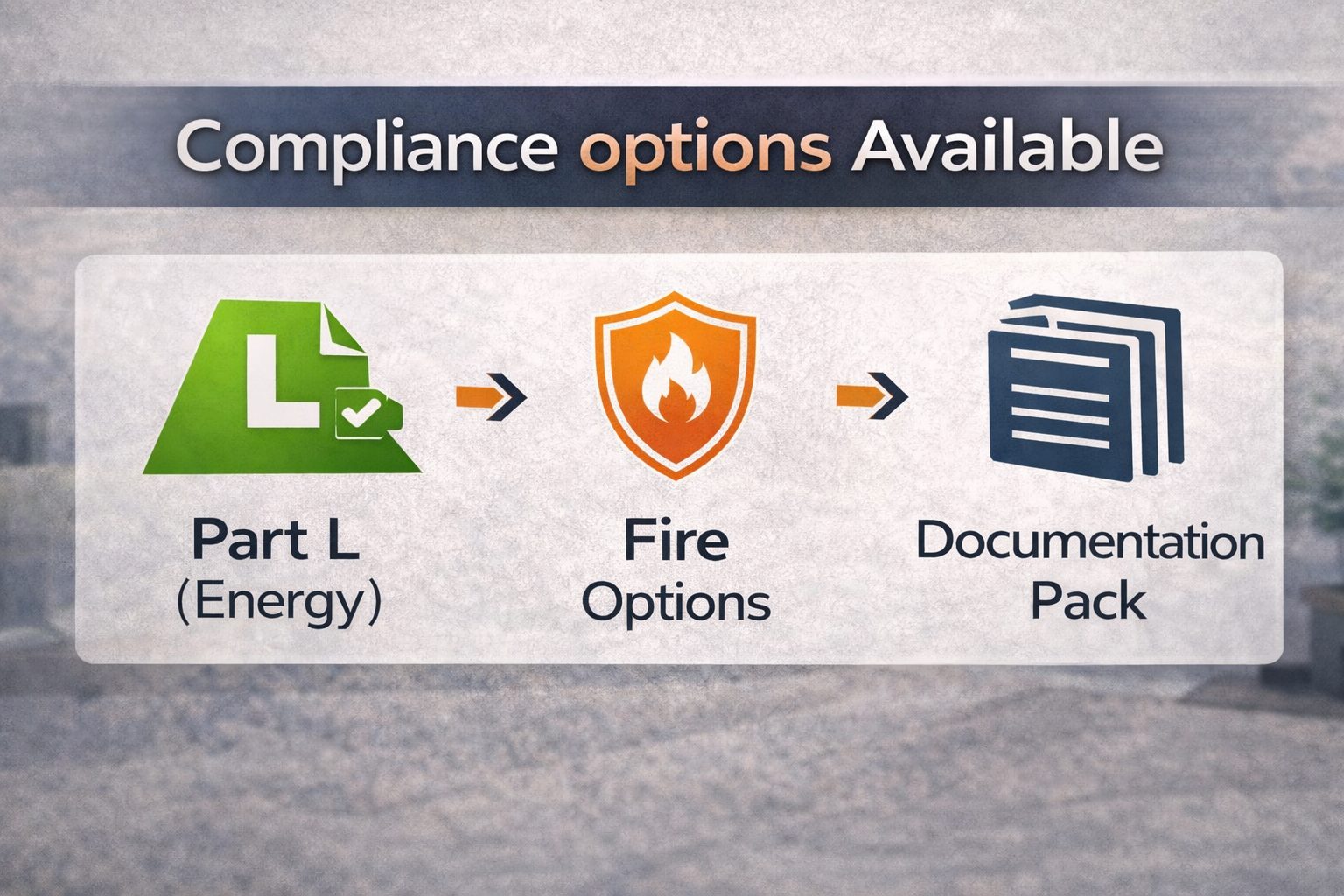
Description: Illustration showing the energy performance pathway used when designing modular holiday lodges for long-term comfort and efficiency.
Compliance route clarity
Planning, building regulations and site-specific rules vary across holiday parks and private land. Therefore early compliance planning helps reduce delays and supports smoother project delivery.
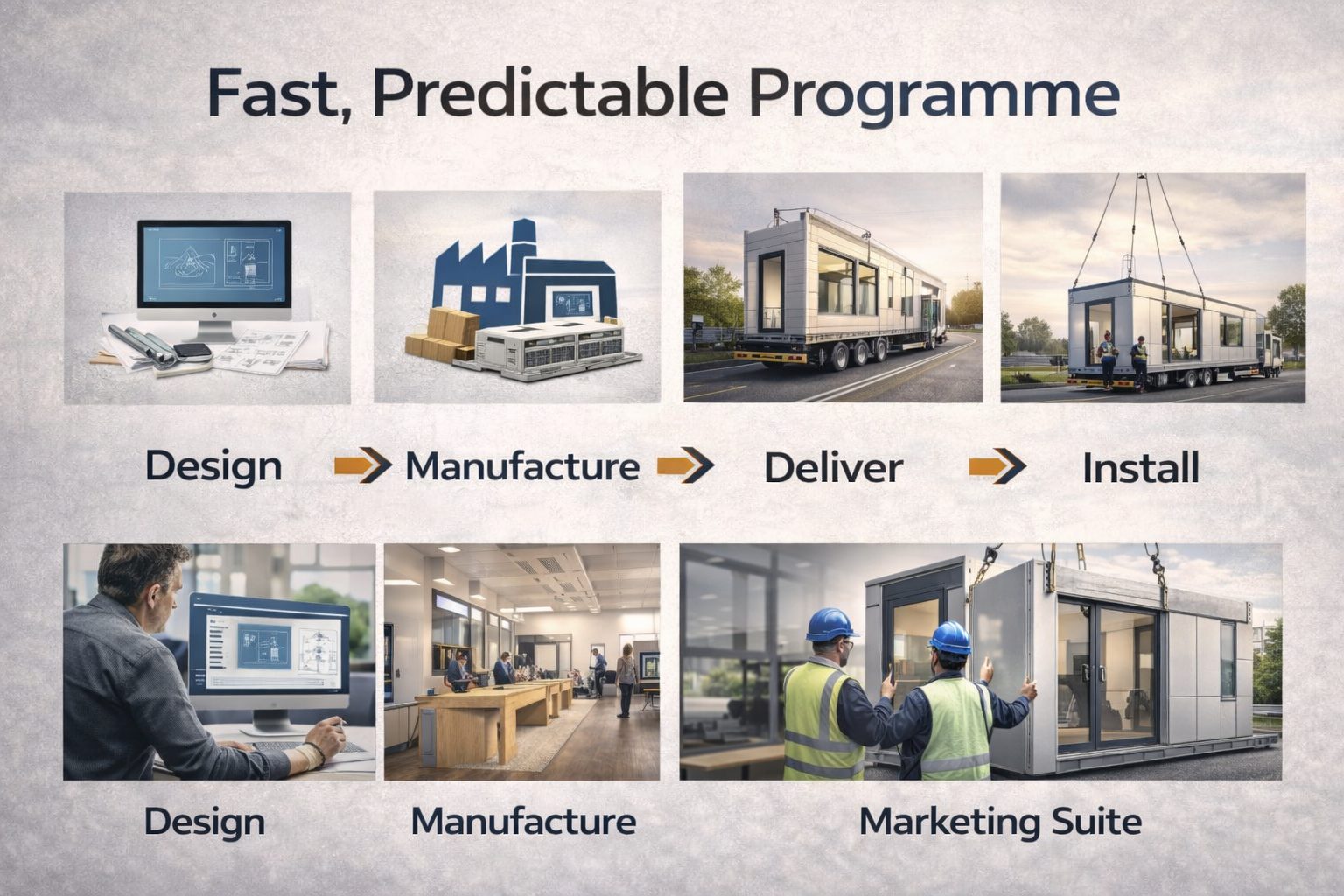
Description: Diagram illustrating compliance considerations for modular holiday lodges including planning, structural and performance requirements.
Delivery and installation planning
Lodge projects often require careful coordination with site access and park layouts. In practice modular construction allows lodge units to be manufactured offsite and installed efficiently once the site is ready.
Description: Visual representation of how modular holiday lodges are manufactured, transported and installed on site across the UK.
Moreover holiday lodges UK benefit from early coordination between design, planning and installation teams. As a result, projects can achieve better build quality and more predictable delivery timelines.
Holiday lodges UK — frequently asked questions
Buyers often want clear answers on planning, usage and lodge performance before starting a project. Therefore these FAQs explain the most common points in plain English. However every lodge project still depends on site conditions, park rules and intended use.
Planning and permissions
Design and performance
Cost and delivery
Start planning your holiday lodge project
Holiday lodges UK offer a premium upgrade for parks, developments and private leisure use. Therefore modular lodge buildings provide a practical route to high-quality accommodation with strong visual appeal and improved guest comfort.
However choosing the right lodge pathway early — timber, bespoke modular or premium lodge environment — improves both design clarity and delivery planning. As a result, lodge projects can be aligned with target markets and long-term use more effectively.
Typical quote response within 48h (Mon–Fri)
Description: A high-end modular holiday lodge in Harrogate, North Yorkshire, demonstrating premium exterior design and landscaped positioning for leisure and residential-style use.
Visit our showroom for holiday lodge planning
Many buyers want to compare lodge layouts, finish levels and construction pathways before confirming a project. Therefore the showroom is useful when deciding between timber lodge routes, bespoke modular lodge options and premium accommodation standards.
However, if you cannot visit in person, a quote request with the site postcode, intended lodge use and preferred finish level is still enough to start a structured recommendation.
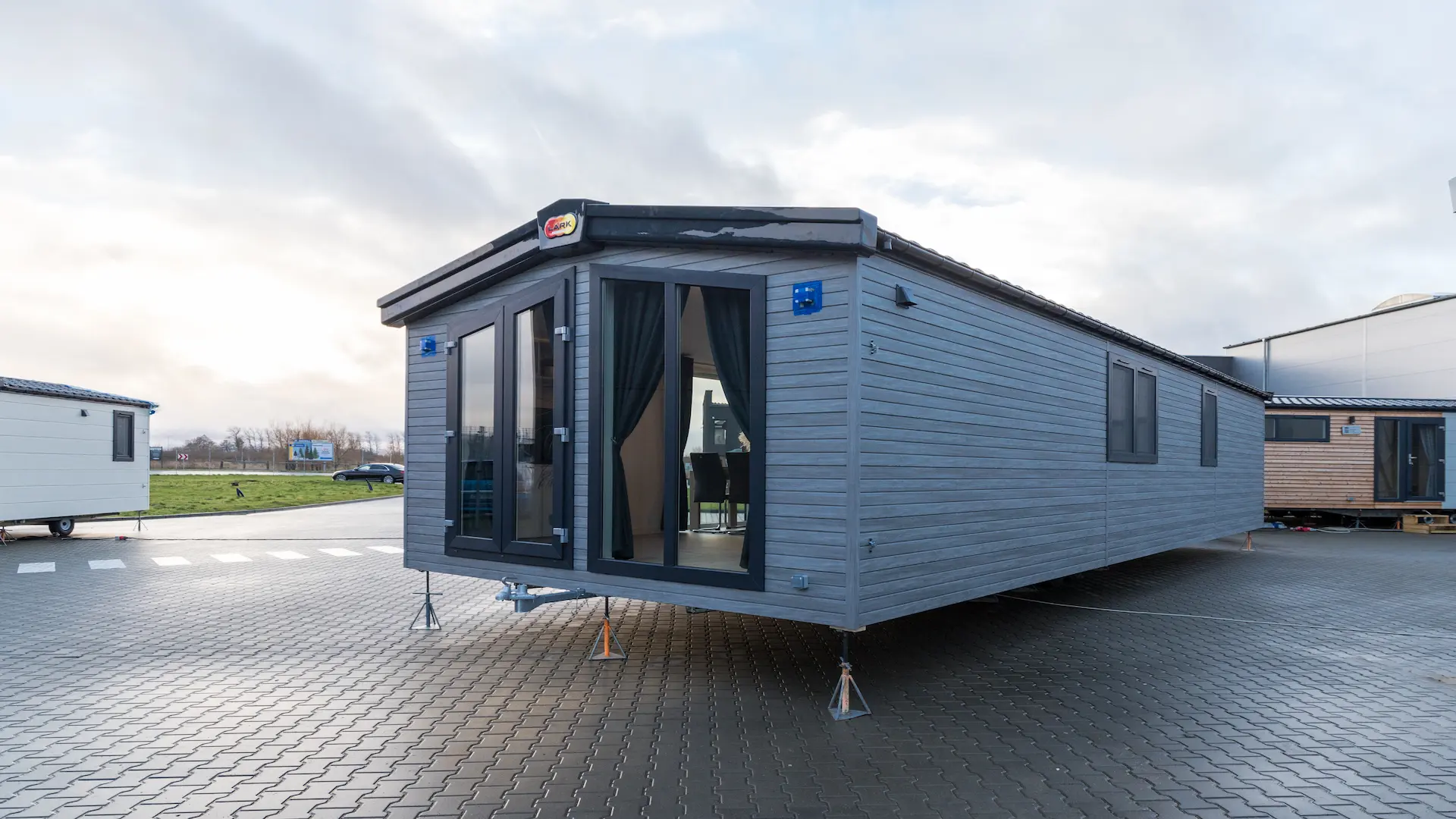
Description: A holiday lodge reference image used to support showroom discussions on lodge layouts, exterior finishes and accommodation standards for UK holiday park and leisure projects.
What clients value in holiday lodge projects
Lodge buyers usually focus on comfort, finish quality and the overall guest experience. Therefore the feedback themes below reflect the points that park operators, developers and private buyers tend to value most when reviewing modular holiday lodge projects.
Premium finish and presentation
Buyers often value strong exterior appearance and better internal finishes because these features improve both guest experience and perceived accommodation quality. As a result, lodge projects can support a more premium market position.
Theme: lodge qualityComfort and usability
Comfortable living space, practical layouts and year-round usability are frequent priorities. Therefore lodge design usually performs best when comfort and durability are considered together from the start.
Theme: guest comfortClear project coordination
Buyers also appreciate clear timelines and structured communication during delivery. Moreover this helps lodge projects move forward with fewer surprises once site preparation and installation planning begin.
Theme: project clarityWhy buyers choose KC for holiday lodge projects
Holiday lodge projects are judged on more than appearance alone. Therefore the best outcomes usually come from the right build pathway, a strong finish standard and practical delivery planning. However the correct solution still depends on the park setting, target guest and long-term use of the lodge.
Clear lodge pathways
We separate timber lodge routes, bespoke modular lodge buildings and premium lodge environments clearly. As a result, buyers can compare the right options earlier and reduce confusion later in the project.
Comfort-led design thinking
Lodge layouts are planned around guest experience, not only floor area. Therefore living space, bedrooms and internal finishes are considered together so the building feels more like accommodation and less like a standard unit.
Practical project delivery
Leisure developments still depend on site access, planning context and installation timing. However modular lodge construction helps reduce on-site disruption once the route and specification are agreed.
Defensible compliance wording
We use realistic wording for energy pathways and project performance intent instead of over-claiming. As a result, buyers receive information that is easier to support during planning and review.
Premium finish flexibility
Some lodge projects need a straightforward park-standard finish, while others need a stronger luxury offer. Moreover modular lodge pathways make it easier to align the finish level with the target market.
Showroom and specification support
Reviewing lodge examples, finishes and layout options in person often speeds up decisions. Therefore the showroom can help buyers compare routes before committing to a final holiday lodge design.
Next step: send the site postcode, intended lodge use and preferred finish level through the quote request form. As a result, the most suitable holiday lodge route can be recommended more quickly.
Compliance transparency for holiday lodge projects
Holiday lodge projects involve more than design preference and finish level. Therefore this section explains the usual compliance routes in plain English. However every lodge still depends on the site, the intended use and the final approval pathway.
Planning status matters first
Lodge use must always be read alongside the planning status of the site. In practice, leisure use, holiday occupancy and residential use can follow different rules. Therefore the planning route should be checked early before specification decisions are finalised.
Energy performance intent
Permanent lodge buildings can be designed to follow a pathway intended to achieve A Energy Performance under Part L 2021. However the final outcome depends on insulation levels, glazing, services design and the agreed construction route.
Fire and structural approach
Fire strategy and structural requirements vary by lodge type, site rules and project scope. As a result, the correct build-up and compliance route should be aligned with the intended use rather than assumed from appearance alone.
Residential comfort vs park rules
Many buyers want a residential feel, but park standards and site conditions still shape what is appropriate. Therefore lodge design usually balances comfort, durability and compliance rather than focusing on one factor only.
Services and utility coordination
Water, drainage, power, heating and ventilation all affect long-term lodge usability. Moreover these elements influence both comfort and compliance, so they should be coordinated with the lodge layout from the start.
Defensible wording only
We avoid vague promises and use approval-led language instead. That said, this gives buyers a clearer understanding of what the lodge is designed to achieve and what still depends on project-specific approvals.
Plain-English summary: holiday lodges UK can follow strong comfort and performance pathways, but the final route always depends on planning status, site requirements and the agreed lodge specification.
What affects the cost of holiday lodges UK?
Lodge pricing varies because projects differ in size, finish level and intended use. Therefore it becomes easier to estimate realistic budgets once the lodge pathway and layout are agreed. However modular lodge construction still allows better early cost clarity than many traditional builds.
Main cost drivers
- Lodge size: floor area, number of rooms and internal layout complexity.
- Build pathway: timber lodge, bespoke modular or premium lodge environment.
- Finish level: standard park specification or high-end interior design.
- Site conditions: access, foundations and positioning requirements.
- Services: utilities, heating, ventilation and drainage connections.
Secondary cost factors
- External works: decking, steps, landscaping or connections to existing infrastructure.
- Project scale: single lodge or multi-unit development.
- Planning context: requirements set by park operators or local authorities.
- Programme constraints: delivery timelines and installation windows.
- Customisation: bespoke layouts, materials or architectural upgrades.
In practice, holiday lodges UK become easier to price once the target market, occupancy level and finish standard are confirmed. Moreover early planning helps align lodge design with both budget expectations and long-term use.
Tip: include the site postcode, lodge size and intended use in the quote request form. This usually allows a faster and more accurate lodge recommendation.
Authority references and official guidance
Holiday lodge projects often sit across planning, building regulations and leisure-site rules. Therefore official guidance helps buyers understand the wider compliance context before lodge layouts and installation strategies are finalised.
However every site is different. As a result, the sources below should support early understanding rather than replace project-specific planning, technical or legal advice.
- Planning Portal — guidance for planning applications in England and Wales
- UK Government — Building Regulations and Approved Documents
- UK Government — National Planning Policy Framework
- Health and Safety Executive — Construction (Design and Management) Regulations
