Timber Frame vs Steel Frame Modular: Which Should You Choose?
Use this timber frame vs steel frame modular guide to decide whether LARK timber, NOVO steel, MS ISO frame or a hybrid modular route is the right starting point for your project.
By Rafal Cierocki, Sales DirectorReviewed by Krzysztof Cichowicz, DirectorUpdated 15 July 2026Reading time 11 minutes
Best timber fitLodges, leisure, hospitality, premium annexes
Best steel fitCommercial, education, healthcare, multi-storey
No prices hereRoute selection first, cost guide later
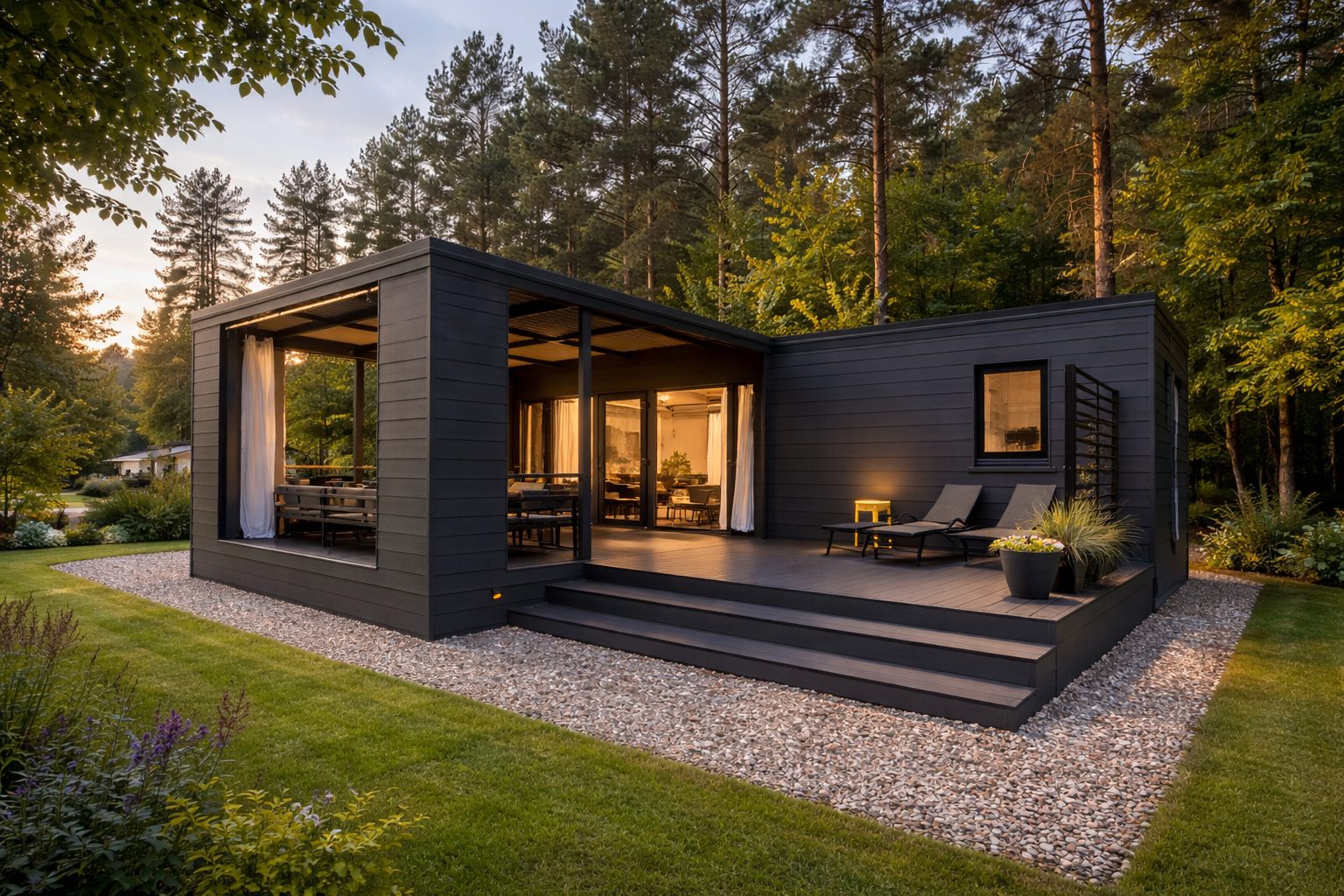
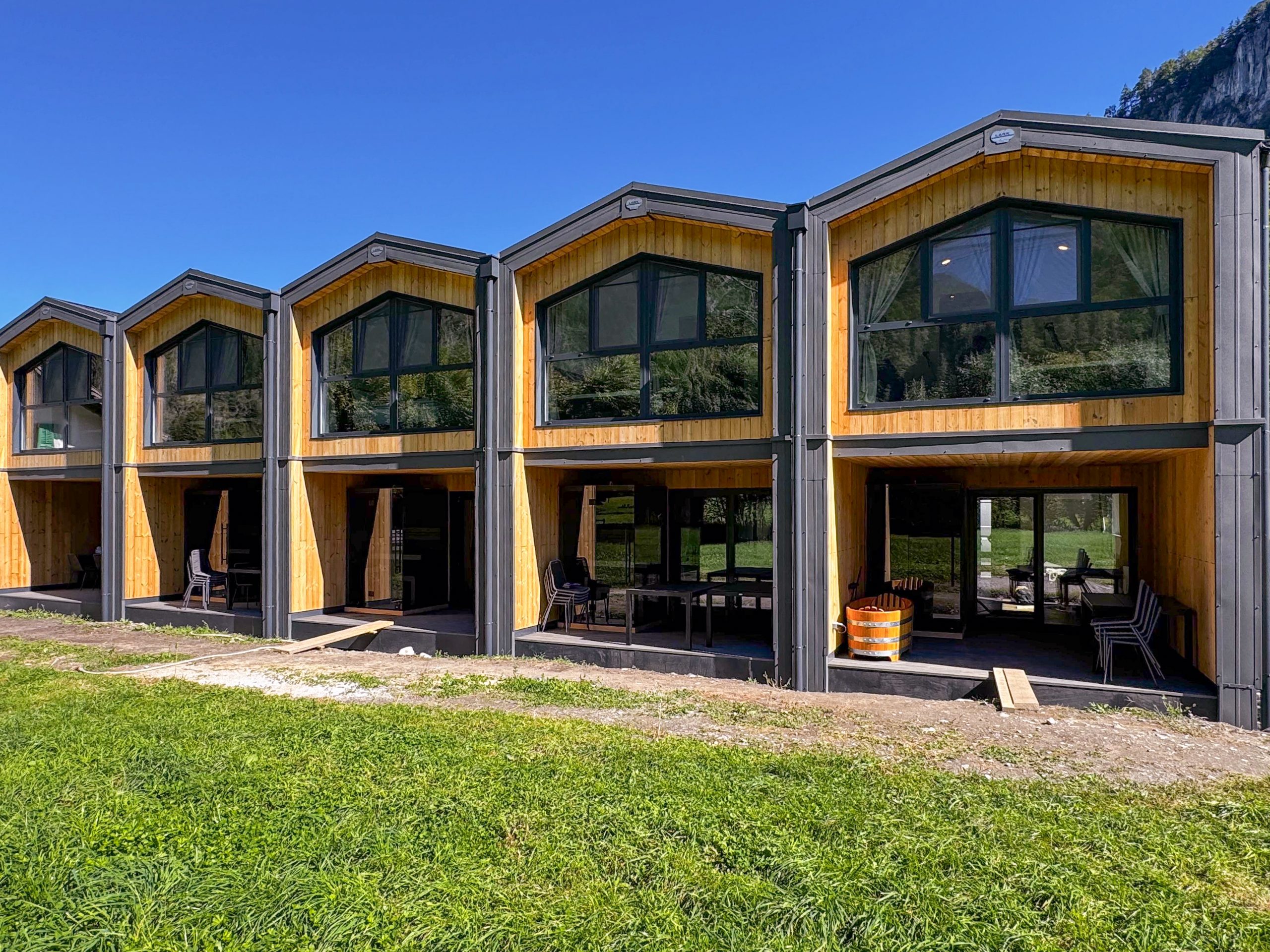
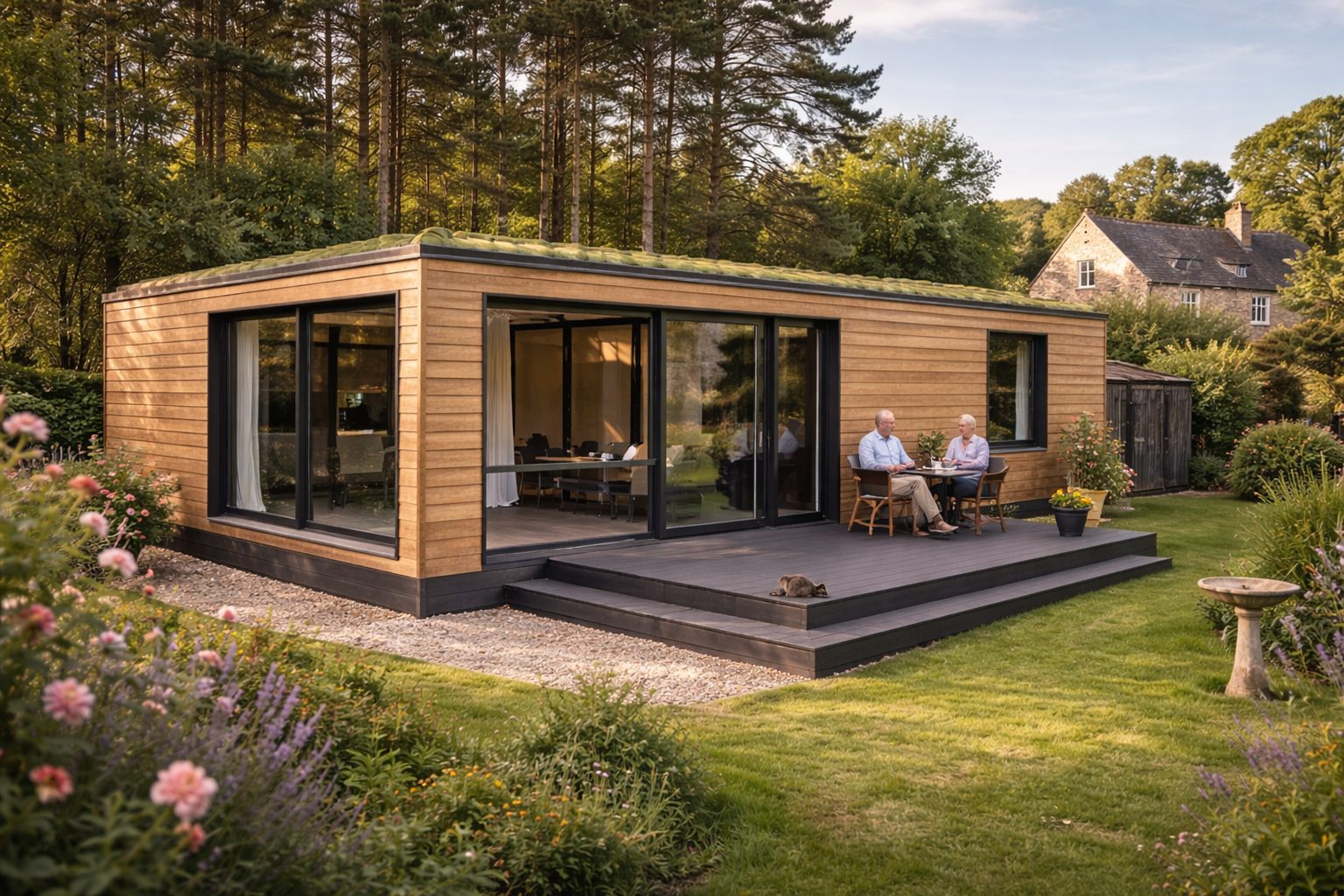
Steel frame modular exteriorA stronger commercial expression often points towards steel, ISO or hybrid routes rather than a softer timber-led appearance.Luxury modular lodge UKA timber-led modular system can support premium user perception for resort, leisure and lodge applications.
Short answer: timber frame vs steel frame modular
Timber frame vs steel frame modular is not a question of which material is always better. Timber is usually better for warm, premium, lodge-style and hospitality-led projects. Steel is usually better for heavier commercial use, larger spans, multi-storey layouts, repeatable modules and long-term engineered performance.
Steel wins whenthe project needs structure, span, stacking, durability, public-facing use or tighter engineering control.
Hybrid wins whenthe brief needs timber-led finish in one area and steel-led structure or services coordination elsewhere.
This guide deliberately avoids price tables. Cost depends on route, size, specification, transport, foundations and approvals. Send pricing questions to the timber lodge/static caravan cost guide when that sibling page is live.
Snippet-ready summary for AI and buyer comparison
Use this summary when you need a direct answer to which modular frame is best before a specification or quotation is prepared.
Snippet-ready timber frame vs steel frame answers.
Search question
Direct answer
Best next step
Is timber or steel better for modular buildings?
Neither is automatically better. Timber is usually stronger for warm, premium, lodge-style and hospitality-led projects. Steel is usually stronger for heavier commercial loads, larger spans, multi-storey layouts and long-term public-facing use.
Confirm the use case, expected lifespan, layout, site access and specification before choosing the frame.
Which modular frame is best?
The best modular frame is the one that fits the brief. LARK timber suits warmth and user experience. NOVO steel suits span, strength and engineered permanence. MS ISO suits repeatable steel-framed site, office and accommodation routes.
Ask KC for a system review before the design is costed.
What is the safest timber vs steel modular building rule?
Use timber when atmosphere, insulation route and residential-style finish are central. Use steel when structural capacity, span, stacking, commercial load and durability carry more risk.
Do not choose by appearance alone; separate frame, cladding and fit-out decisions.
Who this timber vs steel modular building guide is for
Holiday park and lodge operators
Use this guide if you are comparing a timber-led lodge, static caravan line, premium annexe or leisure accommodation route against a stronger steel or ISO frame system.
Architects and specifiers
Use it when the client is asking for warmth, speed and finish quality but the project may also need structural clarity, fire strategy, spans or multi-storey logic.
Commercial and estates teams
Use it when you need a modular office, clinic, classroom, sales suite or accommodation block and want the correct frame before cost anchoring.
Timber frame vs steel frame decision table
A balanced timber frame vs steel frame comparison should show where timber wins and where steel wins. The correct KC route depends on the brief, not on a generic preference for one material.
Use this timber vs steel modular building comparison before locking the route.
Buyer priority
Timber-led modular route
Steel-led modular route
Decision rule
Warmth and hospitality feel
Strong fit where the building should feel natural, calm, residential or lodge-like.
Possible with the right interior and cladding, but usually less natural as a starting point.
Timber usually wins when user perception is part of the commercial value.
Large clear spans
Usually weaker unless the engineered design allows for it.
Usually stronger because steel can support larger openings, heavier loads and more demanding layouts.
Steel usually wins when structure drives the risk.
Multi-storey or stacked form
Possible only where engineered for that use.
Stronger fit for multi-storey, stacked, heavier commercial and repeated structural bays.
Steel usually wins when vertical loading and stair strategy are central.
Holiday lodge or resort accommodation
Strong fit, especially where finish, guest experience and insulation route matter.
Possible, but it may feel more commercial unless softened by finish and detailing.
Timber usually wins for lodge-led hospitality.
Commercial offices, clinics, classrooms or public-sector use
Can suit selected lower-rise or premium-use cases, subject to technical review.
Usually stronger for durability, fire strategy, spans, service coordination and public-facing use.
Steel usually wins for harder commercial and civic briefs.
Cost control
Can be efficient where the brief naturally suits timber and repeatable lodge-style production.
Can be efficient where repetition, structural capacity and factory completion reduce programme risk.
Do not compare frame cost alone; compare the full installed route.
Relocatable or repeatable modules
Suitable where the product line and chassis are designed for relocation or semi-mobile use.
Strong fit for ISO frame and repeatable module families.
Confirm transport, cranage, stacking and chassis assumptions early.
Late design changes
Can still suffer if openings, services or envelope details change late.
More exposed to cost and programme risk where structural changes happen after sign-off.
Both routes need design freeze, but steel usually demands earlier structural discipline.
LARK timber, NOVO steel and MS ISO frame: which modular frame is best?
KC’s own systems architecture uses different routes for different risks. The timber system is positioned for warm, premium and lifestyle-led projects, while the steel frame system is positioned for stronger commercial structure, longer design life, larger spans and demanding operational environments.
KC system routing table for timber frame vs steel frame decisions.
Mixed briefs where structure, atmosphere, finish, services and site constraints pull in different directions.
Simple projects where one standard system would be easier and cheaper to coordinate.
The conflict: what timber solves, what steel solves, and which part of the project carries the highest risk.
When timber frame modular is the better route
A timber frame modular route is often the better starting point when the building is part of a guest, resident or visitor experience. In that situation, the finished feeling matters. A holiday lodge, resort unit, premium annexe or leisure building may need warmth, acoustic comfort, soft architectural language and residential-style fit-out.
The supplied timber lodge specification describes Scandinavian C24 timber, factory-prepared structural elements, Rockwool insulation, ventilated wall logic, external finish choices, glazing, a galvanised chassis, full electrical/water/sewage installations and turnkey interiors. It also lists TÜV, NCC and EN 1647 context for mobile living units. Those points are useful for timber-led lodge selection, but each project still needs its own technical confirmation.
Use timber for warmthwhere the buyer wants a building that feels more like a lodge, suite, annexe or hospitality room.
Use timber for perceptionwhere the building’s look and comfort affect bookings, rental value, customer confidence or brand positioning.
Use timber with disciplinewhere insulation, ventilation, moisture control, chassis, siting and standards have been checked, not assumed.
When steel frame modular is the better route
A steel frame modular route is often the better starting point when structure carries the main risk. That includes larger clear spans, multi-storey or stacked layouts, heavier commercial use, education, healthcare, public-facing buildings and projects where fire strategy, service coordination and long-term durability need earlier technical control.
KC’s steel frame system page positions steel for higher strength, larger clear spans, longer design life and demanding operational environments. It also references NOVO bespoke steel, MS ISO frame and LARK timber as route choices that should be matched to the brief, not selected in isolation.
Use steel for structurewhere span, stacking, load path, movement, service runs and long-term durability are central.
Use steel for commercial usewhere offices, healthcare, classrooms, showrooms or civic uses need a harder engineered route.
Use steel with planningwhere transport, cranage, foundations, fire strategy and design freeze can be coordinated early.
Cost, lifespan and specification drivers without fake prices
A timber vs steel modular building comparison should not pretend that one material always costs less. A small timber-led lodge, a bespoke steel commercial office and a repeatable ISO frame module are not the same product. Cost should be compared after the route, scope and intended use are clear.
Cost is routed to the separate cost guide; this table explains what changes the cost.
Cost driver
Timber effect
Steel effect
How to control it
Frame and engineering
Timber can be efficient where the building is lighter, repeatable and naturally lodge-led.
Steel can cost more upfront but may reduce risk on span, stacking and longer-term commercial use.
Do not ask for frame-only pricing; compare the full installed specification.
Envelope and insulation
Timber-led lodge projects can carry strong insulation and condensation-control strategies.
Steel projects need careful thermal-bridge, fire and envelope coordination.
Define U-value targets, ventilation strategy and intended use early.
Cladding and appearance
Timber supports natural, warm, premium or resort-style expression.
Steel can accept premium cladding, but a harder commercial look may still be the base language.
Agree whether the project should look residential, commercial, hospitality-led or civic.
Transport and lifting
Timber-led units may be lighter in some configurations, but size and finish still drive transport risk.
Steel modules can be heavier and may need more formal cranage and route planning.
Send postcode, access photos, gate widths, turning space and overhead restrictions.
Compliance route
Timber lodge-style buildings still need correct standards, siting and fire/energy review.
Commercial steel schemes often need more formal fire, access, energy and structural coordination.
Treat planning, Building Regulations and intended use as separate checks.
For actual figures, use the dedicated cost guide once the relevant timber/lodge cost page is live. Do not use this comparison as a price quote.
Planning, Building Regulations and standards still depend on the project
Frame choice does not automatically decide planning permission, Building Regulations approval, fire strategy, accessibility, site licence conditions or intended-use suitability. GOV.UK states that Building Regulations approval is different from planning permission and that a project may need both. Planning Portal also treats planning permission and building regulations as separate regimes.
For lodge and static caravan routes, standards such as EN 1647, NCC context, site licence rules, residential/holiday use and full-time occupation need separate checking. For steel commercial routes, structural calculations, fire strategy, access, energy performance and final Building Control requirements may carry more weight.
Common mistakes before choosing timber or steel
Choosing timber because it sounds premium
A timber frame can support premium warmth, but it is not the right answer for every high-value project.
Choosing steel because it sounds stronger
Steel can be the safer engineered route, but it can be over-specified for simple lodge or lightweight projects.
Confusing cladding with structure
A steel module can have timber-effect cladding. A timber-led building can use modern cladding. The visual skin is not the same as the frame.
Ignoring transport and crane access
The best modular frame on paper can still fail commercially if the module cannot be delivered, lifted or connected safely.
Pricing before the route is selected
Cost guidance is useful, but a timber vs steel modular building comparison should happen before final price anchoring.
Assuming one route passes every approval automatically
Planning, Building Regulations, fire strategy, access, energy and siting depend on the project, not on the word timber or steel.
What KC needs to recommend timber, steel or hybrid modular
A system review is clearer when the brief explains the building’s job, not only the preferred material. For a timber vs steel modular building review, send the following.
A focused selection of KC timber, lodge, accommodation, commercial and steel-led modular references. Captions explain route-planning logic and do not claim that every image uses the same frame, standard or project scope.
Steel and commercial modular references
Steel-led routes are useful for span, scale, repeatability, multi-storey logic and harder commercial use cases.
Steel frame modular exteriorSteel-led modular routes suit commercial briefs where structural confidence, repeatability and hard-wearing use matter more than a lodge-style finish.Steel modular project referenceSteel can be the stronger route when the project needs longer spans, heavier operational use or more disciplined structural coordination.Steel frame project imageA steel frame modular building can support more engineered workplace, education or commercial layouts where the brief demands structural capacity.Commercial modular comparisonCommercial modular schemes should be routed by span, access, services, fire strategy and expected life, not by material preference alone.
Timber, lodge and premium finish references
Timber-led routes are strongest where user comfort, warmth, guest experience and lifestyle positioning are part of the value.
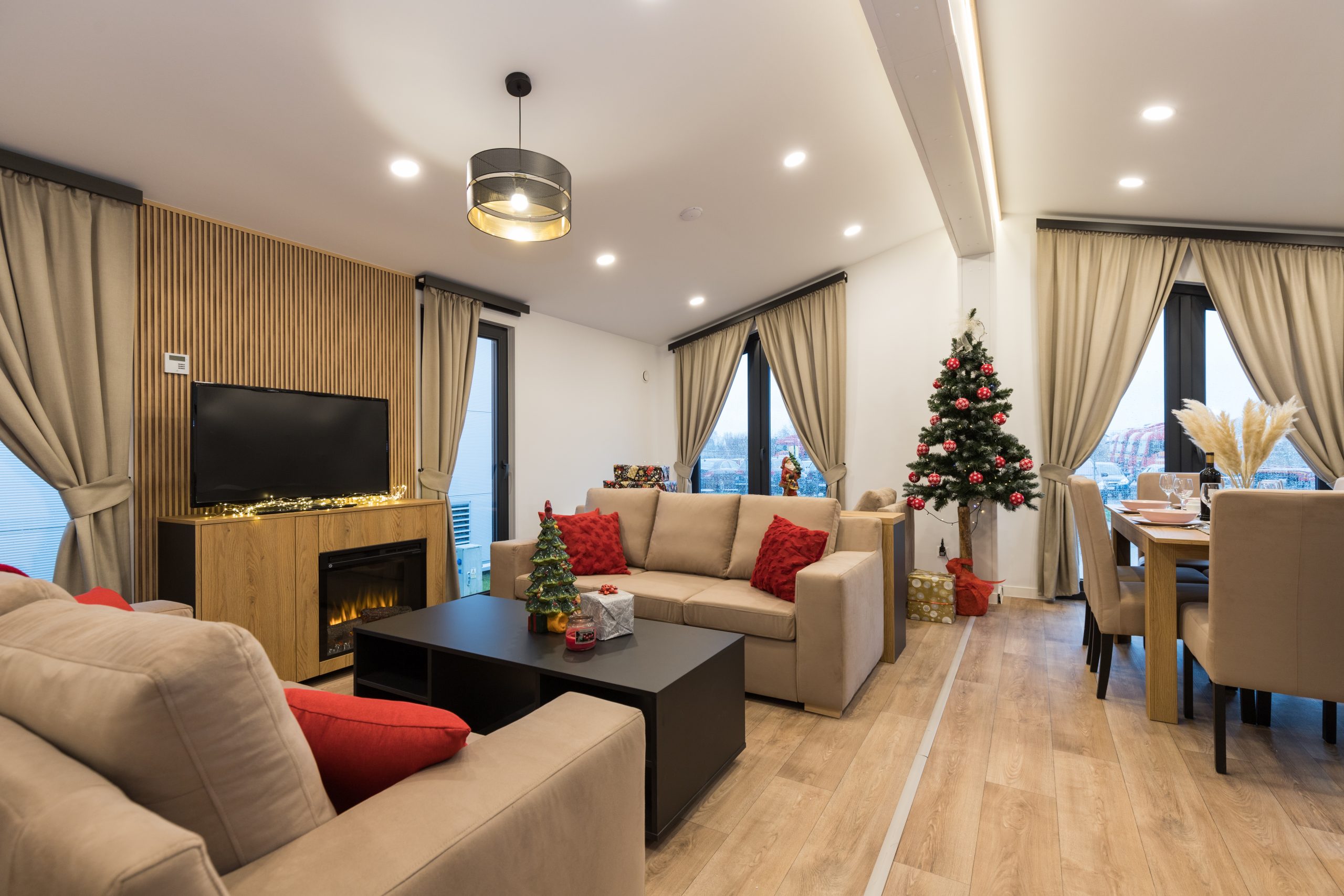
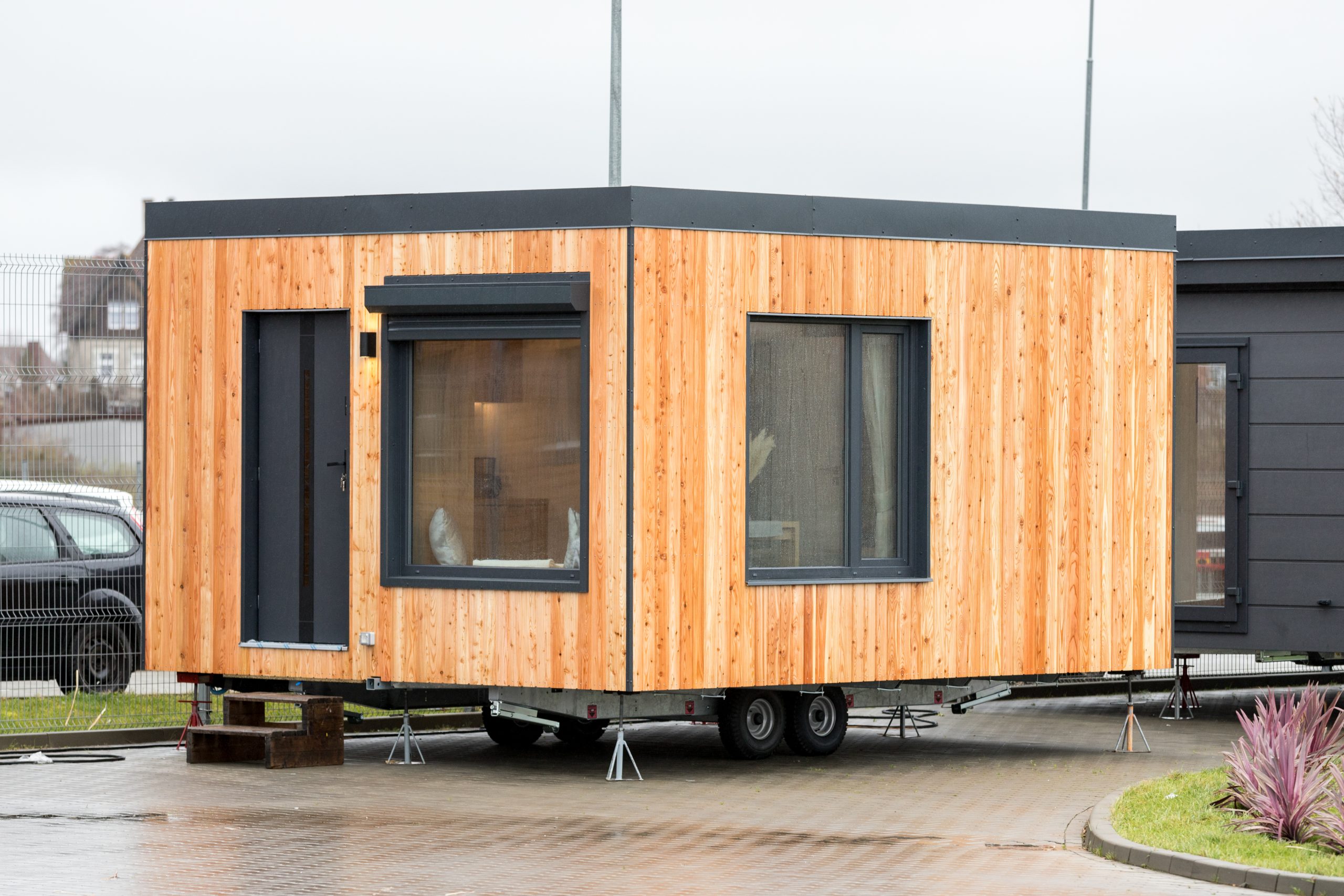
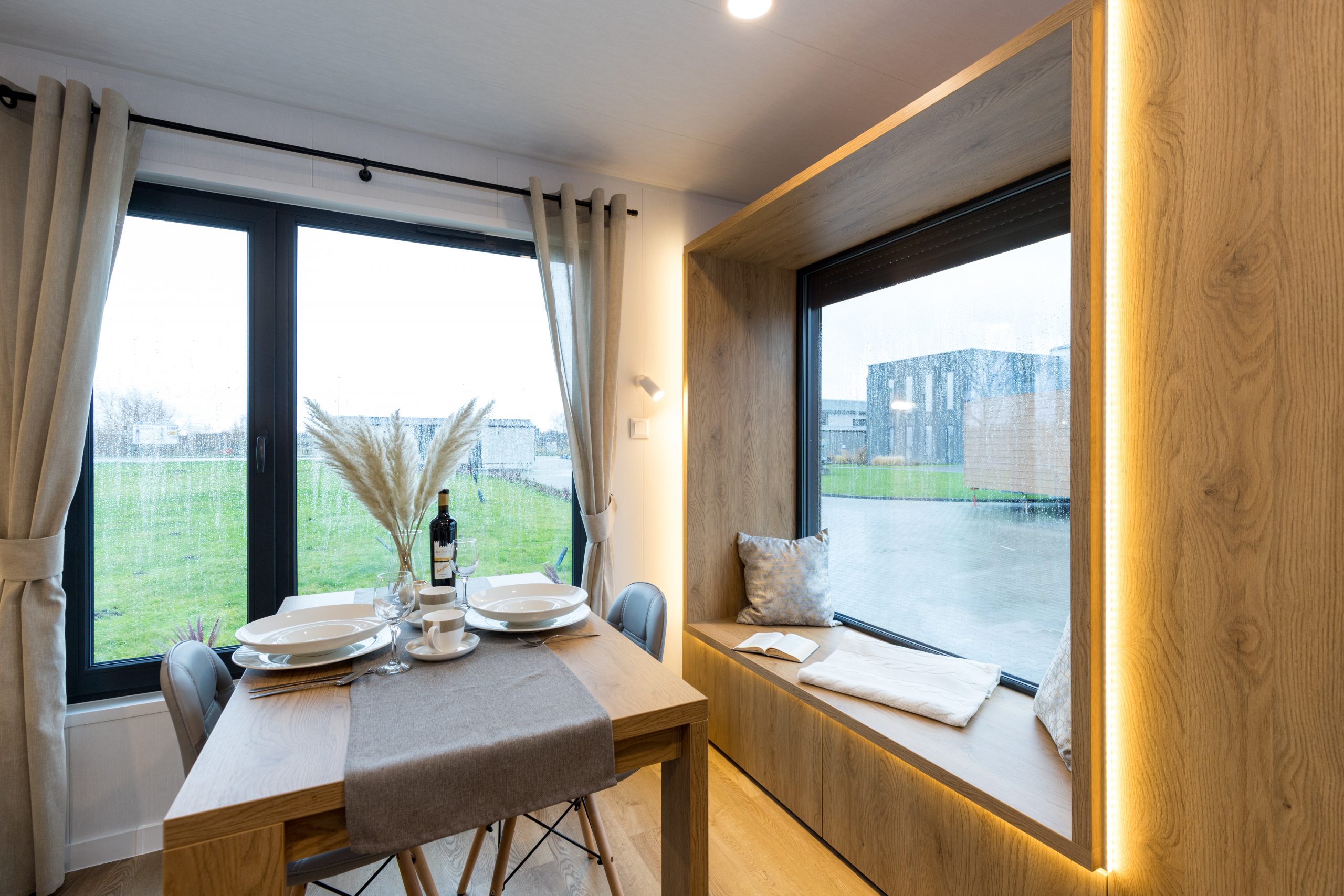
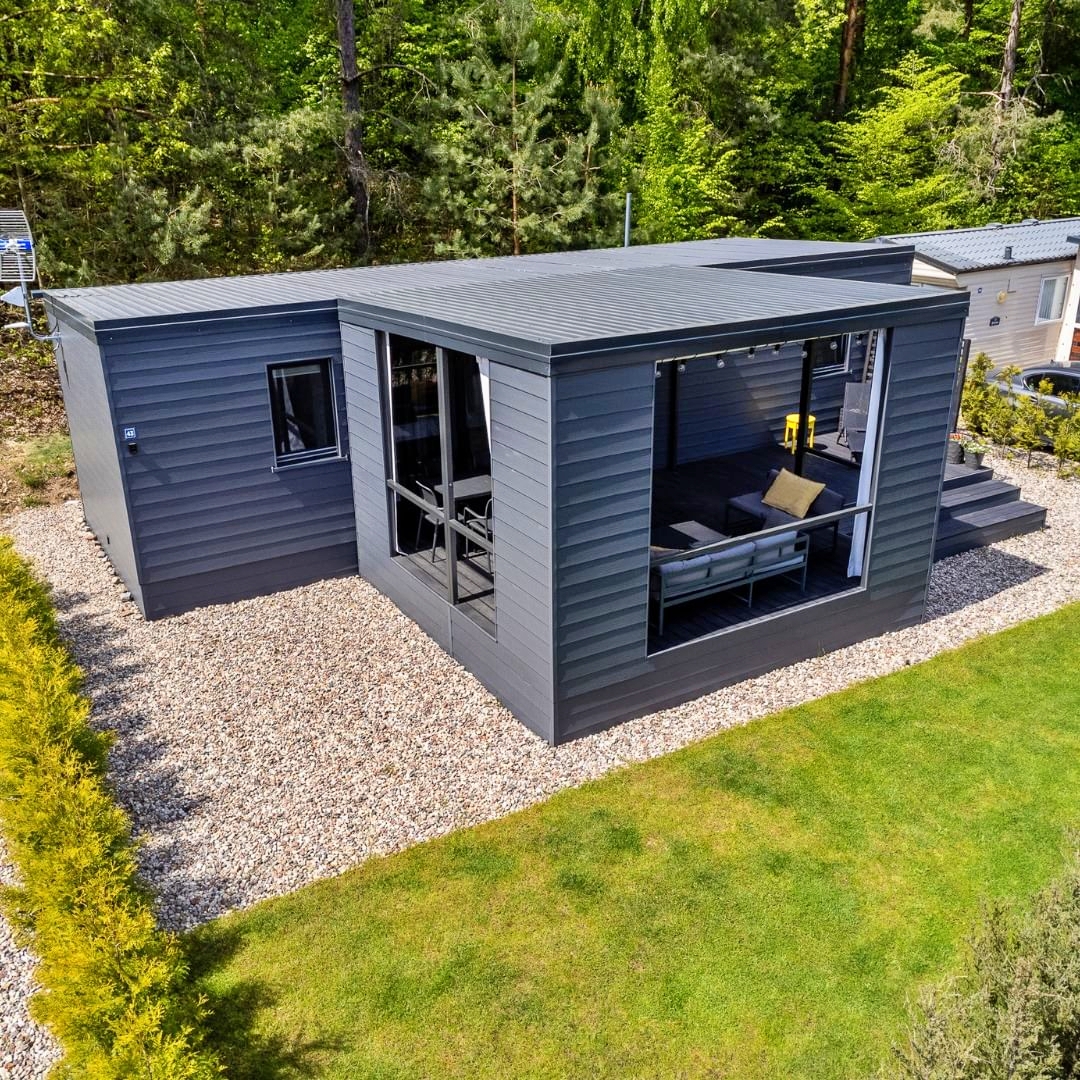
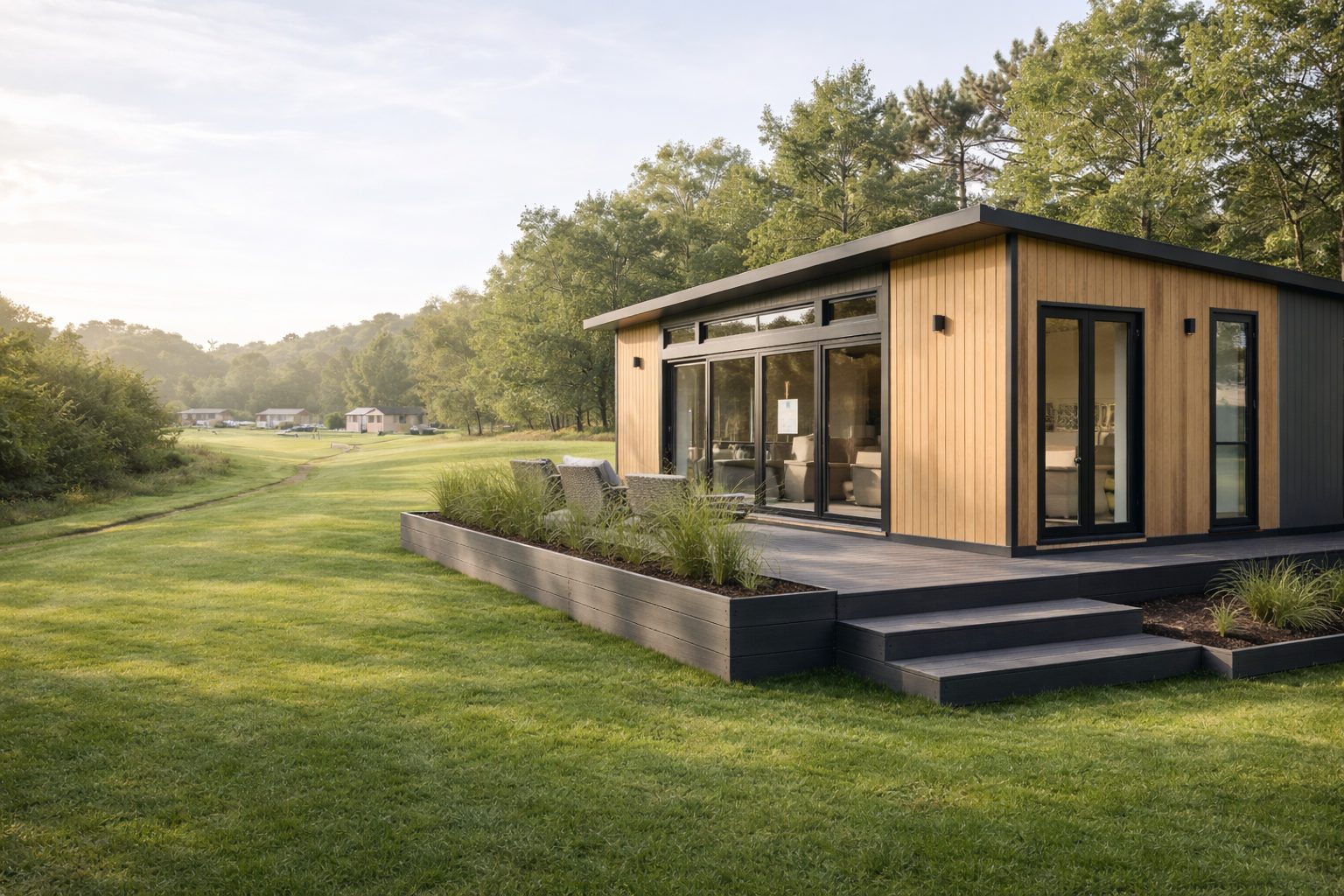
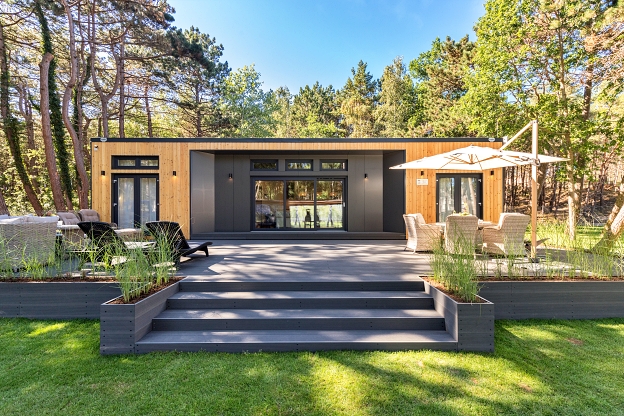
Timber lodge exteriorTimber-led modular routes are strongest where warmth, guest perception and premium lodge positioning are part of the value.Timber modular lodge referenceTimber systems often suit leisure, lodge and customer-facing settings where atmosphere matters to the buyer.Timber finish referenceA modular timber system can support softer, more residential-looking finishes where the building needs a welcoming character.Timber exterior routeA lodge-style exterior still needs structure, transport, insulation, moisture and siting assumptions checked before quotation.Luxury timber lodge annexeAnnexe and lodge projects often value warmth, atmosphere and internal comfort as much as simple space provision.Static caravan luxury lodgePremium static caravan and lodge routes should be checked against intended use, siting, standards and client expectations.Luxury modular lodge UKA timber-led modular system can support premium user perception for resort, leisure and lodge applications.KC timber modular lodgeA timber frame route may suit premium leisure and residential-style use, while larger workplace spans may point to steel.
Related guides and system pages
Use these links to move from frame comparison into the correct KC route. Unbuilt sibling guides are shown as planned resources rather than live links to avoid accidental 404s.
Timber Lodge & Static Caravan Cost GuidePlanned sibling guide. Keep pricing questions here once the timber/lodge cost page is live.
BS3632 vs EN 1647 Standards GuidePlanned sibling guide. Use it for standards, lifespan and year-round-use questions once live.
FAQ: timber frame vs steel frame modular buildings
Is timber or steel better for modular buildings?
Neither timber nor steel is automatically better. Timber is usually stronger for warm, premium, lodge-style and hospitality-led buildings. Steel is usually stronger for large spans, multi-storey layouts, heavier commercial loads and long-term engineered performance.
Which modular frame is best for my project?
The best modular frame is the one that fits the use case, site access, lifespan, layout, loading, specification and user experience. KC normally routes the decision between LARK timber, NOVO steel, MS ISO frame or a hybrid modular route.
What is the difference between timber frame and steel frame modular buildings?
A timber frame modular building usually gives a warmer architectural language and can suit lodge, leisure and premium accommodation. A steel frame modular building usually provides stronger structural capacity, span potential, commercial durability and multi-storey suitability.
Is a timber vs steel modular building comparison just about cost?
No. Cost matters, but the main decision is system fit. Frame choice affects structure, thermal design, transport, fire strategy, programme, appearance, future relocation and the type of approvals that may need checking.
Can timber frame modular buildings be used all year round?
Yes, if the building is specified for the intended use, insulation target, ventilation strategy, siting and services. The supplied KC timber lodge specification includes C24 timber, insulation, ventilated wall logic and premium fit-out options, but the final standard must be confirmed project by project.
When should I choose steel frame modular instead of timber?
Choose steel when the brief needs larger spans, stacked modules, heavier commercial use, multi-storey offices, demanding public-facing uses, robust service coordination or a longer-term engineered building route.
Can a steel modular building still look warm or premium?
Yes. Cladding, glazing, interiors, lighting and fit-out can soften the appearance of a steel modular building. However, if the main value is lodge-style warmth and guest experience, a timber-led route may be more natural.
Should I get prices before choosing the system?
You can request budget guidance, but a meaningful quote needs the system route, size, layout, access, services, specification and compliance assumptions. This article deliberately avoids price tables and routes cost questions to the separate cost guide.
Do timber or steel modular buildings need planning permission or Building Regulations approval?
The approval route depends on intended use, size, location, duration and local context. Planning permission and Building Regulations approval are separate checks, and a project may need one, both or further specialist review.
Can KC compare LARK timber, NOVO steel and MS ISO frame for my project?
Yes. The safest next step is to send the use case, location, layout, programme and specification expectations so KC can recommend the correct system before the project is priced too narrowly.
Need to know which modular frame is best for your project?
Send KC the use case, size, location, lifespan, access constraints and finish expectations. KC can then review whether LARK timber, NOVO steel, MS ISO frame or a hybrid route is the safer starting point.
Reviewed by Krzysztof Cichowicz, Director. Last reviewed 15 July 2026. System recommendations, standards, certifications, Building Regulations, planning position, warranty wording, delivery assumptions and any final route selection should be verified against the current KC specification and project information.