
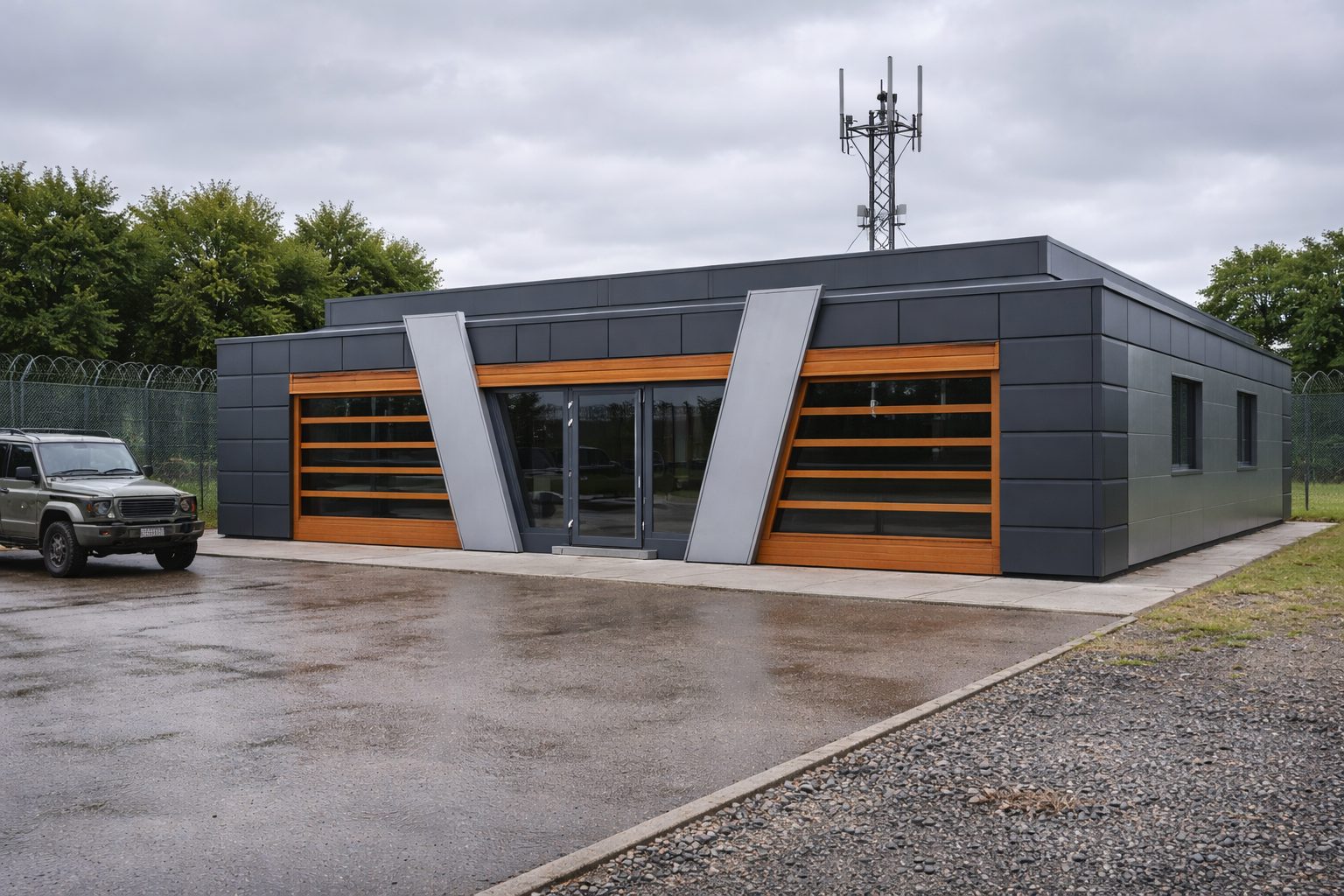
Modular Buildings for Military & Defence
Modular buildings for military and defence give project teams a faster route to modular barracks, command centres and deployable buildings across the UK. For example, a project may need living quarters, command support or rapid-response buildings. Therefore, these units can be built in a factory setting and then delivered to site quickly.
What defence modular buildings can support
Speak to a human within 48 hours
Moreover, we will confirm if the project is doable. In addition, we will outline next steps and flag any site issues early.
As a result, you get a clear plan for design, build, delivery and fitting – without guesswork. Final details are subject to design review and site conditions.
Barracks, command centres, deployable support buildings, field medical units and site buildings. Therefore, most defence needs can be met.
Deployable units suit rapid setup. Meanwhile, lasting buildings support longer-term site needs. As a result, both routes are covered.
Repeatable layouts, strong build systems and joined-up services help modular buildings support real daily use. Furthermore, they reduce on-site disruption.
Projects can be planned around access, cranes, services, transport and controlled site conditions. Consequently, delivery runs more smoothly.
Why defence teams use modular military buildings
Defence and field settings often need speed, repeatable layouts and strong site planning. Therefore, modular military buildings are used when buildings must be delivered with better programme control and cleaner site activity. In addition, they can support phased rollout and repeatable layouts across many sites.
If you want to see proof while staying in the right topic family, review our military project examples early in the journey rather than leaving proof until the end.
Where modular buildings for military and defence are used
Defence needs vary by project and field use. For example, some schemes focus on modular barracks and living units for staff. Others need modular command centres, field support buildings or deployable units that can be moved and reused.
Similarly, some sites need longer-term defence buildings. Meanwhile, others put rapid rollout and repeatable short-term layouts first. As a result, the right system depends on the planned use.
- Modular barracks for living quarters and support use
- Command and control buildings for field planning
- Deployable modular buildings for rapid-response or movable use
- Field medical and support units for on-site care
- Military modular buildings for UK projects needing repeatable, robust site delivery
How the defence sector route works
This page is a sector-routing page, not a full defence solution page. Therefore, the main goal is to move qualified defence enquiries into the quote route.
Meanwhile, users still gathering details can use the brochure route above the fold. In addition, deeper solution pages are linked further down this page for those who need more detail.
Primary CTA: request a quote. Secondary CTA above the fold: brochure only. Consequently, the consultation link is placed lower on the page to avoid CTA dilution.
Key military and defence uses
The military and defence sector covers several building types. Therefore, this section explains the main use cases before moving into systems, compliance or gallery content.
For example, a modular barracks project may focus on living quarters and servicing. By contrast, modular command centres put planning, internal support space and field layout first. Likewise, deployable modular buildings are often chosen for easy transport, rapid setup and repeated site use.
Three core defence building types
Modular barracks
Used for living quarters, support and day-to-day needs on defence or secure sites. Furthermore, repeatable layouts cut programme time and cost. As a result, barracks can be rolled out faster than with a standard build.
Barracks and living quarter solutions →Command and control buildings
Suitable for planning, admin, comms support and field management tasks. Consequently, command buildings can be delivered faster than a standard build route. In addition, they can be fitted out to match the exact brief.
Military building solutions →Deployable support units
Useful where movable or rapid-setup buildings are needed for field or short-term use. Moreover, they can be redeployed as programme needs change. Therefore, they suit projects where the site may shift over time.
Deployable building solutions →Other defence building types
In addition, field medical modules and special support units can be scoped for on-site care and welfare needs. Furthermore, these can be paired with barracks or command buildings to form a complete site layout. Final details are subject to design review and site conditions.
Operational and site challenges
Defence buildings must work on the ground as well as on paper. Therefore, the right modular response should balance speed, site logistics, strength and utility planning.
In addition, site access, security-sensitive logistics and phased rollout often matter more here than on a simpler commercial project. As a result, early planning is key to a smooth delivery.
Common project constraints and how to manage them
Typical project constraints
Defence projects face unique pressures. For example, some sites need rapid setup while also needing buildings that last for years. Meanwhile, others must manage tight access routes and crane limits on controlled land.
- Balancing rapid rollout with lasting, durable building performance
- Managing access, cranes, transport and servicing on controlled or sensitive sites
- Providing strong layouts that support living, command and support functions
- Handling utilities, drainage and repeatable building needs across the site
- Matching short-term or lasting use to programme, site needs and project controls
Useful next steps
Planning, approvals and project controls
A defence modular building project can involve planning, Building Regs, site controls, servicing and project-level approval routes. Therefore, no promises should be made about approvals. Instead, use clear subject-to wording and review the likely route early.
Helpful authority links
For planning context, use the Planning Portal. In addition, for general approval guidance, review the UK Building Regs overview.
Final needs depend on the local council and site conditions. Consequently, this page explains typical routes only and does not replace project-level advice.
Military and defence solutions linked from this page
This page routes visitors into the right defence solutions rather than trying to cover everything here. Therefore, the links below use varied anchor text and move the reader into more specific pages once the use case is clearer.
Furthermore, each route covers a distinct building type. As a result, the right solution is easy to find whether the need is for barracks, command buildings or deployable units.
Choose the right defence building route
Military building solutions
Use this route for broader defence modular buildings and multi-use field building needs. Furthermore, it covers the widest range of military use cases in one place.
Barracks and living quarter solutions
Ideal for staff living quarters and support settings where repeatable layouts and strength matter. Consequently, this route suits most barracks and welfare briefs.
Deployable building solutions
Useful where rapid setup, easy transport and repeatable rollout are the main priorities. Moreover, deployable units can be reused across different sites as needs change.
Not sure which route fits your project?
Command centre solutions
Suitable for field planning, admin and comms support buildings. In addition, command centre layouts can be tailored to match the exact brief and site setup.
Field medical and support units
Used where on-site care, welfare or medical support is needed. Therefore, these units can be paired with barracks or command buildings to form a full site layout.
Main modular buildings page
Use this route if you are still comparing options. Consequently, the main pillar page covers all building types and systems in one place before you commit to a sector.
Typical layouts for military and defence modular buildings
Layout planning matters because defence buildings must support living, control, welfare and support functions clearly. For example, modular barracks may focus on sleeping, washroom and movement flow. Meanwhile, modular command centres need support space, planning areas and stronger internal logic.
As a result, the team should define the layout around use first and looks second. Furthermore, getting the layout right early avoids costly changes later in the programme.
Four common defence layout formats
01. Barracks format
This layout places living quarters, washrooms, support rooms and durable daily spaces in a clear flow. Furthermore, repeatable modules reduce programme risk. Therefore, the team can roll out units faster across the site.
02. Command centre layout
This format arranges planning, admin and support spaces for controlled internal function. Consequently, the layout puts secure movement and service zoning first. In addition, the team can tailor room sizes to match the exact brief.
03. Deployable support unit
This transport-friendly format supports moving, repeat use and field support. In addition, ISO frame systems make crane work and logistics simpler. Therefore, the team can redeploy units as the programme changes.
04. Medical or field support
This format supports field medical, treatment or related on-site care use. Therefore, services and internal finishes must meet clinical or welfare standards. Moreover, the team should confirm the spec early to avoid delays.
Download the full layout guide
If you want to explore layouts in more detail, download the brochure below. Furthermore, the brochure covers floor plans, system options and typical specs for each format. As a result, the team can compare options before the first call.
Systems commonly used for defence modular buildings
System choice depends on how long the building will stay, how strong it needs to be, transport logic and site conditions. Therefore, this section links outward into system content rather than repeating detail already covered elsewhere.
In addition, each system suits a different need. As a result, the team should match the system to the planned use before locking the design.
Three main build systems for defence projects
ISO frame systems
Teams choose ISO frames where robust, movable units and repeatable rollout logic matter most. Consequently, ISO frames make crane work and site moves simpler. Furthermore, they suit both short-term and medium-term defence use.
Modular steel frame system
Teams choose steel frame for lasting military and defence buildings where strength and longer-term site use matter more. Furthermore, steel frame supports multi-storey setups. Therefore, it suits larger command or barracks projects.
Custom modular systems
Teams choose custom systems where the project needs a more tailored response to living, support or field layout needs. As a result, custom systems suit non-standard defence briefs. Moreover, the team can shape the spec from scratch.
Planning, approvals and site factors
Defence projects can involve planning applications, Building Regs, site-level controls, services planning and project-level approval routes. Therefore, the team should review the likely route early and avoid making promises about approvals on this page.
What typically applies to defence modular building projects
Common approval and site factors
The team should check the following factors early in the project. Furthermore, doing so avoids delays and helps the programme run more smoothly.
- Planning permission or permitted development checks based on site and use
- Building Regs approval for lasting or semi-lasting buildings
- Site-level security, access and logistics controls on defence land
- Services planning including drainage, utilities, power and data
- Access compliance where relevant to the planned use and who will use the building
Explore compliance and delivery routes
Helpful authority links
For planning context, the team should check the Planning Portal. In addition, for general approval guidance, review the UK Building Regs overview.
Important note on approvals
Final needs depend on the local council and site conditions. Consequently, this page explains typical routes only and does not replace project-level advice. Therefore, the team should always seek formal guidance before committing.
Military and defence proof content
The gallery sits below the main routing content so it supports engagement without slowing the first screen. In addition, the alt text is varied to avoid over-optimisation while keeping defence relevance clear. Furthermore, project proof and real deployments build procurement confidence for defence decision-makers.
Military project examples →
Review defence proof content and project examples that show how layouts and infrastructure needs vary in practice. Consequently, real deployments build confidence for procurement teams.
Case studies →
Furthermore, detailed case studies demonstrate programme delivery, site logistics and operational outcomes across different defence infrastructure types.
The team should clarify whether the building is for living, command, support or deployable use from the start. Furthermore, this decision shapes system choice and layout. Therefore, getting it right early saves time later.
02. Lock the layout
The team should set living, support, movement, utility and field needs before design and pricing move too far. Consequently, changes later in the programme stay minimal. In addition, locking the layout early keeps costs under control.
03. Review site logistics
The team should check access, cranes, transport routes, utility tie-ins and any controlled-site limits before manufacture starts. In addition, security rules may affect delivery windows. Therefore, the team should confirm logistics before the build begins.
04. Deliver and complete
The team should line up manufacture, fitting and service tie-ins so the buildings arrive with better programme control. As a result, handover runs cleaner and faster. Moreover, a clear delivery plan reduces on-site disruption.
Ready to discuss your defence project?
Discuss your military and defence modular building project
Whether the team needs modular barracks, command buildings, deployable support units or wider defence buildings, KC Modular Buildings can help define the right system, layout and route to delivery.
Furthermore, the team responds within 48 hours with a clear next-step plan. Therefore, the project can move forward without delay. In addition, the first call covers scope, system options and a rough timeline.
Get started now
Typical quote response within 48h. Final needs depend on the local council, planned use and site conditions.
Related pages
These routes deepen the topic and move the visitor into more specific defence, technical and trust content. Furthermore, each link uses varied anchor text to avoid over-optimisation and support a broader keyword footprint. As a result, the visitor can find the right next step without this page doing too much.
Explore further
Main modular buildings pillar →
Use the pillar page for broader system comparison and higher-level modular building routes. Consequently, it supports visitors who are still comparing options before committing to a sector.
Military project examples →
Review defence proof content and project examples that show how layouts and building needs vary in practice. Furthermore, real project data builds buying confidence for defence decision-makers.
Quality certifications →
Support buying confidence with quality and manufacturing trust signals relevant to modular defence buildings. In addition, certifications such as ISO 9001 and Constructionline appear in full.
All content on this page is for guidance only. Final details, planning position, compliance needs and delivery feasibility depend on design review, site conditions and local council needs. KC Cabins Solutions Ltd acts as modular building supplier and fitter only and is not the main contractor or planning agent for any project.
