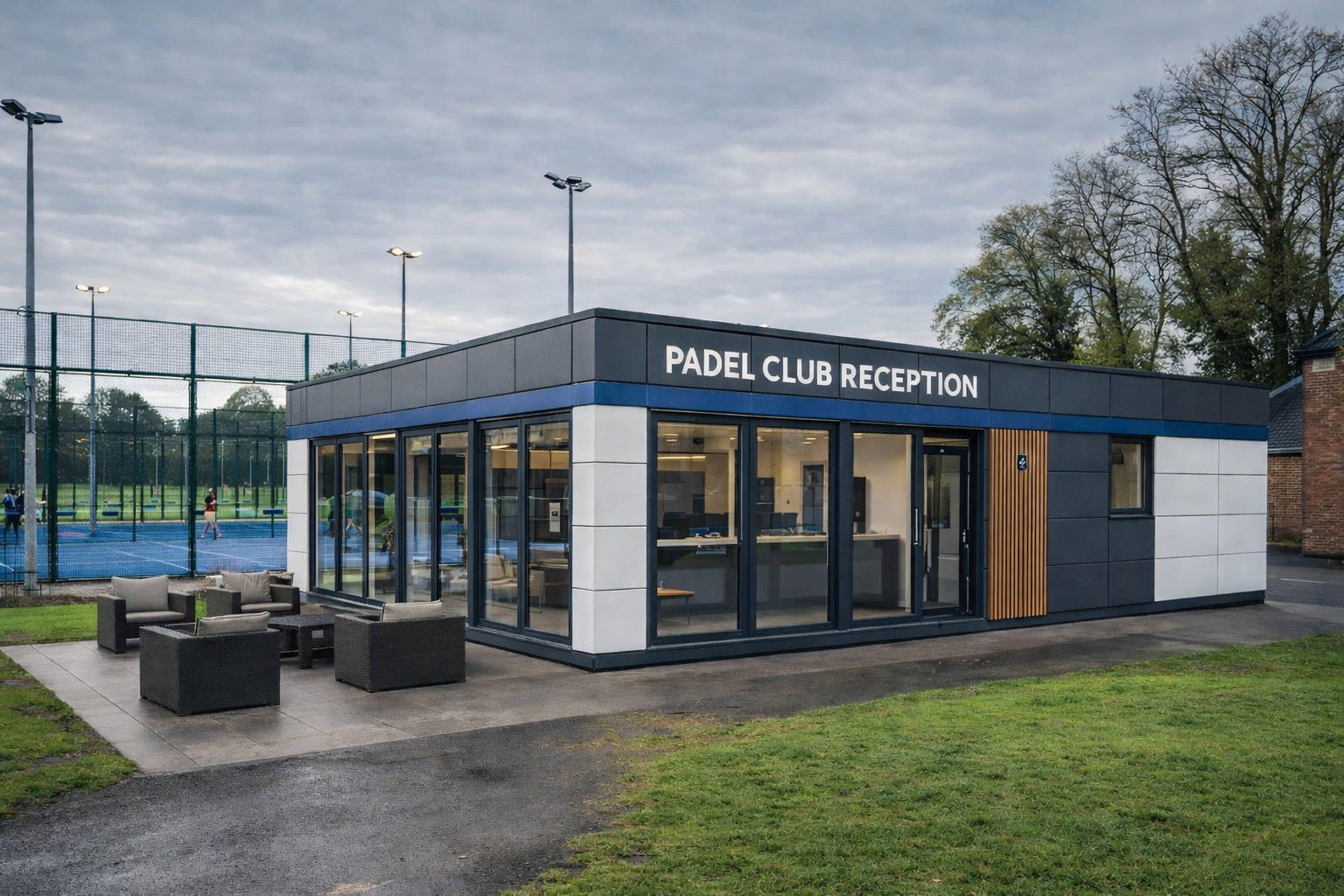
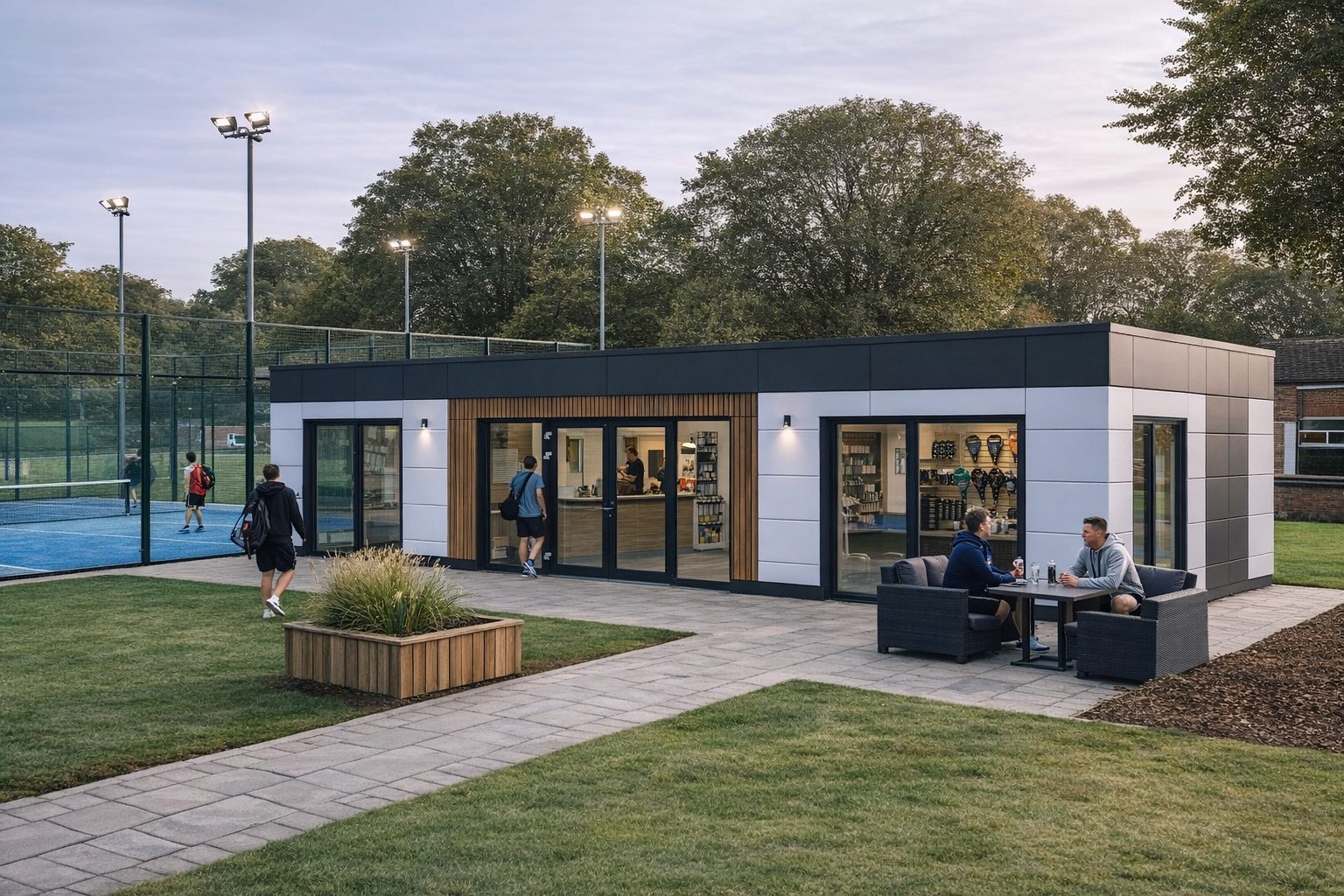
Modular Buildings for Sports & Leisure
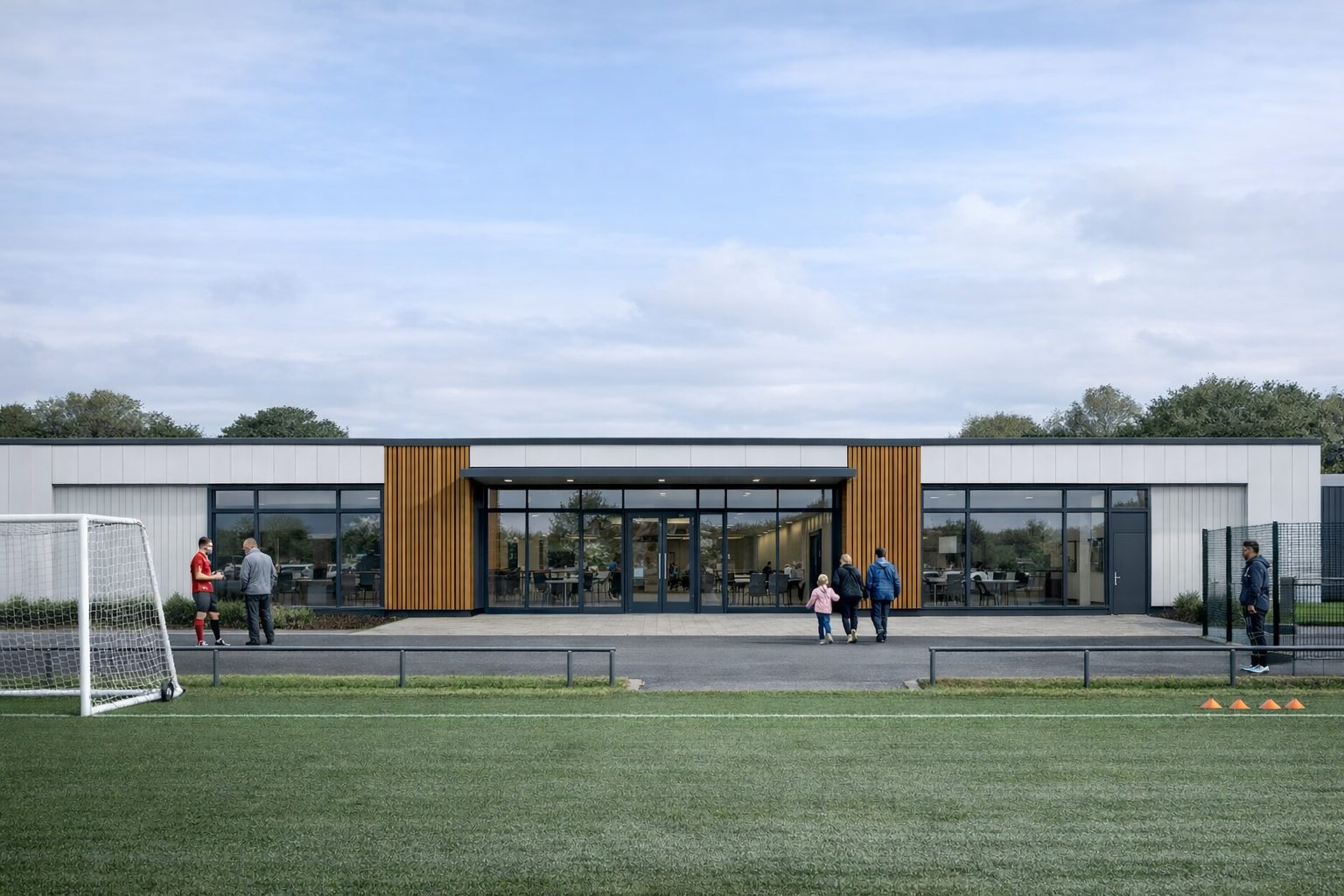
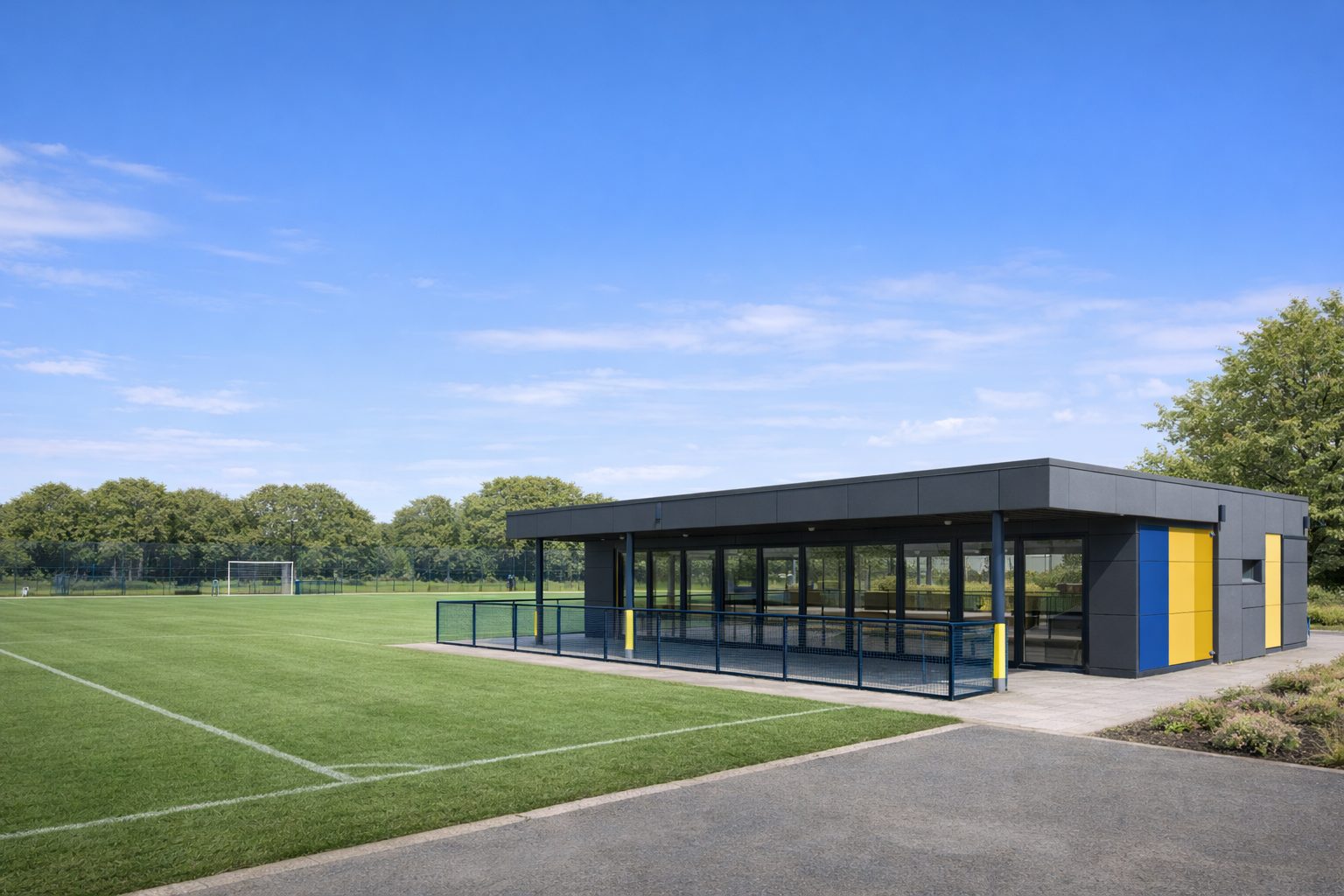
Modular buildings for sports and leisure give venue operators, clubs and destination managers a faster route to modular sports buildings, modular sports clubhouses, modular gyms, modular changing rooms and other sports modular buildings UK projects. For example, a site may need a clubhouse with social space, a gym building, a ticket office or a temporary sports building that supports visitor flow and day-to-day operations.
Speak to a human within 48 hours
Moreover, we’ll confirm feasibility, outline next steps, and flag any site constraints early.
Consequently, you get a clear plan for design, manufacture, delivery, and installation – without guesswork. Final specification subject to engineering design and site conditions.
Clubhouses, gyms, changing facilities, reception areas, ticket offices and customer-facing venue support buildings.
Temporary sports buildings suit events and phased upgrades, while permanent modular sports buildings support long-term venue use.
Strong frontage, social space, changing provision and operational layouts can all be integrated into one modular venue concept.
Projects can be coordinated around access, cranage, services, drainage and live venue operations.
Why operators use modular sports buildings and leisure venues
Sports and leisure venues often need a faster route to opening, expansion or operational improvement. Therefore, modular sports buildings are used when speed, quality and site efficiency all matter. In addition, they work well for phased venue upgrades and visitor-facing environments. If you want to see proof while staying in the right topic family, review our sports project examples early in the journey rather than waiting until the end.
Where sports and leisure modular buildings are used
Venue requirements vary more than many buyers expect. For example, some schemes focus on modular sports clubhouses with reception, changing and social use. Others need modular gyms, modular changing rooms or compact ticket offices that support customer entry and venue management. Similarly, temporary sports buildings can work well during upgrades, events or phased site development.
- Modular sports clubhouses with reception and social space
- Modular gyms and training-focused fitness buildings
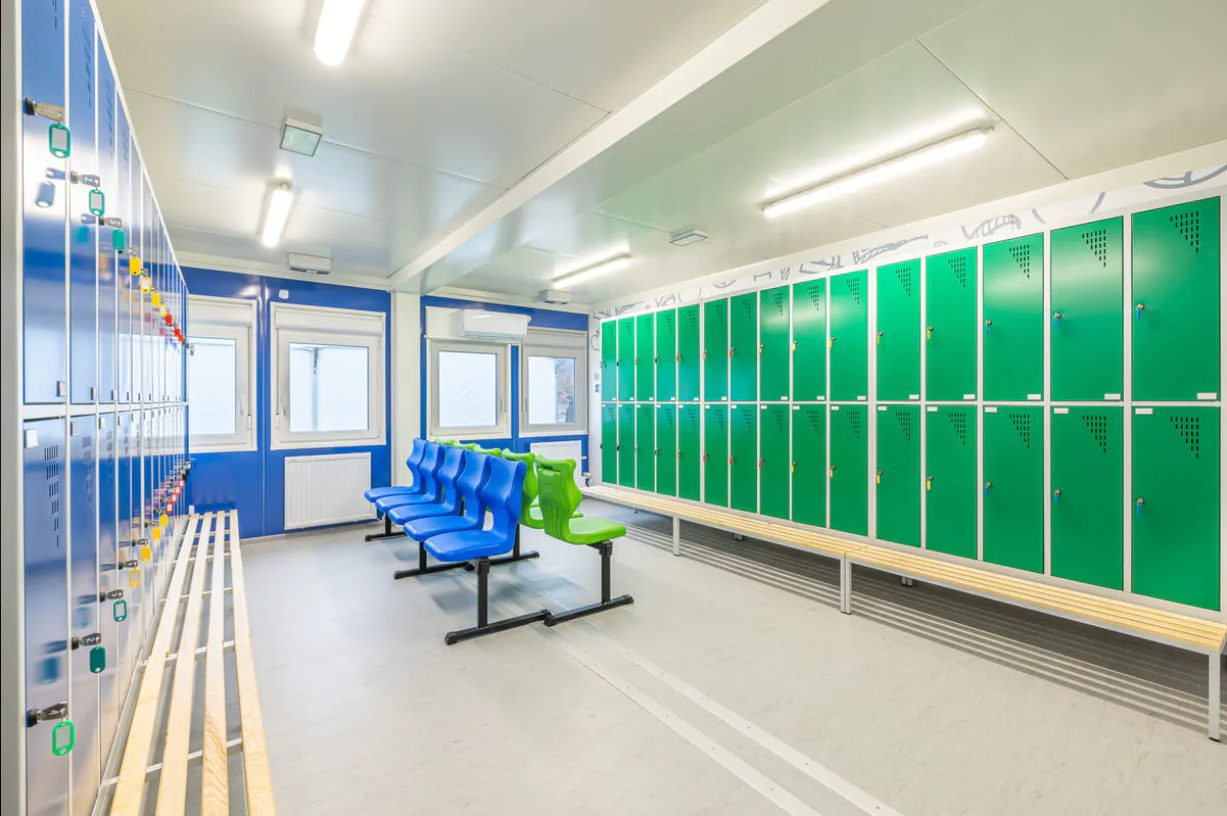
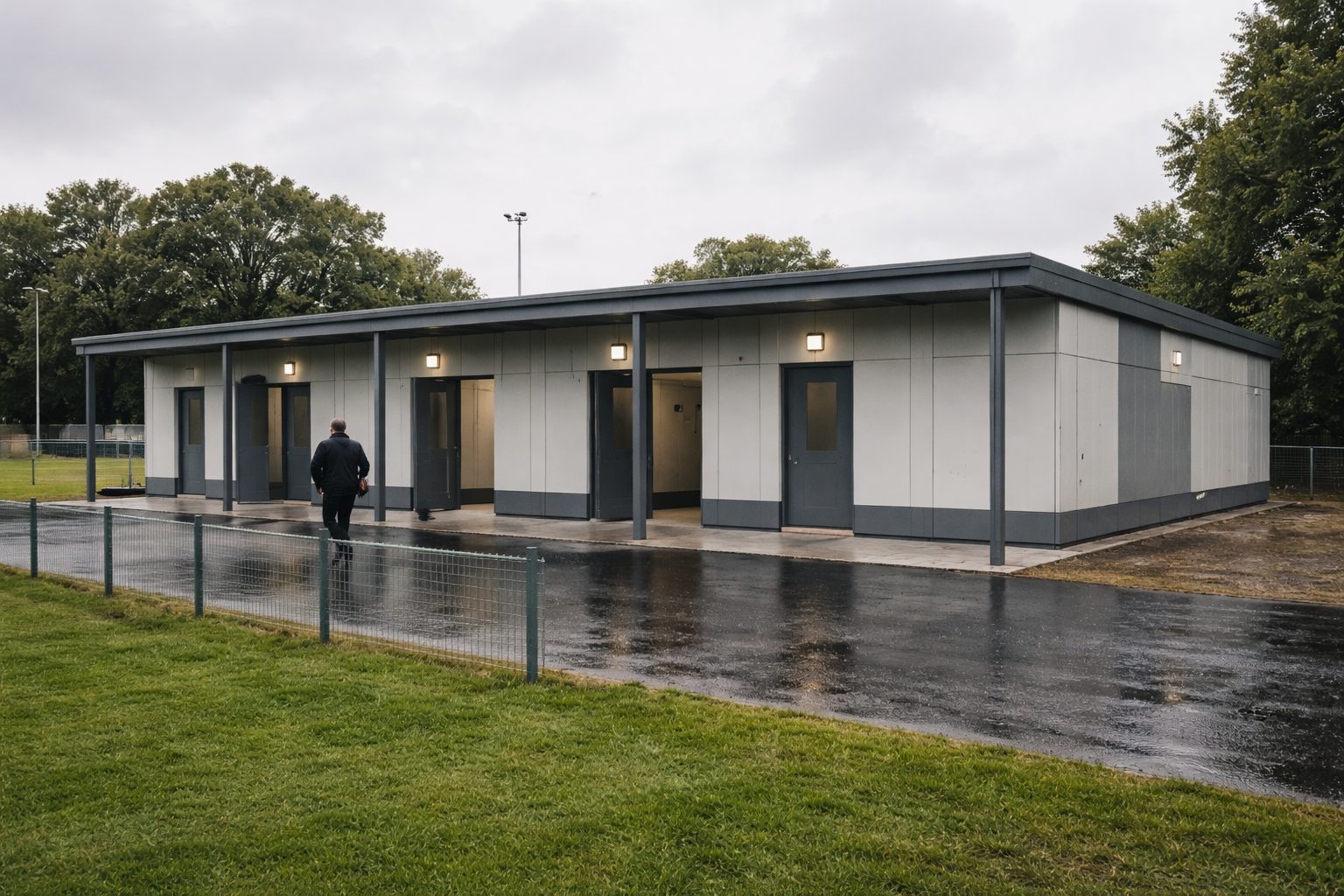
- Modular changing rooms for teams, staff and visitors
- Ticket offices and front-of-house admissions buildings
- Temporary sports buildings for phased or event-led use
How the sports and leisure route works
This page is a sector-routing page, not a full clubhouse or gym specification page. Therefore, the main goal is to move qualified sports and leisure enquiries into the quotation route. Meanwhile, users still gathering information can use the brochure route above the fold.
Primary CTA: request a quote. Secondary CTA above the fold: brochure only. Consultation is placed lower on the page to avoid CTA dilution.
Key applications for modular sports and leisure buildings
The sports and leisure sector covers several venue formats. Consequently, this section clarifies use cases before moving into systems, compliance or gallery content. A modular sports clubhouse may focus on arrival, social space and team changing. By contrast, a modular gym may focus on open internal floor area, training flow and robust servicing. Likewise, modular changing rooms and ticket offices support operational efficiency rather than headline architecture alone.
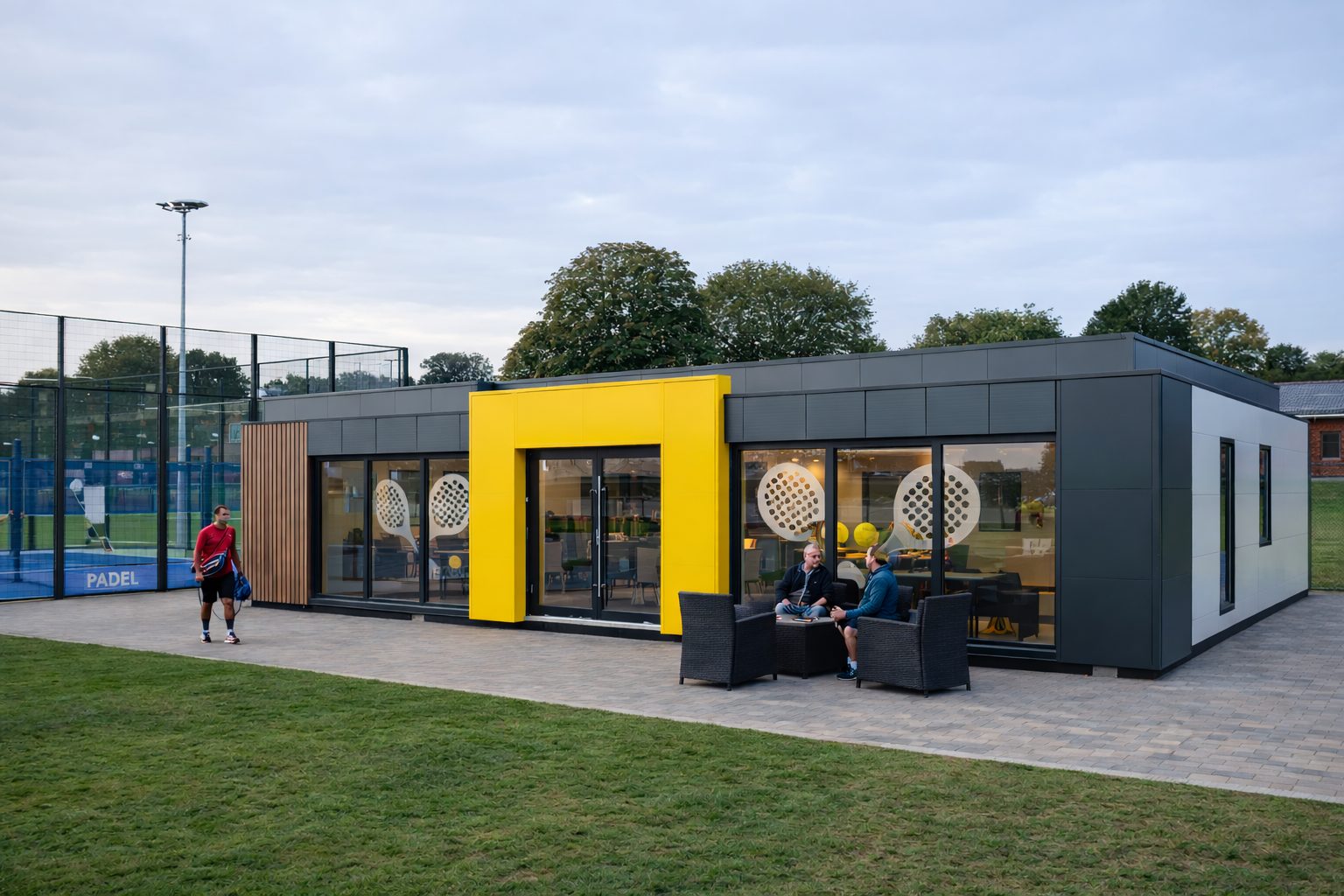
Modular sports clubhouses
Used for reception, social space, viewing, changing and venue support at sports and leisure destinations. Consequently, they combine customer-facing and operational functions in one building.
Discuss a clubhouse →
Modular gyms
Suitable for training, fitness, exercise and community wellbeing environments where clear internal volume matters. Moreover, servicing and ventilation can be planned around active use.
Plan a gym building →
Changing and support buildings
Useful for teams, staff and visitors who need practical changing, washroom and welfare facilities at active venues. As a result, operations run more smoothly on match and event days.
Explore changing buildings →
In addition, we can plan practical details like drainage, washroom servicing, access and phasing. Final specification subject to engineering design and site conditions.
Operational challenges on sports and leisure projects
Venue projects need to work operationally as well as visually. Therefore, the right modular response should balance customer flow, team use, admissions, servicing and live-site logistics. In addition, sports venues often remain active during improvement works, which means programme and access planning matter early.
Typical venue constraints
- Creating strong front-of-house space without disrupting visitors or members
- Balancing changing, social, training and circulation functions in one building
- Coordinating power, water, drainage and washroom services for active venues
- Managing access, cranage and installation on live sports or leisure sites
- Matching temporary or permanent use to programme, budget and venue priorities
Planning, approvals and venue considerations
A sports or leisure project can involve planning, accessibility, site controls, drainage, services and Building Regulations. Therefore, approvals should be considered early rather than left until the end.
For planning context, use the Planning Portal. For general approval guidance, review the UK Building Regulations overview.
Final requirements depend on the local authority and site conditions. Consequently, this page explains typical routes only and does not replace project-specific advice.
Sports and leisure solutions routed from this page
This page routes visitors into the right solution pages rather than competing with them. Therefore, the links below use varied anchor text and move the reader into more specific content once the use case is clearer.
Gym building solutions
Use this route for modular gyms, training buildings and fitness-led venue expansion.
Padel clubhouse solutions
Ideal where reception, social use, viewing space and sports-club customer experience all matter.
Sports project proof
Useful for seeing how real sports and leisure venue layouts and building types vary in practice.
Typical layouts for clubhouses, gyms and changing facilities
Layout planning matters because sports and leisure buildings need to support both visitors and operations. For example, a clubhouse may combine reception, social seating and changing space. Meanwhile, a gym building may need a clearer open-plan training zone with more direct servicing. As a result, layout should be defined around venue use first and appearance second.
01. Clubhouse format
Reception, social space, viewing area and changing provision arranged around customer and team flow.
02. Gym layout
Open exercise area, support rooms, washroom provision and a practical route for users and staff.
03. Changing block
Team changing, washrooms, storage and practical servicing for active sports environments.
04. Ticket office format
Compact admissions and customer entry building suited to events, matches and managed visitor flow.
Systems commonly used for sports and leisure modular buildings
System choice depends on permanence, finish level, transport logic and site conditions. Therefore, this page links outward into system content rather than duplicating technical detail already owned elsewhere.
ISO frame systems
Useful where transportability, robust format and faster mobilisation are priorities for sports and leisure use.
Modular steel frame system
Strong option for permanent sports buildings where finish quality and longer-term use matter more.
Custom modular systems
Helpful where a venue needs stronger branding, bespoke frontage or more tailored clubhouse and leisure layouts.
Final specification subject to engineering design and site conditions.
Sports and leisure gallery
The gallery sits below the main routing content so it supports engagement without slowing the first screen. In addition, the alt text is varied to avoid over-optimisation while keeping sports and leisure relevance clear. Furthermore, each image shows a different building type or venue context relevant to UK sports and leisure projects.
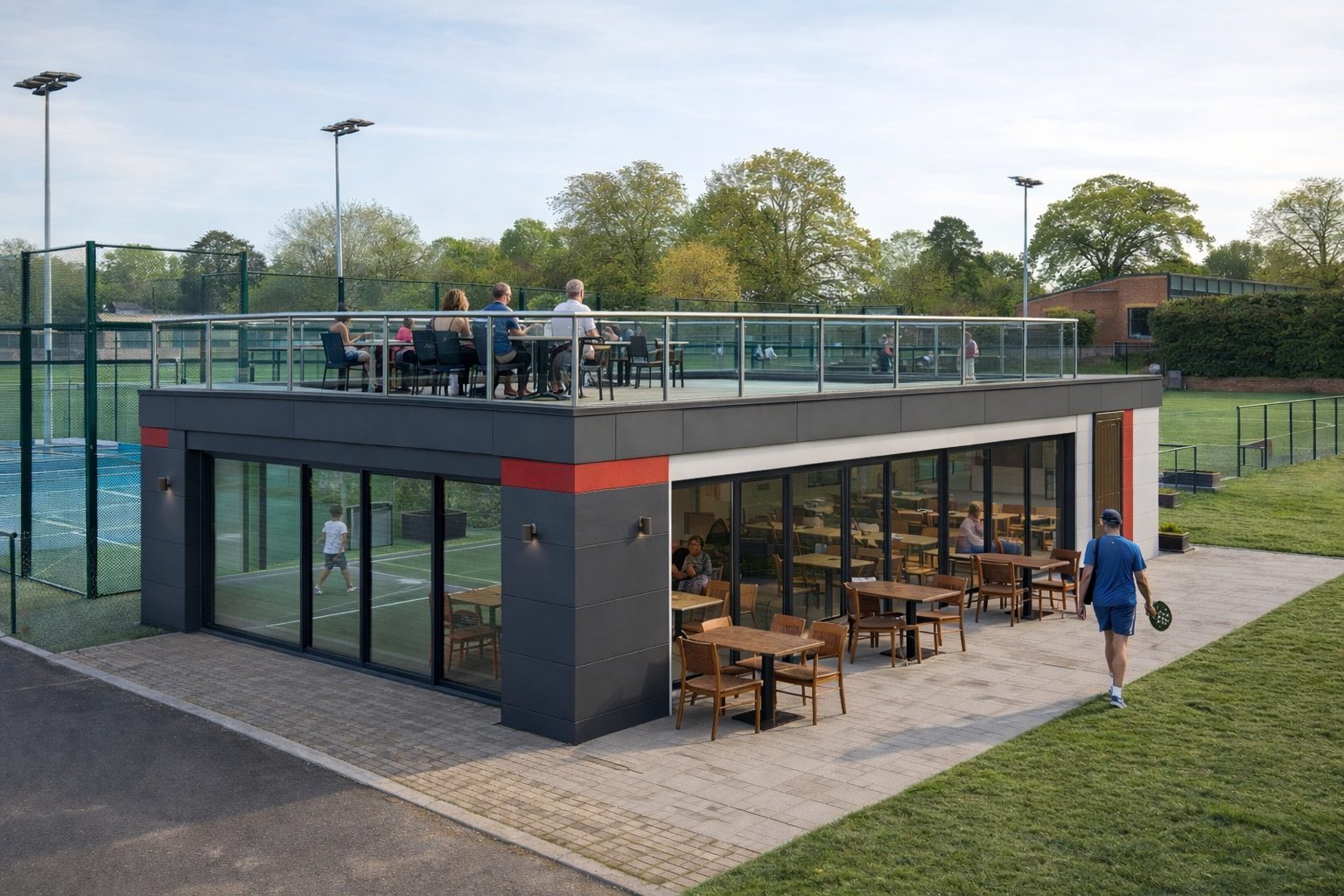
All images show KC Modular Buildings projects or representative sports and leisure venue formats. Consequently, layouts, finishes and specifications may vary depending on the project scope and site conditions.
Delivery, installation and live-site coordination
Sports and leisure buildings often sit on active sites. Therefore, delivery and installation planning needs to happen early. First, access and cranage must be reviewed. Next, services, drainage and washroom requirements need clear interface planning. Then, the install sequence should be aligned with venue operations, member use or event schedules. Consequently, sports modular buildings perform better when logistics are treated as part of the design process.
01. Define the venue use
Clarify whether the building is clubhouse-led, gym-led, changing-led, admissions-led or mixed-use from the start. As a result, design and pricing align with the actual venue requirement.
02. Lock the room schedule
Set reception, social, changing, training and washroom needs before design and pricing move too far. Furthermore, this avoids costly revisions later in the programme.
03. Review site logistics
Check access, cranage, service routes, drainage and any live-site visitor or member constraints before manufacture is finalised. Consequently, installation runs more smoothly.
04. Deliver and complete
Coordinate manufacture, installation and interfaces so the venue opens with less disruption and better programme control. In addition, snagging and handover are planned from the outset.
Sports and leisure FAQs
These questions are unique to the sports and leisure sector page. Therefore, they support venue-specific intent without turning this page into a full clubhouse or gym specification page. Moreover, each answer is written to help both human readers and AI search engines understand the topic clearly.
Are modular buildings suitable for sports and leisure venues?
Yes. Modular buildings for sports and leisure can be designed for clubhouses, gyms, changing facilities, ticket offices and visitor support spaces. However, the layout, specification and services must suit the intended operation. Consequently, early planning ensures the building meets both venue and regulatory requirements.
Can modular sports buildings be used as temporary venue space?
Yes. Temporary sports buildings are often used for events, seasonal venue expansion, short-term changing facilities, interim club spaces and temporary leisure support functions. Furthermore, they can be relocated or removed once the temporary need has passed.
What affects delivery and installation for sports and leisure projects?
Access, cranage, utilities, drainage, changing room servicing, visitor circulation and the approved project scope all influence the delivery and installation route. As a result, these factors should be reviewed before manufacture begins rather than addressed on site.
Do modular sports and leisure buildings require approvals?
Yes, depending on the site, intended use, permanence, planning position and local authority requirements. Therefore, it is important to check with the relevant local authority early in the project. Final requirements depend on the local authority and site conditions.
Discuss your sports and leisure modular building project
Whether you need modular sports clubhouses, modular gyms, modular changing rooms or other venue support buildings, KC Modular Buildings can help define the right system, layout and route to delivery.
What to send us
- Site location and access details
- Intended venue use (clubhouse, gym, changing, mixed)
- Approximate size or room schedule
- Programme or target opening date
- Any planning or approval status already known
What you get back
- Feasibility review and system recommendation
- Indicative layout or room schedule response
- Budget guidance based on your scope
- Delivery and installation outline
- Next steps and programme advice
Typical quote response within 48 hours. Final specification subject to engineering design and site conditions.
Authority and standards references
The following external links provide independent guidance relevant to sports and leisure modular building projects. Consequently, they support procurement confidence and due diligence.
- Planning Portal – UK planning guidance and application routes
- UK Building Regulations – approval routes and compliance overview
- Health and Safety Executive (HSE) – workplace and construction site safety
- ISO 9001:2015 – quality management systems standard
- Constructionline – pre-qualification and supply chain verification
Related pages
These routes deepen the topic and move the visitor into more specific venue, technical and trust content. Furthermore, they prevent this sector page from doing too much while still supporting the full buyer journey.
Main modular buildings pillar
Use the pillar page for broader system comparison and higher-level commercial modular building routes.
Sports project examples
Review venue proof content and project examples that show how sports and leisure layouts vary in practice.
Quality certifications
Support procurement confidence with quality and manufacturing credibility signals relevant to sports and leisure modular buildings.
Final specification subject to engineering design and site conditions. All content on this page is for general guidance only and does not constitute a contractual offer. Consequently, project-specific advice should be sought before proceeding.