
fbpx

Modular Welfare Units

HomeSolutions › Modular Welfare Units

Modular Welfare Units UK

Modular welfare units UK provide essential facilities for construction sites, infrastructure projects and temporary compounds. Therefore site teams can access rest areas, sanitary facilities and drying rooms without waiting for permanent buildings.

In practice, welfare units support worker safety, hygiene and productivity. However the best configuration depends on workforce size, project duration and site logistics.

Portable and permanent welfare buildings

ISO volumetric systems are widely used for rapid site deployment. Meanwhile bespoke modular welfare buildings can support larger site compounds or permanent welfare facilities for long-term projects.

As a result project managers can scale welfare provision quickly while still meeting site compliance requirements.

Typical quote response within 48h (Mon–Fri)
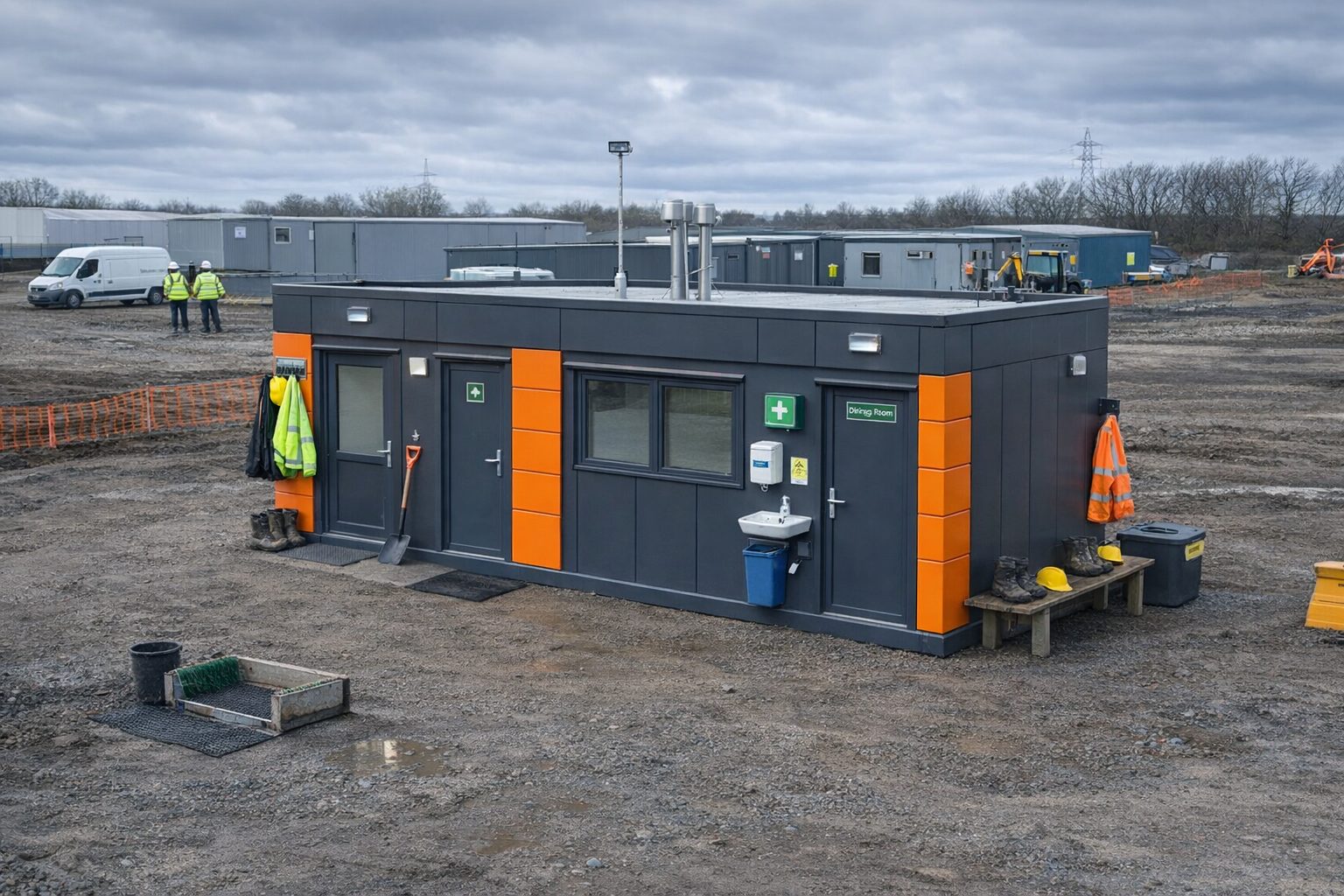
Portable ISO frame modular welfare unit used on a UK construction site.
Portable ISO welfare unit Caption: Portable modular welfare unit for construction sites.
Description: ISO frame modular welfare unit installed on a UK construction site providing rest area and welfare facilities for project teams.
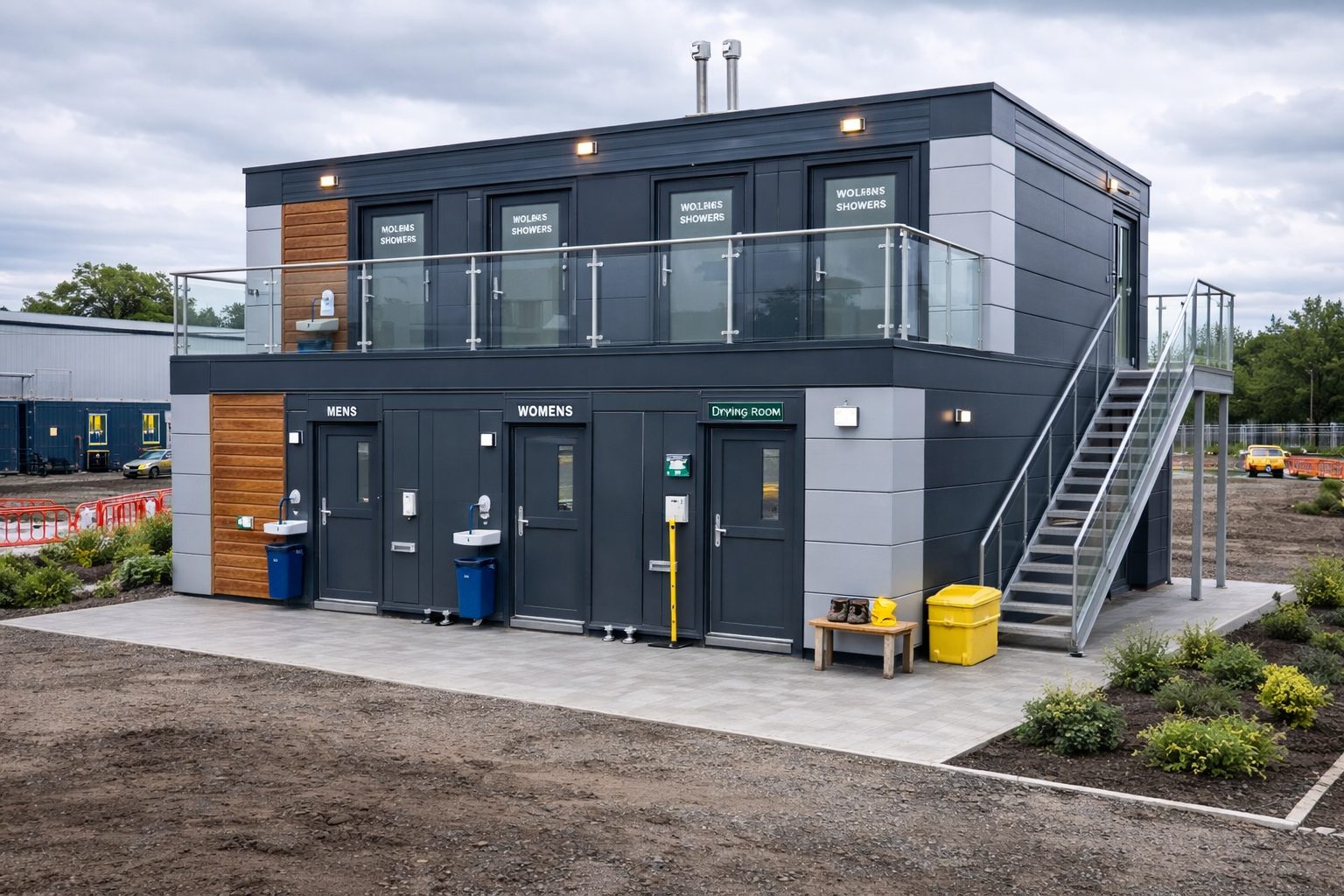
Bespoke modular welfare building designed for large construction projects.
Bespoke modular welfare building Caption: Bespoke welfare facility for infrastructure projects.
Description: Bespoke modular welfare building used for larger site compounds requiring expanded welfare capacity.
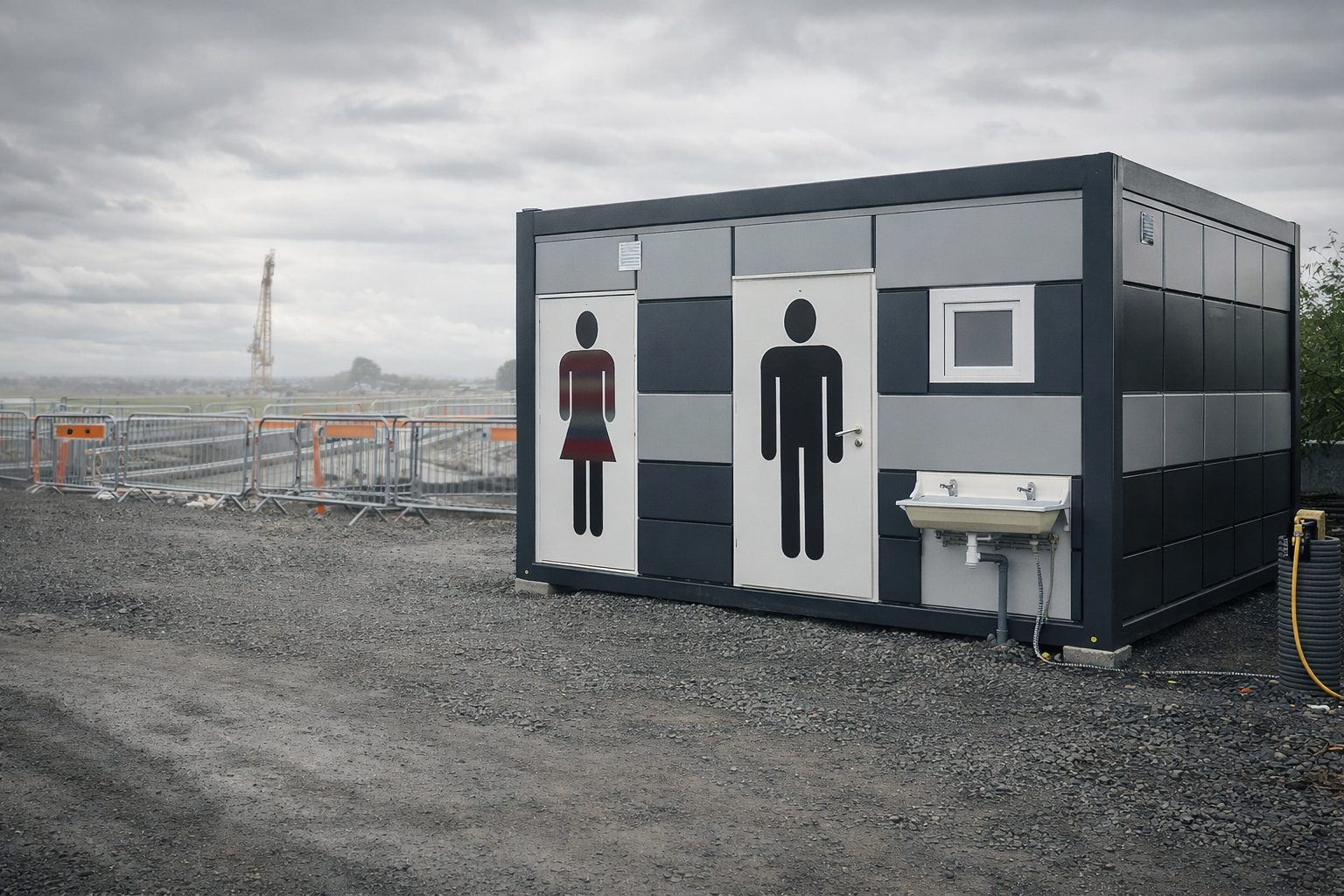
Construction welfare cabin installed on a live project site in the UK.
Construction welfare cabin Caption: Site welfare cabin for construction workers.
Description: Modular welfare cabin providing rest, sanitation and drying facilities for site workers.
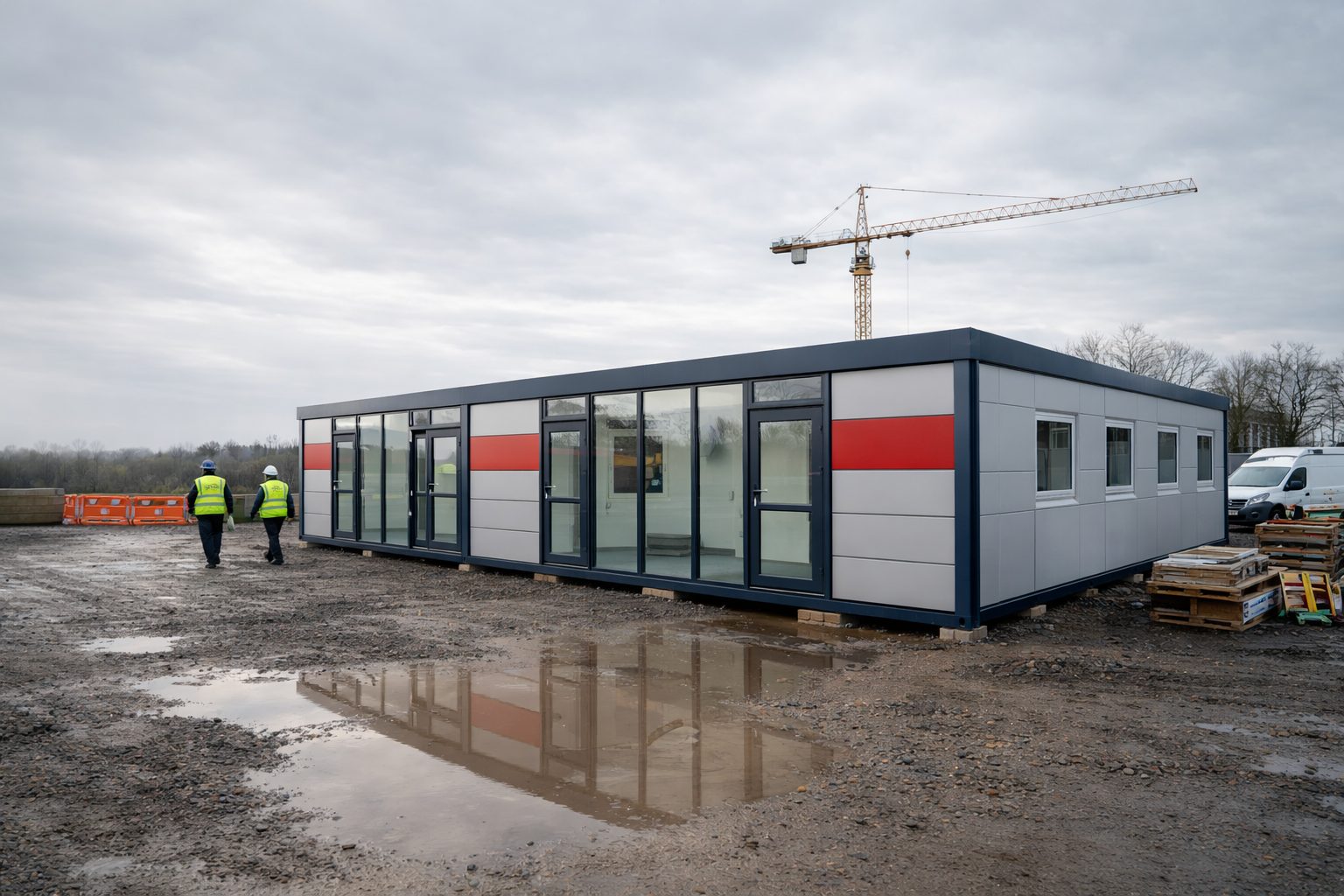
Temporary modular welfare and office unit used on construction site in Manchester.
Site welfare compound Caption: Modular welfare and office unit — Manchester construction site.
Description: Temporary modular welfare and site office unit supporting operational facilities on a construction project in Manchester.

KC Modular Buildings trust badge graphic.
Site-ready modular welfare delivery Caption: Trust badge — modular welfare units UK. Description: Reassurance badge used on modular welfare unit pages to highlight rapid deployment, practical site facilities and compliance-led planning for UK construction and infrastructure projects.
Typical quote response within 48h (Mon–Fri) Call: 01782 561110 Portable & permanent welfare pathways ISO · Bespoke · Timber systems Designed for live site conditions

When sites need welfare space fast

Construction and infrastructure projects often need welfare facilities before the main works are fully underway. Therefore modular welfare units UK provide a fast route to essential site support without waiting for permanent buildings.

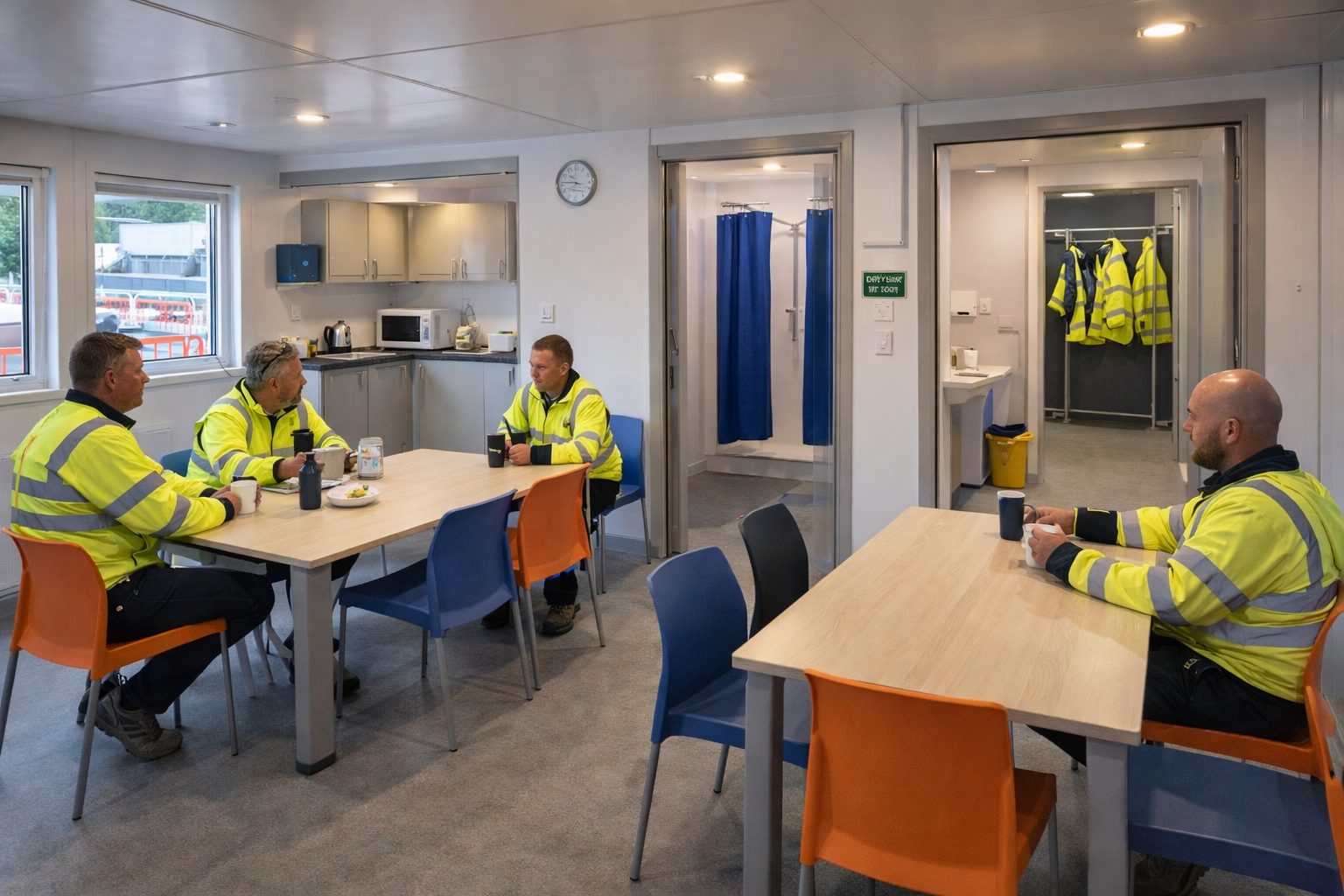
In practice, site teams need more than a simple cabin. However modern welfare units can combine rest space, canteens, drying rooms, toilets and changing areas in one structured setup. As a result, projects can protect worker welfare while keeping operations moving.

  • Rest and break areas for site workers
  • Drying rooms for wet weather clothing and PPE
  • Sanitary facilities for daily site use
  • Canteen and refreshment space for welfare breaks
  • Temporary or long-term welfare compounds

Moreover, modular welfare buildings can scale from a single temporary unit to a larger compound depending on workforce size and project duration.

Modular welfare units UK installed for construction workers on a live project site.
Caption: Construction welfare cabin — UK site reference.
Description: A modular welfare cabin installed on a live UK project site, providing break space, sanitation and worker welfare support during active construction works.

Key features of modular welfare units

Modern construction projects require reliable welfare facilities for site teams. Therefore modular welfare units UK are designed to support worker comfort, hygiene and safety from the early stages of a project. However the configuration can change depending on workforce size and site conditions.

Rapid deployment

Modular welfare cabins can be delivered and installed quickly. As a result project teams gain access to essential welfare facilities without delaying site operations.

Integrated welfare spaces

Many units combine rest areas, drying rooms, sanitary facilities and small kitchen spaces. Therefore workers can access daily welfare facilities within one building.

Portable or permanent options

Some welfare units are temporary site cabins, while others are permanent modular welfare buildings. However both options follow similar welfare principles.

Compliance-aware design

Layouts typically consider fire strategy, accessibility and welfare regulations. As a result the facilities better support safe working environments.

Expandable welfare compounds

Multiple units can be combined to create larger welfare compounds. Moreover this approach allows projects to scale welfare facilities as workforce numbers change.

Durable construction

Steel modular structures provide robust buildings designed for demanding site environments. Therefore welfare facilities remain reliable throughout the project lifecycle.

Choose the right welfare building pathway

Welfare projects work best when the system route is clear from the start. Therefore we separate temporary site welfare, permanent welfare buildings and premium welfare environments into the correct modular pathway. However each option can still be adapted to suit project scale and site access.
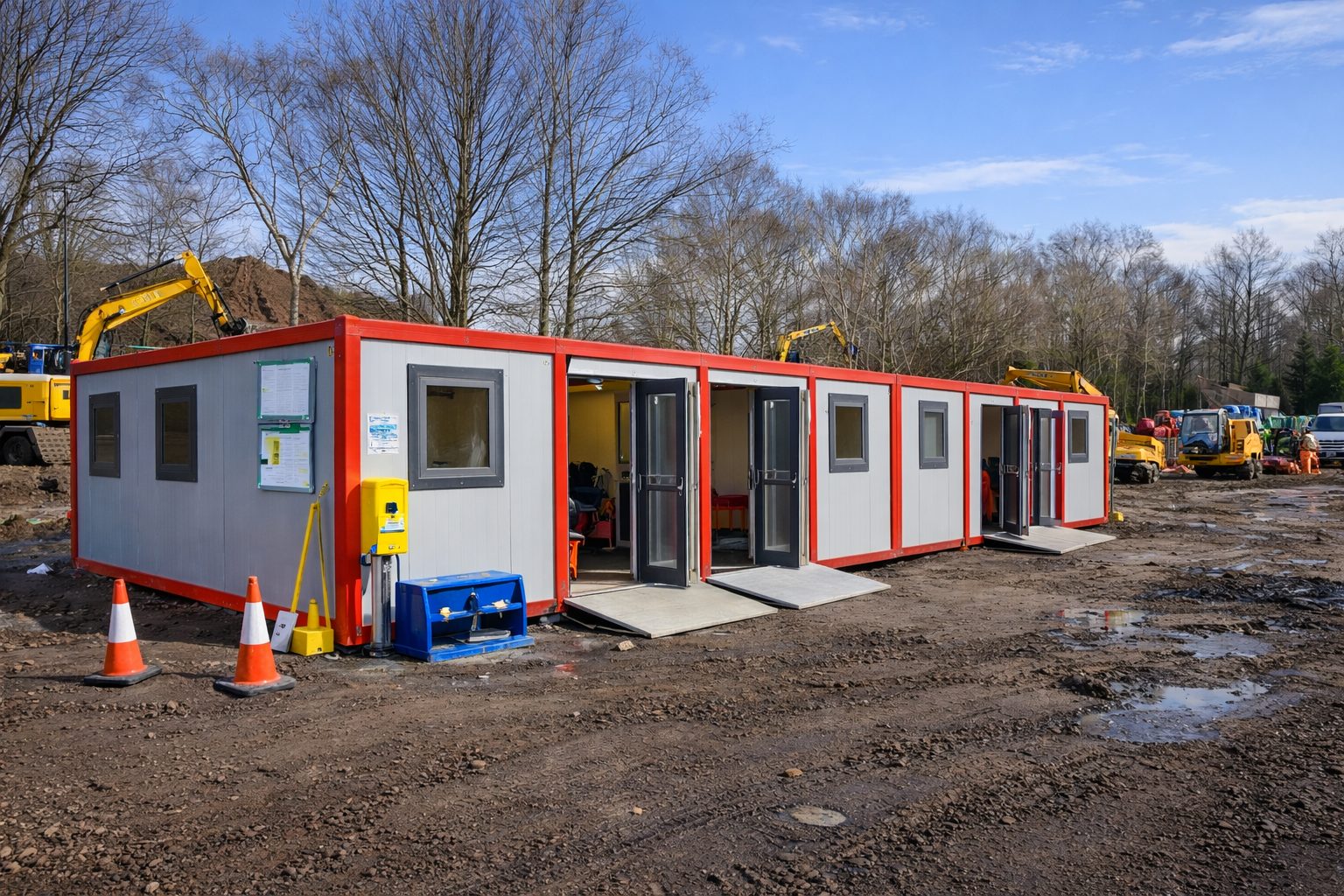
Modular welfare units UK installed for live construction site use.

1) Portable Site Welfare Units

Portable welfare units are best for fast-moving construction and infrastructure projects. As a result, site teams get essential facilities quickly without waiting for permanent welfare buildings.

  • Best use: temporary compounds and live construction projects
  • Typical facilities: rest rooms, canteens, toilets and drying areas
  • Main advantage: rapid delivery and practical relocation if the site changes
Caption: Portable modular welfare units — UK construction site.
Description: Modular welfare units installed for live construction use in the United Kingdom, providing fast access to site welfare facilities for project teams.

Explore ISO Frame Systems

Permanent ISO frame welfare building for long-term operational use in the UK.

2) Permanent Modular Welfare Buildings

Permanent welfare buildings are suitable for long-duration projects, depots and operational sites that need a more fixed welfare solution. Therefore they are often chosen when longevity and improved performance matter more than relocation.

  • Best use: permanent compounds, depots and long-term infrastructure sites
  • Performance route: can follow Part L 2021 energy pathway intent
  • Main advantage: stronger long-term specification and professional site presence
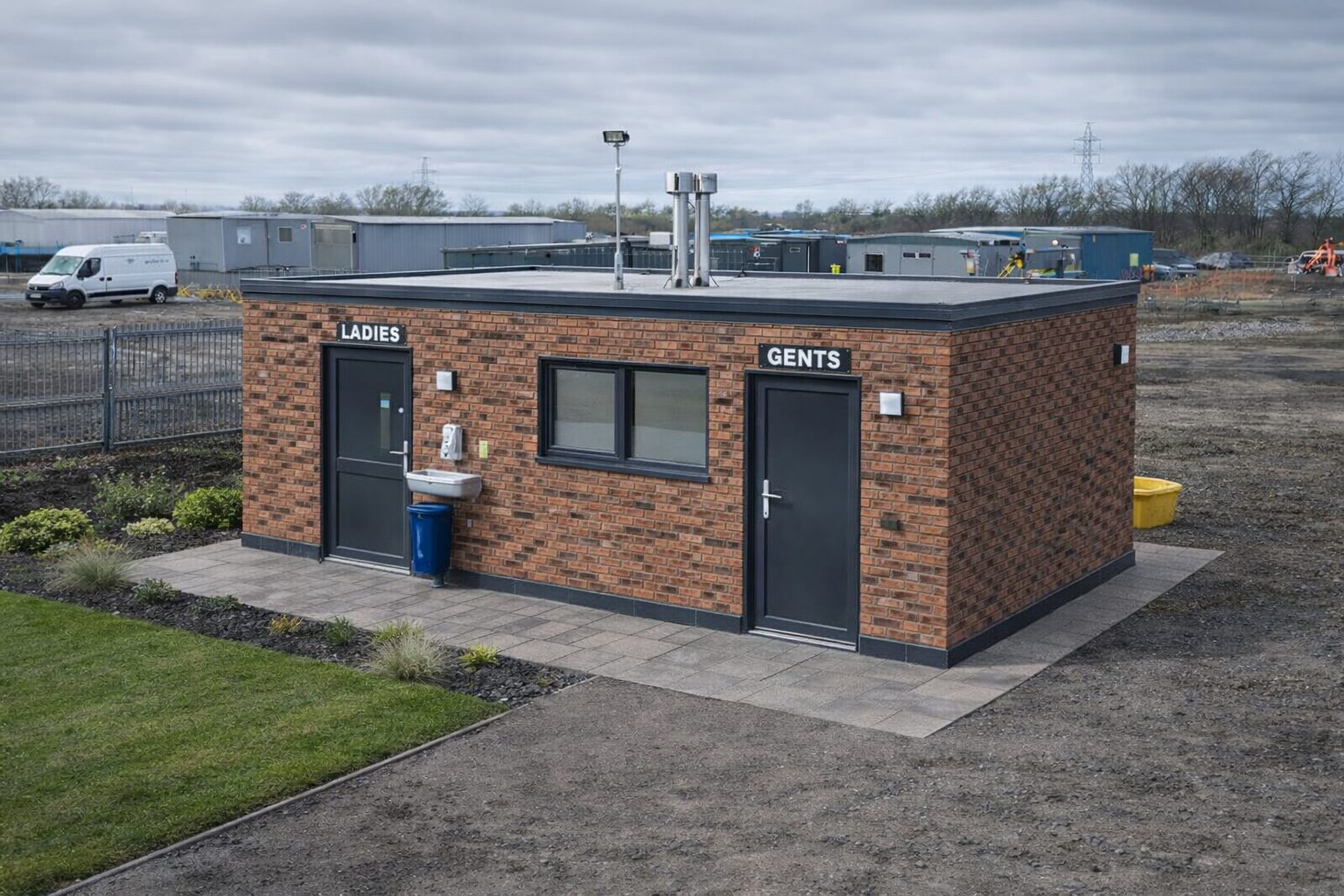
Caption: Permanent ISO frame welfare building — UK reference.
Description: A permanent ISO frame welfare building used for long-term site operations in the UK, illustrating a higher-spec welfare pathway for extended project durations.

Explore Permanent ISO Welfare Options

Premium modular welfare building interior and finish example for UK projects.

3) Premium Welfare Environments

Some projects need more than basic site welfare. However premium modular welfare environments can provide improved finishes, better user comfort and a more professional staff experience where welfare quality is a priority.

  • Best use: flagship projects, long-term compounds and higher-standard welfare provision
  • Typical upgrades: improved interiors, better finishes and enhanced comfort
  • Main advantage: stronger user experience for long-duration site teams
Caption: Premium modular welfare environment — UK reference.
Description: A premium modular welfare building reference image showing upgraded internal finish standards suited to longer-term UK project compounds and higher-quality welfare provision.

Request a Quote

Moreover, modular welfare units UK are easier to plan when the intended lifespan and workforce size are agreed early. As a result, welfare provision can be matched more accurately to project needs.

Typical welfare unit specification

Construction projects require practical facilities that support workforce safety and daily operations. Therefore modular welfare units UK are usually designed around durability, hygiene and reliable site performance.

Typical building use Construction welfare, infrastructure projects, site compounds
Common facilities Rest areas, drying rooms, canteen space and sanitation
Construction system Steel modular structures designed for demanding site environments
Fire strategy Options including REI60 tested assemblies where required
Energy pathway Permanent buildings can follow Part L 2021 performance pathway intent

However final specifications depend on project duration, workforce size and local compliance requirements. As a result welfare layouts are usually confirmed early in the planning process.
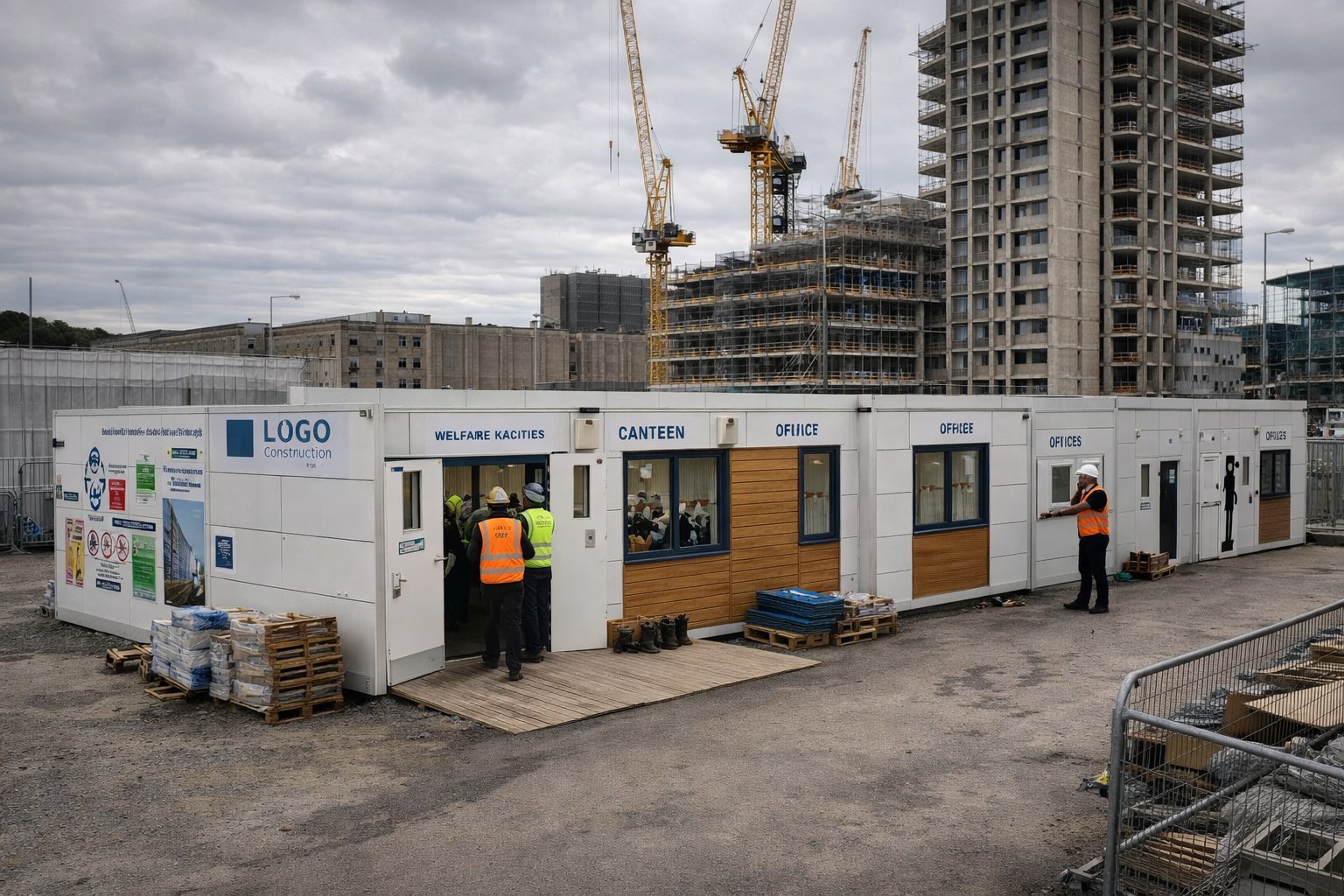
Modular welfare units supporting construction workers on a project site in Birmingham, West Midlands.
Caption: Modular welfare units — Birmingham construction project.
Description: A modular welfare unit supporting construction workers on a project site in Birmingham, West Midlands, demonstrating practical welfare facilities used on UK construction projects.

From site need to welfare handover

Welfare projects often move quickly because live sites cannot operate well without proper staff facilities. Therefore we use a simple delivery flow that keeps decisions moving and reduces late changes. However access, workforce numbers and services still shape the final programme.

1) Scope the welfare requirement

Confirm headcount, project duration, required facilities and whether the welfare building is temporary or long-term.

2) Choose the right building pathway

Portable welfare units suit fast-moving sites, while larger or permanent projects may need a more fixed welfare building route.

3) Set the layout and compliance route

Rest areas, canteens, drying rooms and sanitary zones are agreed early. As a result the project team can align specification and approvals sooner.

4) Manufacture and quality checks

Factory build improves repeatability and protects quality. Meanwhile site preparation can continue in parallel where needed.

5) Delivery and installation

Logistics, crane access and positioning are planned before arrival. Therefore installation on live sites is usually more controlled and efficient.

6) Commissioning and handover

The welfare unit is checked, connected and handed over for use. In practice this helps the site team start operations with fewer delays.

Tip: include the site postcode and estimated workforce in the quote request form. As a result the welfare route can be scoped more accurately from the start.

Modular welfare units in real project environments

Welfare buildings are used across many project types, not only construction sites. Therefore modular welfare units UK can support infrastructure works, large public events and temporary operational compounds. However each scenario requires slightly different welfare layouts and facility combinations.
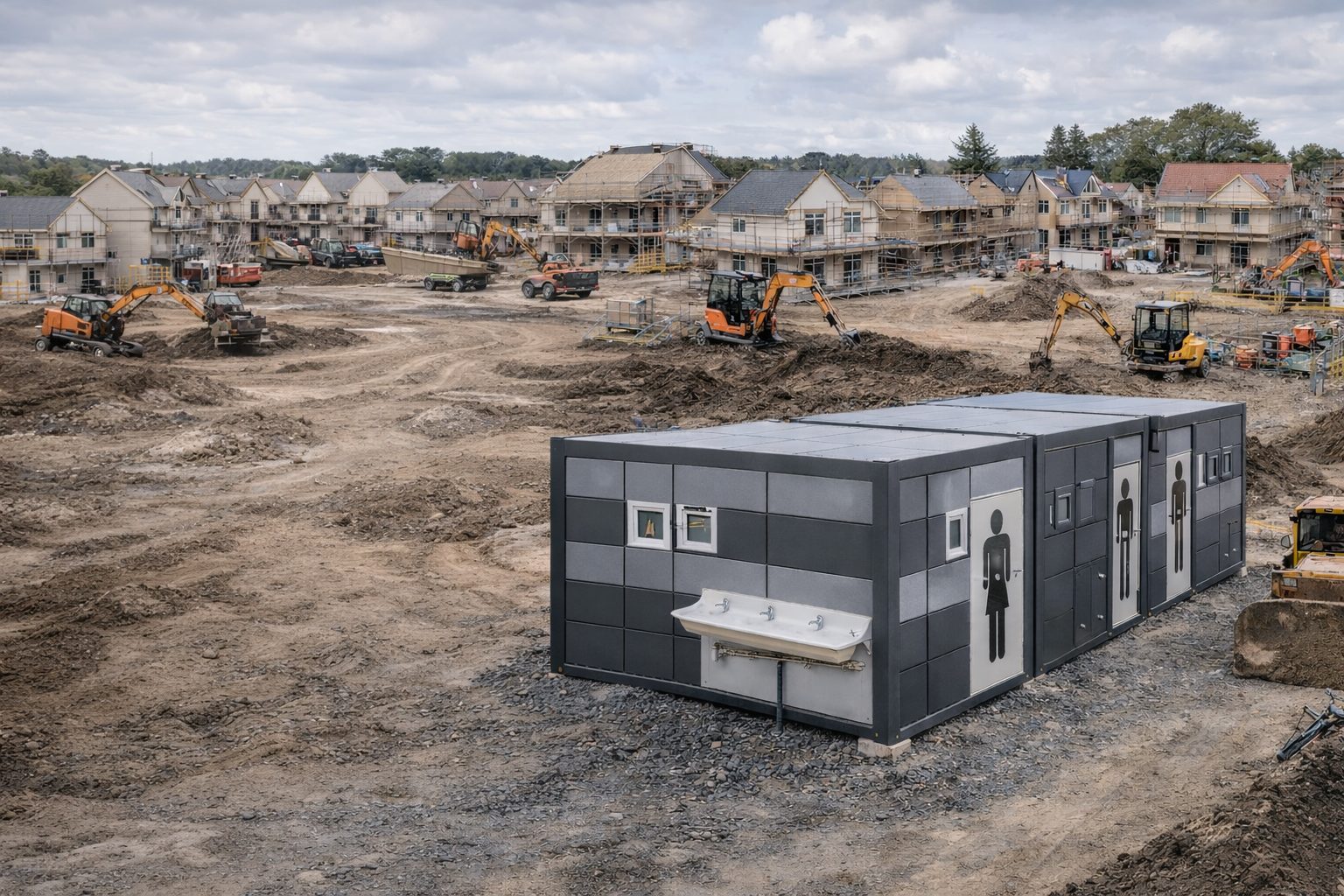
Modular welfare unit supporting construction workers on a UK building project.

Construction site welfare unit

Many construction projects rely on modular welfare cabins to support worker breaks, sanitation and drying facilities. As a result site teams gain practical welfare support from the earliest project stages.
Caption: Modular welfare cabin — UK construction site.
Description: A modular welfare unit installed on a live construction project providing essential rest space, sanitation and welfare facilities for site workers.

View case studies

Temporary modular welfare and sanitation units installed for a UK festival event.

Event welfare facilities

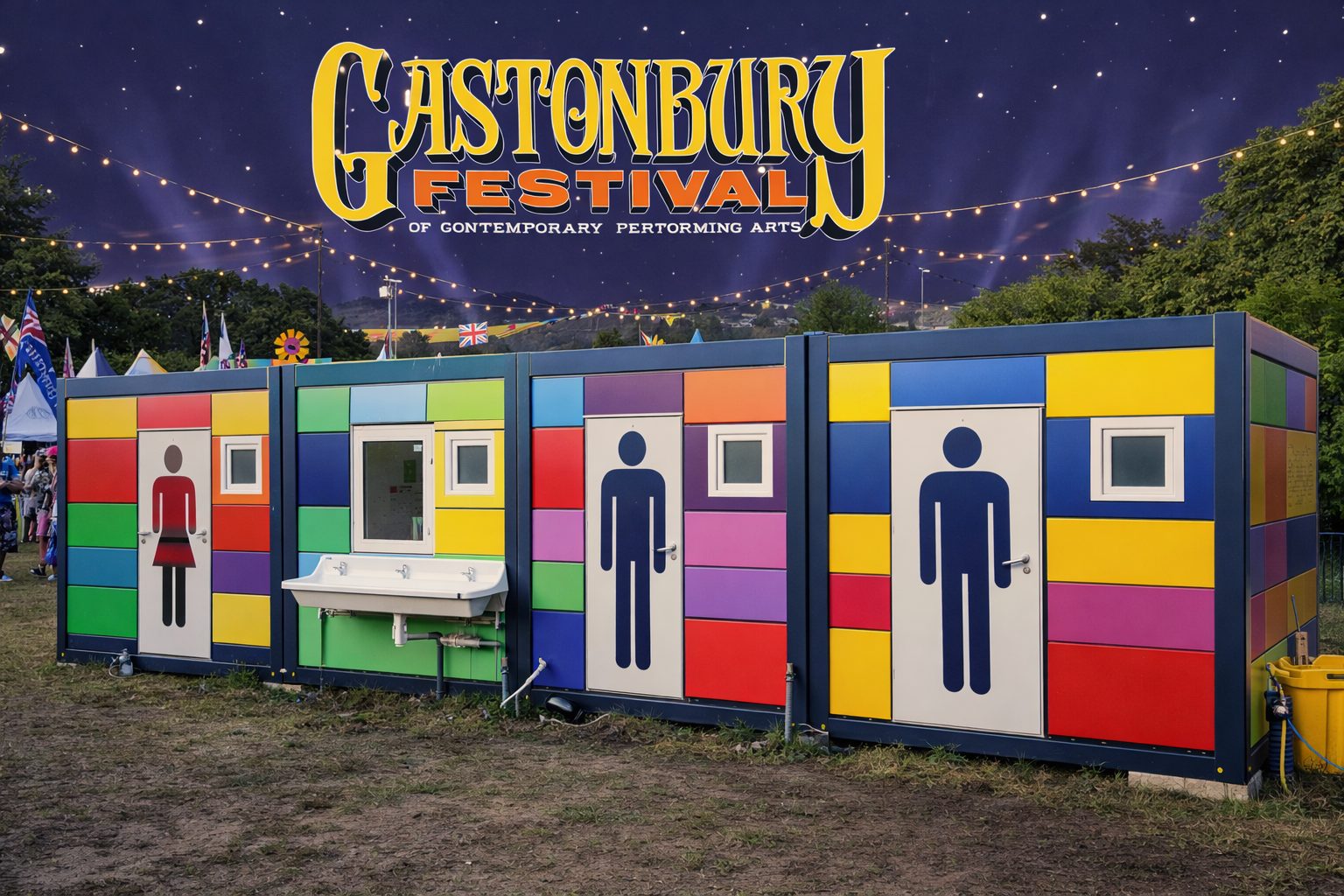
Large public events require sanitation, washing facilities and rest areas for staff and service teams. Therefore modular welfare units are commonly used for festivals and temporary event infrastructure.
Caption: Festival welfare units — UK event infrastructure.
Description: Modular welfare and sanitation units used for major UK events such as festivals, providing temporary facilities for staff and operational teams.

Request a Quote

ISO frame modular welfare system installed for UK infrastructure project.

Infrastructure project welfare compound

Infrastructure projects often require larger welfare compounds for extended workforces. However modular systems allow facilities to scale quickly as project phases change.

Caption: Modular welfare compound — UK infrastructure site.
Description: ISO frame modular welfare compound providing rest areas and sanitation facilities for infrastructure workers on large UK construction projects.

Back to solutions

Moreover modular welfare units UK can expand from a single welfare cabin to a full compound depending on workforce size, project duration and operational requirements.

Modular Welfare Units UK vs Traditional Site Welfare Setups

Project teams often compare modular welfare units UK with ad-hoc or traditional welfare setups when planning live site facilities. Therefore the table below highlights the main differences in speed, hygiene, flexibility and long-term practicality. However the final choice still depends on project duration and workforce size.

Decision factor Modular welfare units Traditional or ad-hoc welfare setup
Speed of deployment Factory-built units can be delivered and installed quickly once site access is ready. On-site assembly and separate facility sourcing can delay worker welfare provision.
Worker comfort Integrated rest space, drying areas and sanitary facilities support daily welfare needs. Facilities are often split across temporary setups and may provide a lower standard of comfort.
Hygiene and practical use Purpose-built welfare layouts improve hygiene, cleaning and ease of use. Temporary arrangements may be harder to maintain consistently on busy sites.
Flexibility Units can scale from one cabin to a full welfare compound as the project grows. Expanding ad-hoc setups often becomes less efficient over time.
Best-fit projects Construction sites, infrastructure schemes, events and long-duration compounds. Very small or short-term arrangements where minimal welfare provision is being used.
Mobile tip: swipe left or right to view the full comparison table.
Fast site setup → Portable welfare unit Longer-term compound → Permanent welfare building Higher standard welfare → Premium modular route

Common modular welfare unit layouts

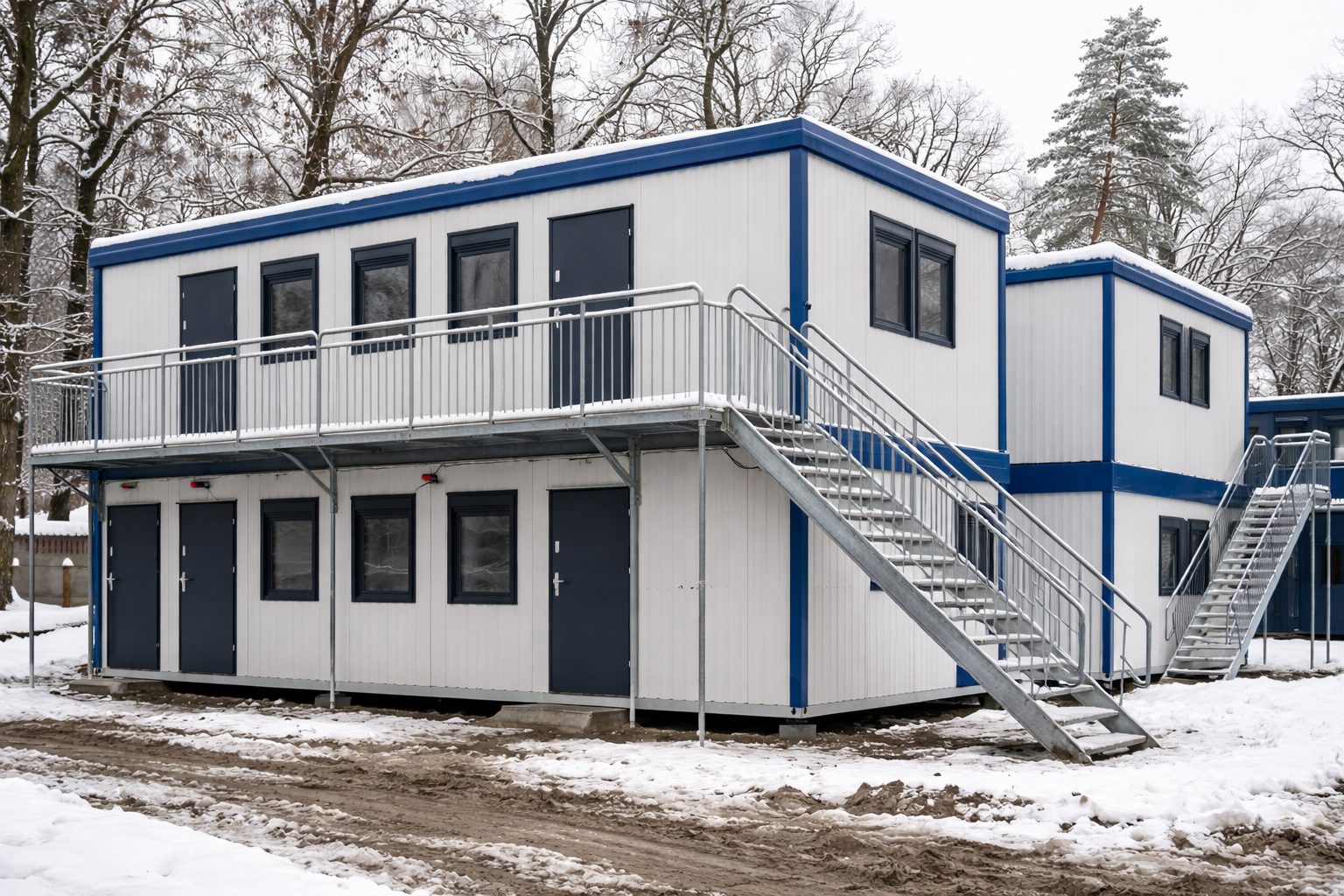
Welfare facilities can be configured in several ways depending on workforce size and site requirements. Therefore modular welfare units UK often combine rest areas, sanitation and changing facilities within one building. However some projects require specialised sanitary layouts instead.
Combo modular welfare unit with rest area and sanitation facilities for construction workers.

Combined welfare unit

Many construction projects choose combined welfare units because they provide several facilities within a single building. As a result workers can access rest space, washing facilities and sanitation areas conveniently.

  • Rest and break area for workers
  • Sanitary facilities and washing space
  • Drying room for clothing and PPE
  • Compact welfare building for busy sites
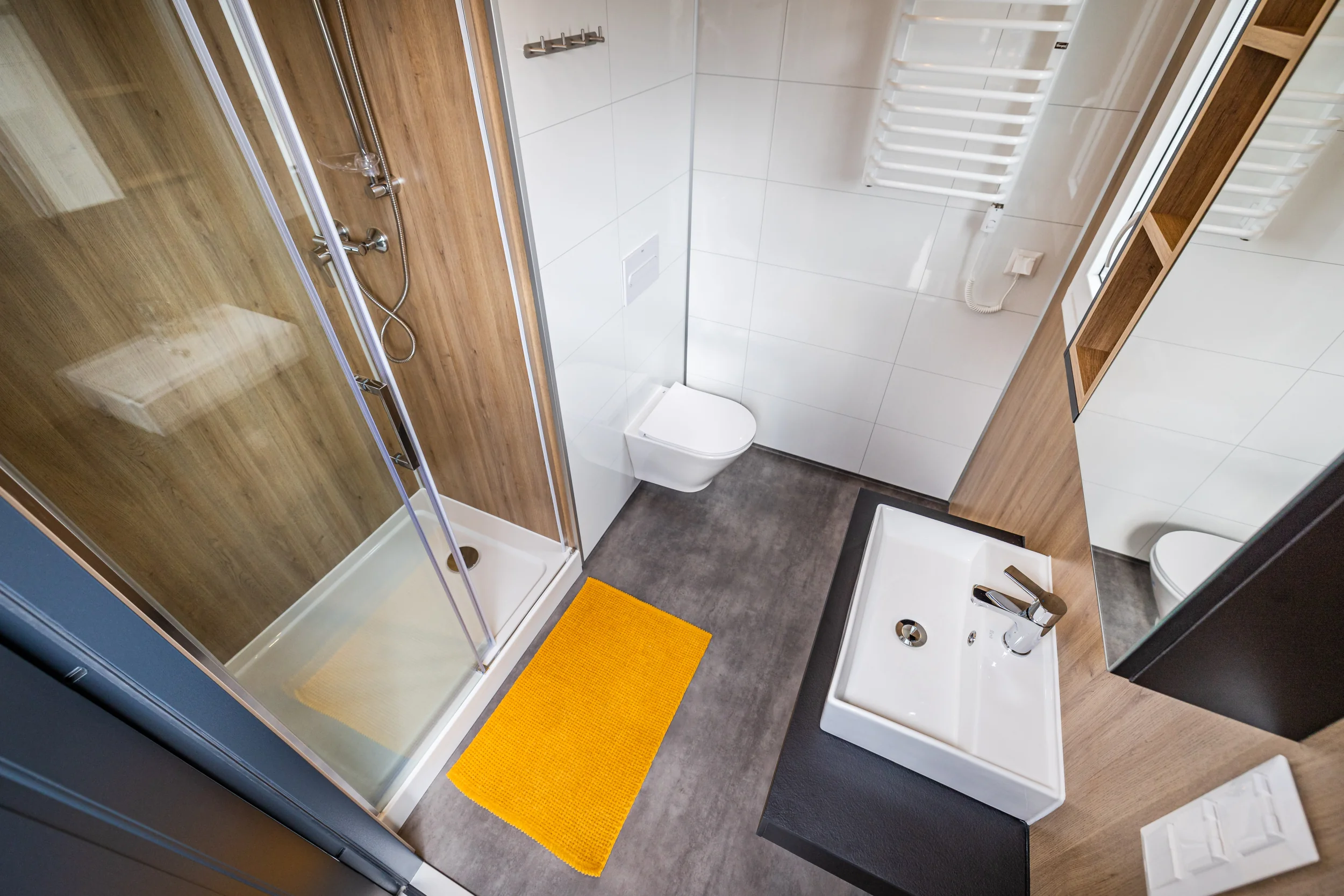
Caption: Combo modular welfare unit — UK construction site.
Description: A combined modular welfare unit providing rest areas and sanitation facilities for construction workers on UK project sites.
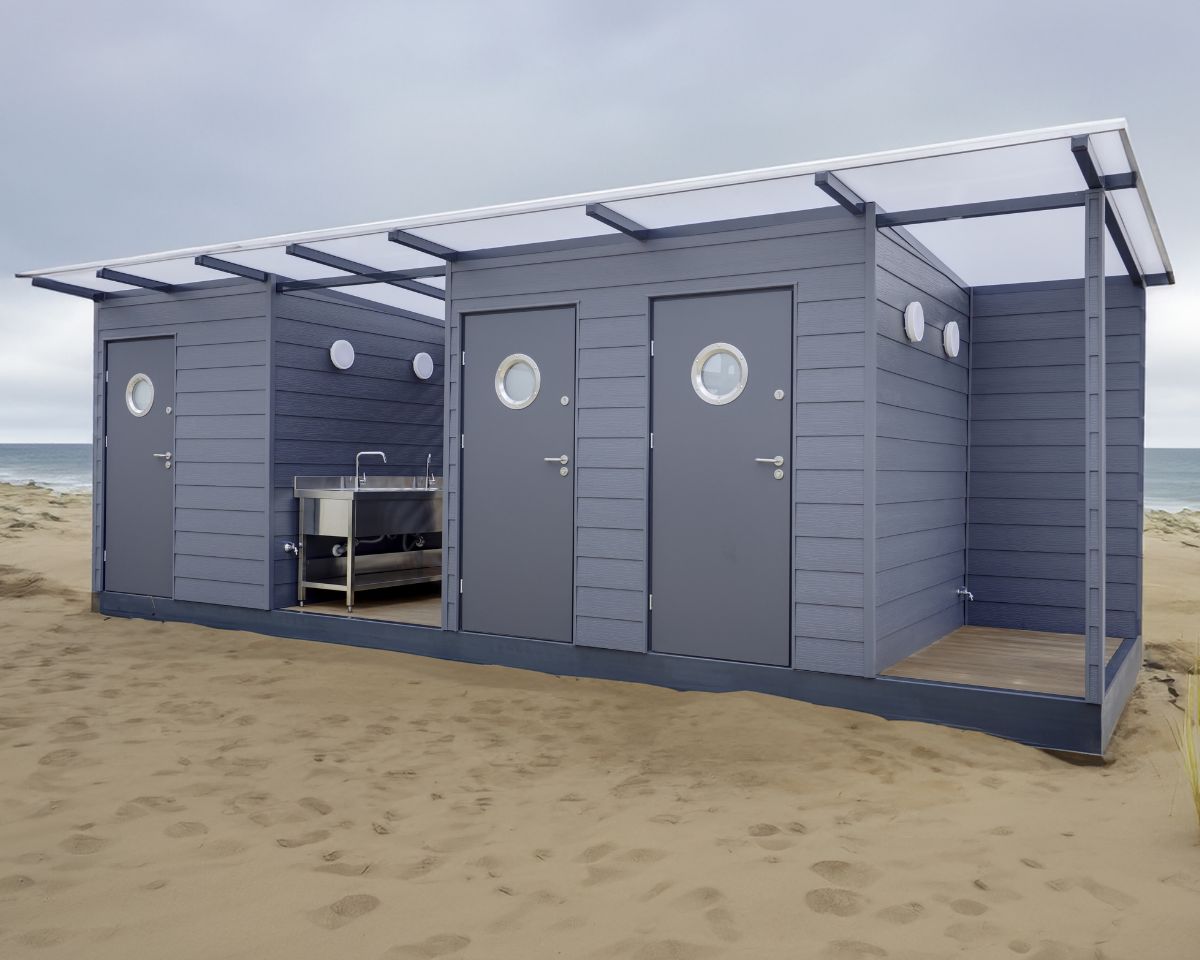
Portable twin bathroom welfare unit used for temporary facilities at UK sites.

Sanitary welfare unit

Some projects require dedicated sanitary facilities rather than full welfare buildings. Therefore portable bathroom units are commonly used for construction sites, festivals and temporary work environments.

  • Separate toilet and wash facilities
  • Portable sanitation for temporary sites
  • Units suited to events or infrastructure projects
  • Quick installation and relocation
Caption: Portable sanitary welfare unit — UK temporary facility.
Description: A portable twin bathroom modular unit providing sanitation facilities for temporary UK construction or event sites.

Moreover modular welfare units UK can expand from a single sanitary unit to a full welfare compound depending on workforce size and project duration.

UK coverage for modular welfare units and site compounds

Birmingham, West Midlands Manchester, Greater Manchester Leeds, West Yorkshire London, Greater London Liverpool, Merseyside Bristol, South West England Reading, Berkshire Southampton, Hampshire Cardiff/Caerdydd, Wales Swansea/Abertawe, Wales Glasgow/Glaschu, Scotland Edinburgh/Dùn Èideann, Scotland Inverness/Inbhir Nis, Scotland Dartford, Kent

Site location affects delivery planning, crane access and the size of the welfare setup that can be positioned safely. Therefore it helps to include the project postcode in your quote request from the start. However if the site is still being confirmed, we can still advise on the typical information needed for welfare planning and access review.

Compliance, safety and welfare standards

Construction welfare facilities must support worker safety, hygiene and comfort while operating on active project sites. Therefore modular welfare units UK are usually designed with practical site requirements and regulatory guidance in mind. However the final welfare specification still depends on project size, workforce numbers and local site rules.
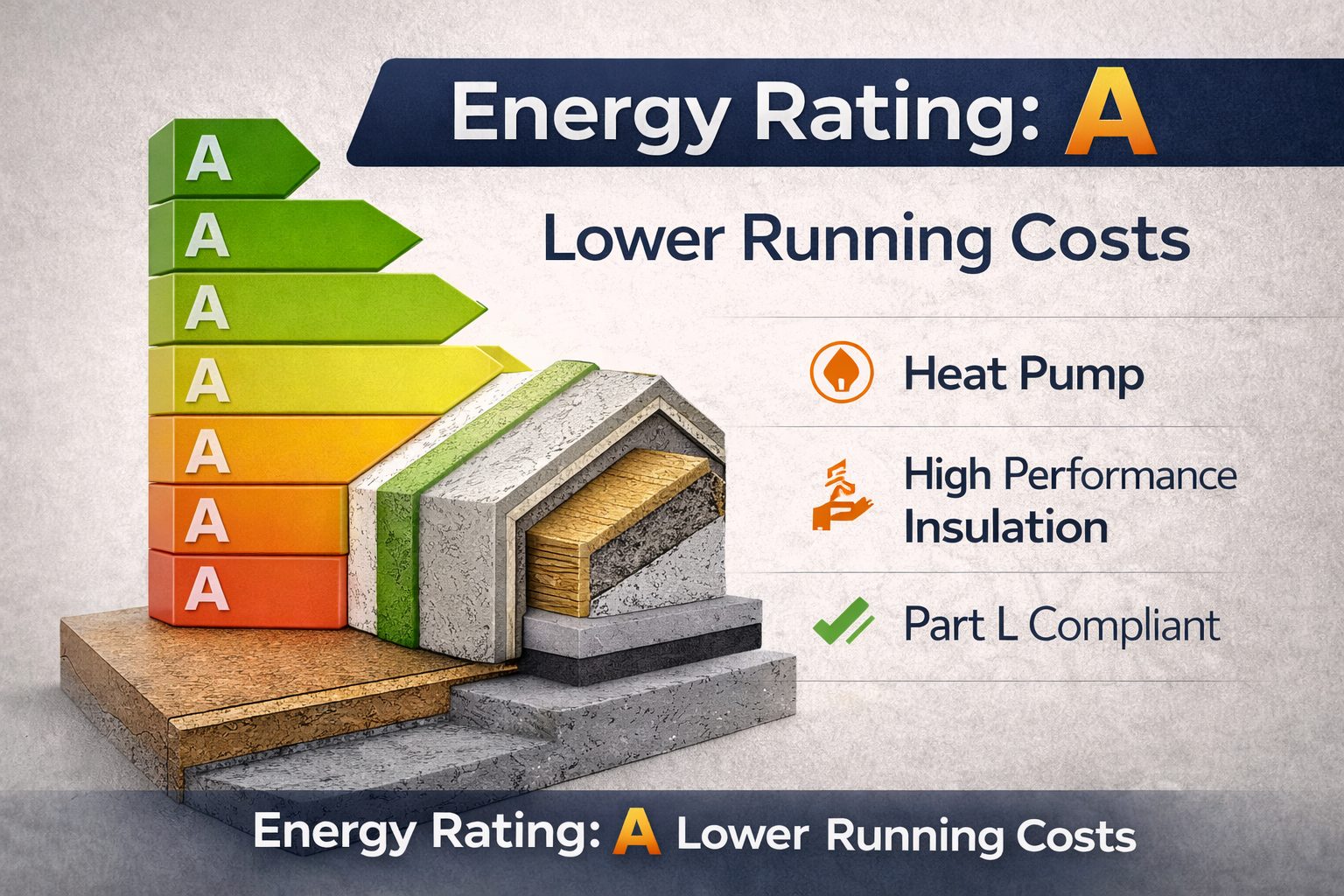
Energy performance pathway illustration for modular welfare buildings.

Energy performance pathway

Permanent welfare buildings can follow an energy pathway designed to achieve A Energy Performance under Part L 2021. As a result site welfare facilities can operate more efficiently over longer projects.
Caption: Modular energy pathway concept.
Description: Illustration explaining the Part L 2021 performance pathway used when designing permanent modular welfare buildings.
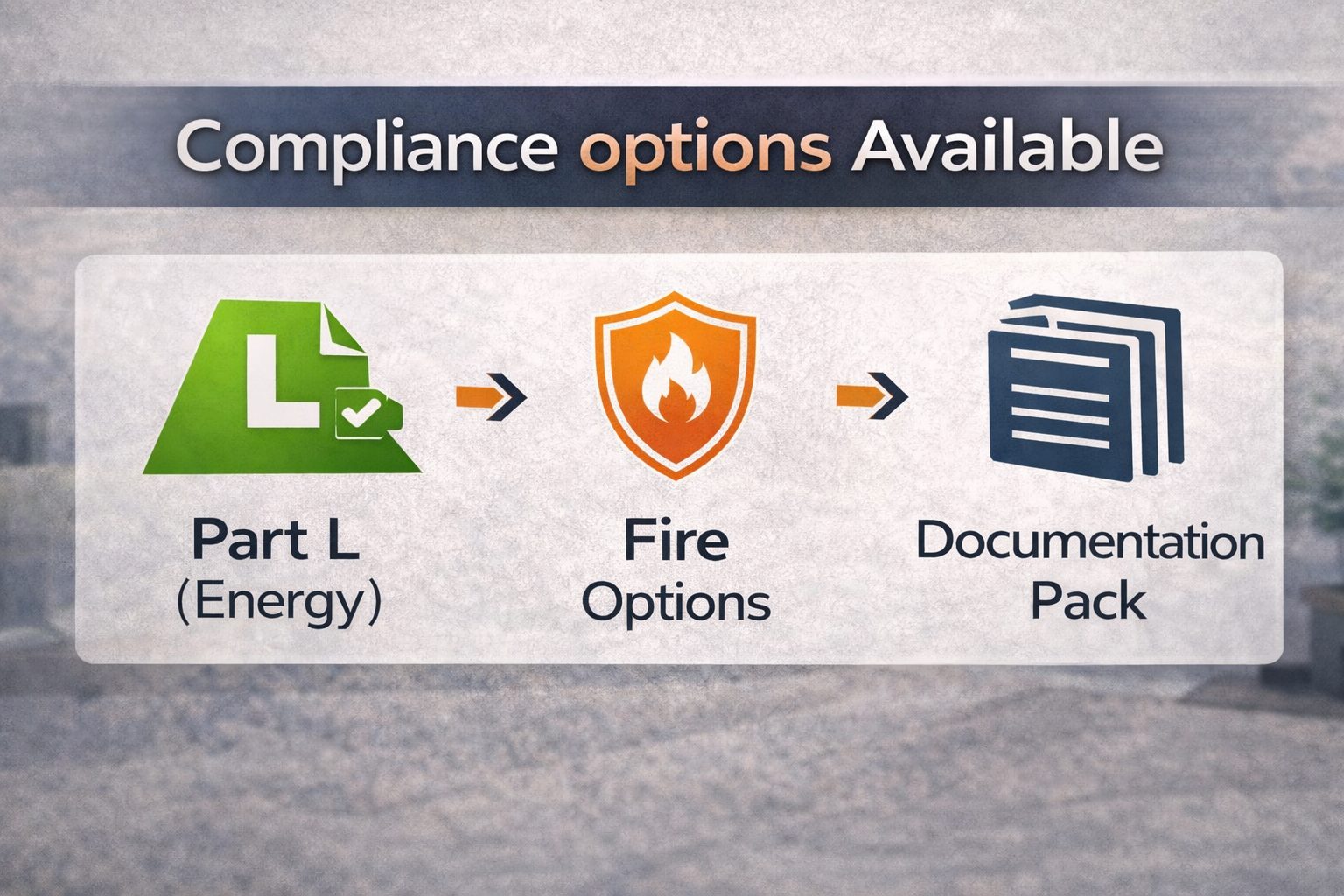
Compliance and fire performance routes for modular welfare units.

Compliance route clarity

Site welfare buildings must often consider fire strategy, sanitation facilities and access requirements. Therefore early compliance planning helps avoid delays once welfare buildings are delivered to site.
Caption: Modular compliance pathway overview.
Description: Diagram illustrating fire performance and regulatory considerations for modular welfare units used on UK construction projects.
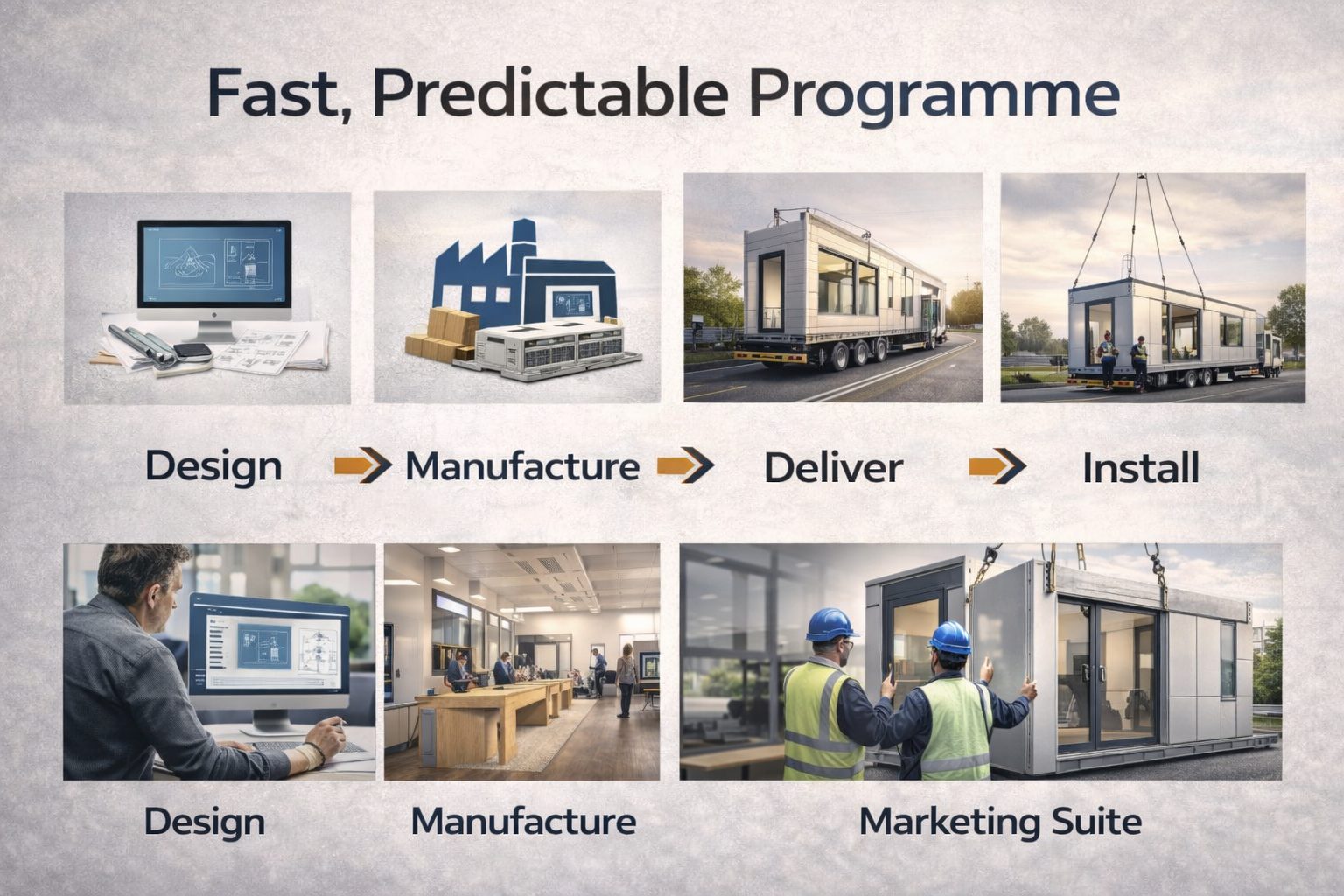
Delivery and installation planning for modular welfare buildings.

Delivery and installation planning

Welfare buildings are often required early in the project timeline. In practice modular construction allows welfare facilities to be delivered and installed quickly while other site works continue.

Caption: Modular delivery and installation planning.
Description: Visual explanation of how modular buildings are manufactured, transported and installed for construction site welfare use.

Moreover modular welfare units UK allow project teams to improve worker welfare conditions while maintaining practical delivery timelines on busy construction sites.

Modular welfare units UK — FAQs

Project teams usually want fast answers on welfare facilities, compliance and delivery. Therefore these FAQs explain the main points in plain English. However site size, workforce numbers and project duration still affect the final welfare setup.

Planning and compliance

Often yes, although it depends on location, project duration and local policy. Therefore longer-term welfare buildings should usually assume a planning route until confirmed otherwise. For short-term site use, the position can vary by project.
Permanent welfare buildings can be designed to follow a pathway intended to achieve A Energy Performance under Part L 2021. However the final result depends on insulation, services strategy and the agreed specification.
REI describes how long a tested assembly can maintain structural capacity, integrity and insulation under fire conditions. As a result, REI60 means 60 minutes where tested assemblies apply and where that route is required for the project.

Facilities and site use

Welfare units can include rest space, canteen areas, toilets, wash facilities, drying rooms and changing areas. Therefore the final layout can be matched to the workforce size and the type of site operation.
Both options are possible. Portable welfare units suit fast-moving sites, while permanent welfare buildings suit longer-term compounds and operational facilities. In practice the right route depends on how long the site will run and how the welfare space will be used.
Yes. A single welfare cabin can be used for smaller teams, while multiple modular units can be combined into a larger compound. Moreover this makes it easier to expand welfare provision as workforce numbers increase.
No. They are also used for infrastructure works, public events, temporary operations and long-term service compounds. However construction remains one of the most common applications because welfare support is needed from the earliest site stages.

Cost and delivery

Key drivers include the number of units, facility mix, portable versus permanent route, site access and the required finish level. Therefore early clarity on workforce numbers and project duration helps produce a more accurate welfare proposal.
Delivery time depends on scope, approvals and manufacturing slots. However modular construction usually reduces on-site work because the buildings are factory made before arriving on site.
Send the site postcode, expected workforce size, required facilities and whether the building is temporary or long-term. As a result the welfare route can be scoped more accurately from the start.
Prefer a faster response? Use the quote request form and include the site postcode plus the estimated number of workers. Typical quote response within 48h (Mon–Fri).

Plan your modular welfare units

Construction and infrastructure projects often need welfare facilities before the main works are fully underway. Therefore modular welfare units UK provide a fast route to practical worker welfare support.

However choosing the right welfare configuration early — portable welfare cabins, permanent welfare buildings or compound layouts — improves delivery planning and site efficiency. As a result teams can maintain better welfare standards throughout the project.

Typical quote response within 48h (Mon–Fri)
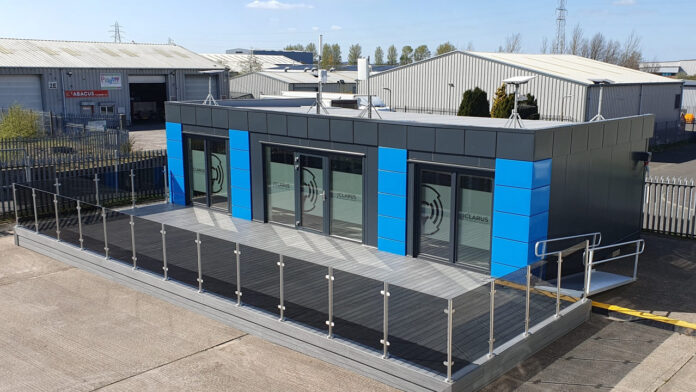
Modular welfare building example used for commercial and site facilities in the UK.
Caption: Modular welfare building reference — UK commercial facility.
Description: A modular welfare building example used for commercial and site support facilities in the United Kingdom, illustrating how modular structures provide welfare space for staff and project teams.

Visit our showroom for welfare unit planning

Many buyers want to compare layouts, finish levels and building pathways before confirming a welfare order. Therefore the showroom helps you review modular welfare options in a more practical way, especially when deciding between portable units, permanent welfare buildings and larger site compounds.

Showroom address London Rd, Chesterton, Stoke-on-Trent, Staffordshire, ST5 7HT
Phone 01782 561110
Quote response Typical quote response within 48h (Mon–Fri)

However, if you cannot visit in person, a quote request with the site postcode, workforce size and required facilities is still enough to start a structured welfare recommendation.
Assumption: travel times vary by traffic. As a guide, the showroom is positioned for practical access from the Midlands, North West and surrounding UK commercial regions.
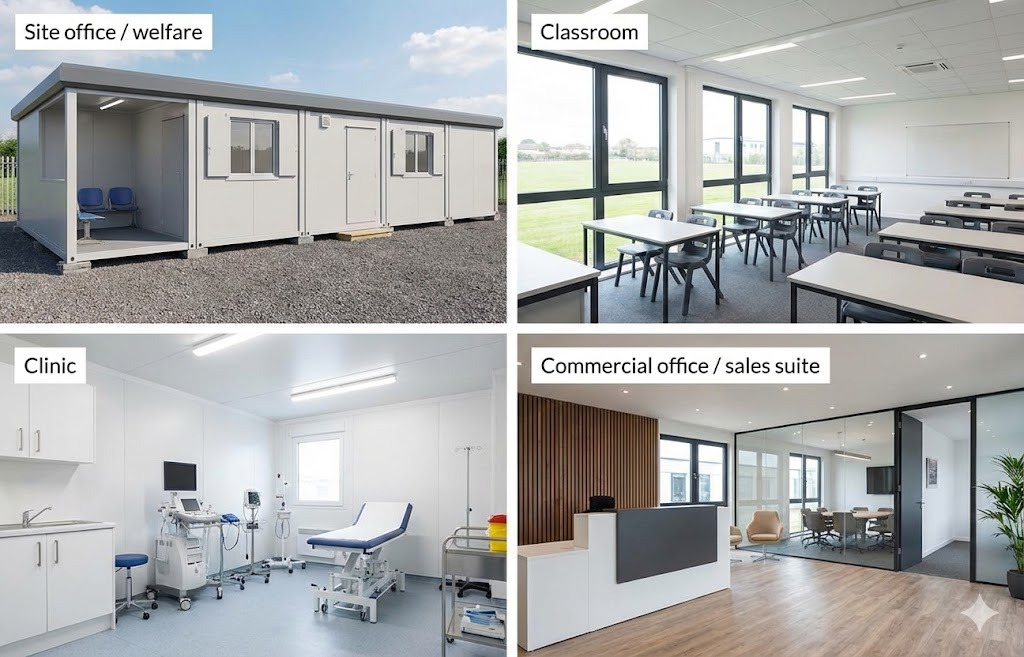
Modular welfare units UK use-case reference image for site facilities and project compounds.
Caption: Modular buildings use-case reference — UK welfare and support facilities.
Description: A modular buildings use-case reference image used to support showroom discussions on welfare units, site compounds and temporary staff facilities for UK construction and infrastructure projects.

What clients say about modular welfare units

Construction and infrastructure teams often prioritise reliability, safety and delivery speed when selecting welfare facilities. Therefore the feedback themes below reflect the points that site managers and project teams frequently mention when reviewing modular welfare buildings.

Reliable site welfare delivery

Project teams often highlight the benefit of receiving welfare facilities early in the construction timeline. As a result workers gain access to proper rest areas and sanitation facilities from the start of site operations.

Theme: delivery reliability

Practical welfare layouts

Many reviewers emphasise the practical layout of welfare units, including rest areas, drying rooms and sanitation spaces. Therefore daily site routines become easier to manage.

Theme: practical design

Clear communication

Construction buyers usually appreciate clear timelines and realistic project updates. Moreover transparent communication helps teams coordinate welfare installation with wider site logistics.

Theme: project coordination
Note: feedback themes summarise common client comments. For the latest public reviews please see the Google review page linked above.

Why project teams choose KC for modular welfare units

Welfare buildings are not only about adding site facilities. They also affect worker comfort, hygiene and daily site performance. Therefore our approach focuses on system clarity, practical layouts and delivery planning that suits live construction and infrastructure environments.

Clear welfare pathways

We separate portable welfare units, permanent welfare buildings and premium welfare environments clearly. As a result, site teams can choose the right route faster and avoid confusion later in the project.

Practical site-focused layouts

Welfare layouts are planned around real site needs such as rest areas, drying rooms and sanitation. Therefore the final building works better for day-to-day site operations instead of looking right only on paper.

Delivery planning for live projects

Construction and infrastructure sites often have tight delivery windows. However modular welfare units can be planned around access, workforce size and operational deadlines so the installation causes less disruption.

Defensible compliance language

We use realistic wording for fire performance and energy pathways instead of over-claiming. As a result, project teams receive information that is easier to support during planning and review.

Scalable welfare provision

A project may begin with one welfare unit and later need a larger compound. Moreover modular construction makes it easier to scale welfare facilities as workforce numbers change.

Showroom and specification support

Reviewing finish levels and welfare options in person often speeds up decision making. Therefore the showroom can help buyers compare layouts and choose the most suitable modular welfare approach.

Next step: send the site postcode, workforce estimate and required welfare facilities through the quote request form. As a result we can recommend the right modular welfare route more quickly.

Compliance transparency for modular welfare buildings

Welfare facilities must support worker safety, hygiene and practical site operation. Therefore this section explains the usual compliance routes in plain English. However every welfare project still depends on the final building layout, project duration and local approval context.

Fire performance pathways

Where required, welfare buildings can follow tested assembly routes such as REI60. In practice this refers to how long a tested build-up can maintain structural capacity, integrity and insulation under fire conditions.

Energy performance intent

Permanent welfare buildings can be designed to follow a pathway intended to achieve A Energy Performance under Part L 2021. However the final result depends on the agreed insulation levels, glazing and services strategy.

Planning and project context

Planning requirements, building regulations and site-specific constraints vary from project to project. Therefore early coordination usually reduces redesign risk and improves delivery certainty before manufacture begins.

Accessibility and welfare use

Welfare buildings should be planned with practical access, circulation and usable internal layouts in mind. As a result facilities are easier to use safely during day-to-day site operations.

Services coordination

Water, waste, heating, lighting and ventilation influence both worker comfort and practical site performance. Therefore services planning should be aligned with the intended welfare use from the start.

Defensible wording only

We avoid vague promises and use approval-led language instead. That said, this gives project teams a clearer and more realistic description of what the welfare building is designed to achieve.

Plain-English summary: modular welfare units UK can follow strong compliance pathways, but the final route always depends on the agreed specification, local requirements and project-specific approvals.

What affects the cost of modular welfare units UK?

Welfare budgets vary because projects differ in workforce size, project duration and facility requirements. Therefore it becomes easier to estimate realistic budgets once the welfare pathway and layout are confirmed. However modular welfare units still provide clearer planning compared with many temporary site arrangements.

Main cost drivers

  • Number of units: single welfare cabin or multi-unit compound.
  • Facility mix: rest space, drying rooms, toilets or canteen areas.
  • Portable vs permanent route: temporary welfare or longer-term buildings.
  • Site access: delivery routes, crane positioning and installation logistics.
  • Services connections: water, waste, power and heating requirements.

Secondary cost factors

  • Interior finish level: standard welfare vs upgraded staff facilities.
  • Compound layout: linking multiple welfare modules together.
  • External works: steps, ramps or temporary walkways.
  • Programme constraints: tight delivery timelines for live projects.
  • Planning context: site-specific regulatory requirements.

In practice, modular welfare units UK become easier to price once the workforce size and required facilities are confirmed. Moreover early clarity helps teams plan installation and operational use more effectively.

Tip: include the site postcode, workforce size and required welfare facilities in the quote request form. This information usually allows a faster welfare recommendation.

Authority references and official guidance

Modular welfare buildings often sit within wider construction, infrastructure and site management duties. Therefore official guidance helps project teams understand the broader regulatory context before finalising welfare layouts and delivery planning.

However every project still needs site-specific review. As a result, the sources below should support early understanding rather than replace project-specific advice.