Home › Solutions › Modular Classrooms
KC Modular Buildings
Modular Classrooms UK
Modular classrooms UK give schools, councils and multi-academy trusts a structured way to add teaching space with less disruption than traditional construction. Therefore, if you’re under pressure from rising pupil numbers or a refurbishment programme, offsite delivery can protect term-time operations while improving programme certainty.
In practice, you choose one of three engineered systems — ISO Frame (steel volumetric), Bespoke steel frame, or Timber frame — and then align the pathway (portable, REI60 option, or permanent “A-path” intent) to your approvals and lifespan requirements. However, the “right answer” depends on site constraints, safeguarding and whether the building needs to connect into existing circulation routes.
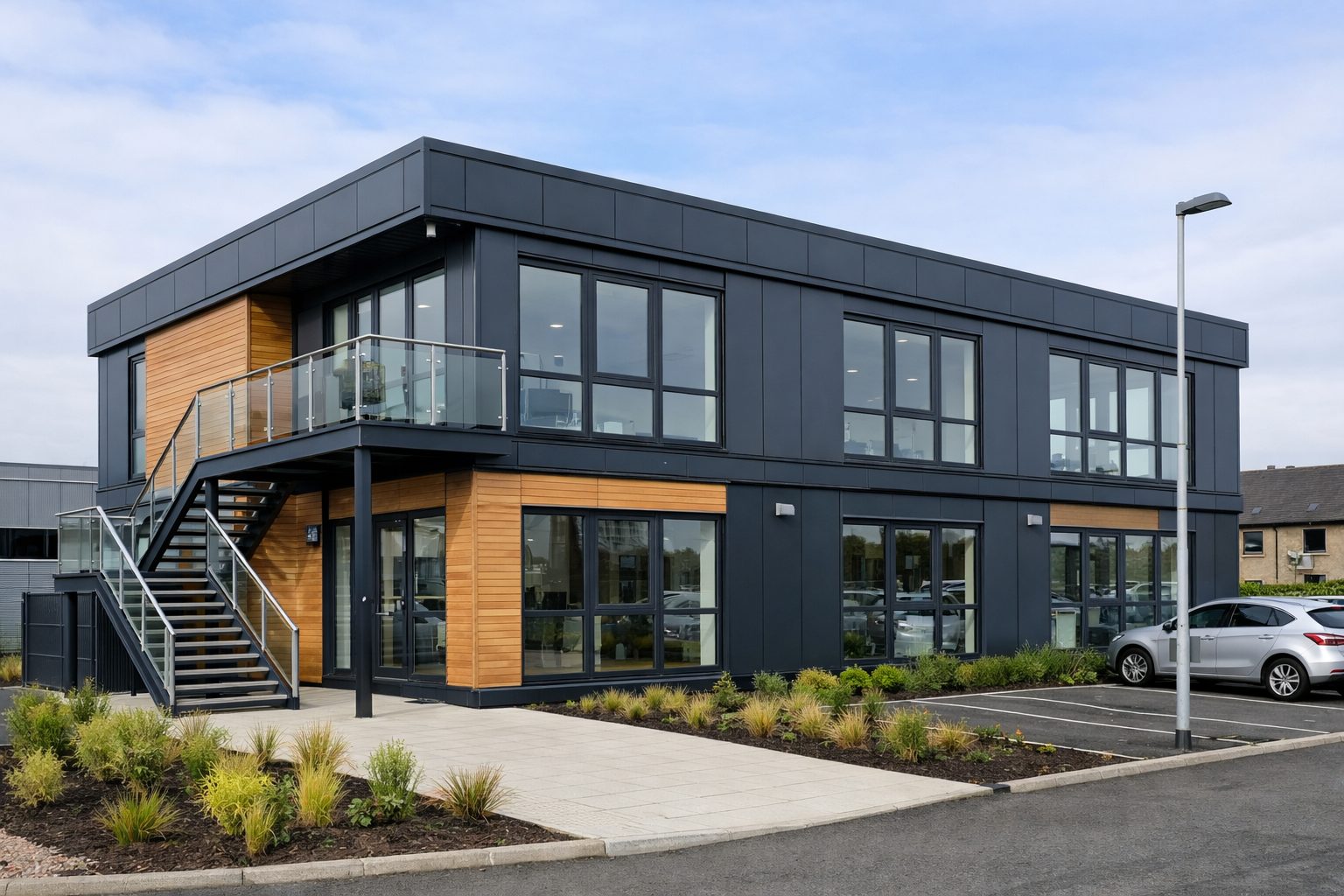
When schools need space fast, disruption becomes the real cost
Schools rarely have the luxury of “quiet sites”. However, pupil safeguarding, access management and term-time operations mean that long traditional build programmes can create ongoing disruption to teaching and learning.
In practice, modular classroom delivery reduces the time spent on-site. Therefore, you can add capacity using planned delivery windows and clearer sequencing, while still maintaining routine school operations.
- Rising pupil intake and timetable pressure
- Decant space during refurbishment works
- Need for SEND, IT, science or small-group rooms
- Campus reconfiguration without losing teaching weeks
Moreover, modular classrooms UK can be scoped as portable or permanent depending on approvals and long-term estate strategy.
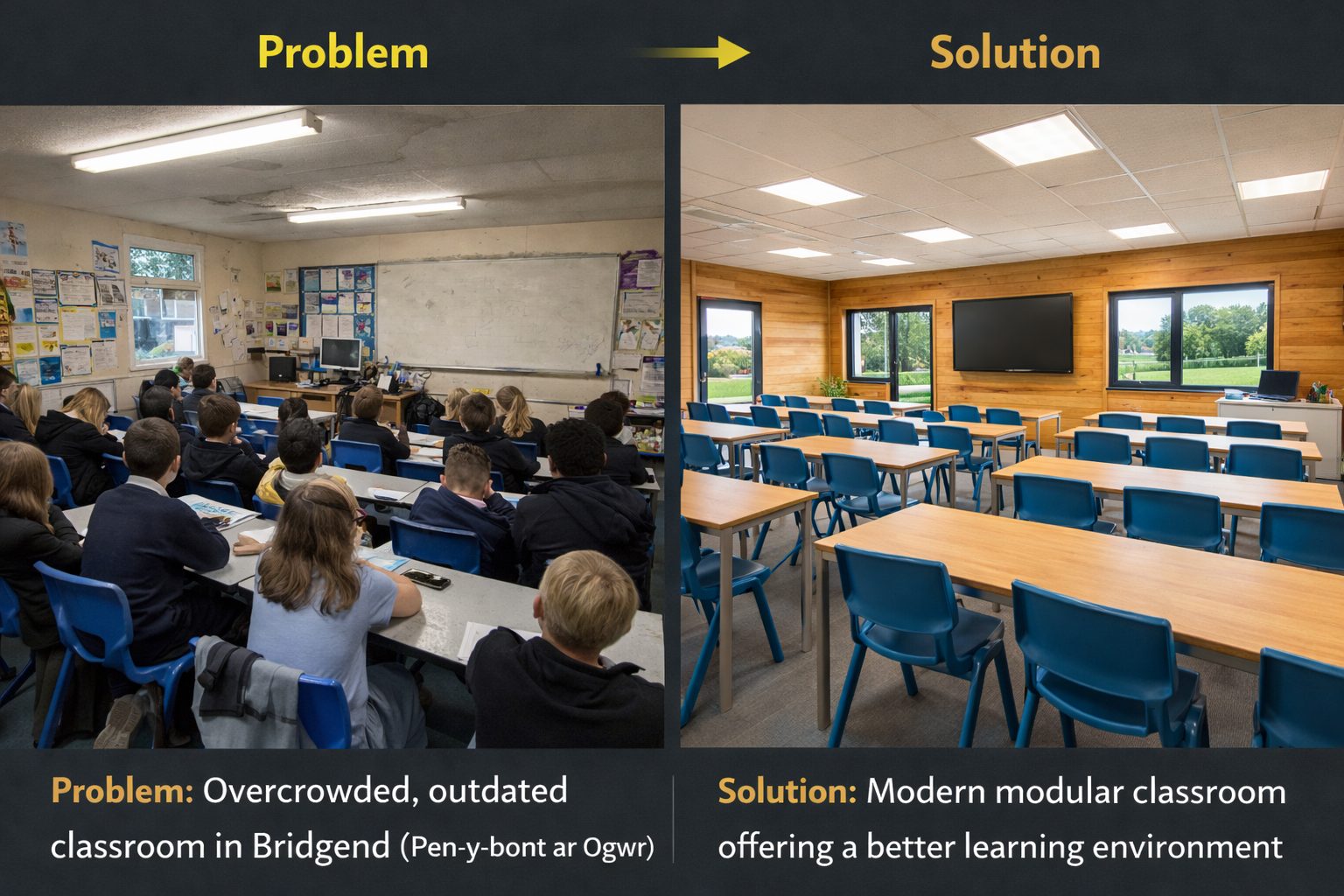
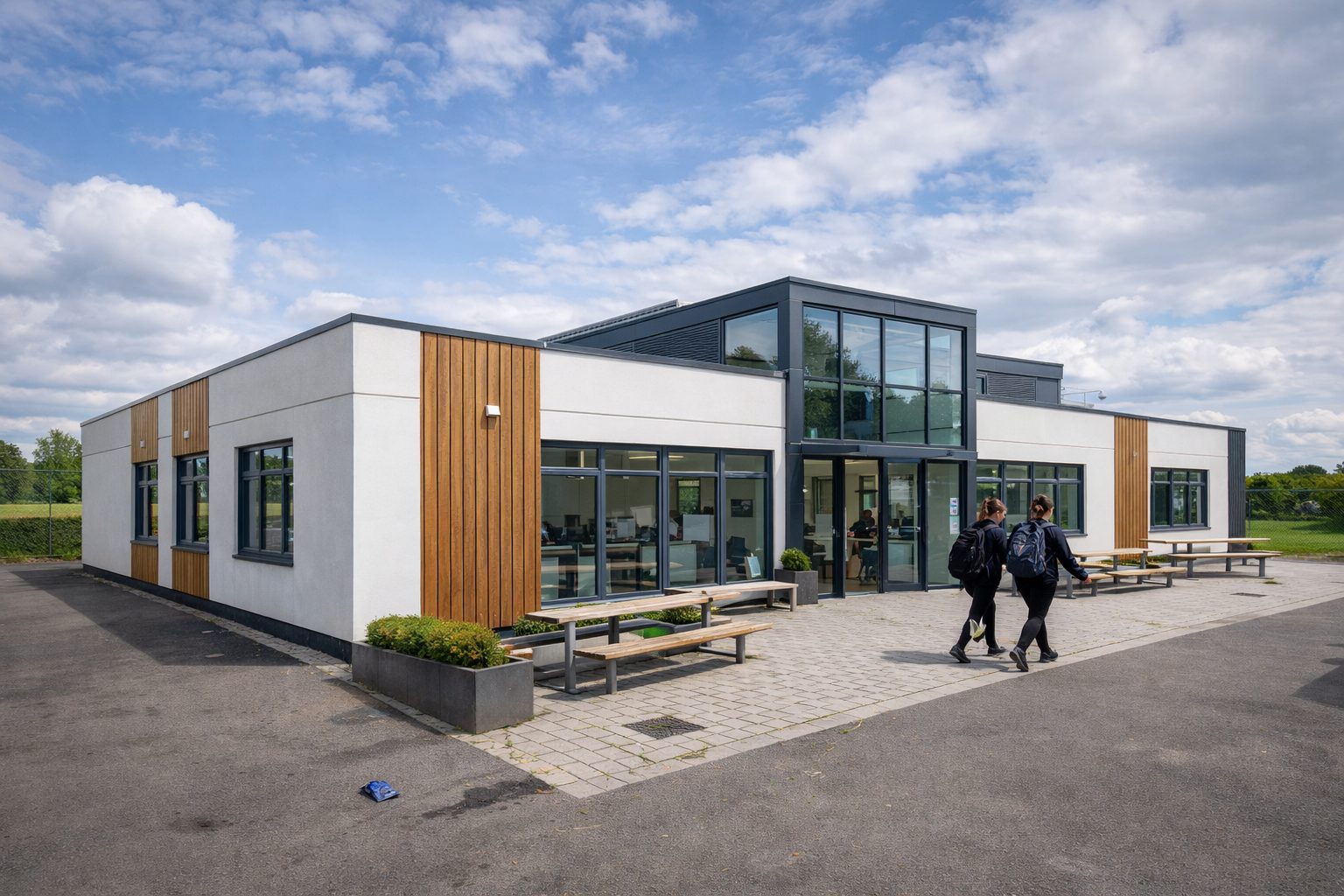
Description: A modular classroom delivered for an education expansion in Bridgend/Pen-y-bont ar Ogwr, South Wales, designed to support increased pupil capacity with minimal disruption.
Built around education reality (not generic marketing)
Offsite manufacture supports clearer sequencing. Therefore, schools can plan around holidays, weekends and agreed access windows.
Reduced site duration helps manage segregation and safe routes. However, we still plan access, lift points and contractor movement carefully.
General teaching rooms, SEND spaces, IT suites, admin rooms and small-group rooms. In practice, the best layout depends on your timetable pattern.
ISO volumetric suits repeatable speed; bespoke steel suits complex circulation; timber suits certain planning preferences. As a result, you avoid “wrong system” rework.
Fire and energy statements are written defensibly. Therefore, planning and Building Control discussions stay grounded and consistent.
Choose the system first (education delivery becomes simpler)
Schools get better outcomes when the structural system is chosen early. However, each option can be aligned to a portable or permanent pathway and to your target performance intent. As a result, you reduce design churn and speed up approvals planning.
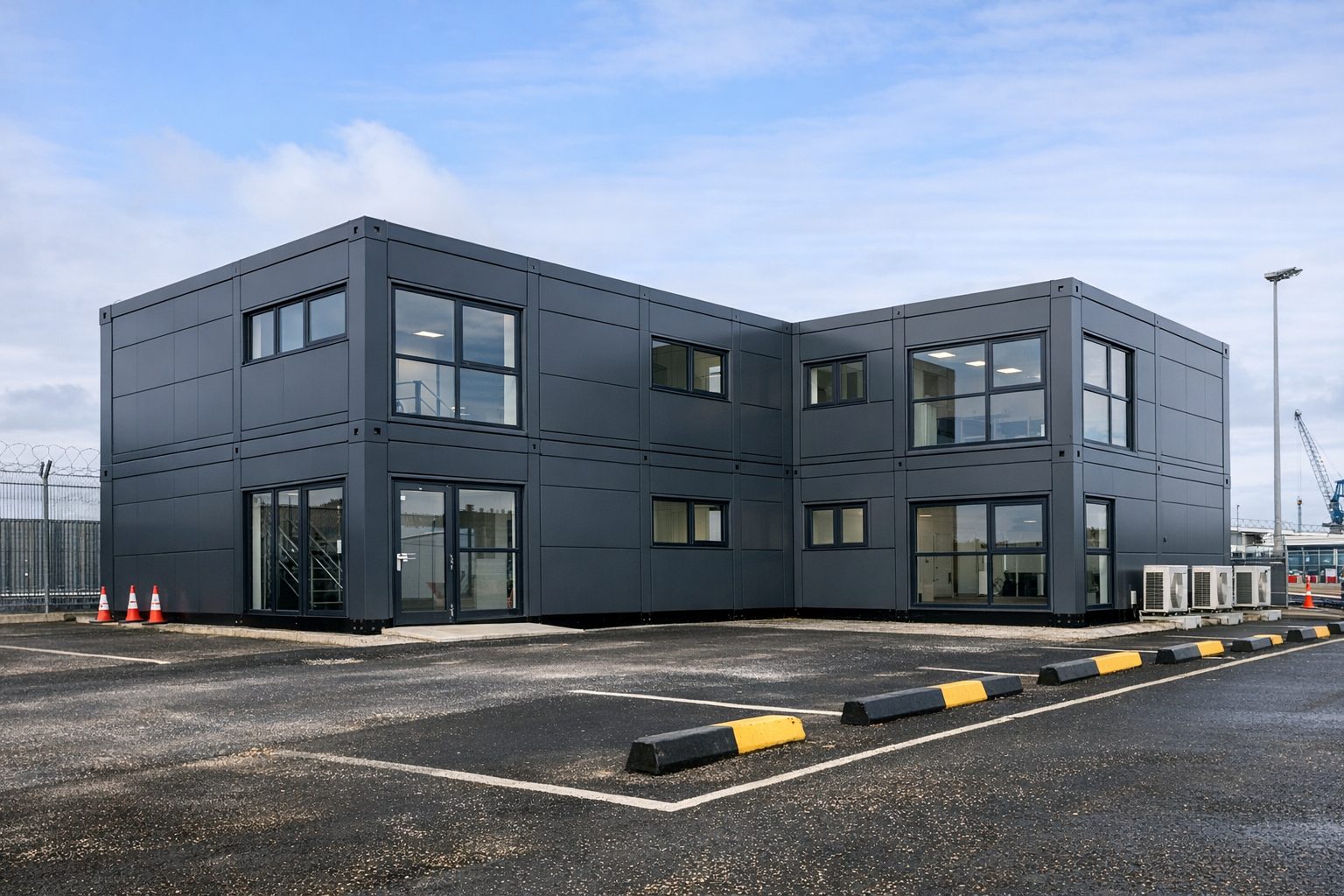
1) ISO Frame Systems (steel volumetric)
Best when you need speed, repeatability and staged delivery windows (e.g., summer installs).
- Temporary / Portable: fast classroom capacity or decant use.
- REI60 option: where a tested assembly route is required (project specific).
- Permanent “A-path” intent: designed to achieve A Energy Performance under Part L 2021 pathway.
Description: A volumetric ISO-frame building form used as a reference for fast modular deployment planning in Portsmouth, South East England.
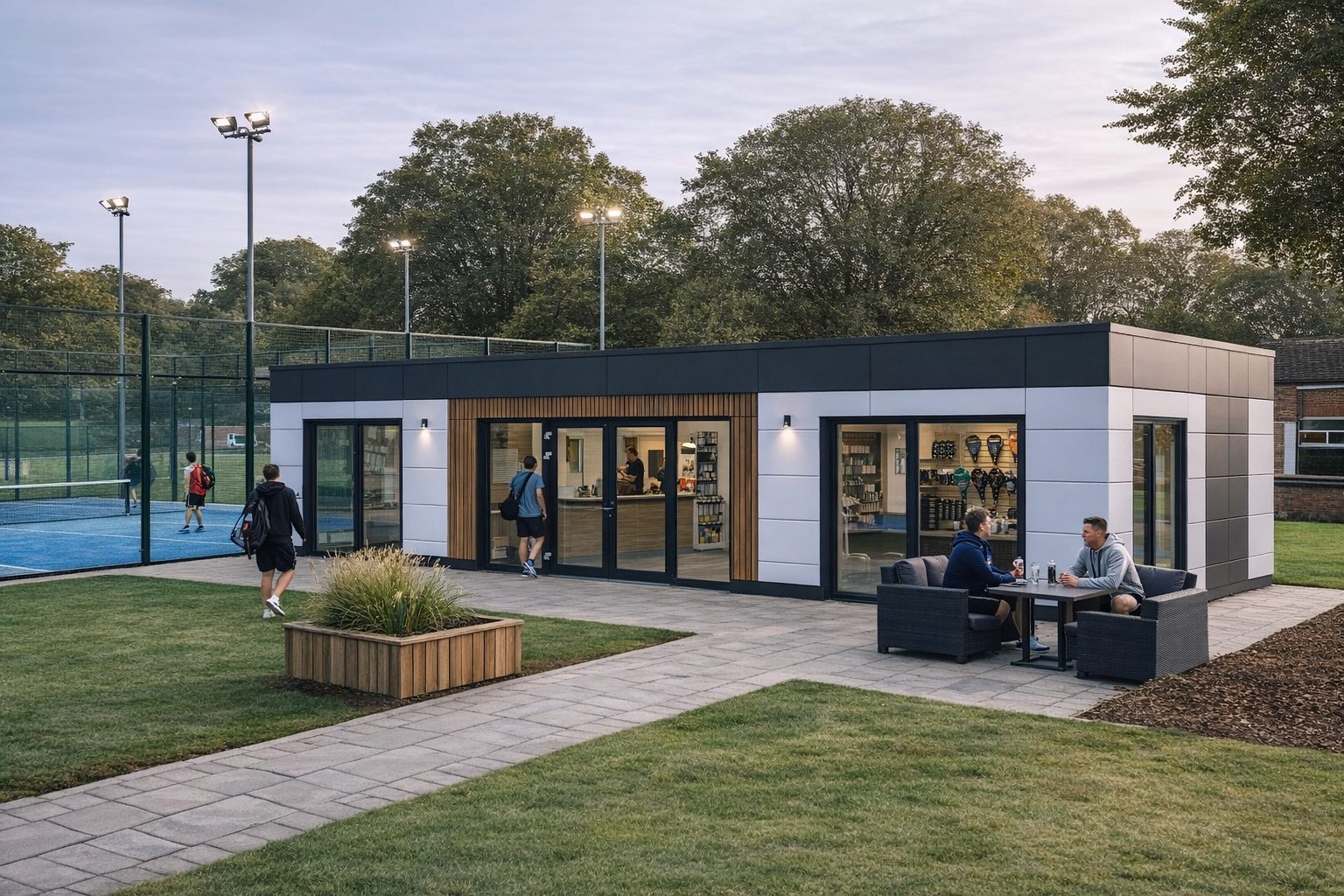
2) Bespoke Modular Buildings (steel frame custom)
Best when circulation, multiple room types, or integration into an existing campus is critical.
- Temporary / Portable: custom layouts with rapid programme planning.
- Permanent “A-path” intent: designed to achieve A Energy Performance under Part L 2021 pathway.
- Hi-End Permanent: “A-path” + Individual Interior Design (premium interiors for front-of-house).
Description: A bespoke steel-frame modular building used as a reference for circulation-led layouts and reception/admin zones (swap exact city later if needed).
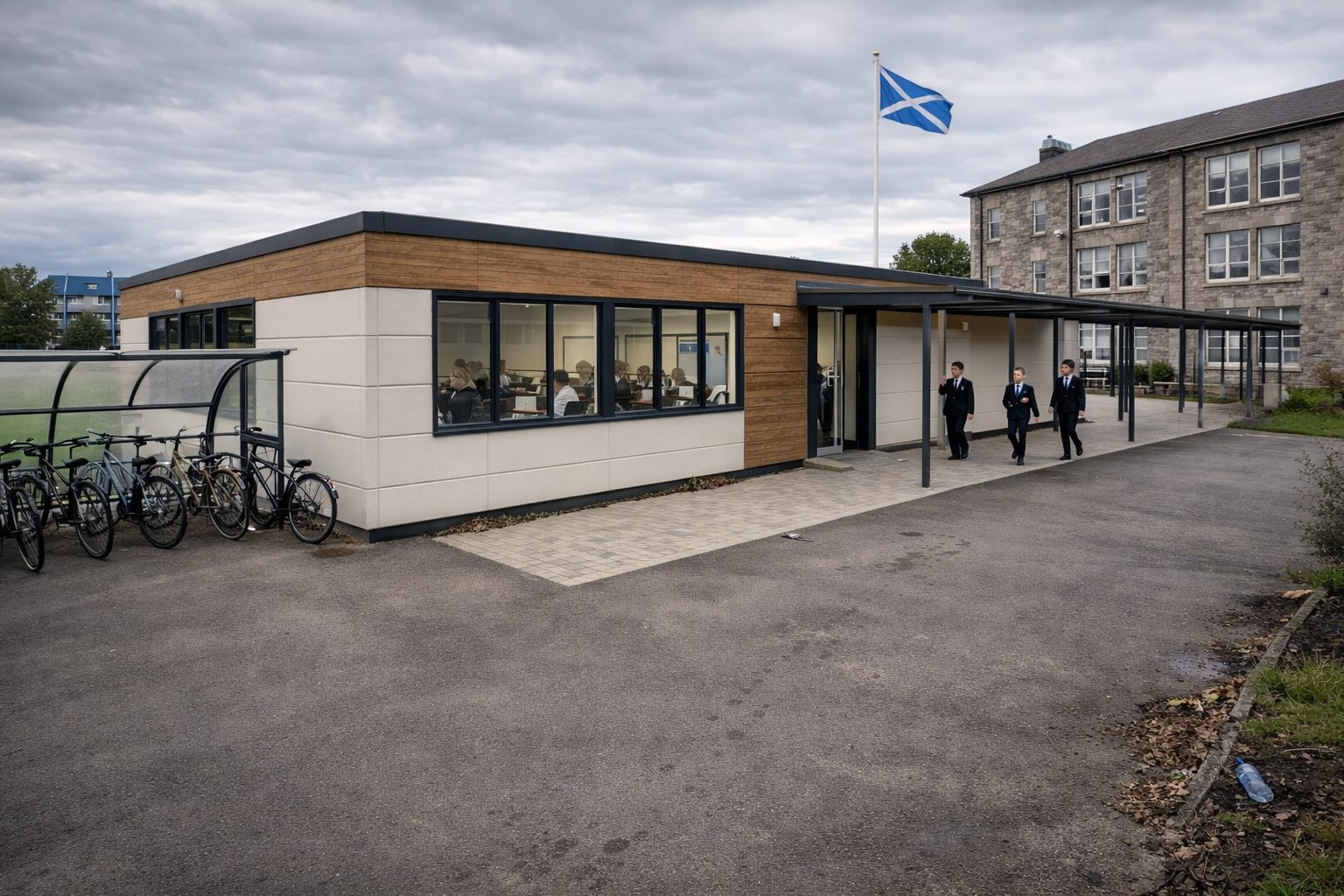
3) Timber Frame Modular Buildings
Often chosen for living-led projects, but used in education where planning or stakeholder preference supports timber.
- Temporary / Portable: portable teaching space when needed.
- Permanent “A-path” intent: designed to achieve A Energy Performance under Part L 2021 pathway.
- Hi-End Permanent: “A-path” + Individual Interior Design (high-quality learning environments).
Description: A timber-led education modular building reference in Aberdeen/Obar Dheathain, North East Scotland.
Moreover, modular classrooms UK can be delivered as standalone blocks or as part of wider education estates, provided access routes, services and safeguarding plans are confirmed early.
Specification snapshot (education-ready)
Classroom buildings succeed when comfort, acoustics and ventilation are treated as core requirements rather than optional extras. Therefore, we scope early around occupancy, lesson patterns, ICT loads and expected operating hours.
However, final specification depends on site constraints, planning context and the agreed compliance route.

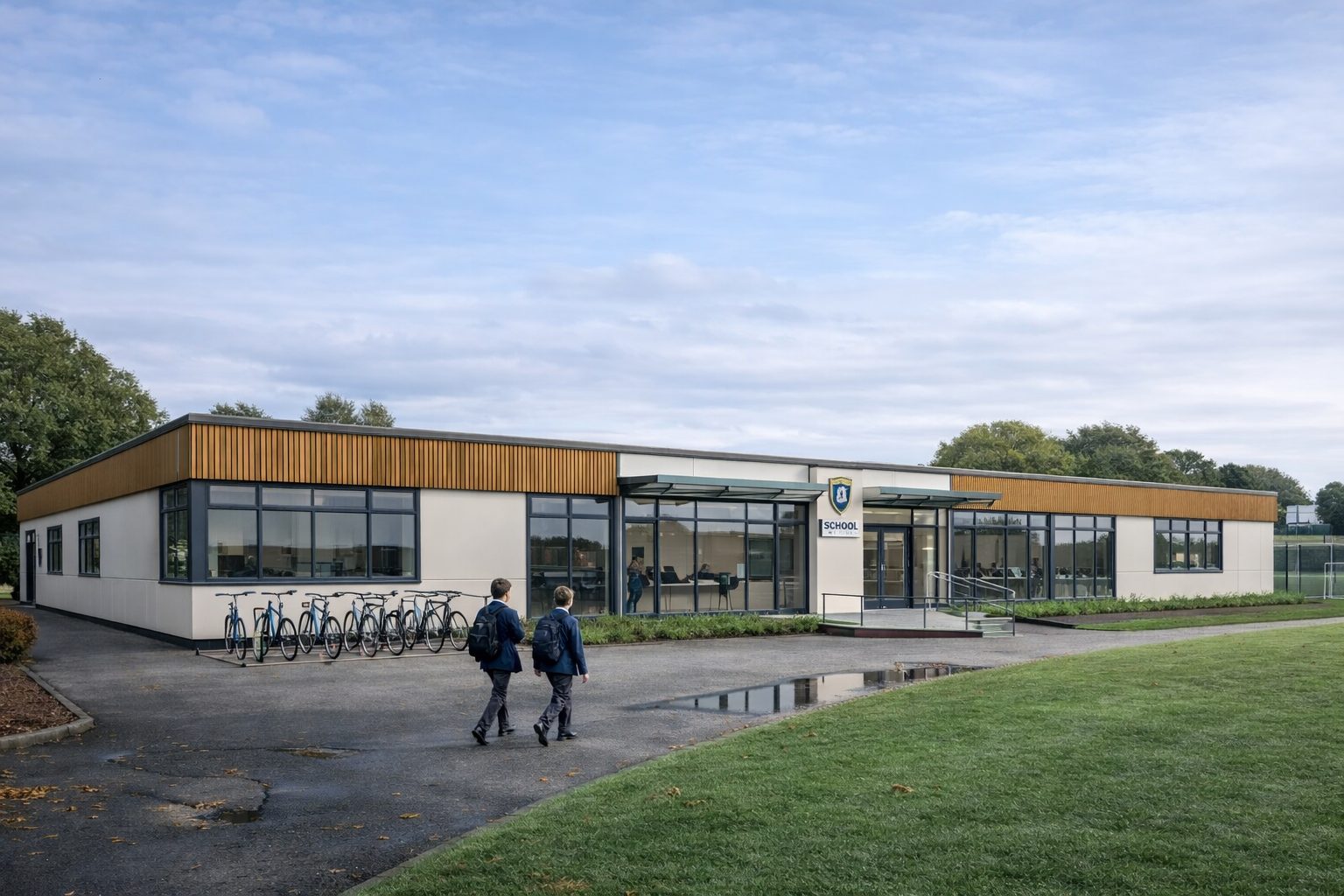
Description: An ISO-frame modular classroom building used as an education reference example, showing form factor, fenestration and classroom-ready configuration for a UK school environment.
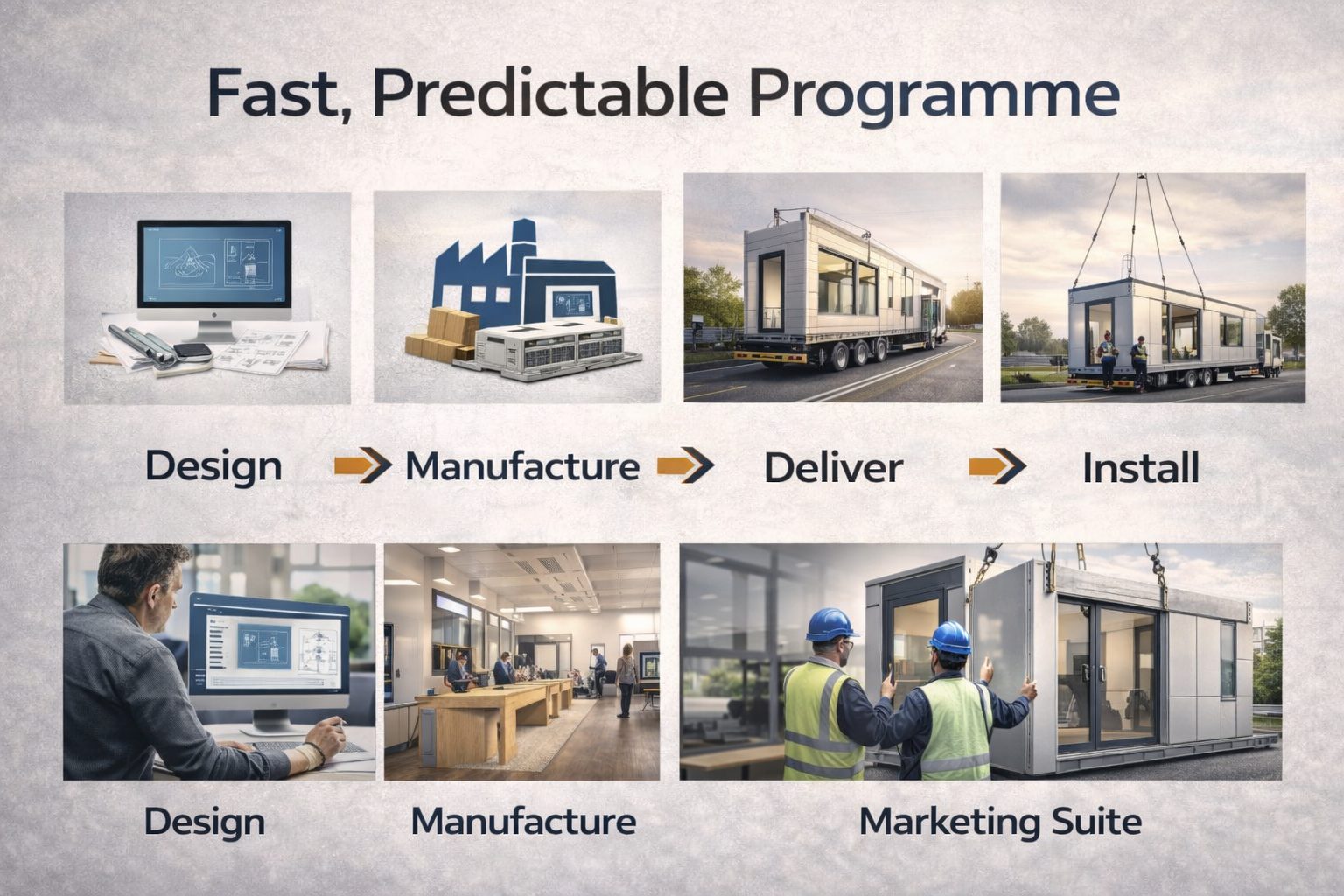
How modular classroom projects typically run
Schools need predictability. Therefore, we use a clear delivery flow that keeps decisions moving and reduces late-stage surprises. In practice, early site information and pathway choice are the biggest accelerators.
Room count, occupancy, timetable pattern, SEND needs, ICT requirements, and expected lifespan.
ISO for speed, Bespoke for circulation, Timber for planning preference. However, confirm portable vs permanent early.
Layout, elevations, compliance route, and stakeholder requirements. As a result, approval conversations stay grounded.
Factory build with staged checks and documentation preparation for handover packs.
Lift plan, safe access routes, services connection planning and commissioning.
Snagging, documentation, operating guidance and sign-off support.
Education outcomes (how solutions translate into real use)
Every school estate is different. However, the strongest outcomes come from choosing the correct system pathway early and then shaping layout around learning flow. Therefore, these examples show how modular delivery supports operations rather than interrupts them.
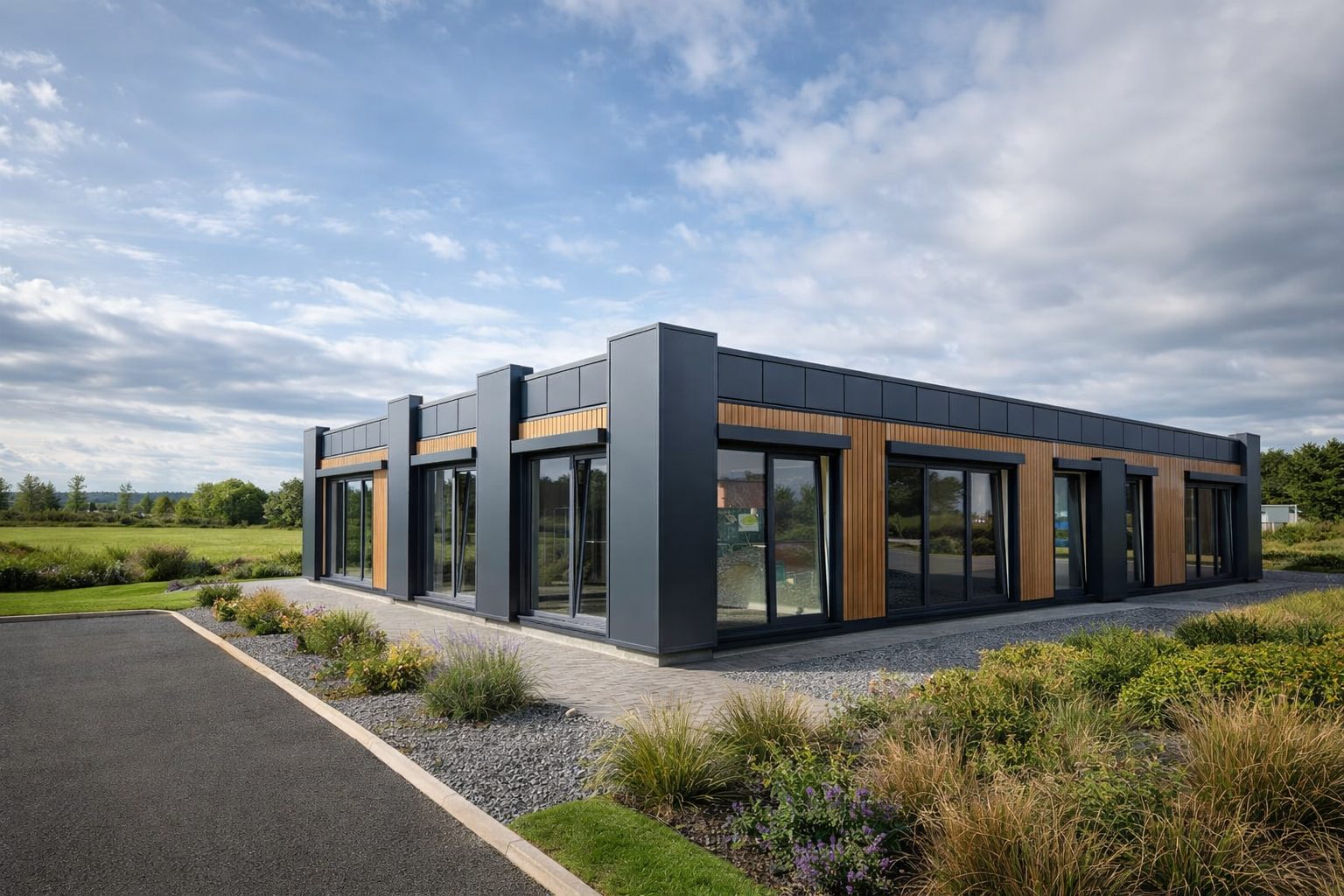
Bespoke circulation-led building
Useful when you need corridors, admin zones, staff areas, and teaching rooms working together without awkward pinch points.
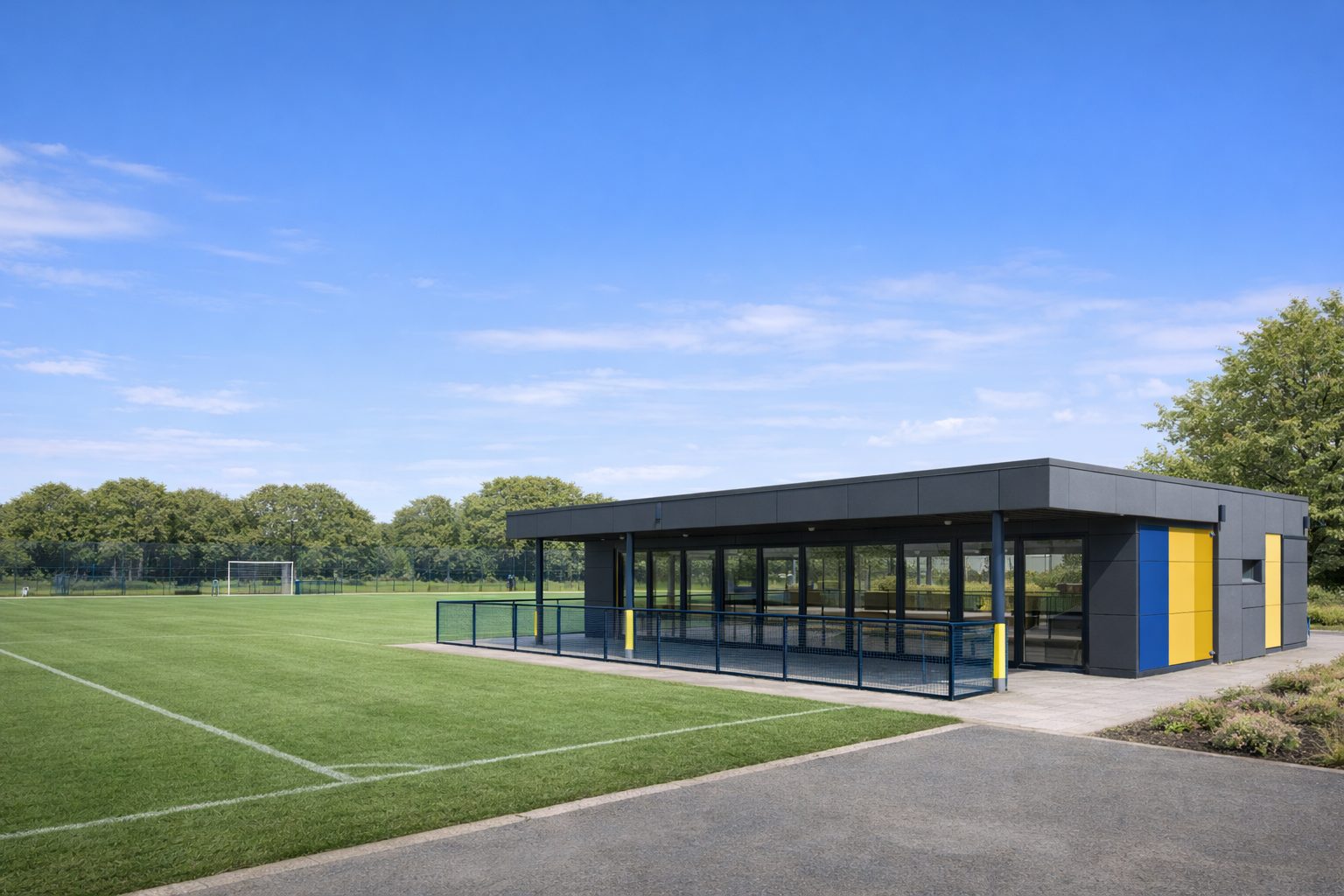
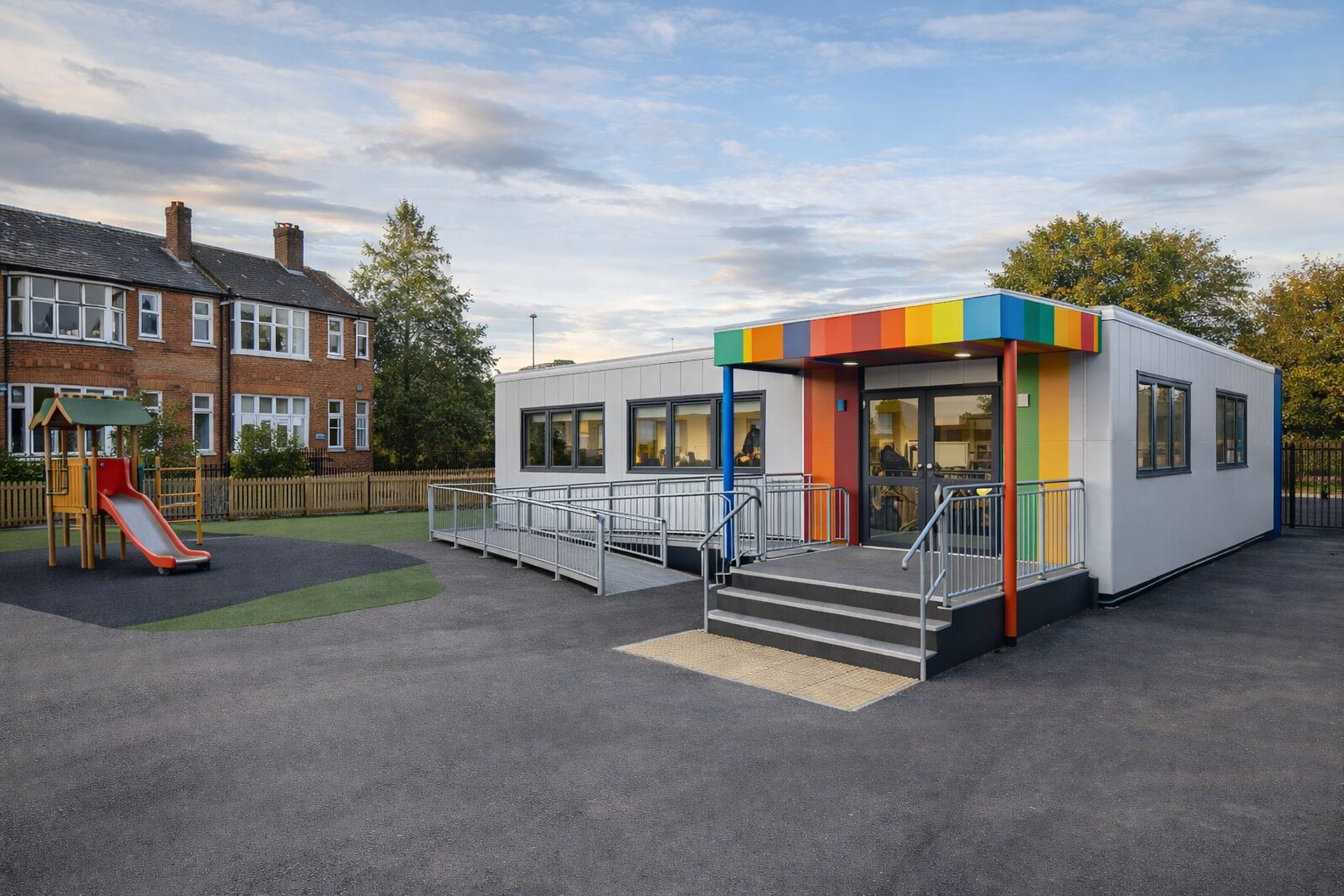
Description: A bespoke steel-frame modular building reference used to illustrate circulation-led planning for education estates (swap city later if required).
Multi-room modular block (shared facilities)
While this example is from a community/sports setting, the layout logic applies to education too — shared spaces, WC/welfare zoning, and controlled access routes.
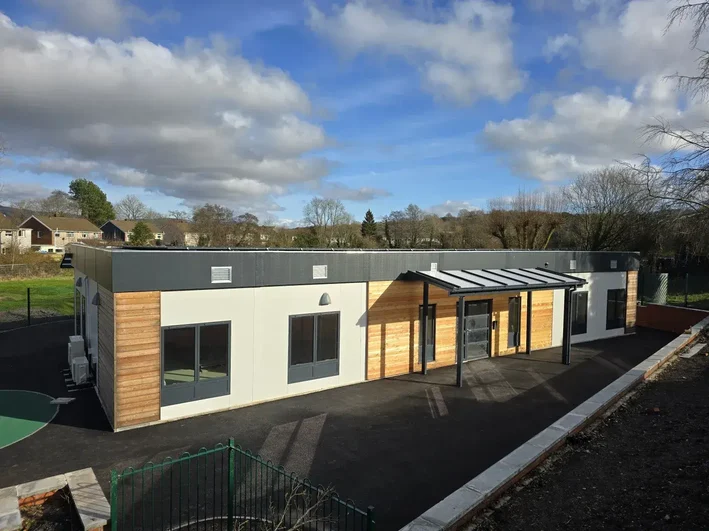
Description: A modular multi-room building reference used to illustrate zoning and circulation planning that can translate to education campuses (swap city later if required).
Moreover, modular classrooms UK can scale from a single room to a full block with supporting areas, provided site access and services are confirmed.
Modular classrooms vs traditional build
If you’re comparing options, the key difference is not “modular vs traditional” as a slogan; it’s programme certainty and disruption risk. Therefore, use the table below to frame stakeholder discussions.
| Decision driver | Modular (offsite) | Traditional build |
|---|---|---|
| Programme certainty | Factory build supports predictable sequencing and planned installation windows. | Greater exposure to weather and variable site conditions. |
| Term-time disruption | Reduced on-site duration; easier safeguarding and segregation planning. | Longer site presence; higher ongoing disruption risk. |
| Quality control | Repeatable workflow with staged checks and controlled environments. | Quality varies by site interfaces and subcontract complexity. |
| Scaling capacity | Phased deployment possible: add rooms or blocks over time. | Scaling often means fresh mobilisation and extended programme. |
| Best-fit scenarios | Decant space, rapid intake growth, specialist rooms, campus expansions. | Major new-build campuses with long timelines and stable access. |
Common modular classroom variants
A “modular classroom” rarely means one standard box. However, the best layout is driven by timetables, staff circulation, SEND requirements and storage needs. Therefore, we typically scope variants like these:
- Single classroom room with integrated storage
- Double classroom block with shared breakout area
- Small-group/SEND rooms with calm acoustic strategy
- IT suites (power/data planning matters early)
- Science rooms (services and extract needs)
- Admin + reception support as part of the block
In practice, a quick “use-case variant” selection reduces redesign cycles and speeds up quote accuracy.
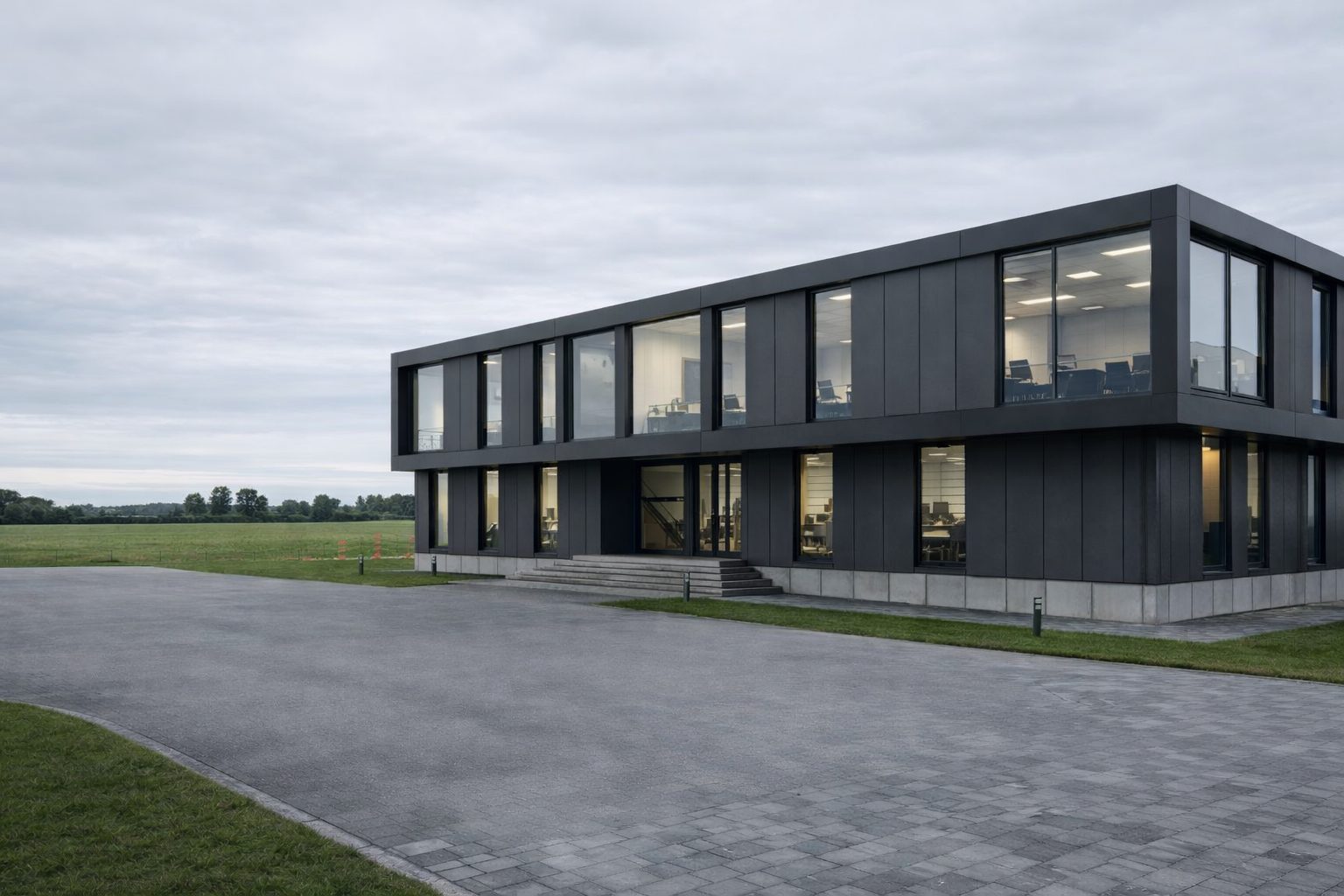
Description: A large modular building reference used to illustrate how circulation and room adjacency planning can translate into education blocks (swap exact city later if required).
Description: An interior finish reference image illustrating durable, low-maintenance surfaces and learning-environment-ready fit-out approaches (swap exact city later if required).
UK education delivery planning (examples)
For education projects, location affects access planning, cranage strategy and working-hour constraints. Therefore, include the site postcode in your quote request so we can validate delivery routes early.
Proof you can reference (quality, compliance, delivery)
Schools and councils need defensible statements. Therefore, we focus on documented pathways — delivery planning, compliance options and energy intent — rather than vague promises.
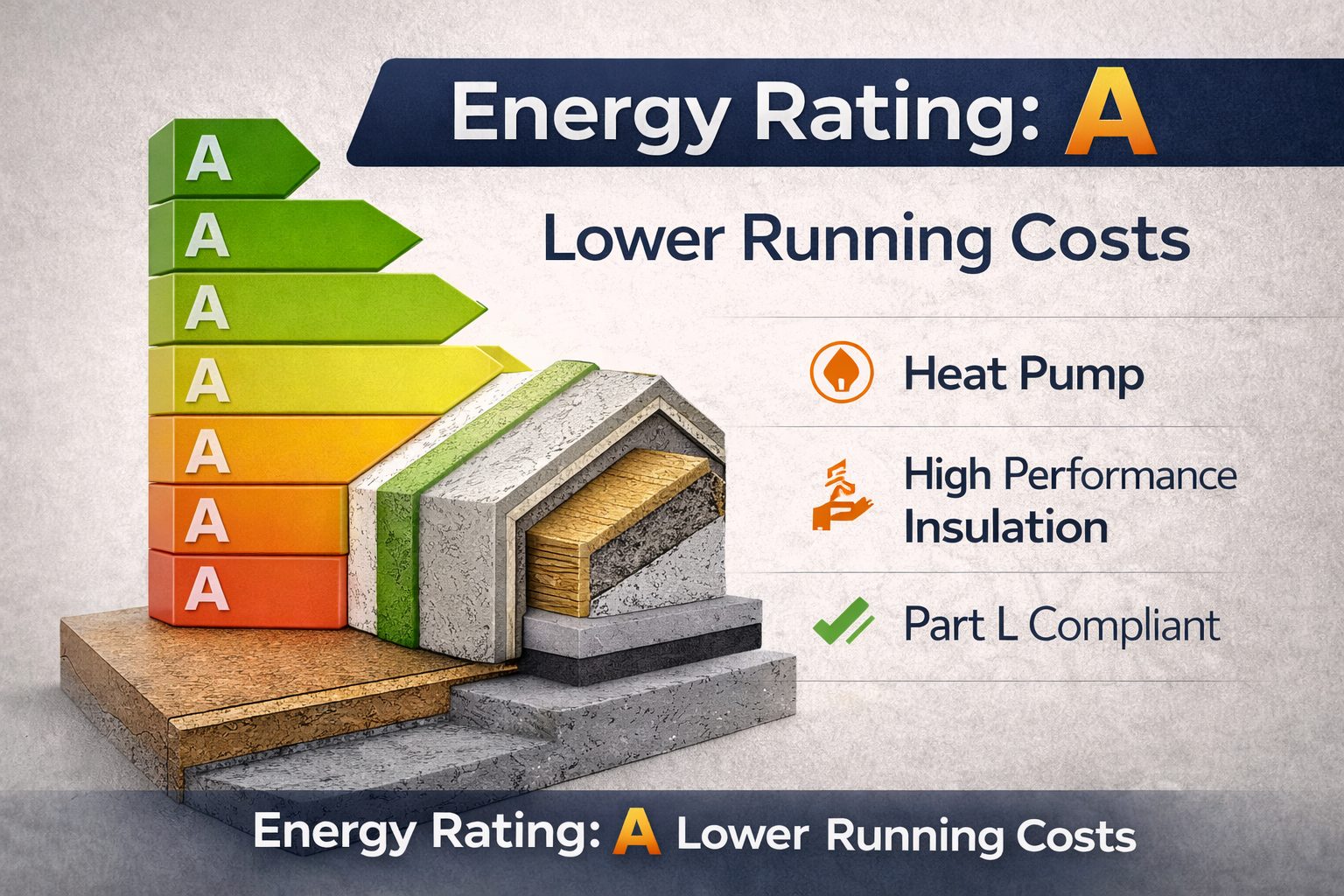
Energy intent (Part L 2021 pathway)
We use defensible wording: “Designed to achieve A Energy Performance under Part L 2021 pathway” (project dependent).
Description: A-rated modular energy intent reference used to support performance-led education building discussions (no guarantee implied).
Compliance options (plain English)
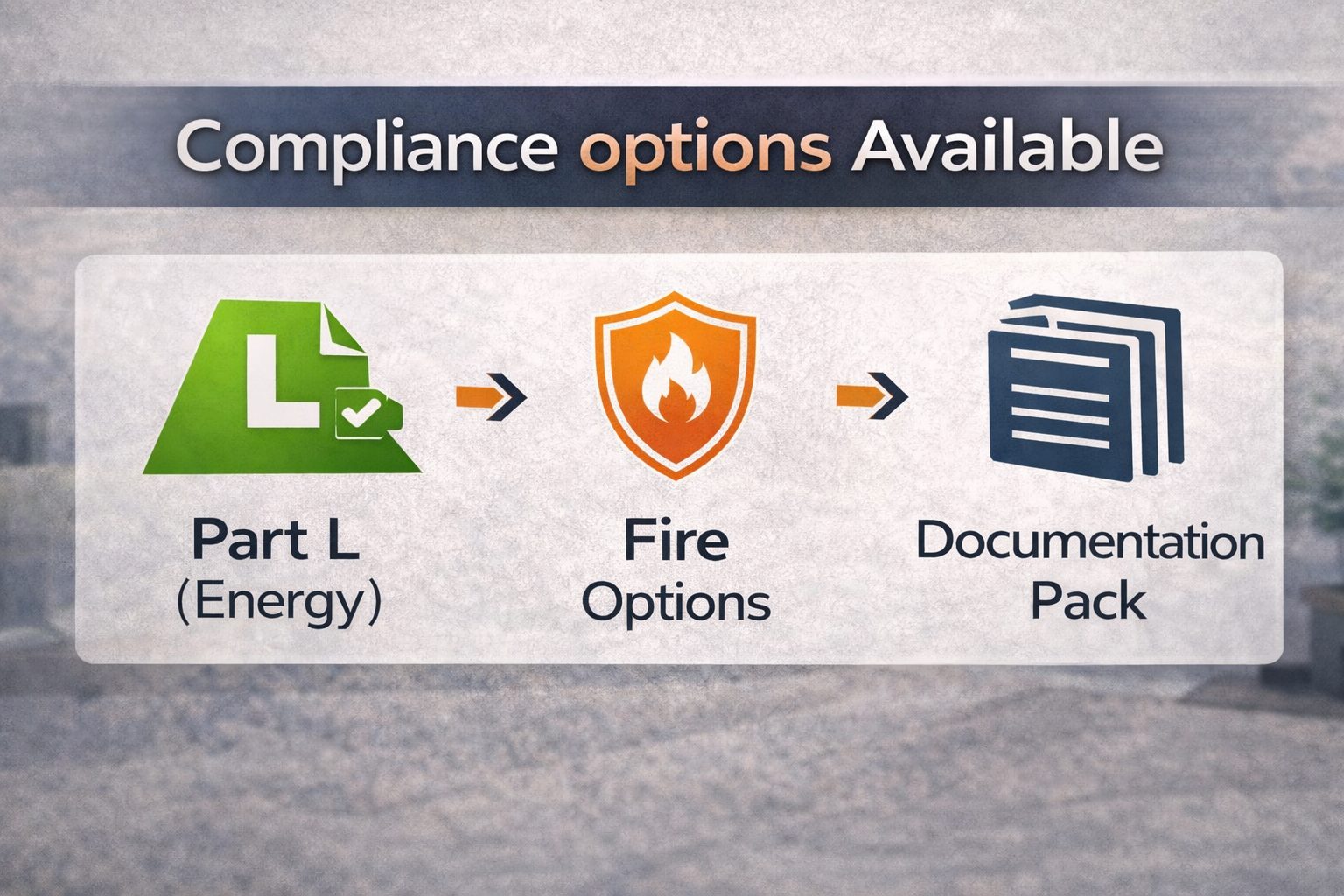
Fire performance and approvals vary by project. However, we clarify options early to reduce redesign cycles.
Description: A compliance options reference graphic supporting early-stage modular classroom pathway decisions for schools and councils.
Delivery & installation planning
Education sites require safe segregation. Therefore, lift planning and access routes are treated as core workstreams.
Description: A delivery and installation reference graphic supporting lift plan and access-route planning for education campus environments.
Modular classroom FAQs
Plan your modular classroom project with fewer unknowns
If you need to add teaching space without losing weeks to disruption, we can route you quickly to the right system pathway. Therefore, include your site postcode, room types and target date — we’ll respond with structured next steps.
That said, if you’re still exploring options, a short call can help confirm portable vs permanent, and whether REI60 or a permanent “A-path” intent is the right direction.
Typical quote response within 48h (Mon–Fri)
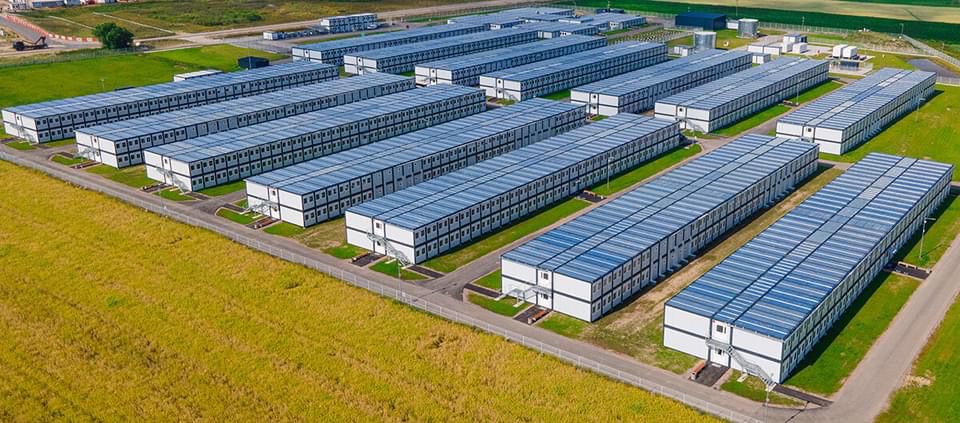
Description: A modular classroom building reference image showing exterior form, fenestration and finish approach suited to education environments (swap exact city later if required).
Find us (showroom for finishes and system routing)
Many education buyers prefer to see finishes, layouts and system options before locking decisions. Therefore, our showroom helps schools and councils confirm the best-fit pathway early — ISO volumetric for speed, bespoke steel for circulation-led layouts, or timber where planning preference supports it.
As a guide, we’re positioned for access from the North West and Midlands (actual times vary by traffic and start point). However, even a short visit often reduces rework later.
Description: A modular classroom building reference image illustrating a school expansion use-case in the UK, suitable for showcasing exterior form and education-ready configuration.
What our clients say
We keep this transparent. Therefore, review themes here are summarised for readability, while the most current feedback remains on Google. That said, education buyers commonly value predictable scheduling, clear communication and a smoother handover.
Clear sequencing and practical next steps reduce uncertainty for estates teams.
Durable finishes and well-planned internal layouts support long-term use.
Routing into ISO, bespoke steel or timber early avoids costly redesign later.
Why KC Modular Buildings for education projects
We separate ISO volumetric, bespoke steel and timber clearly. Therefore, buyers avoid the confusion that slows decisions and approvals.
We explain fire ratings and energy performance defensibly. However, outcomes remain project dependent, so expectations stay realistic.
Seeing finishes and layouts early reduces rework. As a result, estates teams can align stakeholders faster.
Compliance transparency (defensible language)
Education buyers deserve clarity, not hype. Therefore, we use wording that is accurate and defensible, while keeping the pathway understandable for non-technical stakeholders.
- Fire performance: REI ratings describe how long a tested assembly maintains structural capacity (R), integrity (E) and insulation (I) under fire. REI60 means 60 minutes where tested assemblies apply.
- Energy performance: “Designed to achieve A Energy Performance under Part L 2021 pathway” (project dependent). This is intent language, not a blanket guarantee.
- Approvals: Planning and Building Control requirements depend on site, duration and use. However, early information reduces redesign risk.
As a result, education stakeholders can review decisions with clearer confidence and fewer assumptions.
What affects cost for modular classrooms?
Budgets vary because education projects vary. Therefore, we clarify the drivers early so your estimate is based on real constraints rather than guesswork.
Primary drivers
- System choice: ISO vs bespoke steel vs timber
- Portable vs permanent pathway
- Room types: standard classrooms vs specialist rooms
- Services complexity: power, data, ventilation strategy
- Access and lift planning (crane/HIAB, route constraints)
Secondary drivers
- Finish level: standard vs upgraded vs hi-end interiors
- Acoustic strategy and learning-environment comfort targets
- Fire strategy pathway (where tested assemblies apply)
- External works: steps/ramps, walkways, fencing, drainage tie-ins
- Programme constraints: holiday installs vs staged term access
Moreover, modular classrooms UK become more cost-predictable when scope is fixed early and the pathway is chosen clearly.
Authority references (official guidance)
For official guidance on planning and compliance, refer to recognised UK sources. Therefore, these links help stakeholders validate terminology and routes independently.
- Planning Portal (England & Wales)
- GOV.UK — Building Regulations & Approved Documents
- HSE — CDM 2015 guidance
However, if you share your site and intended use, we can outline the typical evidence and drawings stakeholders usually ask for.