
Healthcare
Healthcare Sector
Modular Buildings for Healthcare
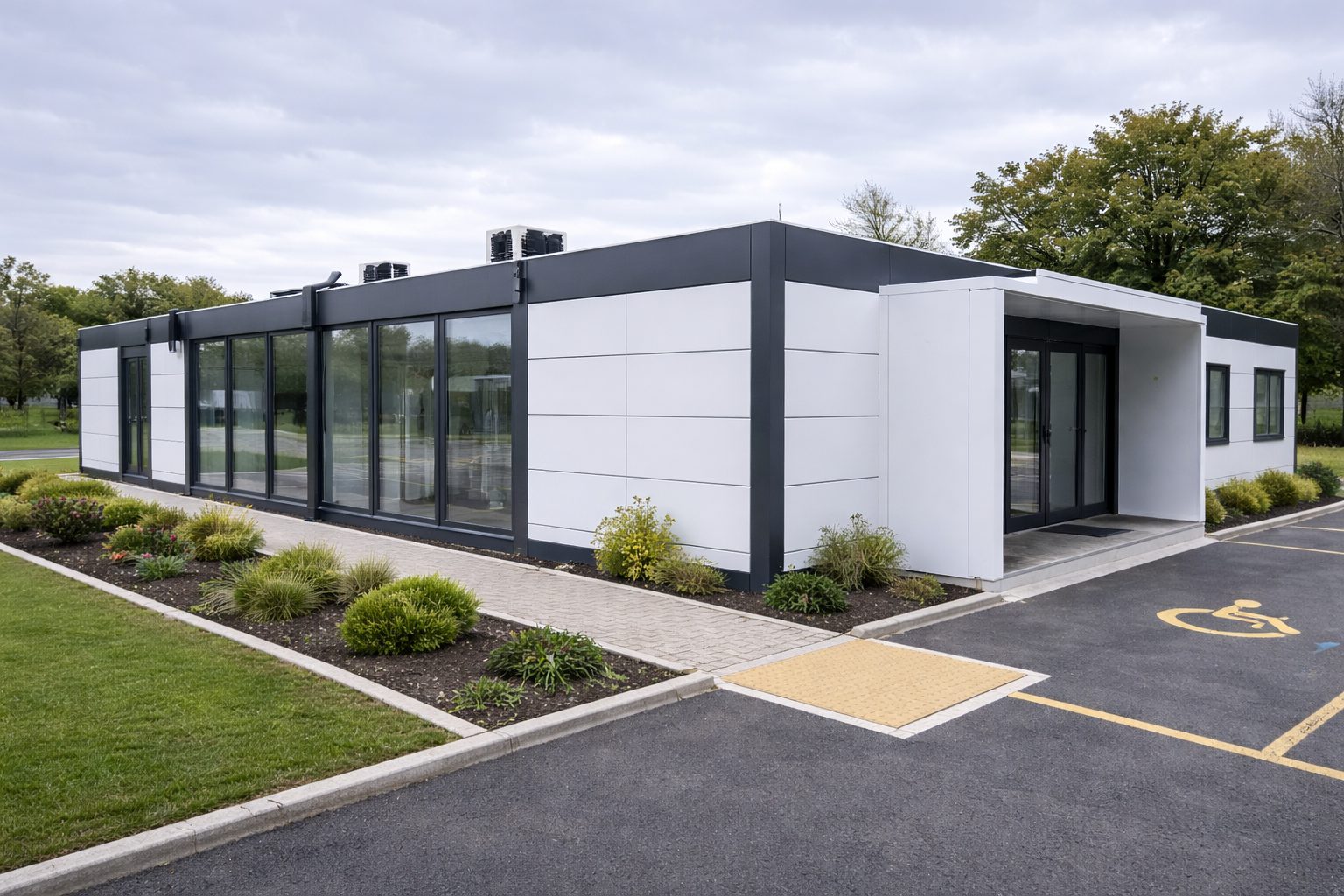
Modular buildings for healthcare give NHS-linked providers, private operators and specialist care teams a faster route to modular clinics, modular healthcare buildings, modular medical buildings, temporary medical facilities and well-planned modular treatment rooms across the UK. As a result, healthcare modular buildings can support expansion, decant works, patient flow improvements and service continuity without relying entirely on long traditional construction programmes.
Healthcare modular facilities can be planned for consultation, treatment, waiting, administration and sanitary support.
However, final requirements depend on the local authority, intended use, approvals and site conditions.
Why modular healthcare buildings are used across the UK
Healthcare providers often need extra space quickly. Therefore modular healthcare buildings are used when a project needs predictable manufacture, cleaner site programmes and flexible layouts that can support consultation rooms, waiting areas, treatment support zones and administration space. In addition, modular medical buildings help teams separate public and staff circulation more efficiently, which is useful when privacy, hygiene and operational continuity matter.
What healthcare modular facilities can include
The right healthcare modular facilities depend on the service model. Some projects need compact modular consultation rooms. Others need larger modular treatment rooms, reception desks, staff support space and sanitary provision in one building. Consequently, a good modular healthcare strategy starts with the room schedule and operational brief, rather than with a generic footprint.
- Reception, waiting and triage spaces
- Modular consultation rooms and modular examination rooms
- Clinical prep areas and modular healthcare treatment spaces
- Staff rooms, admin offices and secure storage
- Integrated sanitary units, washroom modules and accessible WC provision
Primary conversion routes
If you already know your project need, use the conversion route that matches your stage. Otherwise, start with a consultation so the building type, programme and interfaces can be defined properly.
Key healthcare applications for modular medical buildings
Because service requirements differ, the same modular system can support several healthcare use cases. For example, some modular medical buildings operate as local GP extensions, while others serve as temporary medical facilities during refurbishment or capacity pressure. Likewise, some schemes focus on modular clinics with reception and waiting areas, whereas others prioritise modular treatment rooms or modular consultation rooms with more private workflows.
Primary care expansion
Modular clinics and consultation spaces for GP practices, community health centres and outpatient support.
Temporary medical facilities
Temporary healthcare buildings and healthcare decant buildings used while existing facilities are upgraded or reconfigured.
Treatment and support spaces
Modular treatment rooms, prep zones, staff rooms, diagnostics support and sanitary modules for patient-facing environments.
Sector challenges healthcare projects must address
Every healthcare site brings its own constraints. Nevertheless, the main risks are usually operational continuity, privacy, hygiene, access and utilities. Therefore the page should make those issues clear before the user reaches pricing or quotation content.
Typical constraints on healthcare sites
- Keeping live services running while new healthcare modular facilities are delivered and installed
- Maintaining patient dignity, staff privacy and safe separation between clinical and non-clinical activity
- Creating modular clinical rooms and prefabricated treatment rooms with practical, easy-clean internal finishes
- Managing constrained access, crane positions and utility tie-ins on busy healthcare campuses
- Aligning temporary medical facilities with wider estate programmes, refurbishment phases and service continuity plans
Planning, compliance and approvals
Modular buildings for healthcare are not exempt from project governance. Instead, planning status, Building Regulations, fire strategy, accessibility, utility interfaces and local site controls must be reviewed according to the intended use. For approval routes and planning context, see the Planning Portal. For general approval guidance, review the UK Building Regulations overview.
Final requirements depend on the local authority and site conditions. Therefore this page positions typical routes only; the final approval position sits with the relevant bodies and project advisers.
Healthcare solutions linked from this sector page
To keep intent clear, the main healthcare sector page should route users into the most relevant solution pages rather than trying to compete with them. Consequently, the links below use varied, descriptive anchor text rather than repeating the same phrase.
Clinic building solutions
Purpose-built healthcare modular buildings for consulting, assessment, treatment and support functions.
Sanitary and washroom modules
Modular sanitary units, modular washroom modules and healthcare sanitary modules that support clinical and staff environments.
Decant and overflow building options
Temporary healthcare buildings and modular temporary medical units for service continuity during change or expansion.
Typical layouts, modular consultation rooms and treatment arrangements
Layout is one of the biggest drivers of project success. For that reason, healthcare modular buildings should be structured around patient flow, privacy and operational simplicity. In practice, a modest modular clinic may only need reception, waiting and two modular consultation rooms. However, larger healthcare modular buildings UK schemes may require diagnostics support, staff rooms, modular examination rooms and integrated sanitary provision.
01. Compact clinic format
Reception, waiting zone, two modular consultation rooms and accessible WC.
02. Expanded treatment suite
Additional prep areas, modular treatment rooms and support storage for more specialised workflows.
03. Temporary decant arrangement
Temporary medical facilities used while a permanent building is refurbished or while capacity is under pressure.
04. Multi-zone healthcare block
Reception, patient flow, modular clinical rooms, staff welfare and sanitary modules in one coordinated footprint.
Systems commonly used for modular healthcare facilities
System selection depends on the lifespan, finish level, transport constraints and whether the project is permanent or temporary. Therefore this sector page links to system pages instead of duplicating their technical detail.
ISO frame systems
Useful where robust transportable units, faster mobilisation and modular temporary medical units are priorities.
Modular steel frame system
Strong option for permanent healthcare modular buildings and larger, more refined clinical environments.
Custom modular systems
Helpful when room layouts, finishes and sector-specific medical requirements need a more bespoke response.
Healthcare gallery and project references
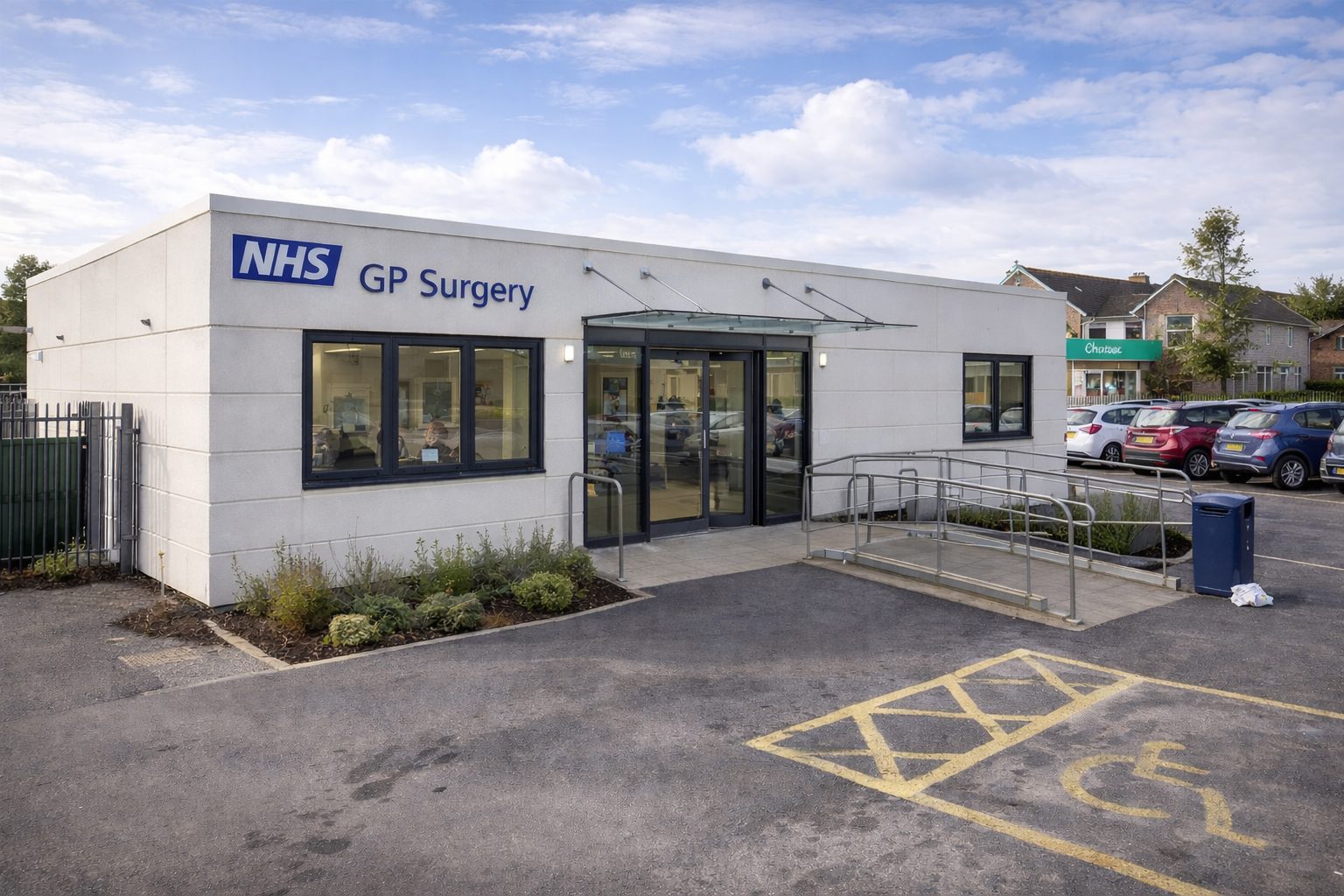
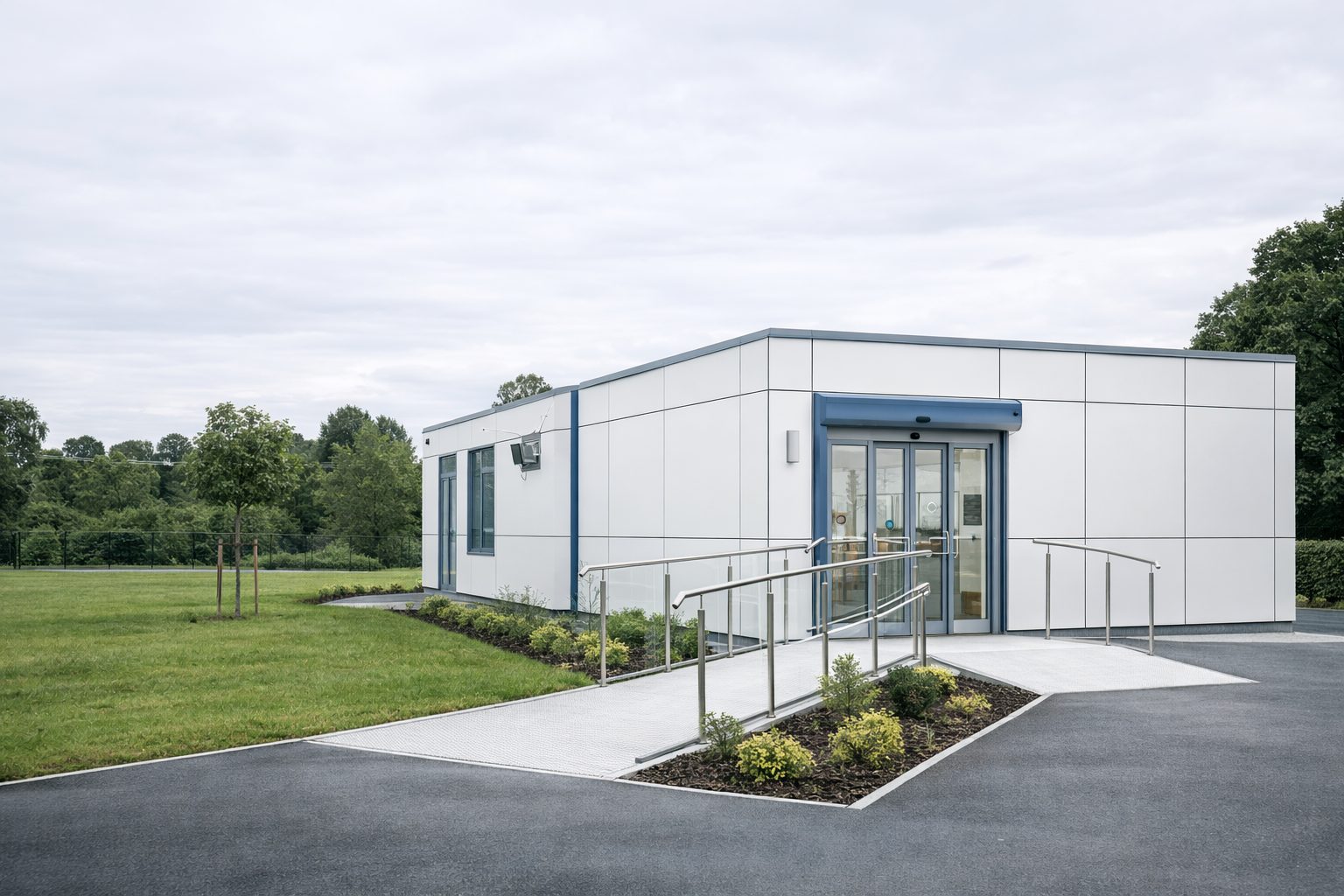
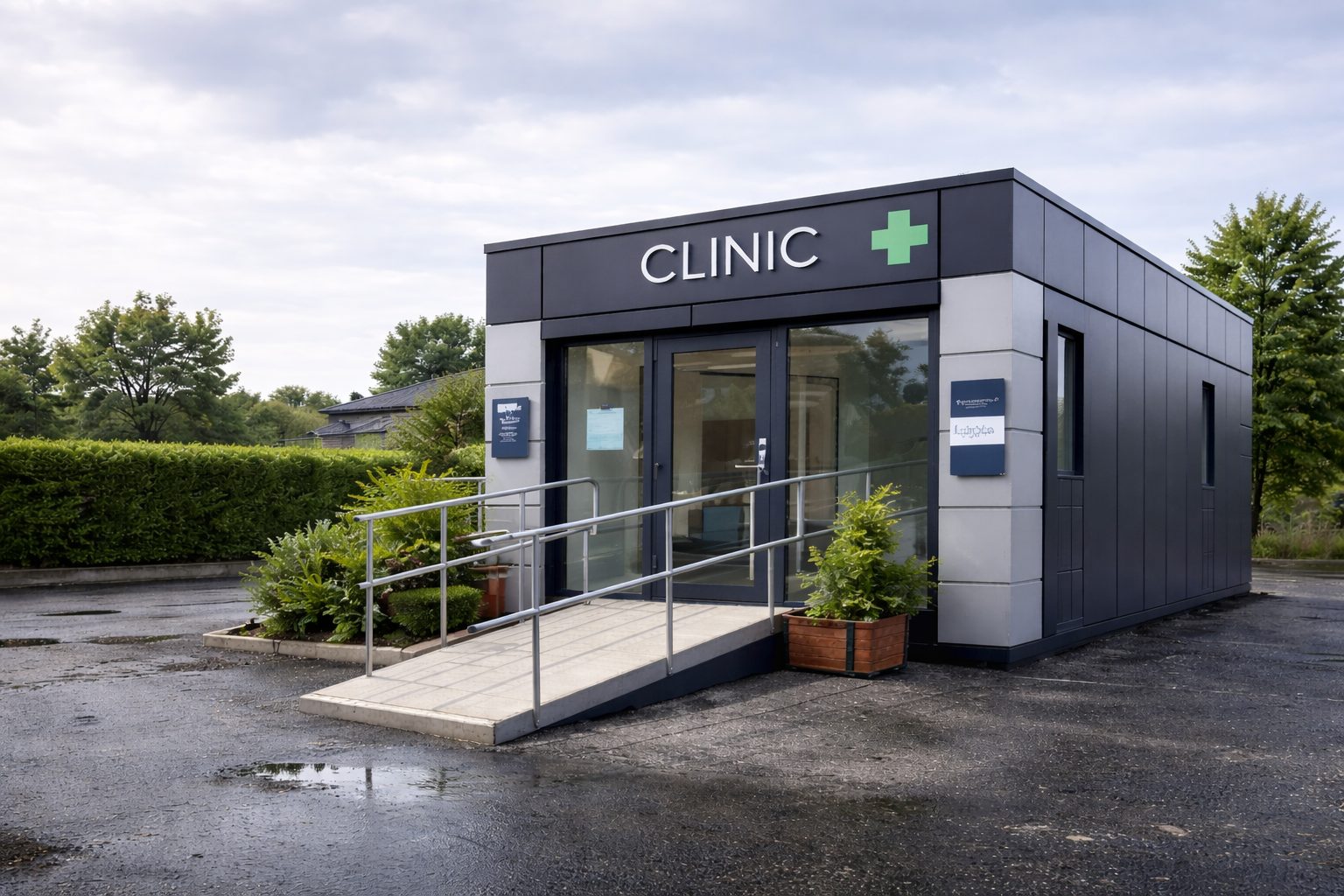
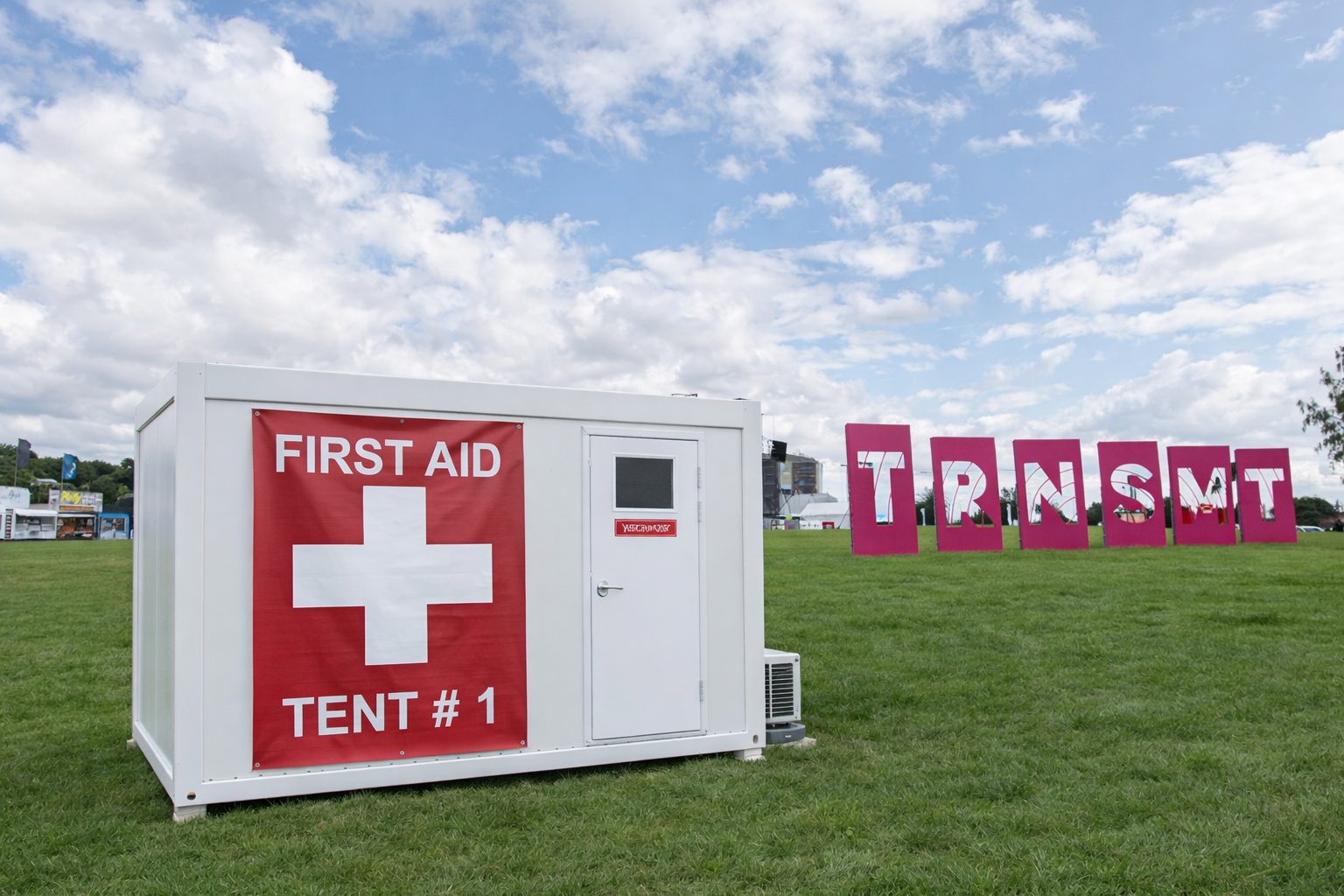
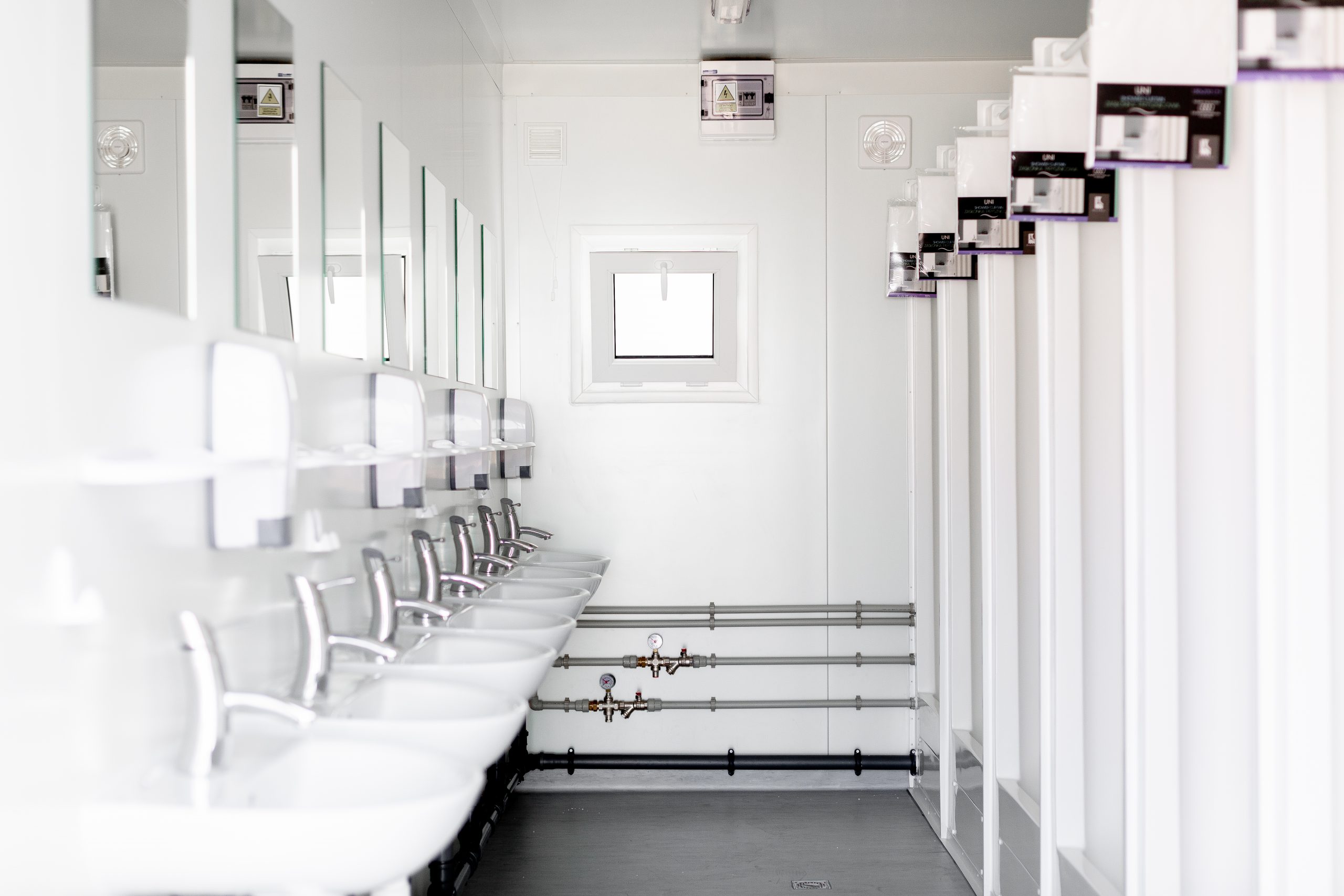
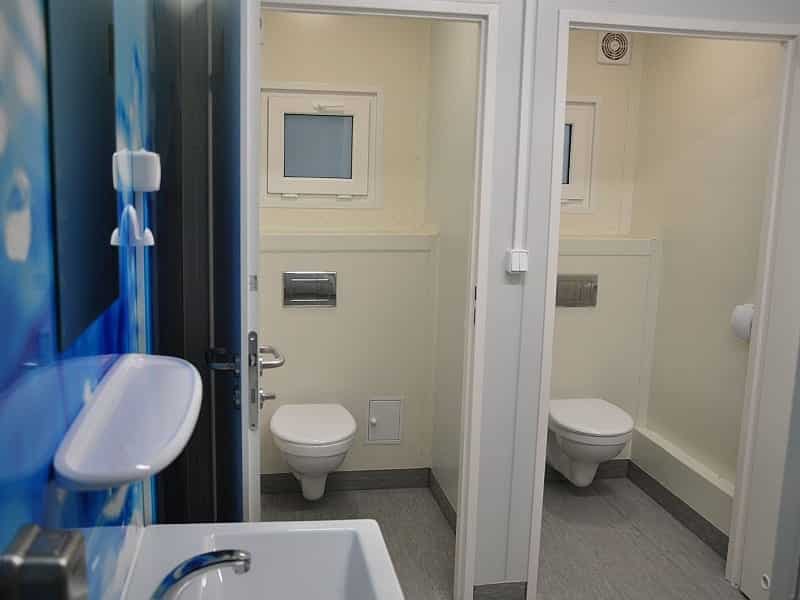
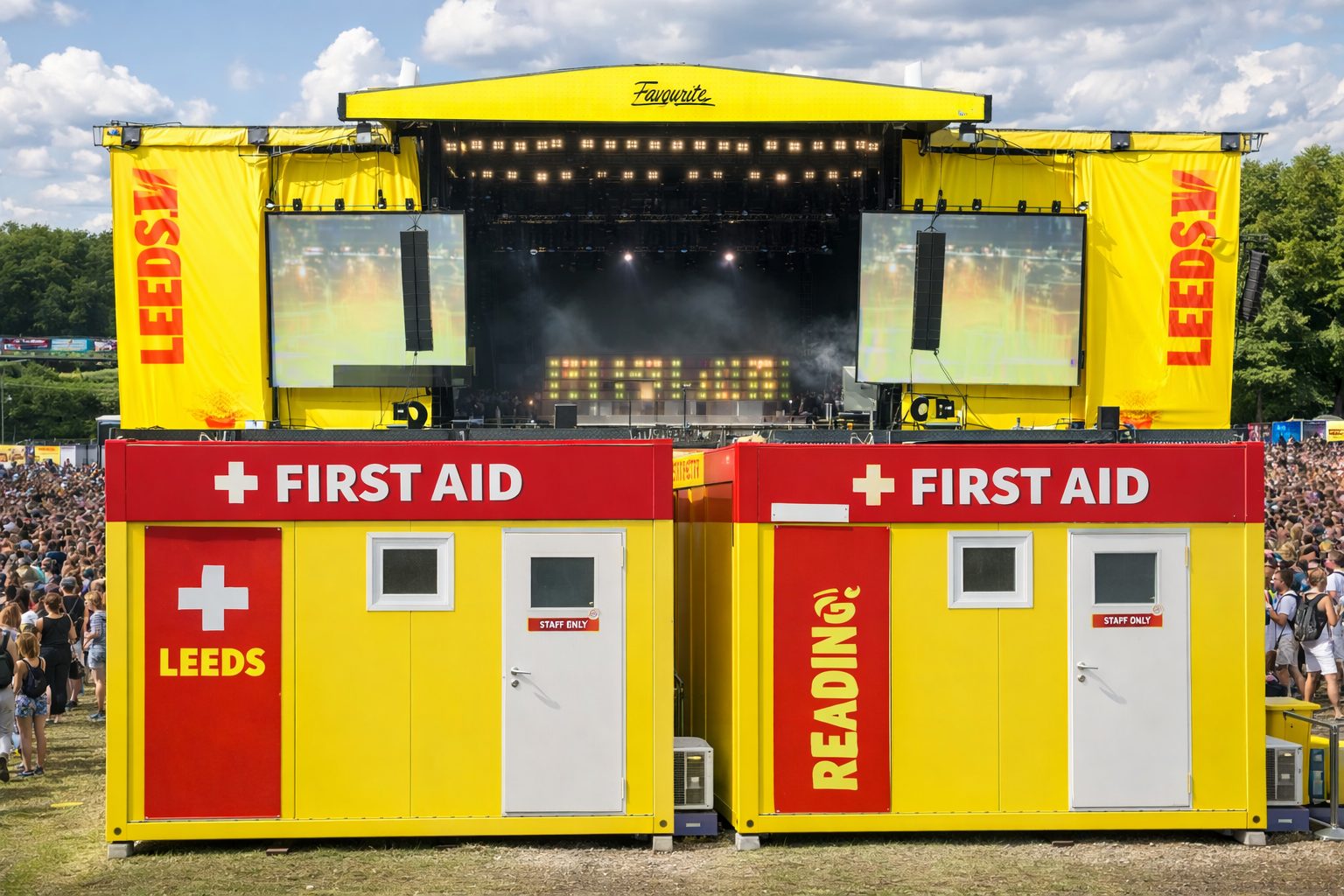
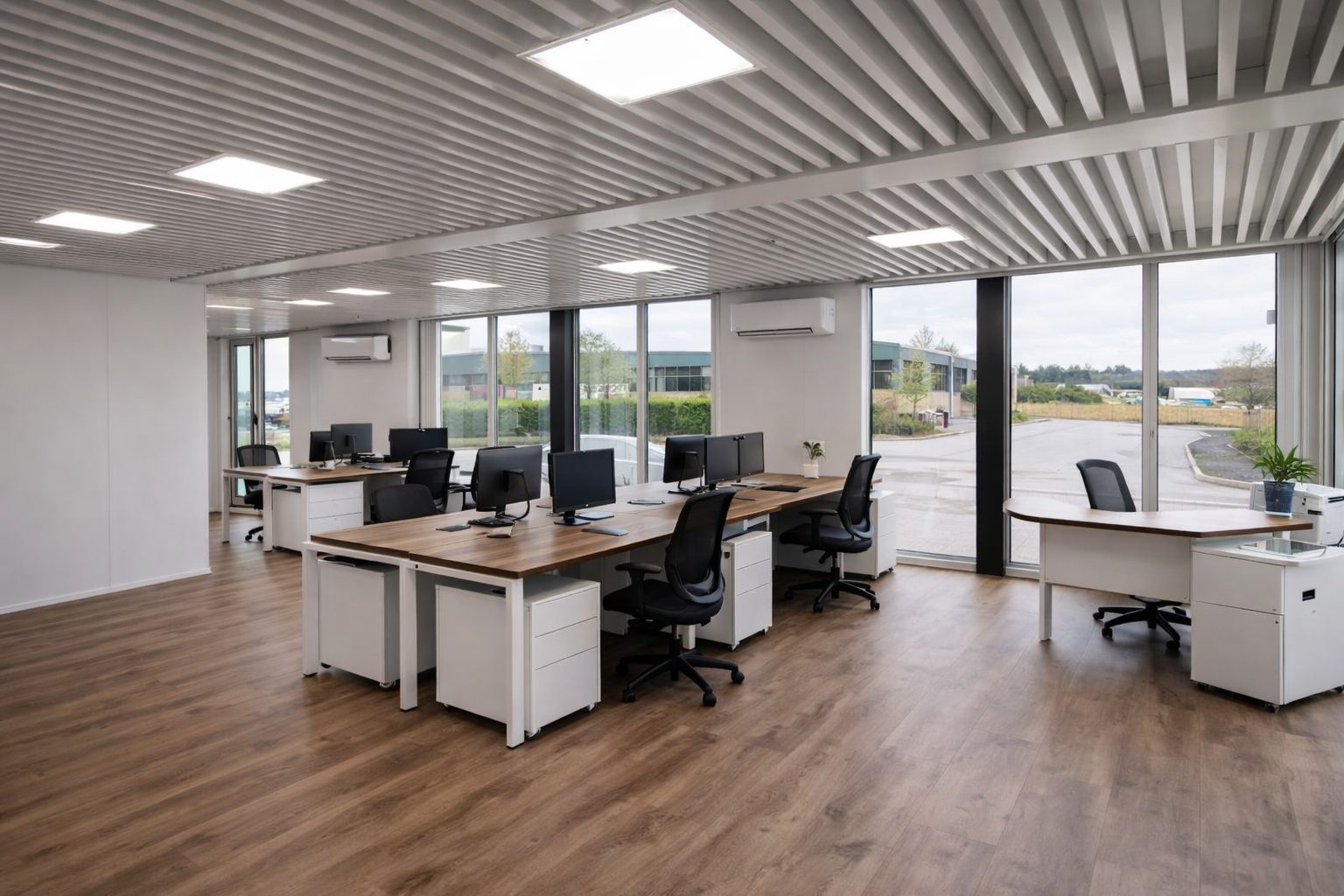
The image selection below supports the healthcare sector topic while avoiding alt-text over-optimisation. Some visuals show clinics directly. Others show sanitary or event-medical functions that help explain how modular buildings for medical use can vary by brief.
Delivery, installation and live-site coordination
Healthcare modular buildings UK projects often require earlier logistics review than a simpler commercial scheme. First, access and crane positions must be checked. Next, utilities and service connections need clear interface planning. Then, the installation sequence has to be aligned with healthcare operations. As a result, live-site modular healthcare facilities perform better when delivery and install logic is defined early rather than late.
01. Define the brief
Confirm room schedule, intended use, sanitary needs and whether modular healthcare treatment spaces are temporary or permanent.
02. Select the system
Choose the modular route that best fits permanence, delivery constraints, finish level and future flexibility.
03. Review the site
Assess access, set-down zones, cranage, utilities and any restrictions created by live patient services.
04. Deliver and commission
Coordinate installation, interfaces and final checks so the building supports service continuity with less disruption.
Healthcare FAQs
These FAQs are unique to the healthcare sector page and are written to support both user understanding and FAQ rich-result eligibility.
Can modular buildings be used for clinics and treatment rooms?
Yes. Modular buildings can be used for clinics, treatment rooms, consultation suites and other healthcare support functions when the layout and specification are designed around the intended use.
Are modular healthcare buildings suitable for temporary use?
Yes. Temporary modular clinics, temporary healthcare buildings and other temporary medical facilities are often used for decant projects, overflow demand and short-to-medium-term site expansion.
What affects delivery and installation for healthcare projects?
Access routes, crane positions, live site operations, utility connections, service continuity and the final approved scope all influence how healthcare modular buildings are delivered and installed.
Do modular healthcare buildings require approvals?
Yes, depending on the site, intended use and project duration. Final requirements depend on the local authority and site conditions, and approval pathways should always be reviewed with the relevant bodies and advisers.
Discuss your healthcare modular building project
Whether you need modular healthcare buildings for long-term service expansion, modular clinics for community care, temporary medical facilities for decant, or modular treatment rooms with sanitary support, we can help you define the right route, system and project scope.
Typical quote response within 48h. Final requirements depend on the local authority, intended use and site conditions.