
System comparison guide
Modular Offices vs Traditional Construction: Modular vs Traditional Build Guide
Use this UK guide to compare modular offices vs traditional construction, understand modular building advantages, check modular construction benefits and answer the buyer question: are modular offices worth it for this site?
Best for Offices, estates, developers and contractors.
Compared on Cost, speed, disruption and flexibility.
Key caveat Approvals and services are project-specific.
Next step Send use, size, postcode and access notes.
Short answer: modular vs traditional build for UK offices
Are modular offices worth it? For many UK office projects, yes: a modular vs traditional build route is worth considering when the buyer needs faster usable workspace, lower disruption around staff or customers, and a clearer route for later expansion or relocation.
Modular offices vs traditional construction should still be compared on full project scope. The modular building advantages are strongest when the design can be frozen early, the site can accept delivery and lifting, and the office layout suits repeatable modules.
The main modular construction benefits are programme control, reduced live-site work, factory-led consistency and future flexibility. Traditional construction can still be the better route for highly bespoke architecture, complex structural interfaces or sensitive planning settings.
Modular building advantages, modular construction benefits and are modular offices worth it?
This snippet-ready section gives direct answers for modular offices vs traditional construction searches, including modular building advantages, modular construction benefits and whether modular offices are worth it for UK buyers.
| Search question | Direct answer | Buyer action |
|---|---|---|
| modular vs traditional build | A modular vs traditional build comparison should review cost, site time, disruption, future flexibility, approvals, specification and business continuity. | Start with a route review. |
| modular building advantages | Modular building advantages include controlled factory production, reduced live-site work, repeatable layout quality, faster installation planning and future relocation options. | Check which advantages apply to the site. |
| are modular offices worth it | Are modular offices worth it? They are usually worth considering when speed, disruption control and future flexibility matter more than unlimited design freedom. | Compare total project value. |
| modular construction benefits | Modular construction benefits include parallel factory and site preparation, reduced weather exposure, clearer programme control and less on-site disruption. | Send KC use, size, postcode and access notes. |
| modular offices vs traditional construction | Modular offices vs traditional construction is a route choice based on cost, speed, disruption, approvals, design freedom and whole-life use. | Compare like-for-like scope. |
Modular building advantages
Modular building advantages include reduced live-site work, controlled factory production, repeatable layouts, shorter installation windows and the option to plan future relocation or extension from the start.
Are modular offices worth it?
Are modular offices worth it for every site? No. They are worth it when speed, disruption control, repeatable layouts and future flexibility are more valuable than unlimited design freedom.
Modular construction benefits
Modular construction benefits include parallel factory and site preparation, less wet-trade time on site, clearer installation planning and a stronger route for buyers who need office space without prolonged disruption.
Modular offices vs traditional construction
Modular offices vs traditional construction is not a single-price comparison. It is a route decision based on cost, speed, disruption, approvals, specification, access and long-term use.
Who this guide is for
This comparison is for buyers who already know they need office space but have not yet decided whether modular offices vs traditional construction, a portable cabin, bespoke modular building or conventional extension is the safest commercial choice.
Facilities managers
Need extra office space without turning an active workplace into a long-running construction site.
Operations directors
Need to protect production, logistics, customer access or business continuity during expansion.
Developers and landlords
Need a credible comparison between a modular office, a conventional extension and a bespoke commercial building.
Main contractors
Need site offices, project offices or client-facing workspace that fits the programme and compound plan.
Public sector and estates teams
Need a decision trail that explains cost, time, disruption, approvals and whole-life flexibility.
Decision table: when modular offices make sense
Use this as an early route selector. It does not replace engineering, planning, fire, accessibility or commercial review.
| Situation | Recommended route / what to check | Why it matters | Next step |
|---|---|---|---|
| You need office space quickly on a live site | Modular office route | More work can be prepared away from site, reducing the amount of construction activity around staff, visitors or production areas. | Book a modular office route review |
| You need a highly individual façade or complex interface | Compare bespoke modular against traditional construction | Traditional construction may suit very complex architecture, but bespoke modular can still work where the design is fixed early enough. | Send drawings and site photos |
| The site has limited space or must keep operating | Model site disruption and deliveries | The best route may be the one that minimises site compound pressure, vehicle movements and working-hour conflict. | Request site access review |
| You may expand or relocate later | Check relocatable or expandable modular routes | Relocatability is a modular construction benefit only when structural, service and foundation assumptions support it. | Ask for expansion assumptions |
| You are comparing budget figures | Use whole-scope cost comparison | A like-for-like comparison must include foundations, services, approvals, lifting, fit-out, professional fees and disruption risk. | Read the cost guide |
Modular offices vs traditional construction: cost, speed and disruption table
This table supports the modular offices vs traditional construction decision by comparing practical buyer points: cost, programme, disruption, future flexibility, approvals and site control.
| Criteria | Modular office route | Traditional construction route | Buyer note |
|---|---|---|---|
| Initial cost view | Can be easier to compare once the design, modules, fit-out and installation scope are fixed. Module transport, lifting, foundations and services still matter. | Can suit highly bespoke work, but costs may shift where site conditions, weather, sequencing or design changes affect the programme. | Compare total scope, not just the headline build rate. |
| Programme | Can reduce time spent on site because more work happens in a factory while site preparation continues. That advantage depends on design freeze, approvals and access. | Usually relies on more sequential on-site trades and longer live-site coordination. It can still be efficient when the site is simple and the design is stable. | Ask which stages can run in parallel and which cannot. |
| Site disruption | Often useful where staff, customers, pupils, residents or production lines need to keep operating nearby. Fewer wet trades may be needed on site. | Can involve longer periods of deliveries, scaffolding, waste movement, noise, wet trades and site compound management. | Live sites should compare disruption, not only programme length. |
| Design flexibility | Works best when the repeatable modular grid, transport limits and early design decisions are accepted. Bespoke modular can add more visual freedom. | Can offer more freedom for unusual forms, complex interfaces and one-off architecture. | Choose the route that fits the brief, not the buzzword. |
| Future change | Some modular offices can be extended, reconfigured, moved or reused, subject to system, foundations and services. | Traditional buildings are usually harder to relocate and may be more expensive to alter later. | Relocatability has value only if it is designed in from the start. |
| Approvals and compliance | Planning, Building Regulations, fire strategy, accessibility, drainage, energy performance and structural checks still apply where relevant. | The same approval principles can apply, but the evidence pack and sequencing may differ. | Do not assume either route avoids statutory checks. |
Cost, speed and disruption: modular construction benefits in context
A cost comparison is only useful when both routes include the same scope. A modular office quote and a traditional construction estimate can look very different if one includes delivery, lifting, assembly and fit-out while the other excludes groundworks, professional fees, service connections or disruption costs.
For speed, the modular construction benefits usually come from moving more work away from the live site. Modular construction benefits still depend on design freeze, supplier capacity, planning, Building Regulations coordination, transport, cranage, foundations and site readiness.
For disruption, compare how the route affects staff, visitors, tenants, production, deliveries, parking, neighbours and health and safety management. A traditional build may be fine on a clear site. A modular office may be stronger when the existing business needs to keep operating.
| Cost or programme driver | Why it changes the comparison |
|---|---|
| Building size and shape | Module dimensions, repeated bays and stackable layouts can improve build logic. Awkward shapes may push the project toward bespoke modular or traditional construction. |
| Specification level | Glazing, cladding, acoustic treatment, fire strategy, ventilation, heating/cooling, toilets and kitchens affect both modular and traditional costs. |
| Site access | Delivery route, turning area, lifting zone, overhead restrictions and working hours can change modular viability and traditional site preliminaries. |
| Foundations and groundworks | Both routes need a suitable base. Ground conditions, drainage, service trenching and level changes are often excluded from early guide prices. |
| Approval route | Planning, Building Regulations, fire strategy, accessibility and energy-performance checks can change scope, sequence and professional input. |
| Business disruption | Traditional construction may carry more on-site disruption risk. Modular may reduce it, but temporary relocation, traffic management and lifting plans still need pricing. |
Modular building advantages for office projects
The modular building advantages that matter most are commercial: less live-site work, earlier certainty over repeated layouts, potential to expand later, clearer installation planning and the ability to separate factory production from some site preparation.
These modular building advantages are strongest when the office layout, access route, foundations, services and external finish can be agreed early enough for factory-led planning.
- Reduced site time: useful where a live business, school, depot or contractor compound must keep operating.
- Repeatable layout logic: useful for offices, meeting rooms, welfare-office combinations and staff facilities.
- Controlled production: useful where the buyer wants consistent finish and fewer weather-dependent site activities.
- Future flexibility: useful when relocation, extension or reconfiguration may be valuable later.
- Clearer buyer brief: useful because the route forces earlier decisions on rooms, services, finishes and access.
- Cluster value: useful when the office links to welfare, site accommodation or future two-storey expansion.
Important: none of those modular building advantages removes the need to check planning, Building Regulations, foundations, fire strategy, accessibility, services or drainage where they apply.
Are modular offices worth it? When the modular route wins
Are modular offices worth it? For many commercial buyers, yes: modular offices are worth it when the value of earlier usable space, lower disruption, repeatable quality and future flexibility outweighs the need for complete design freedom.
They can be particularly useful for expanding businesses, factories, business parks, main contractors, councils, schools and estates teams that need office space without a long, disruptive traditional construction programme.
They may be less attractive where the project needs a highly unusual architectural form, a very complex connection to an existing building, unusual structural loads, or a planning-sensitive appearance that cannot be achieved within a modular system route.
The useful question is not simply “is modular better?” The better question is: “are modular offices worth it for this site, this timescale, this budget and this operational risk?”
When traditional construction may be the better route
Traditional construction still has a place. A conventional build may be the stronger option when the design cannot be rationalised into modules, the site is too constrained for transport or lifting, the building must tie into complex existing structures, or the planning context demands a highly specific external form.
Traditional construction can also make sense where the client expects frequent design changes during the build. Modular offices work best when the design, services, openings, finishes and interfaces are agreed early enough for manufacture.
| Office requirement | Likely stronger route | Why |
|---|---|---|
| Temporary or project office | Modular or portable office cabin | Traditional construction is rarely the first choice for short-duration site accommodation unless it forms part of a larger permanent development. |
| Long-term office extension | Permanent modular office or traditional extension | Compare appearance, access, services, planning context and whole-life change before choosing. |
| Constrained footprint | Stacked modular offices or multi-storey traditional route | Structural design, stairs, access, fire strategy and foundations decide whether stacking is sensible. |
| Premium customer-facing office | Bespoke modular or traditional construction | Both can work. Compare finish, procurement time, planning sensitivity and how fixed the design needs to be. |
| Fast decant or temporary workplace | Modular office | Modular is often strong where the main requirement is continuity while another building is refurbished or extended. |
Planning, Building Regulations and approval checks
Do not treat a modular office as a shortcut around approval checks. GOV.UK explains that Building Regulations approval is different from planning permission, and a project might need both. Planning Portal gives the same separation between planning and building control routes.
The GOV.UK Approved Documents collection provides guidance on ways to meet Building Regulations. For a modular office, relevant checks can include structure, fire strategy, access, ventilation, energy performance, drainage, toilets, glazing and site preparation.
Planning, Building Regulations, fire strategy, accessibility, foundations, utilities, drainage, delivery access and services are project-specific. Requirements can depend on use, size, duration, site, local planning authority, building control route and final specification.
Public sector and procurement comparison
For councils, schools and other public-sector buyers, a modular vs traditional build comparison should be evidence-led. The Construction Playbook sets out how public works projects and programmes are assessed, procured and delivered. The Civil Service Modern Methods of Construction guidance highlights the need to consider how MMC and platform approaches fit the project strategy, not just whether they sound faster.
That means the comparison should record assumptions, inclusions, exclusions, approvals, site constraints and whole-life considerations. A modular office route can be compelling, but only when the evidence supports the outcome the buyer needs.
Project-specific caveats before choosing a route
A modular office can be a strong alternative to traditional construction, but every comparison should be based on a real brief. Final suitability depends on engineering design, access, services, foundations, fire strategy, accessibility, planning, Building Regulations and the agreed specification.
- Do not compare a basic portable office against a permanent traditional building.
- Do not compare a modular shell price against a fully fitted traditional construction estimate.
- Do not assume every modular route is automatically relocatable or stackable.
- Do not assume traditional construction includes all groundworks, services and fees.
- Do not treat planning or Building Regulations as optional until the project route is checked.
- Do not make a decision before access, lifting and service routes are understood.
What KC needs to compare modular offices with traditional construction
A route review is easier when the project information is clear. For a modular vs traditional build comparison, send KC as much of the following as possible:
- Intended use: offices, meeting rooms, reception, welfare-office mix or customer-facing workspace.
- Approximate size, number of staff, room schedule and any future expansion plan.
- Temporary, relocatable, semi-permanent or permanent expectation.
- Site postcode, site photographs and available delivery route.
- Access constraints, lifting area, working hours, parking and live-site restrictions.
- Services: power, water, drainage, data, heating/cooling and ventilation needs.
- Groundworks or foundation status, including existing slabs, levels and drainage.
- Finish expectations: practical site office, corporate office, showroom, reception or high-end workspace.
- Any drawings, sketches, planning notes, landlord requirements or consultant reports.
- Budget direction and target handover date, if known.
Modular office and commercial building references
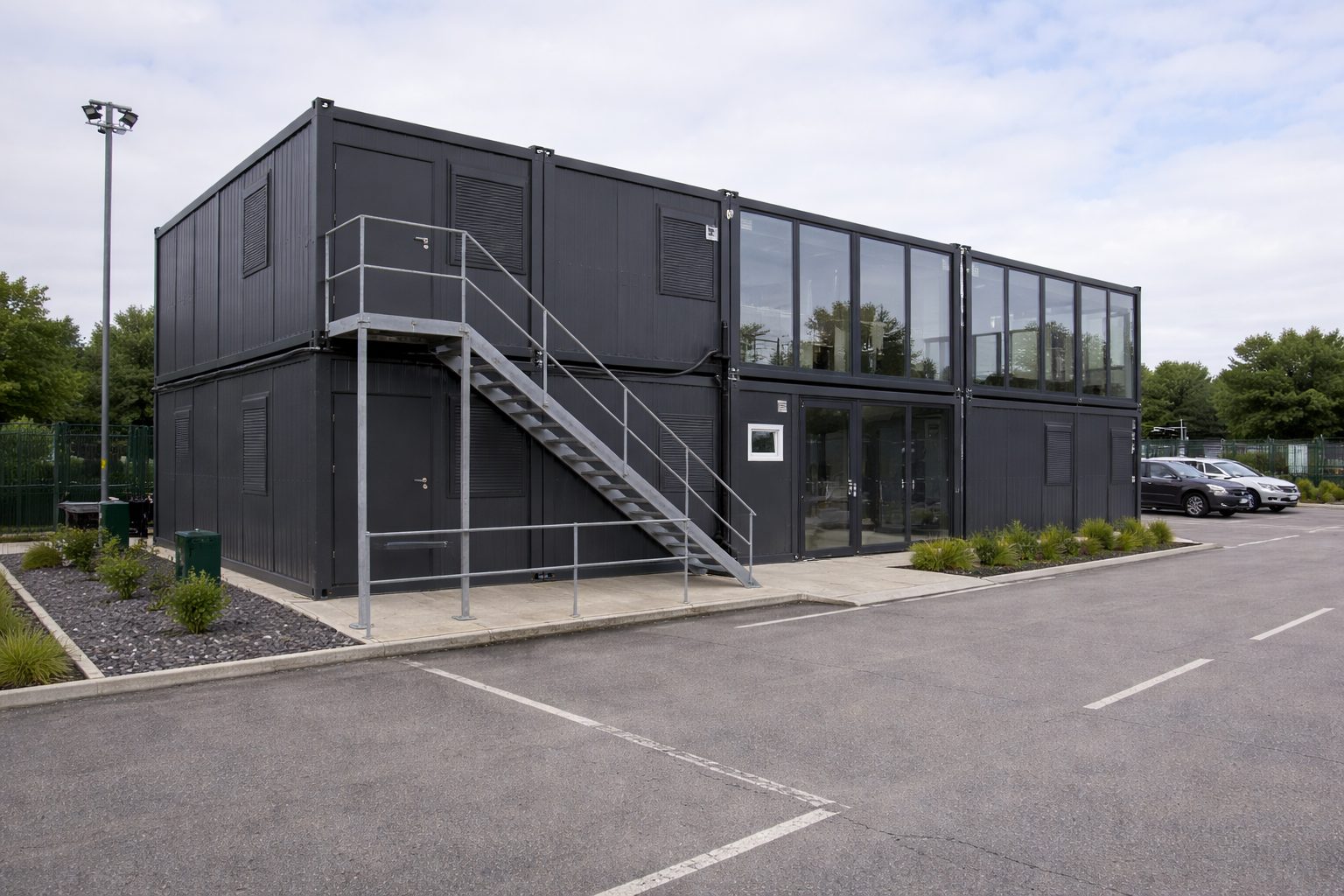
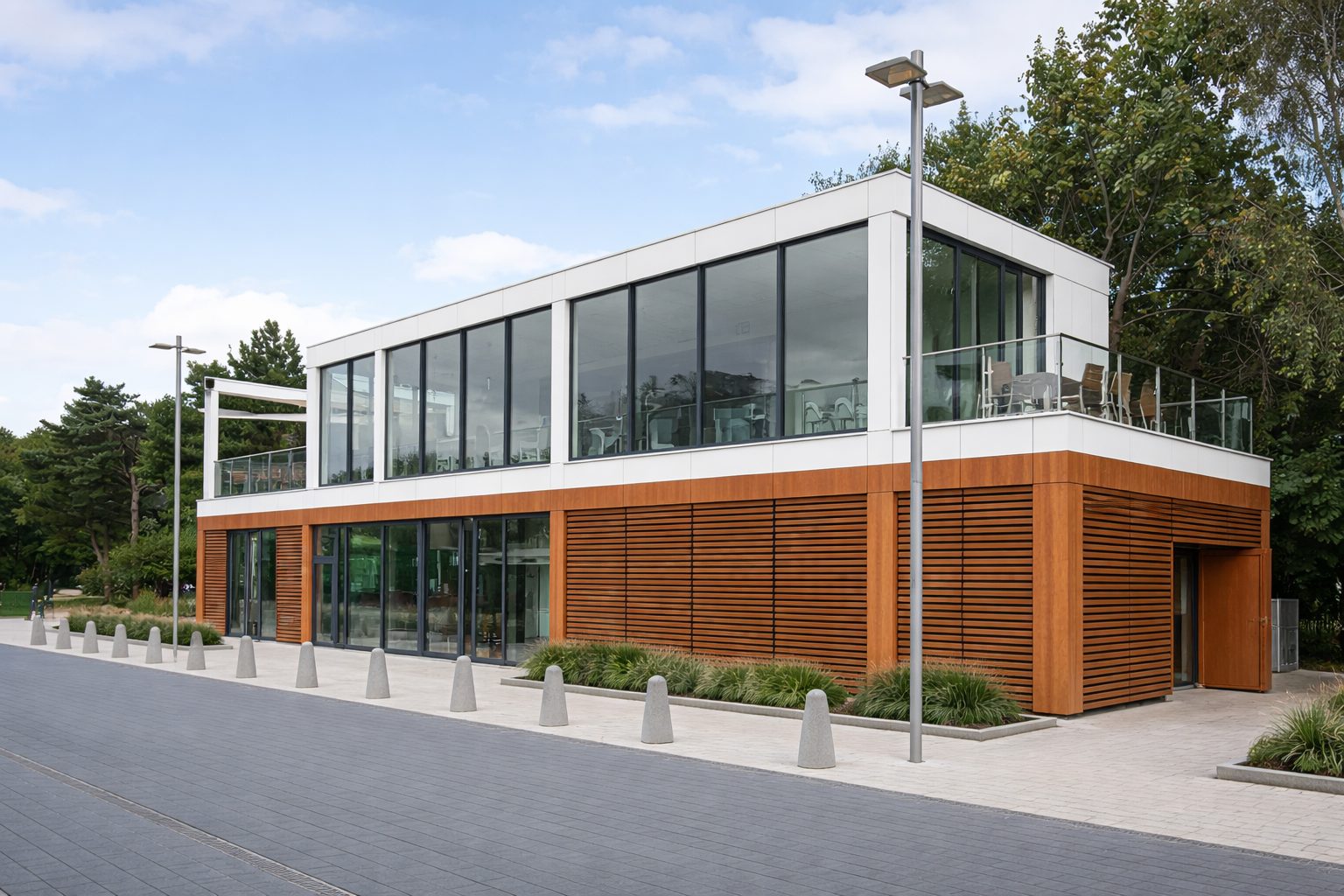
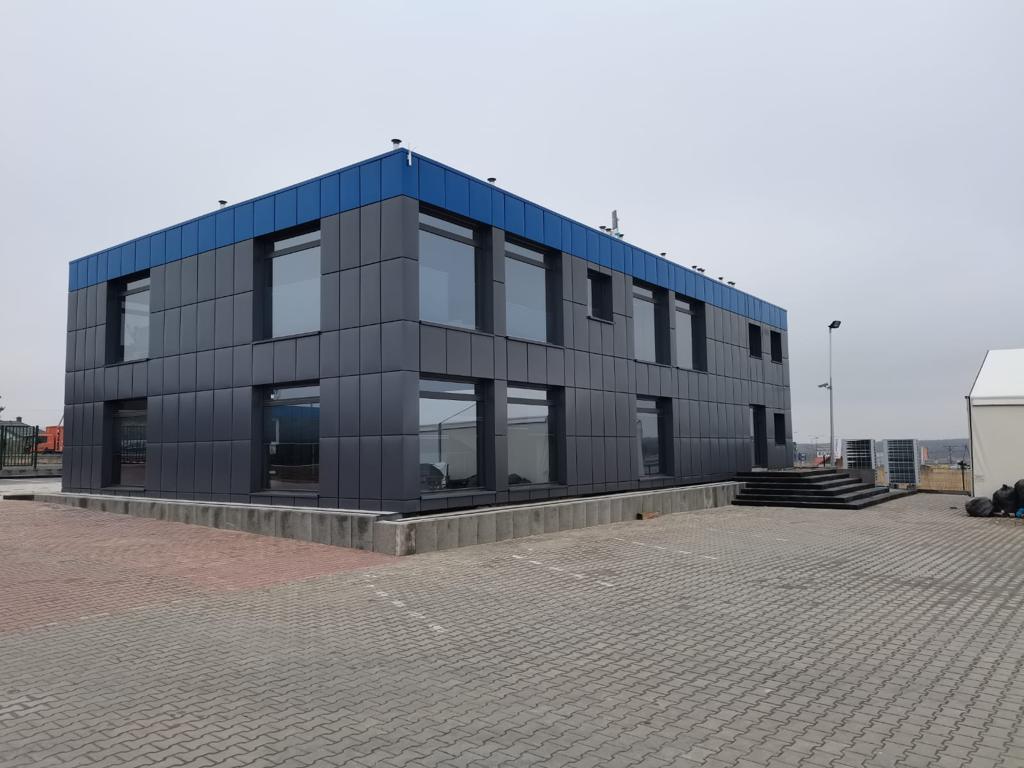
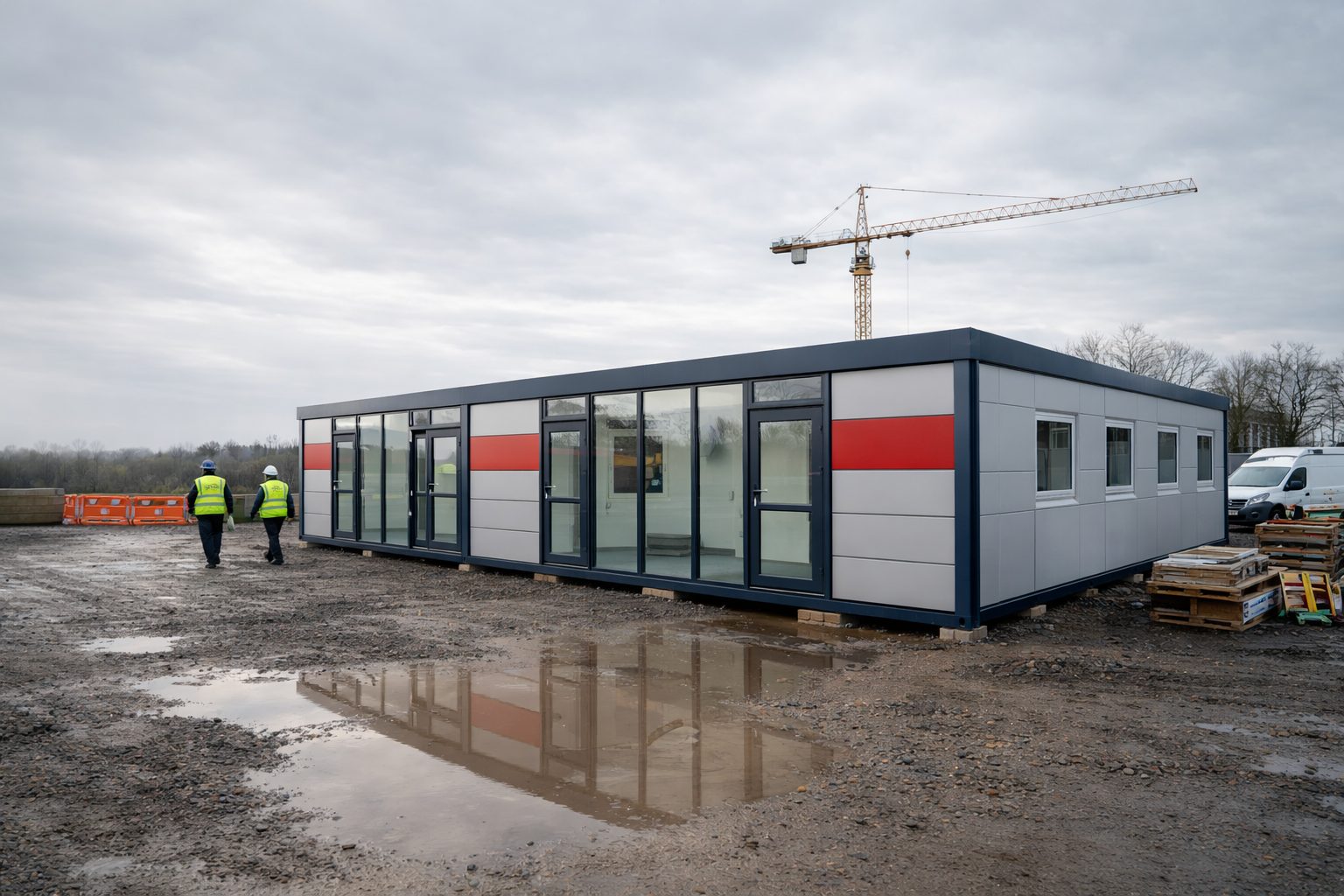
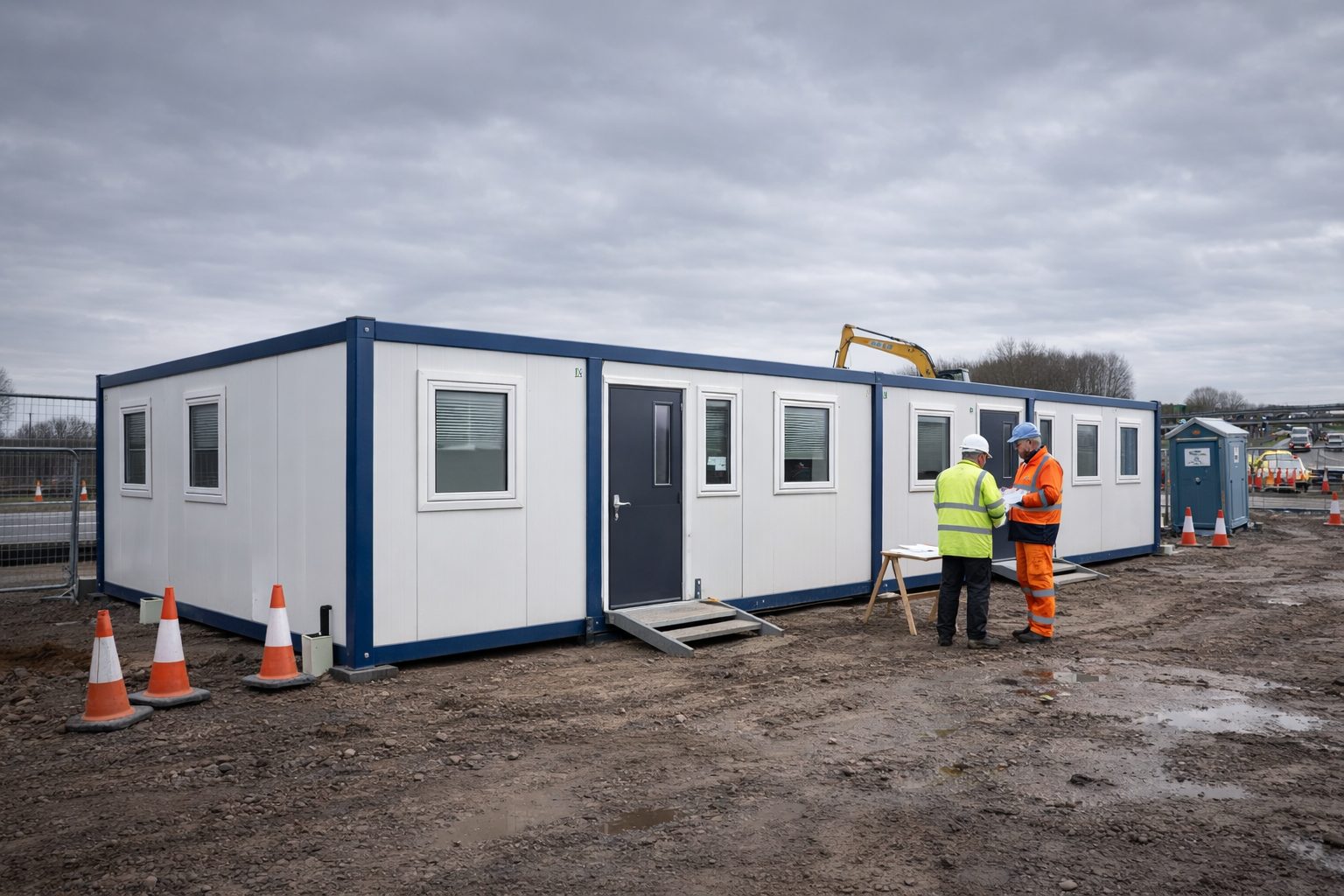
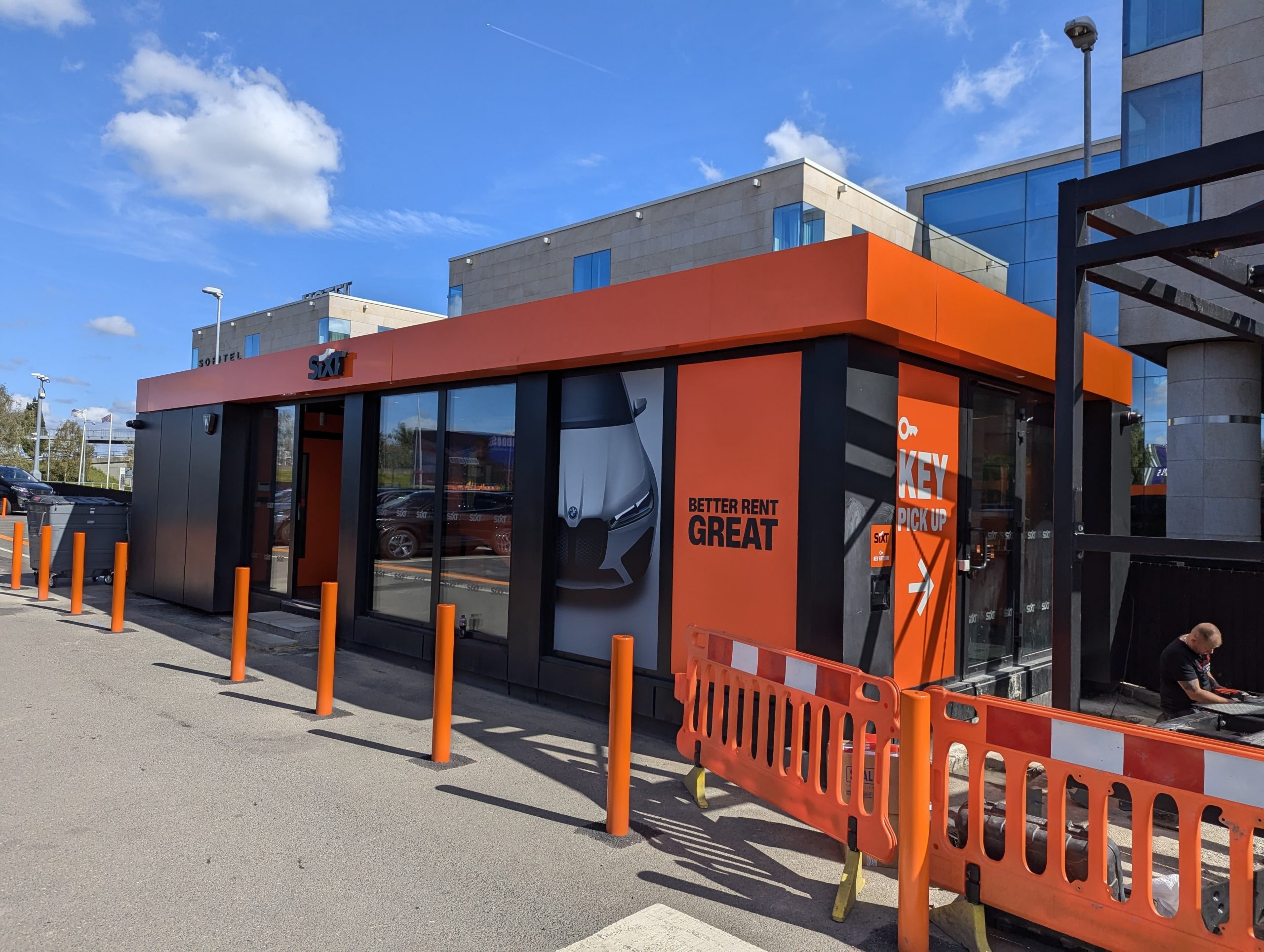
A focused selection of KC office, ISO frame and commercial modular images. Captions are planning guidance, not fixed case-study claims.
External references used in this guide
This guide links to official sources for public-works procurement context and regulatory route checks.
People also ask: modular offices vs traditional construction
Is a modular office cheaper than traditional construction?
A modular office can be cheaper in some projects, but it is not automatically the lowest-cost route. A proper modular offices vs traditional construction comparison should include design, foundations, delivery, cranage, services, fit-out, approvals, professional fees, site preliminaries and disruption. Modular often becomes more attractive where reduced site time, repeatable layouts or future relocation have value.
Are modular offices worth it?
Are modular offices worth it for permanent workspace? Yes, when speed, lower disruption, repeatable layout quality and future flexibility matter. They are not just temporary cabins. However, the right route depends on use, lifespan, site access, foundations, services, planning context, fire strategy, accessibility, energy performance and finish expectations.
What are the main modular building advantages?
The main modular building advantages are controlled factory production, reduced live-site work, repeatable layouts, potential future extension or relocation, and clearer programme planning once the design is frozen. Modular building advantages are strongest when the buyer accepts early design decisions and the site allows efficient delivery and installation.
What are the main modular construction benefits?
The main modular construction benefits are programme control, lower site disruption, factory-led quality control, repeatable specification and the possibility of relocation or expansion. Modular construction benefits remain project-specific. Planning, Building Regulations, fire strategy, access, foundations, services, lifting and drainage still need proper review.
How should buyers compare modular offices vs traditional construction?
Buyers should compare modular offices vs traditional construction by checking total project scope, not just headline build cost. Include programme, site disruption, foundations, services, approvals, fit-out, lifting, future expansion, relocation value and business continuity. The best route is the one that fits the project constraints, not the one with the lowest early number.
Can modular offices look like traditional buildings?
Yes, modular offices can be designed with cladding, glazing, entrance details, internal finishes and layouts that feel permanent and professional. Appearance depends on the system, budget, planning context and finish specification. A simple site cabin, an ISO frame office and a bespoke commercial modular building will look and perform differently.
Is traditional construction ever better than modular?
Yes. Traditional construction may be better for complex architecture, heavy structural interfaces, difficult urban infill, unusual site levels, heritage-sensitive settings or projects where the design cannot be frozen early. Modular offices are strongest where the building can be designed around transportable modules, controlled factory work, reduced site disruption and a clear installation plan.
Do modular offices still need planning permission or Building Regulations approval?
They may. GOV.UK states that Building Regulations approval is different from planning permission and a project might need both. Planning Portal also explains that building control and planning are separate routes. Requirements depend on intended use, size, duration, site, local planning authority, building control route and specification.
What information does KC need to compare modular and traditional options?
KC needs the intended use, approximate size, room schedule, postcode, site photographs, access route, groundworks status, services, drainage, target date, finish expectations and whether the office needs to be temporary, relocatable, semi-permanent or permanent. Drawings, sketches, landlord requirements, planning notes or budget direction help KC compare the modular route against other options more accurately.
Need to decide between modular and traditional construction?
Send KC your use case, approximate size, site postcode, access notes and target date. KC can review whether a modular office route is worth comparing before you commit to a traditional construction programme.