
Completed School & Campus Projects
Education Projects UK
Education projects UK pages should show how modular classrooms, teaching spaces and support buildings perform in real school settings. Therefore this page focuses on delivered and reference education schemes instead of broad sector claims.
Why schools choose modular delivery
Schools often need extra teaching space quickly. However they must keep the campus open and safe during works. As a result, project teams often choose modular systems because they shorten site activity and improve delivery control.
Modular education projects can support classrooms, specialist rooms and permanent school buildings. Meanwhile schools can align the system choice with programme, campus access and long-term estate plans.
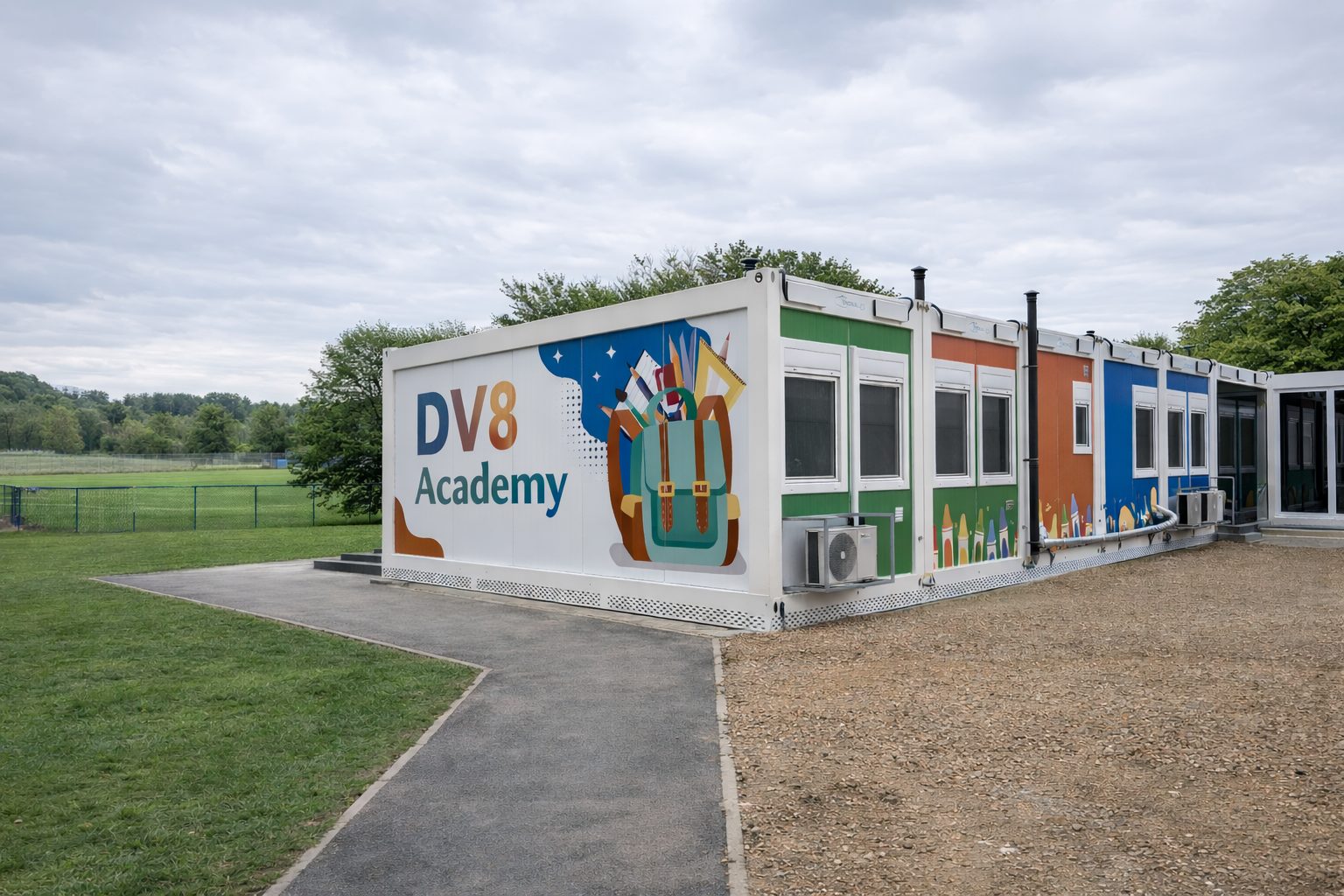
Description: ISO frame modular classroom building positioned in a real UK education environment, showing a permanent school-use modular solution with modern glazing and campus-ready external presentation.
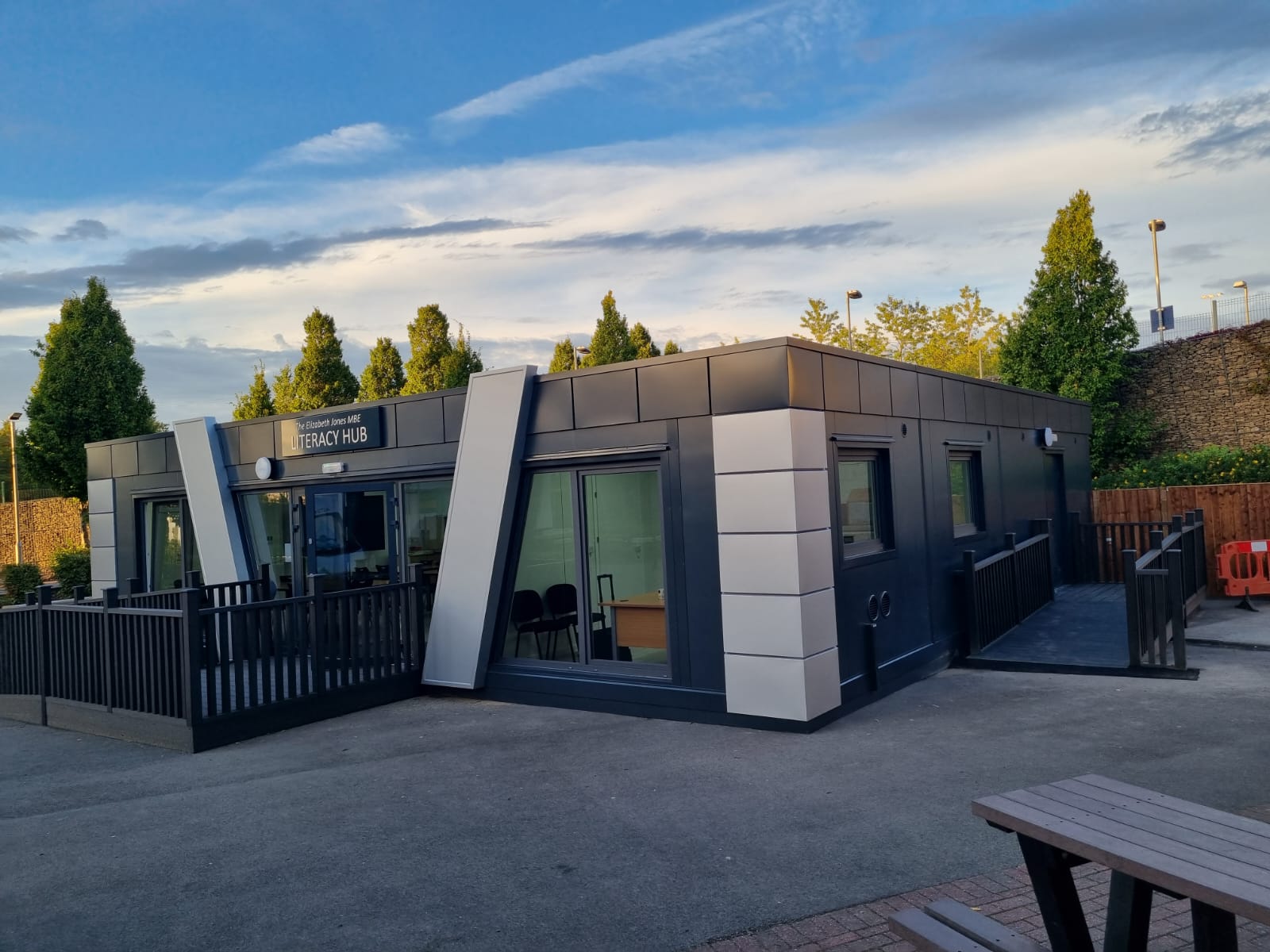
Description: Delivered modular education building shown in a live UK school setting, illustrating how offsite construction can support campus expansion and improved teaching accommodation.
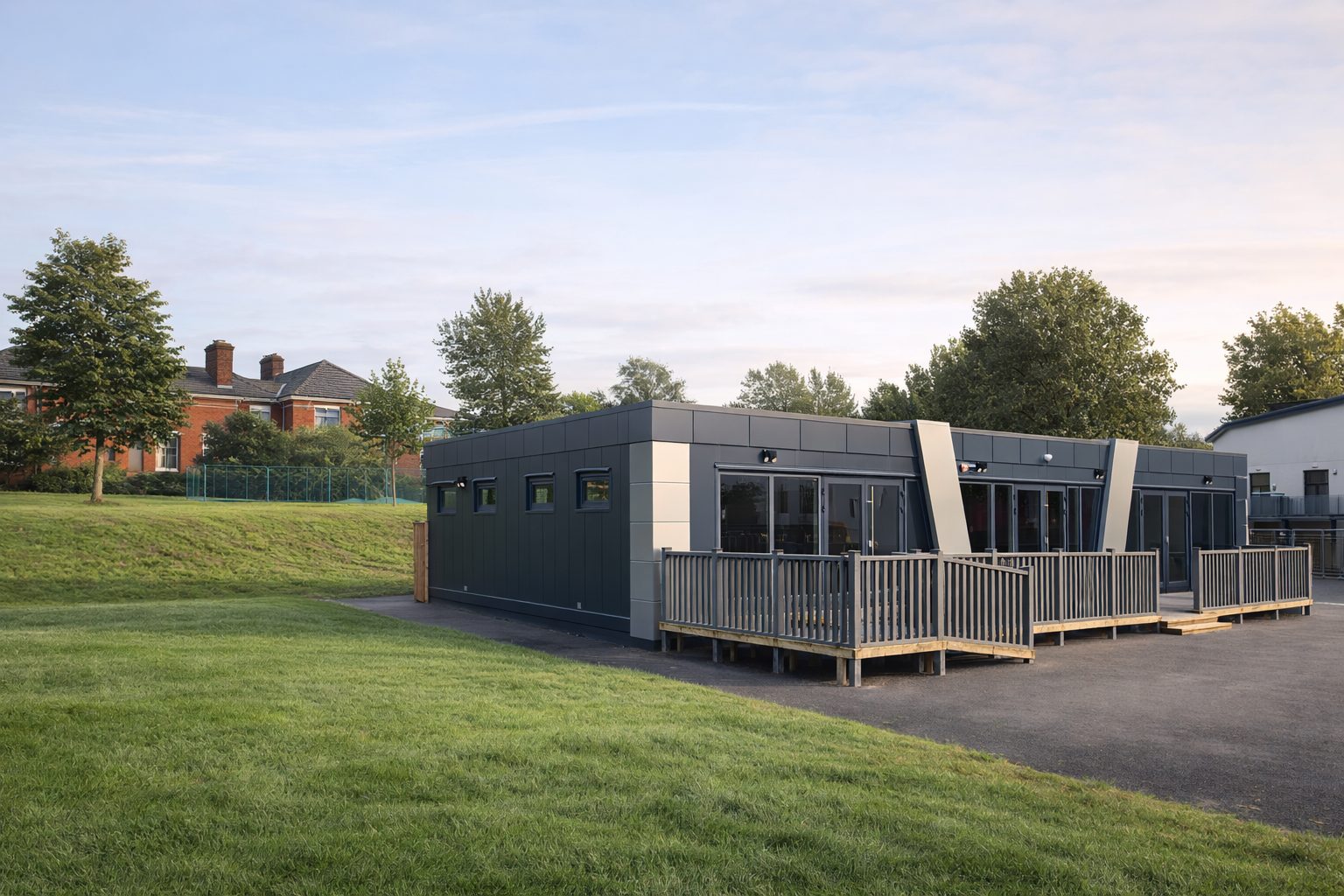
Description: Modern modular classroom building designed for UK education projects, showing a clean external finish and a practical route to additional teaching space on live campuses.
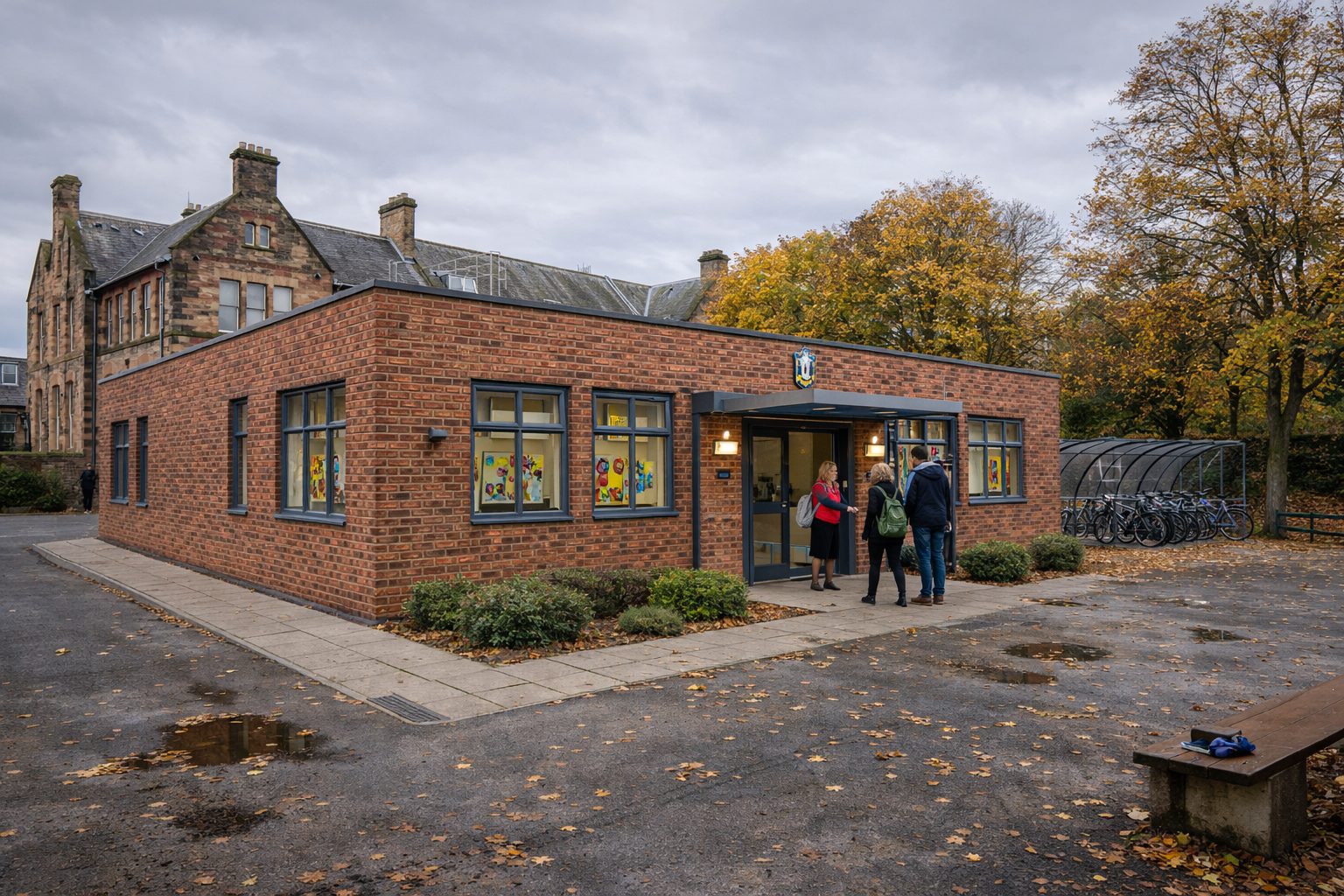
Description: Permanent modular education building in Edinburgh/Dùn Èideann, Scotland, demonstrating an ISO frame school project route suited to long-term campus use and modern educational infrastructure.
When schools need more space but must stay open
Schools often outgrow their existing buildings. However they cannot stop lessons while construction takes place. Therefore project teams need a solution that works alongside daily teaching activity.
Why traditional construction becomes difficult
Traditional builds take longer on site. As a result, noise, access issues and safeguarding concerns can increase. Meanwhile staff and students still need safe and clear movement across the campus.
Because of this, many schools look for alternatives that reduce disruption. Modular construction provides a more controlled delivery route. It also limits the amount of work carried out on site.
How modular education projects solve this
Modular buildings allow teams to manufacture classrooms offsite. Then they deliver and install them in a shorter timeframe. Therefore schools keep operating with fewer interruptions.
- Expand classroom capacity without closing buildings
- Add SEND or specialist teaching spaces quickly
- Replace outdated temporary units with modern classrooms
- Support phased redevelopment programmes
- Maintain safe access and safeguarding routes
As a result, schools can increase capacity while keeping control of daily operations. However each project still depends on site layout, programme and long-term use.
Description: Modular classroom installed on a live UK school campus. It shows how projects can expand teaching space while maintaining daily operations.
What strong education projects usually need
Education projects are often judged on more than speed alone. Therefore schools and estates teams usually focus on safety, teaching continuity and long-term usability. As a result, the best modular school projects are those that balance delivery control with practical day-to-day performance.
Live school sites need careful planning because lessons, access routes and safeguarding arrangements must continue during works.
Modular construction is often selected when teaching space is needed quickly. Therefore factory-led production can support tighter education programmes.
Education buildings may need to support classrooms, group spaces, staff areas or specialist rooms depending on the project scope.
Predictable delivery routes matter on school campuses. As a result, project teams often value cleaner logistics and reduced time spent on site.
Temporary needs can still require durable buildings. However many education projects also need a pathway to longer-term campus use.
Schools, trusts and public-sector clients usually need realistic timelines and simple decision routes before moving into delivery.
Choosing the right modular system for education projects
Education projects are not delivered using a single approach. Therefore selecting the correct system early helps align the building with programme, budget and long-term use. However each school site still requires a solution that responds to access, layout and teaching needs.
ISO Frame (Volumetric) Systems
ISO frame systems are often used where speed and repeatability matter most. As a result, they are commonly selected for multi-classroom blocks and fast-track school expansions.
- Best use: fast classroom delivery and scalable school blocks
- Strength: controlled factory build and predictable installation
- Typical route: permanent or semi-permanent education buildings
Description: Volumetric ISO frame classroom building used in a UK education project, designed for fast delivery and repeatable school expansion.
Bespoke Modular Buildings
Bespoke modular buildings are suited to projects where layout flexibility or architectural integration is important. Therefore they are often used for more complex school environments.
- Best use: tailored education layouts and campus integration
- Strength: design flexibility and upgraded finish options
- Typical route: permanent school buildings
Description: Bespoke modular education building delivered in Edinburgh, Scotland, showing a permanent school project with a tailored layout and campus integration.
Timber Frame Systems
Timber systems are often chosen where a warmer internal feel or accommodation-style space is required. However they can also support certain education uses depending on the project brief.
- Best use: smaller education spaces or specialist rooms
- Strength: comfortable internal environment
- Typical route: education support spaces or flexible use buildings
Description: Timber modular classroom building designed for education projects in the UK, offering a comfortable internal teaching environment.
Typical education project specification priorities
Education projects are usually shaped by teaching needs, programme pressure and campus constraints. Therefore a specification snapshot helps show the practical issues that often matter before detailed design is finalised.
However no two school projects are identical. As a result, the correct building route depends on whether the priority is fast expansion, permanent teaching space or a more tailored campus solution.
Description: ISO frame modular classroom building used as a reference for education project specification priorities in the UK, showing a practical school-ready building route with modern glazing and campus use suitability.
From enquiry to completed education project
Education projects require more coordination than many other building types. Therefore the delivery process is structured to align design, approvals and installation with the realities of a live school environment. However each programme still depends on site access, term-time constraints and project scale.
Confirm whether the requirement is for classrooms, specialist rooms, SEND spaces or admin use. As a result, the building pathway becomes clearer from the start.
ISO frame, bespoke modular or timber routes are reviewed based on layout, programme and long-term use. Therefore the solution matches both teaching needs and site conditions.
Internal layout, daylight, access and finishes are aligned with teaching use. Meanwhile services and performance requirements are confirmed.
Safeguarding, circulation and access routes are reviewed. As a result, installation can be coordinated with ongoing school operations.
Factory production improves build consistency and reduces site time. In practice, this supports cleaner and more controlled delivery on education sites.
The building is installed, connected and prepared for use. As a result, teaching space becomes available with minimal disruption to the wider campus.
Education project examples across UK school environments
Project examples show how modular education buildings perform on real campuses. Therefore the cards below focus on classroom delivery, modern teaching environments and permanent school expansion routes.
Three common project routes
Schools do not all face the same challenge. Some need extra classrooms fast. Others want higher-quality teaching space or a permanent long-term solution. As a result, it helps to separate these project routes clearly.
Classroom expansion on a live campus
This project shows how a school can add teaching space while lessons continue. Therefore the campus stays operational and project teams keep disruption lower.
Description: Completed modular classroom building delivered on a live UK school campus, demonstrating how additional teaching space can be installed with minimal disruption.
Modern modular teaching environments
Some schools want more than extra floor area. They want better daylight, cleaner layouts and stronger everyday comfort. As a result, modern modular classrooms can support a better learning environment.
Description: Modern modular classroom designed for UK education projects, showing improved internal layout and external presentation suitable for long-term school use.
Permanent modular school buildings
Some education projects need a long-term estate solution, not a short-term fix. However modular delivery can still provide a clear and efficient route to permanent school buildings.
Description: ISO frame permanent modular education building delivered in Edinburgh, Scotland, showing a long-term school project solution with modern design and campus integration.
Education projects UK can range from a single classroom to a full school expansion. Therefore the right route depends on programme speed, site constraints and the intended lifespan of the building.
Modular education projects vs traditional school building routes
Schools and estates teams often compare modular education projects with traditional building approaches before committing to a delivery path. Therefore the table below focuses on the points that usually matter most in live campus environments. However the final choice still depends on budget, programme and long-term estate strategy.
| Decision factor | Modular education projects | Traditional school building route |
|---|---|---|
| Programme speed | Factory-led production can shorten the overall delivery route. As a result, teaching space may be available sooner. | Programme length may increase because more of the build happens on site. |
| Live campus disruption | Modular delivery can reduce time spent working on the school site, which helps limit disruption during term-time operations. | Longer on-site activity can create more pressure around access, safeguarding and daily school routines. |
| Predictability | Controlled manufacturing often improves consistency and delivery planning. Therefore project teams can manage sequencing more clearly. | Project conditions may be affected more heavily by on-site variables and phased construction challenges. |
| Design flexibility | ISO and bespoke modular routes can support both repeatable classroom blocks and tailored education layouts. | Traditional construction may offer broad flexibility, although this can come with a longer and less controlled programme. |
| Best-fit use cases | Fast-track classroom delivery, phased campus expansion, admin blocks, SEND spaces and modern teaching accommodation. | Projects where extended on-site build time is acceptable and programme pressure is lower. |
Common education project types and applications
Education projects vary by school size, teaching demand and estate strategy. Therefore modular construction supports several building types instead of one fixed solution.
How schools usually group these projects
Some schools need extra classrooms fast. Others need specialist spaces or permanent campus growth. As a result, it helps to organise education projects by use case before choosing the building system.
Modular classrooms
Schools often choose modular classrooms when pupil numbers rise quickly. Therefore they can add teaching capacity without waiting for a longer traditional build route.
Multi-classroom blocks
Some projects require several teaching spaces in one scheme. As a result, modular systems can support coordinated classroom blocks with a consistent delivery path.
SEND and specialist rooms
Specialist teaching spaces often need more tailored internal layouts. However modular delivery can still support these needs when the design brief is clear from the start.
Administration buildings
Schools also need staff and office space. Therefore education projects often include admin buildings alongside classroom expansion.
Temporary teaching accommodation
Some schools need space for a limited period during wider estate works. As a result, modular buildings can support phased redevelopment and short-term operational needs.
Permanent campus expansion
Many projects aim to strengthen the long-term school estate. Therefore modular construction can also support permanent education buildings where clients want a more controlled delivery route.
Education projects UK often combine several of these needs in one scheme. Therefore the strongest outcomes usually come from matching the project type to the right modular system at the start.
UK coverage for education projects and school buildings
Location affects access, safeguarding arrangements and planning context on school sites. Therefore including the project postcode and building type at the enquiry stage usually helps define the most suitable education delivery route. However early advice is still possible if the project is at concept stage.
Quality, compliance and delivery confidence
Education projects require clear proof of quality before approval. Therefore clients often review construction standards, delivery methods and compliance pathways early in the process.
Why authority proof matters for schools
Schools and public-sector clients follow structured procurement routes. As a result, they need reliable evidence that the building system meets expected standards. Clear documentation also helps reduce uncertainty during early-stage planning.
Quality & compliance proof
This evidence supports procurement decisions and shows how the project follows controlled processes. Therefore clients gain a clearer understanding of build quality before work begins.
Description: Official evidence image supporting quality assurance and compliance for modular education projects in the UK.
Controlled factory production
Teams build modules in a factory environment. As a result, they maintain better quality control and reduce variation across classrooms.
Clear project documentation
Teams provide structured information from the start. Therefore stakeholders can review design intent, compliance approach and delivery steps more easily.
What this means for education projects
Strong documentation and controlled delivery reduce risk. As a result, projects move forward with better coordination between design, approval and installation stages.
Education projects UK — frequently asked questions
Planning and approvals
[FAQ 1] [FAQ 2]Delivery and installation
[FAQ 3] [FAQ 4] [FAQ 5]Specification and building use
[FAQ 6] [FAQ 7] [FAQ 8]Start planning your education project
Education projects need more than extra floor area. Schools need a clear route that supports teaching continuity, campus safety and long-term building performance. Therefore early project planning helps teams choose the right modular system and avoid delays later.
Whether the requirement is for classrooms, specialist spaces or permanent school expansion, the next step is to define the site, the building type and the delivery priority. As a result, the project team can recommend the most suitable route with better accuracy.
Typical quote response within 48h (Mon–Fri)
Description: Permanent modular education building in Edinburgh/Dùn Èideann, Scotland, showing a long-term school project route with modern design, campus-ready installation and permanent teaching use potential.
Related education building project types
Education projects often connect with other school building requirements. Therefore related project pages help clients compare classroom expansion, specialist teaching space and wider campus development routes more clearly.
Modular Classrooms
Explore classroom-focused project routes for schools that need extra teaching capacity quickly and with better site control.
View education sector pageSchool Administration Buildings
Review modular school office and staff-space solutions that support operational needs alongside teaching environments.
View modular officesCampus Welfare & Support Space
Some education projects also require welfare, toilet or support facilities. These routes can sit alongside teaching-space expansion.
View welfare unitsPermanent Modular Buildings
Compare permanent modular building routes for longer-term education estate planning and full campus expansion projects.
View ISO frame systemsWhat schools and project teams usually prioritise
Education clients focus on practical outcomes, not marketing claims. Therefore the points below reflect what project teams typically review before moving forward.
Low disruption delivery
Schools need to keep teaching spaces operational. As a result, project teams prioritise solutions that reduce noise, site time and disruption during term.
Campus operationsPredictable programme
Education projects often run against strict timelines. Therefore clients value delivery routes that provide clearer sequencing and fewer on-site variables.
Programme controlLong-term usability
Many projects move beyond short-term needs. However schools still require buildings that support daily teaching use over time.
Building lifespanWhat to confirm before an education project moves forward
Education projects move faster when the brief is clear. Therefore schools, trusts and project teams usually make better decisions when they define the building need, site constraints and delivery priority early.
1) Define the building need
- Confirm whether the project needs classrooms, specialist rooms, SEND space or administration areas.
- State whether the building is temporary, semi-permanent or permanent.
- Estimate pupil capacity, staff use and the number of rooms required.
2) Review site and campus constraints
- Check access routes, delivery space and safeguarding considerations.
- Confirm where the building needs to sit within the live campus.
- Identify any programme limits linked to term dates or phased works.
3) Align the system with the project goal
- Choose ISO frame when speed and repeatability matter most.
- Choose bespoke modular when the school needs more layout flexibility.
- Use timber routes for selected support or comfort-led education spaces.
As a result, the project team can recommend a clearer route before detailed design starts. However if some details are still unknown, an early enquiry can still define the next decisions.
Next step: send the brief through the quote request form. Therefore the education project route can be scoped with more accuracy from the start.
Visual examples from modular education projects
Visual references help schools compare building styles, campus fit and education use cases more quickly. Therefore this gallery shows different project angles, from classroom delivery to permanent school expansion.
ISO frame classroom delivery
This image shows a modular classroom building positioned for active school use and fast project delivery.
Description: ISO frame modular classroom building installed on a UK school site, showing a scalable education project route for additional teaching space.
Live campus installation context
Schools often need a building route that supports daily operations. As a result, live campus delivery remains a key project priority.
Description: Completed modular education building shown in a live UK school environment, illustrating campus-ready installation and controlled delivery.
Modern teaching environment
Clean external design and modern glazing help schools create better learning environments as they expand capacity.
Description: Modern modular classroom building for UK education projects, designed to support improved teaching environments and long-term daily use.
Permanent education building
Some schools need a long-term estate solution. Therefore permanent modular buildings can support structured campus growth.
Description: Permanent modular education building in Edinburgh/Dùn Èideann, Scotland, showing a long-term school project with campus-ready integration.
Common risks in education projects and how teams avoid them
Education projects often fail because teams overlook practical constraints. Therefore it helps to identify the most common issues before design and delivery begin. As a result, project teams can avoid delays, cost changes and site disruption.
Common project risks
- Teams underestimate access limits on live school sites.
- Projects ignore safeguarding and student movement routes.
- Stakeholders delay key decisions on building type and layout.
- Designs fail to match long-term school use.
- Programmes rely too heavily on on-site construction time.
How strong projects avoid these issues
- Teams review site access and delivery routes early.
- Project leads plan installation around school operations.
- Clients define building use before selecting a system.
- Design teams align layouts with teaching requirements.
- Offsite construction reduces on-site disruption.
As a result, education projects run more smoothly when teams define constraints early and select the correct modular route from the start. However each school still requires a tailored approach based on its site and programme.
Authority guidance and next steps for education projects
Education projects involve planning, compliance and structured delivery. Therefore official guidance helps schools and project teams understand the wider framework before committing to a build route. However each project still requires site-specific review.
- Planning Portal — planning guidance for England and Wales
- UK Government — Building Regulations and Approved Documents
- UK Government — National Planning Policy Framework
- Health and Safety Executive — Construction (Design and Management) Regulations
Next step: define the building type, site location and programme. As a result, the project team can recommend a suitable modular education route with greater accuracy.
