Permanent Modular Buildings UK
Permanent Modular Buildings
Permanent modular buildings are offsite‑manufactured structures designed for long‑term use, providing durable and regulation‑compliant space for education, healthcare, commercial, and public‑sector projects across the UK.
Built Offsite, Installed in Weeks, Designed to Last Decades
Furthermore, these buildings are installed on prepared foundations and specified to meet relevant building regulations for their intended use. As a result, organisations benefit from faster project completion, reduced on‑site disruption, and a building designed to perform for 50–75 years — delivered in weeks, not months.
Permanent Modular Buildings for Long‑Term Use
Permanent modular buildings are specified where clients need a durable, compliant building solution combined with the speed and quality‑control benefits of offsite manufacture. Consequently, these structures are widely used for schools, healthcare facilities, offices, and community projects where long‑term performance is essential.
Who Benefits from Permanent Modular Construction?
Organisations across both the public and private sectors choose permanent modular buildings for operational continuity. Moreover, the controlled factory environment ensures that build quality remains consistent regardless of external conditions. As a result, project timelines are significantly shorter than those of traditional construction.
For a broader overview of the full category before focusing on permanent‑use projects, visit our modular buildings pillar page.
Types of Modular Building Systems for Permanent Use
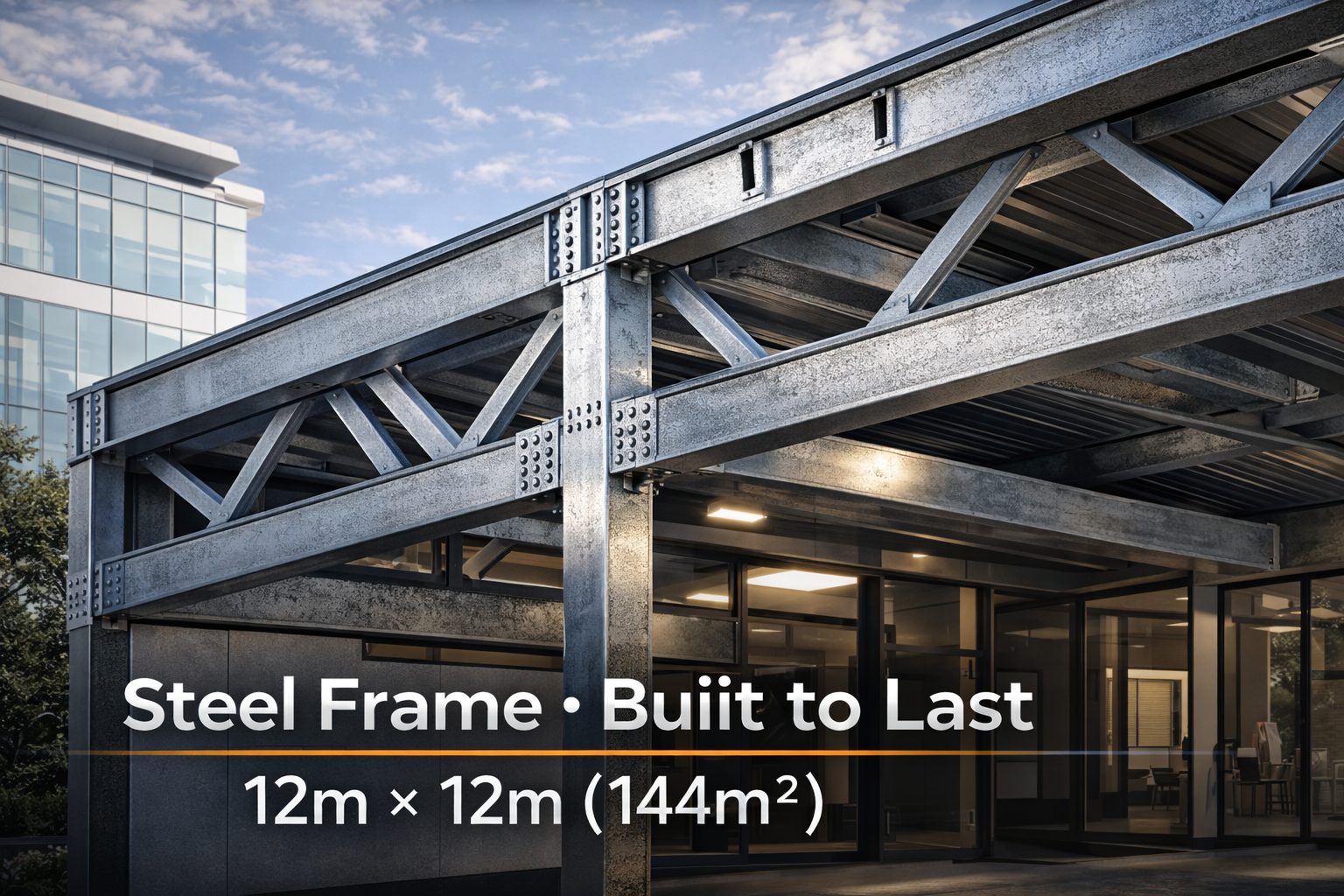
Depending on project priorities, permanent modular building systems may use steel frame, timber frame, or hybrid construction approaches. Furthermore, the most suitable route depends on span requirements, façade expectations, internal layout, and whole‑life use considerations.
Specification Led by Function, Not Assumption
Because of this, specification should always be led by the intended building function rather than a one‑size‑fits‑all product assumption. In addition, compliance needs and programme constraints play a critical role in determining the right structural system.
Our technical team can therefore advise on the most practical approach based on your specific brief. Similarly, early engagement helps identify the optimal balance between cost, programme, and performance.
Why Choose Permanent Modular
Benefits of Permanent Modular Construction
Permanent modular construction is often chosen because it combines offsite quality control with predictable installation and strong long‑term performance. As a result, many clients find it offers a practical route to reducing programme risk without compromising the finished building standard.
Faster Delivery
Factory manufacture and parallel site preparation can significantly shorten delivery programmes compared with fully traditional site‑built routes. Consequently, projects that would typically take 6–12 months can often be completed in 10–16 weeks. Moreover, this overlap between offsite production and groundworks reduces overall programme duration.
Quality‑Controlled Build
Offsite production supports consistent assembly, better environmental control during manufacture, and clearer repeatability across modules. Furthermore, because 90% of construction takes place in a factory setting, weather‑related delays are effectively eliminated. As a result, the finished product meets tighter tolerances than most site‑built alternatives.
Long‑Term Use
Permanent offsite buildings are intended for lasting operational use and can be specified to match the demands of public and commercial projects. In addition, design lifespans of 50–75 years are standard across our steel and timber frame systems. Therefore, these buildings represent a genuine long‑term infrastructure investment.
Reduced Site Disruption
Because the majority of construction happens offsite, noise, dust, and vehicle movements on the installation site are dramatically reduced. This is particularly important for live environments such as schools, hospitals, and operational business premises. Consequently, day‑to‑day activities can continue with minimal interruption during installation.
Sustainability & Waste Reduction
Offsite manufacturing reduces construction waste by up to 90% compared with traditional building methods. Moreover, precise material cutting in a factory environment minimises excess and improves resource efficiency. As a result, permanent modular buildings align well with sustainability targets and environmental reporting requirements.
Regulation Compliance
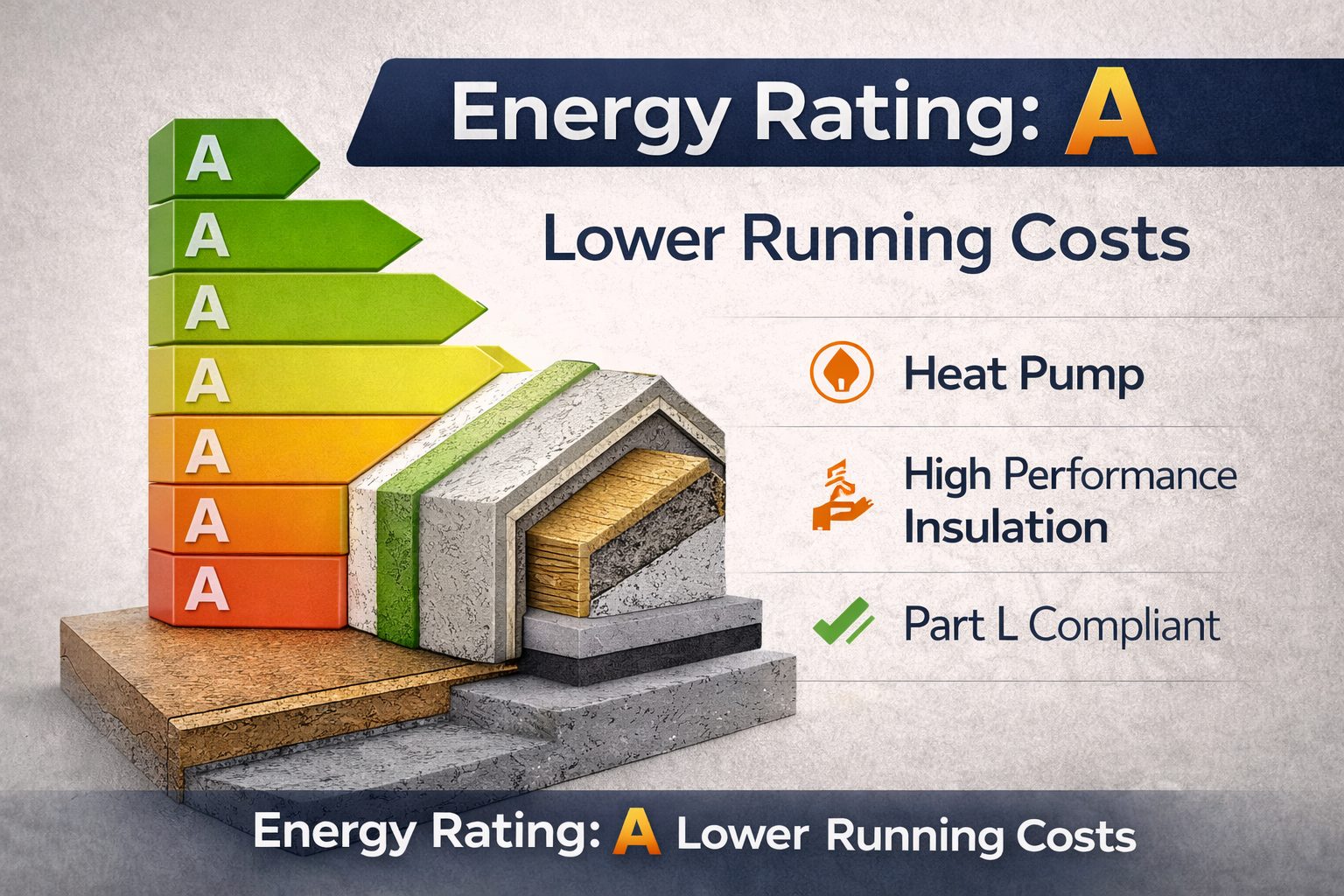
Every permanent modular building can be specified to meet relevant UK building regulations, including Part L thermal performance and fire safety requirements. In addition, our production facilities hold ISO 9001, ISO 14001, and ISO 1090 certifications. Therefore, compliance is built into the manufacturing process from the outset rather than addressed retrospectively on site.
Sector Applications
Offsite Buildings for Education Projects
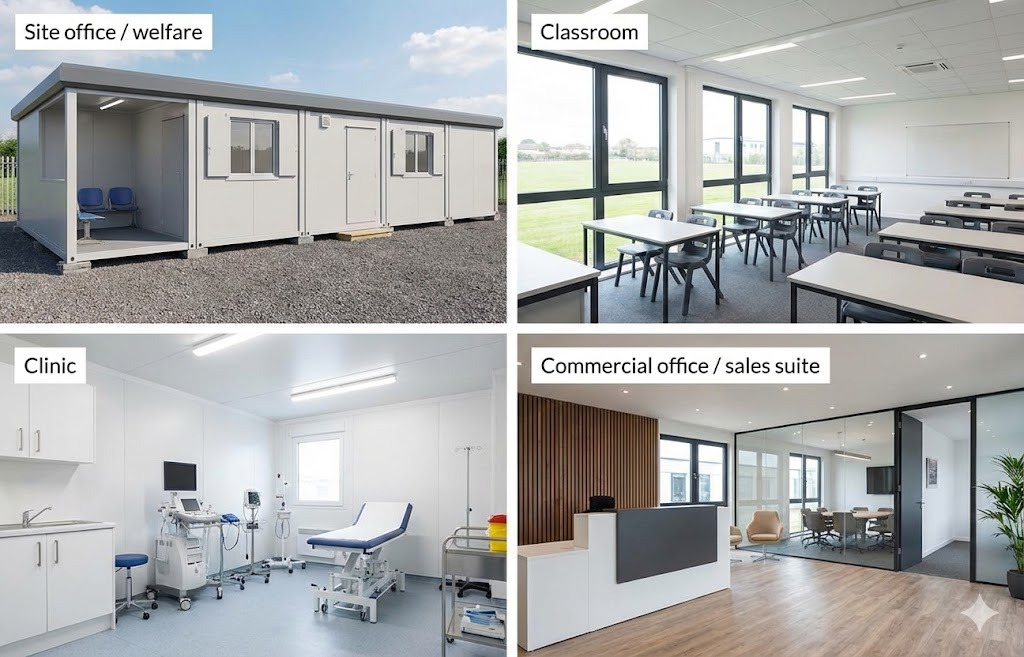
In education, permanent modular buildings are widely used for teaching space, support accommodation, administration, and broader campus development. Consequently, schools and trusts benefit from buildings that combine long‑term value with efficient delivery timelines.
From Classrooms to Full Campus Facilities
Whether the project involves a single teaching block or a multi‑building programme, offsite construction ensures minimal disruption to the live school environment. Furthermore, factory‑controlled manufacturing delivers consistent quality across every module.
If your requirement is specifically classroom‑led, you can review our modular classrooms solution page for more targeted guidance.
Offsite Buildings for Healthcare and Clinical Spaces
Permanent offsite buildings are also well suited to healthcare projects where programme certainty, quality control, and carefully planned internal environments are essential. As a result, these structures are increasingly specified for clinics, treatment support areas, consulting rooms, and operational healthcare accommodation.
Controlled Environments for Clinical Standards
Moreover, the factory environment allows precise control over hygiene standards, acoustic performance, and ventilation during the build process. Therefore, healthcare clients receive buildings that meet stringent clinical requirements from the point of handover. In addition, reduced on‑site construction time means less disruption to adjacent operational facilities.
Modular Buildings for Commercial Projects
Commercial projects frequently use permanent modular building solutions for offices, hospitality venues, showrooms, and staff accommodation. Consequently, these buildings must deliver on quality, programme certainty, and long‑term operational performance simultaneously.
Designed for Operational Continuity
Unlike temporary site accommodation, permanent modular buildings for commercial use are specified with high‑quality finishes, energy‑efficient envelopes, and flexible internal layouts. Moreover, the offsite manufacturing process ensures that fit‑out quality remains consistent regardless of project scale or location.
For office‑led schemes specifically, our modular offices page provides more targeted specification guidance. In addition, our team can advise on the most suitable structural system based on your project brief.
Public‑Sector and Council Procurement Use Cases
Public‑sector buyers often require a procurement route that balances durability, compliance, value, and delivery certainty. As a result, permanent modular buildings are increasingly specified for community facilities, council‑led accommodation, and wider public infrastructure projects.
Compliance‑Ready for Public Procurement
Because these projects typically involve strict compliance and accountability requirements, the controlled factory environment provides a clear audit trail from manufacture through to installation. Furthermore, our ISO 9001 and Constructionline accreditations support the due diligence process for public‑sector procurement teams.
Education support space, operational buildings, and council‑managed accommodation all benefit from the programme certainty that offsite construction provides. Therefore, permanent modular buildings represent a practical and auditable solution for budget‑conscious public bodies.
Where staff welfare or support accommodation forms part of the brief, our modular welfare units page may also provide useful routing context.
Technical Detail
Specifications, Layouts & Expansion Potential
Every permanent modular building is developed around your project‑specific requirements. Furthermore, the specification process covers structural systems, insulation targets, internal finishes, and long‑term expansion potential.
Specifications and Options
Permanent modular building systems can be developed around insulation targets, façade treatments, structural requirements, and internal finishes. In addition, window and door configurations, accessibility needs, and mechanical or electrical coordination are all addressed during the specification stage.
Key Specification Areas
- ✔ Structural systems: Steel, timber, or hybrid approaches tailored to span and load requirements
- ✔ Façade options: Cladding, render, brick‑slip, and composite panels for different planning contexts
- ✔ Insulation performance: Energy‑led specification routes with wall U‑values from 0.16 W/m²K
- ✔ Internal finishes: Flexible planning with standard or premium fit‑out levels
- ✔ Windows & doors: Double or triple‑glazed aluminium or UPVC frames
- ✔ Accessibility: Part M and DDA‑compliant layouts with level access and adapted facilities
Consequently, the final specification is always driven by your project requirements rather than a fixed product template.
Sizes, Layouts and Expansion Potential
Layouts can range from compact single‑storey configurations to larger linked and multi‑module arrangements. Moreover, as project needs evolve, the design strategy can often support phased delivery, future extension, or more complex internal planning.
Typical Size Ranges
| Configuration | Floor Area | Typical Use |
|---|---|---|
| Single module | 15–60m² | Offices, clinics |
| Linked modules | 60–300m² | Schools, welfare |
| Multi‑building programme | 300–2,000m²+ | Campus, infrastructure |
Built‑In Flexibility for Future Growth
This approach makes permanent modular buildings a strong option where current needs are clear but long‑term flexibility still matters. Furthermore, modular construction inherently supports future expansion because additional modules can be connected to the original structure without major structural alterations.
As a result, organisations avoid the cost and disruption of starting from scratch when requirements change. Therefore, early design conversations should always consider potential future phases alongside immediate project needs.
Discuss Your Specification →From Factory to Site
Delivery and Installation
Delivery planning for permanent modular buildings usually covers access, cranage, foundation readiness, service coordination, and sequencing between factory manufacture and site preparation. Consequently, early coordination helps reduce friction during installation and improves overall programme clarity.
Parallel Workstreams for Faster Completion
One of the key advantages of offsite construction is the ability to run factory production and site groundworks simultaneously. As a result, the overall programme can be significantly shorter than a fully sequential traditional build. Furthermore, this overlap reduces the risk of weather‑related delays affecting your completion date.
What the Installation Process Involves
Site Survey & Access Review
Our team assesses access routes, ground conditions, and cranage requirements before production begins.
Foundation Preparation
Groundworks and foundations are prepared in parallel with factory manufacture, saving valuable programme time.
Module Delivery & Crane Placement
Completed modules are transported by HGV and positioned onto foundations using mobile crane equipment.
Service Connections & Commissioning
Electrical, water, and drainage services are connected, followed by final testing and commissioning.
Handover & Snagging
A formal handover process ensures every detail is inspected before the building enters operational use.
Early Engagement Delivers Better Outcomes
In many cases, the best outcomes are achieved when the modular route is considered early enough to influence layout, logistics, and groundwork planning. Therefore, we recommend engaging with our technical team at the earliest opportunity. Similarly, early involvement helps identify potential site constraints before they affect the programme.
Discuss Your Project →