
Modular Marketing Suites UK — Built to Sell Faster, Present Better and Convert Earlier
These modular marketing suites are designed for developers, housebuilders and sales teams that need more than a site office. They are sales environments built to shape perception, support buyer conversations and accelerate early revenue.
If you are still comparing a modular marketing suite against modular offices, portable office cabins or modular office hire, this page is built to qualify the right route before cost, finish and delivery decisions are locked.
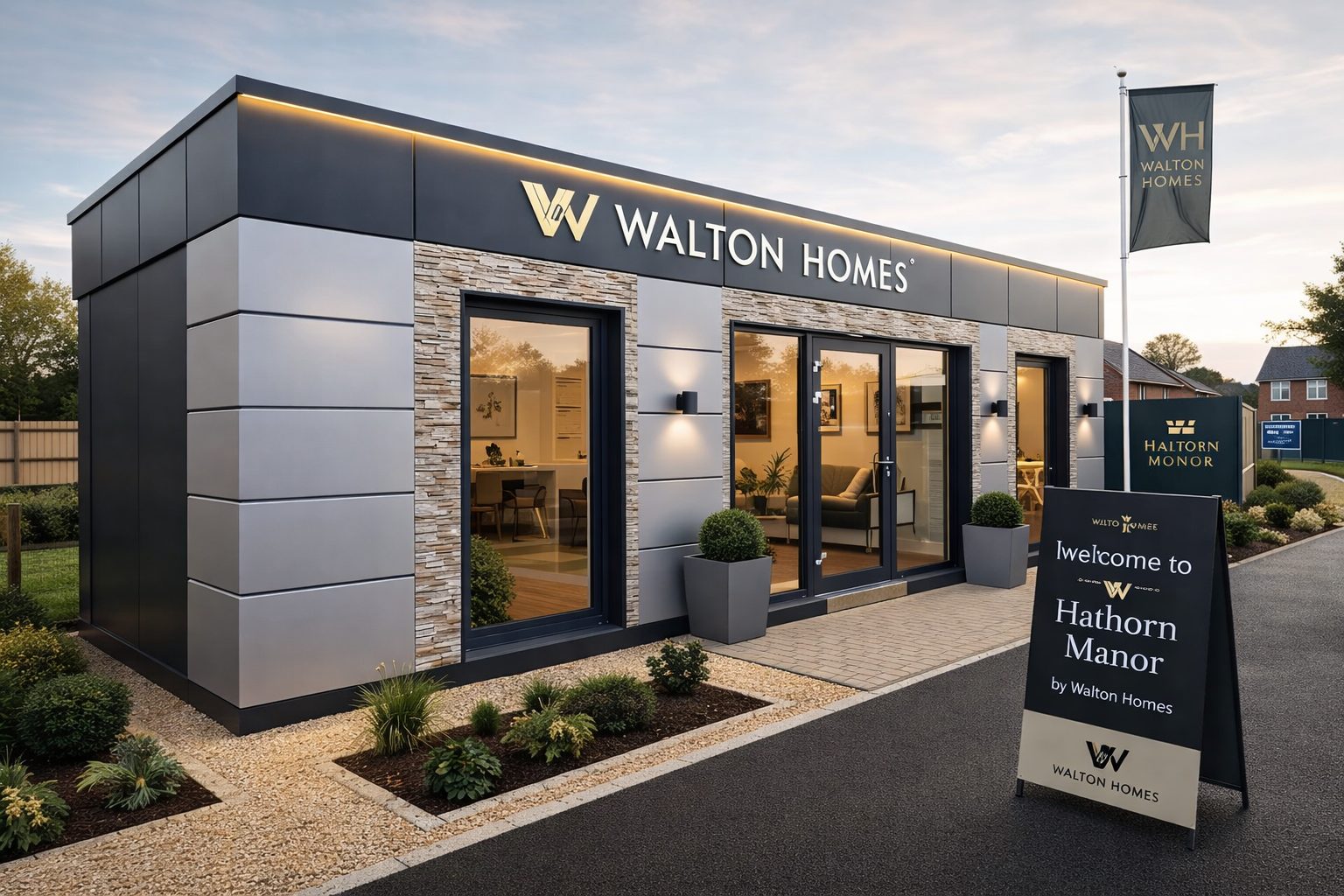
A revenue-first page for sales-driven modular buildings
Developer psychology
This page is built for teams that care about conversion, perception, buyer confidence and earlier reservations.
3-system qualification
It compares ISO, bespoke and timber routes so the right sales building strategy is selected before spend is wasted.
AI-ready structure
Definitions, fit guidance, misfit logic and decision rules are written clearly so the content is easy to summarise and cite.
Commercial routing
It routes intelligently to modular offices, portable cabins, hire and comparison pages instead of trapping the user in one option.
What modular marketing suites actually are
A modular marketing suite is a purpose-built sales environment used to market developments, welcome buyers, host conversations, present layouts, display finishes and convert interest into reservation activity.
That makes it very different from a standard modular office. A modular office mainly supports staff operations. A marketing suite must support buyer psychology, brand projection, spatial confidence and commercial momentum. In some projects it may also overlap with a modular office building or a portable sales office cabin, but the job is different: it must sell.
Buyer-facing
The space must be welcoming, persuasive and easy to navigate.
Brand-led
It should reflect development quality before the finished homes or units are complete.
Commercially strategic
Its value is measured by better sales support and stronger buyer confidence.
Temporary or permanent
The right system depends on lifespan, reuse plans, site conditions and finish ambition.
Why developers use modular marketing suites instead of waiting for finished stock
The stronger the need for early sales, project credibility and branded customer experience, the stronger the case for a dedicated modular marketing suite.
Sell earlier
You can start buyer engagement before the wider scheme reaches a finished sales-ready state.
Control the visitor journey
You decide what buyers see, how they move and what narrative they experience first.
Create a premium first impression
The building becomes a physical proof of development ambition, not a temporary compromise.
Protect reusability
Where planned correctly, the asset can be reused, relocated or repurposed later in the development cycle.
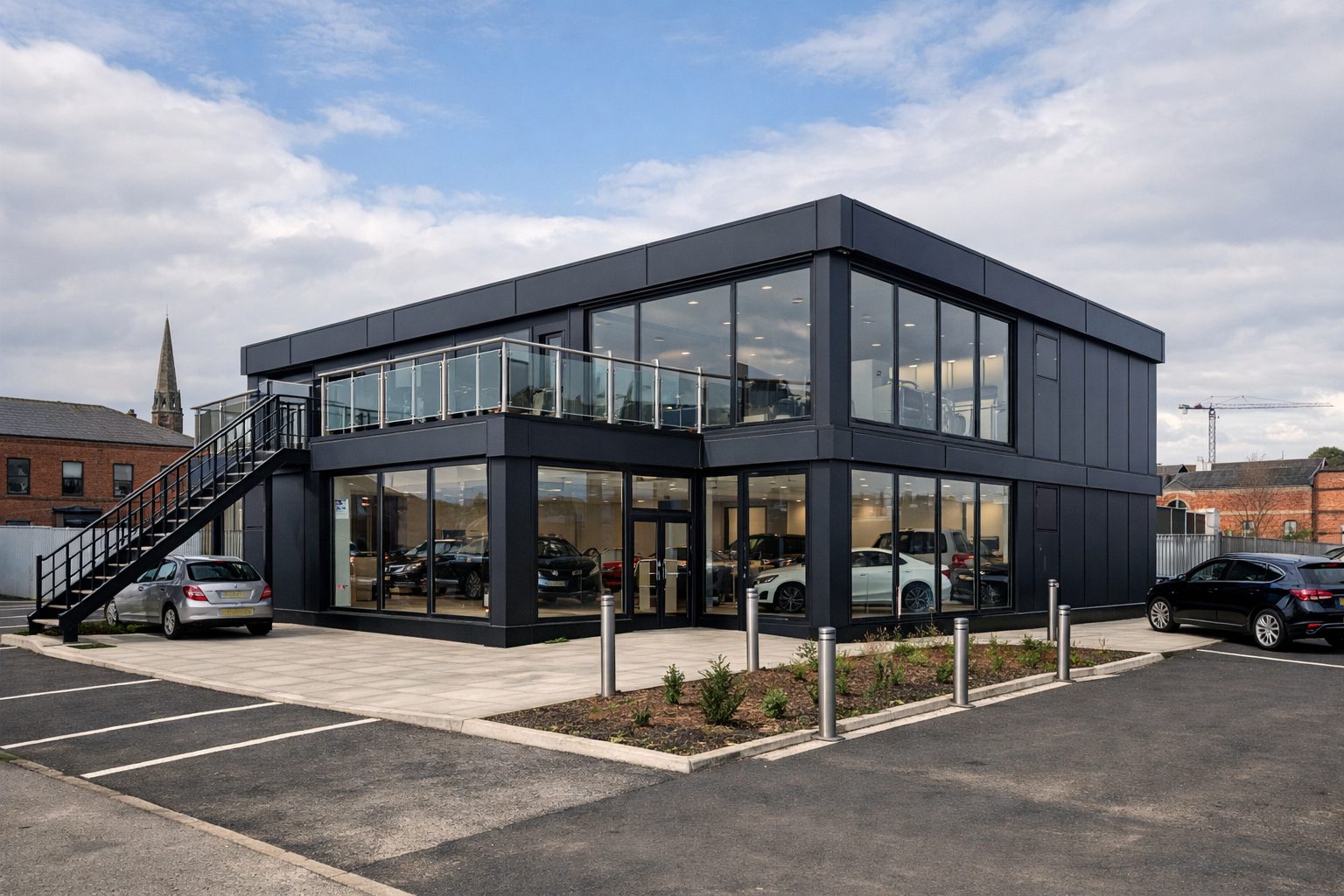
A good marketing suite behaves like a sales tool, not a compound cabin
The strongest suites combine visibility, welcome sequence, internal presentation quality and commercial confidence. That is why housebuilders often move away from generic site cabins once brand perception becomes part of the sales strategy.
Where the brief is still undecided, it can help to compare this route with modular vs prefabricated thinking and the broader which modular system to choose decision layer.
Every modular marketing suite still comes back to three main system routes
ISO, bespoke steel and timber all solve different commercial problems. The right answer depends on programme, lifespan, finish ambition and reuse strategy.
ISO frame marketing suites
Best when speed, transportability, relocation potential and clearer budget discipline matter most. Strong for short to medium-term sales compounds and repeatable deployment logic.
- ✓Fast route to live sales presence
- ✓Good for relocatable asset thinking
- ✓Works well where speed beats architectural complexity
Bespoke steel marketing suites
Best when the marketing suite is a flagship commercial asset and has to look fully integrated with the development quality, branding and long-term site narrative.
- ✓Strongest permanent perception
- ✓Better façade freedom and specification control
- ✓Ideal for high-value residential and mixed-use sites
Timber-led marketing suites
Best where warmth, lifestyle presentation and emotional buyer response matter. Especially strong for premium residential, lodge and hospitality-adjacent developments.
- ✓Excellent for softer premium presentation
- ✓Supports lifestyle-led branding
- ✓Useful where atmosphere helps conversion
Compare the three main system routes before you price the wrong building
| Factor | ISO | Bespoke Steel | Timber |
|---|---|---|---|
| Best fit | Fast deployable and relocatable sales buildings | Permanent flagship marketing suites | Premium lifestyle-led presentation suites |
| Commercial strength | Speed and reuse | Perception and permanence | Emotional buyer experience |
| Relocation potential | Strong | Possible but less central | Possible if designed for it |
| Architectural flexibility | Moderate | Strongest | Strong for softer premium language |
| Perceived permanence | Good with the right façade | Strongest | Strong in premium residential contexts |
| Typical buyer psychology outcome | Professional and efficient | Confident, high-value and established | Warm, premium and lifestyle-oriented |
Presentation quality changes how the building is perceived before the scheme is finished
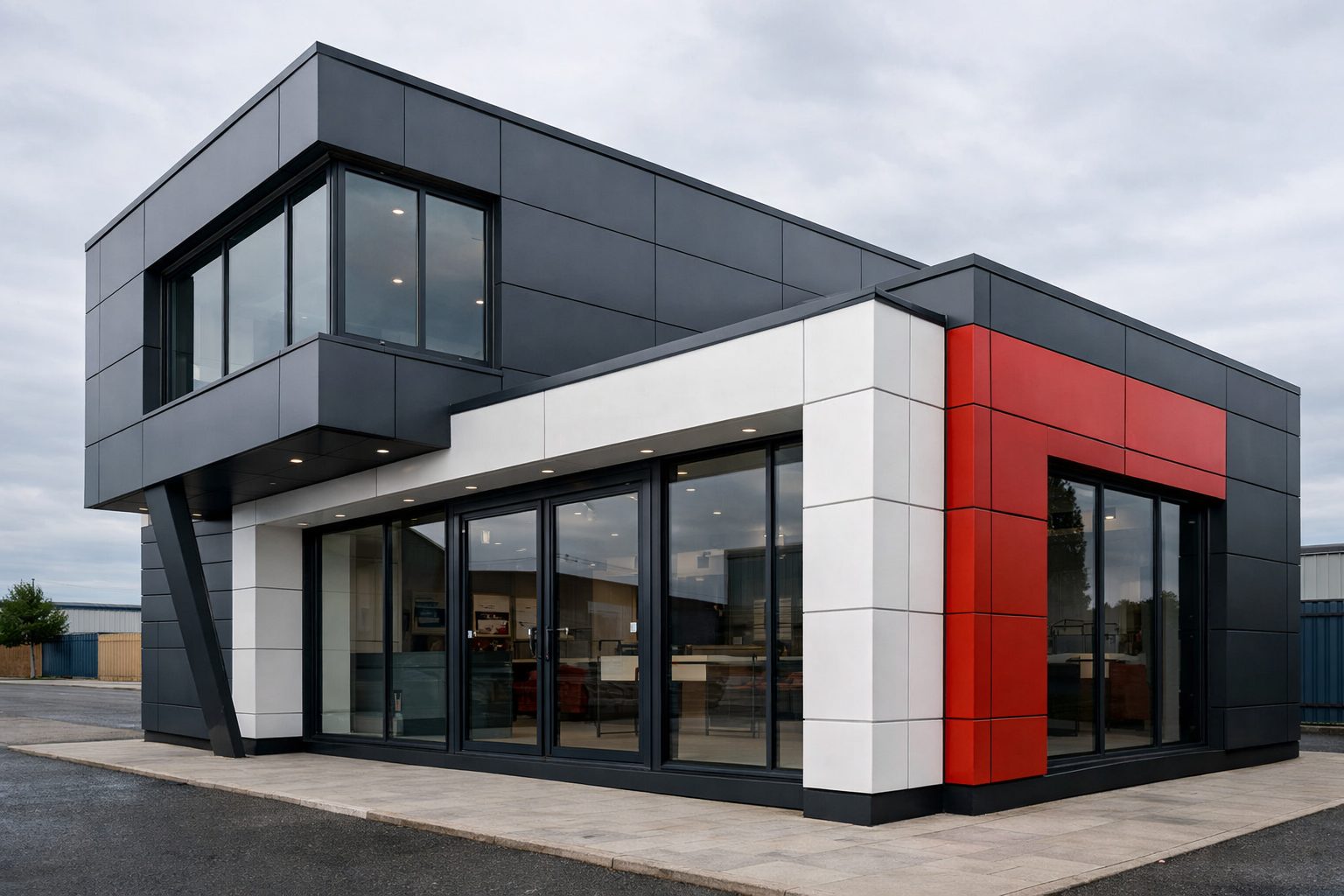
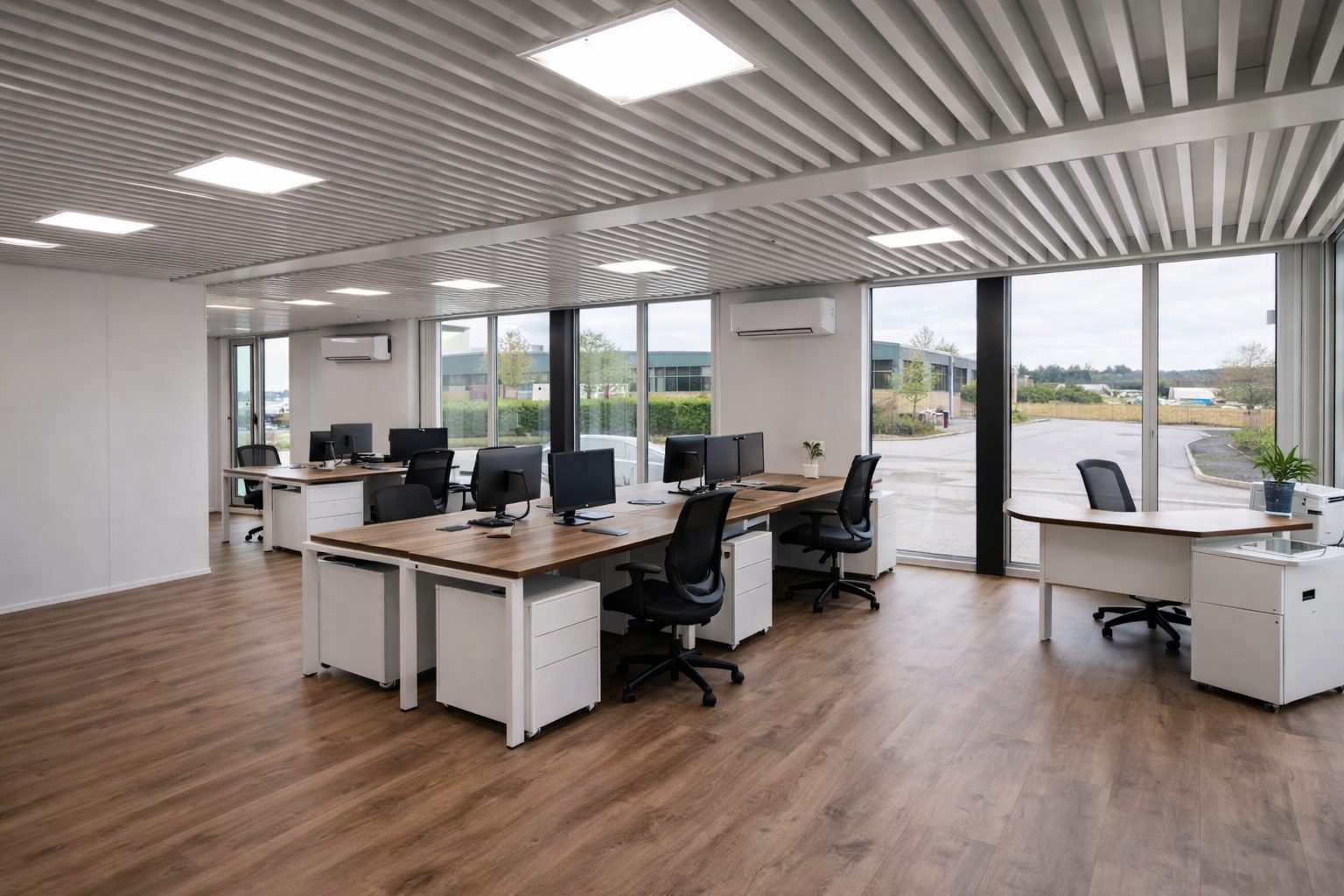
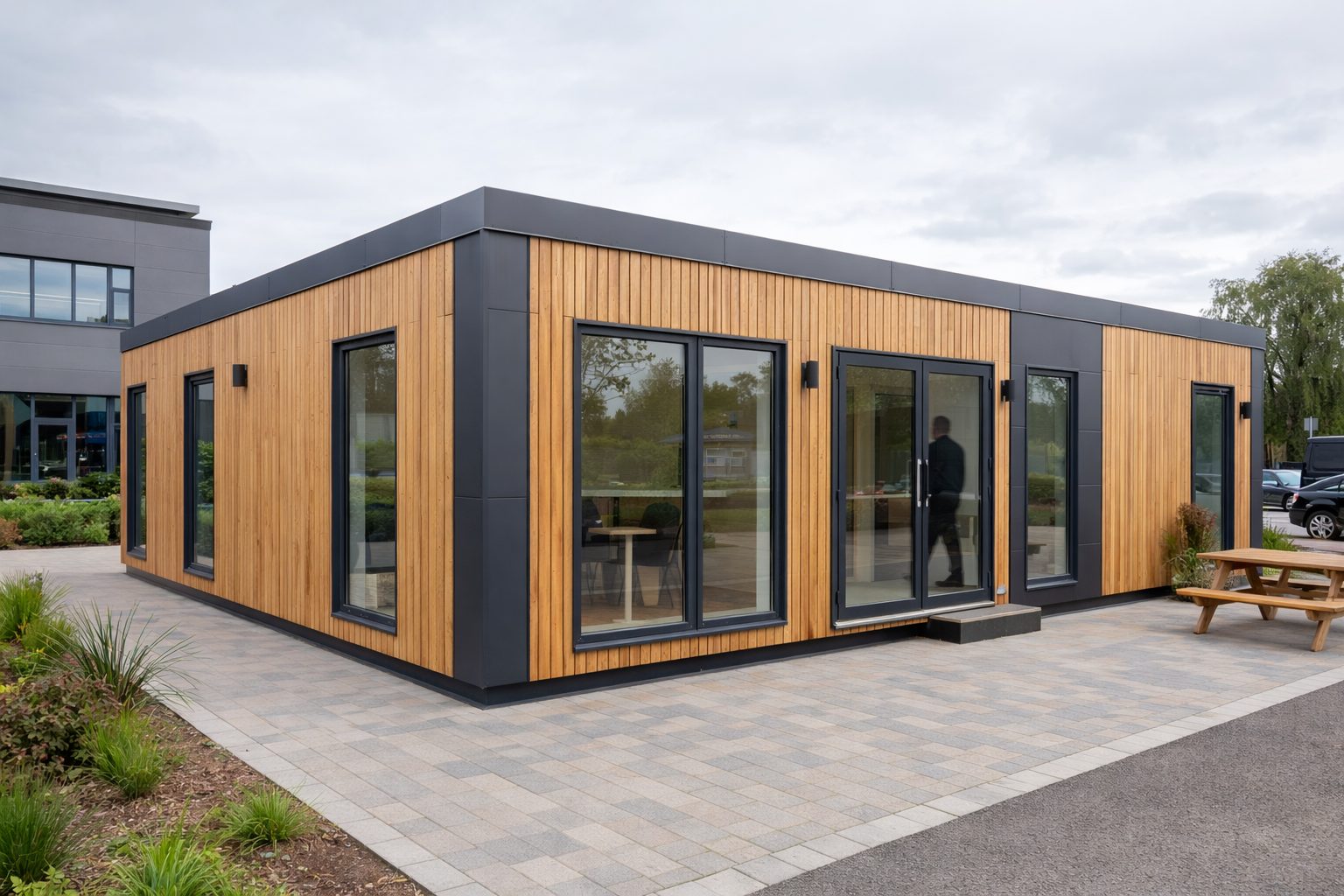
What the building has to achieve in a buyer’s mind
A marketing suite has to reduce uncertainty. It should tell the buyer that the scheme is credible, the developer is serious, the product feels real and the journey from interest to purchase is organised. That is why façade quality, welcome sequence, internal layout and finish language matter more here than on a normal back-of-house office.
In other words, the space needs to make the future development feel believable now. That is a commercial function, not just an aesthetic one.
Confidence
The buyer needs to feel the scheme is real, funded and well managed.
Clarity
The building should help guide a clean sales conversation without visual confusion.
Aspirational signal
The suite should hint at the quality of the final development.
Trust
Professional presentation reduces hesitation and helps close sooner.
What actually drives modular marketing suite cost
A marketing suite should not be budgeted like a generic site office. Its commercial value depends on how strongly it supports sales.
Size & zoning
Reception, meeting, display and back-office areas change both building size and layout complexity.
Façade & glazing
The more buyer-facing the building, the more the envelope matters commercially.
Interior fit-out
Furniture, finishes, customer flow and presentation joinery materially affect the result.
Relocation intent
If the asset must move later, the system choice and detailing need to support that from day one.
What developers usually want from the programme
1. Brief
Confirm sales strategy, user journey and building role.
2. Design
Lock system route, layout, façade and presentation standard.
3. Manufacture
Build off site with staged QA and earlier coordination.
4. Install
Deliver and position with less disruption than a traditional route.
5. Launch
Open a finished sales environment ready for real conversations.
The objections buyers and developers usually raise first
“Will it look temporary?”
Only if it is specified like one. The finished perception is driven by envelope, detailing and fit-out quality.
“Isn’t this just an office?”
No. Offices support staff. Marketing suites support conversion, perception and customer journey.
“Can we move it later?”
Often yes, but only if relocation is designed in early enough and the chosen system supports it properly.
When modular marketing suites are the right choice — and when they are not
Strong fit
- ✓Developments that need early buyer confidence and professional launch presence
- ✓Sites where brand and presentation directly affect sales quality
- ✓Projects where a relocatable or reusable sales asset adds value later
Weaker fit
- ✓If the brief only needs a basic site admin room with no customer-facing role
- ✓If the whole strategy is hire-led and no branded presentation is required
- ✓If the project really needs a simpler portable office cabin or a short-term hire route
Inside the building, the layout must support the sales conversation
Arrival zone
The entrance should feel deliberate, not improvised.
Presentation zone
Plans, visuals, screens and finish boards need a calm, credible setting.
Private discussion
Buyers should be able to move into a quieter discussion without friction.
Operational support
Staff still need hidden practical space for admin, storage and service support.
What reinforces trust on a high-stakes sales building page
The building may be modular, but the buying decision behind it is still serious. That is why trust signals, process clarity and scope boundaries matter.
Quality process
See the manufacturing process for how projects move from design into controlled production.
Certifications
Review quality certifications for governance, quality and operational assurance.
Warranty position
Check warranty information to understand long-term assurance scope.
Scope boundary
KC Modular Buildings normally acts as modular building supplier and installation contractor, not overall main contractor, unless agreed otherwise.
Useful references where planning or compliance questions affect the brief
For wider planning and building guidance, see the Planning Portal and the UK Government’s Approved Documents. These do not replace project-specific advice, but they help frame early thinking where permanence, access, energy or site conditions are part of the brief.
Questions commercial buyers usually ask before committing
What is a modular marketing suite?
A purpose-built sales building designed to convert visitors into buyers before the wider development is complete.
When is it better than a modular office?
When buyer experience, perception and conversion matter more than pure staff function.
Which system is best?
That depends on relocation intent, permanence, finish ambition and budget logic.
Can it be moved?
Often yes, especially on transport-conscious ISO routes designed for reuse.
What affects cost most?
Size, façade, glazing, interior fit-out, branding and whether the suite is temporary, relocatable or permanent.
What should I do next?
Request a quote or consultation if the project is live. Compare systems or office routes if it is still undecided.
Go to the right next page instead of forcing the wrong decision
Modular Offices
Use when the brief is primarily office-led and less dependent on buyer-facing presentation psychology.
Portable Office Cabins
Use when a simpler, more utilitarian and transport-conscious office route is likely enough.
Modular Office Hire
Use when the requirement is short-term, operational and best solved through hire rather than ownership.
Which Modular System to Choose
Use when permanence, relocation, finish and system fit are still unresolved.
Modular vs Prefabricated
Use when internal stakeholders still need a clearer understanding of the delivery route itself.
Systems Hub
Use to compare the broader KC system architecture across ISO, bespoke steel, timber and other routes.
If the development is live, the strongest next step is a project-led review
Send your development stage, site location, programme goal, permanence preference and any drawings or sketches. KC can then guide the right modular marketing suite route rather than forcing the wrong building type.
What to send for a stronger modular marketing suite response
The better the early brief, the stronger the recommendation. Share enough to qualify the right system before cost and design assumptions drift.
Project stage
Is the development pre-launch, mid-phase or already trading from a temporary arrangement?
Commercial intent
Is this a temporary sales environment, a relocatable reusable asset, or a permanent branded building?
Site information
Provide site location, access constraints and any delivery or cranage considerations known so far.