Hybrid Modular Systems for Projects That Need More Than One Pure Method
Hybrid modular systems are the KC route for projects where one construction method alone creates too much compromise. Hybrid modular systems balance speed, structure, design freedom, finish quality and commercial fit by combining the right methods inside one coordinated delivery strategy.

Use hybrid modular systems when one pure route creates avoidable weakness
Best when the scheme combines competing priorities such as speed, premium appearance, structural logic and varied use zones.
Hybrid modular systems are strongest when the building has more than one design problem to solve at the same time.
Different zones, different needs
Strong where front-of-house and back-of-house need different structural or visual strategies.
When visual quality and programme conflict
Useful where one method alone weakens either the appearance or the timeline.
Resolve conflicting priorities
Good where larger spans or more civic presence sit beside more repeatable modular zones.
Better business fit
Hybrid modular systems can protect value when the cheapest-looking answer is not the right answer.
One route does not fit all
Use hybrid modular systems when the brief genuinely needs more than one delivery logic.
A hybrid modular systems page that qualifies complexity instead of hiding it
Combines strengths
Hybrid modular systems combine methods so one part of the project does not weaken another.
Better fit for edge cases
Useful where the brief has competing design, structural, programme or finish priorities.
Scope clarity matters
Hybrid modular systems only work well when interfaces and scope boundaries are planned correctly.
Fit / misfit guidance
This page helps buyers decide when hybrid modular systems add value and when they add unnecessary complexity.
What hybrid modular systems actually mean in KC terms
Hybrid modular systems are not a single product. They are a delivery strategy that combines more than one method when one pure route would create too much commercial, structural, design or programme compromise.
The benefit is not complexity for its own sake. The benefit is that different parts of the same building can use the most appropriate system logic. For example, one zone may need repeatable volumetric efficiency, while another needs more flexible span or a more premium facade route. That is when hybrid modular systems become strategically stronger than a one-method answer.
Balance competing goals
Hybrid modular systems work when the project needs more than one type of strength.
Strategic not generic
The route must be designed around the real problems in the brief, not around buzzwords.
Different zones, different systems
The project can assign the right logic to the right part of the building.
Needs disciplined coordination
Interfaces, handovers, and responsibilities need more care than on a simpler single-system scheme.
| Question | Hybrid modular systems | Single pure system | Traditional compromise risk |
|---|---|---|---|
| Can one route solve the whole brief well? | If no, hybrid strengthens | If yes, simpler can be better | High if forced fit |
| Are there multiple building zones with different needs? | Strong fit | Often weaker | Can create quality mismatch |
| Need both premium finish and structural freedom? | Often strong fit | May create trade-offs | Risk of underperforming outcome |
| Does the project need strict interface planning? | Yes | Usually simpler | Failures show up late |
Modular System Comparison for UK Projects
A proper modular system comparison is essential before selecting a delivery route. Hybrid modular systems are often considered alongside other options such as hybrid vs volumetric modular strategies or hybrid vs steel modular approaches, depending on the project priorities.
In many UK schemes, mixed method modular buildings provide a more balanced outcome where one system alone would create compromise. This is especially relevant when working through modular system selection UK decisions where commercial, structural, and visual requirements overlap.
As part of a wider category of hybrid building systems, this approach allows each part of the building to perform at its best rather than forcing a single solution across the entire project.
Hybrid modular systems are one route inside the wider KC systems architecture
The strongest outcome is not choosing hybrid modular systems because they sound advanced. It is choosing them only when the brief genuinely needs more than one pure method to avoid compromise.
In practice, hybrid modular systems in the UK are most valuable when a project combines mixed public-facing and operational spaces, mixed structural demands, or mixed programme priorities that would otherwise force a weak one-method solution.
Hybrid modular systems
A combined-method route for projects where one pure method weakens design, structure, speed or finish quality.
Best for: schemes with different zones, conflicting goals, or multiple delivery logics.
Volumetric modular systems
A strong route where repeated modules, early design freeze and less on-site activity drive the value case.
Go there if: one route already solves the project cleanly through repetition.
Modular steel frame system
Useful where permanence, span, or more civic/commercial expression matter more strongly.
Go there if: the scheme is steel-led rather than mixed-method.
Modular timber system
A stronger route where hospitality tone, lodge appeal, or softer architectural language leads the brief.
Go there if: atmosphere and warm finish are the project’s main commercial drivers.
Request specification review
If the project is live but the system still feels uncertain, a review request is stronger than forcing the wrong route.
Use when: system selection guidance is needed before price anchoring.
Where hybrid modular systems give KC the strongest advantage
Hybrid modular systems are strongest when the project contains different problems in different places. One area may want modular repetition. Another may need larger span or a different envelope language. Another may need a premium front-of-house expression. Hybrid modular systems allow those priorities to coexist more intelligently.
- ✓Projects where public-facing and operational spaces need different architectural and structural responses.
- ✓Projects that combine premium appearance, programme pressure, and functional complexity.
- ✓Buildings where one pure system would force either design compromise or delivery inefficiency.
Hybrid modular systems can still look coherent, premium and intentional
The point of hybrid modular systems is not to make the building look mixed. The point is to let each part of the building use the right method while still delivering one coherent finished result.

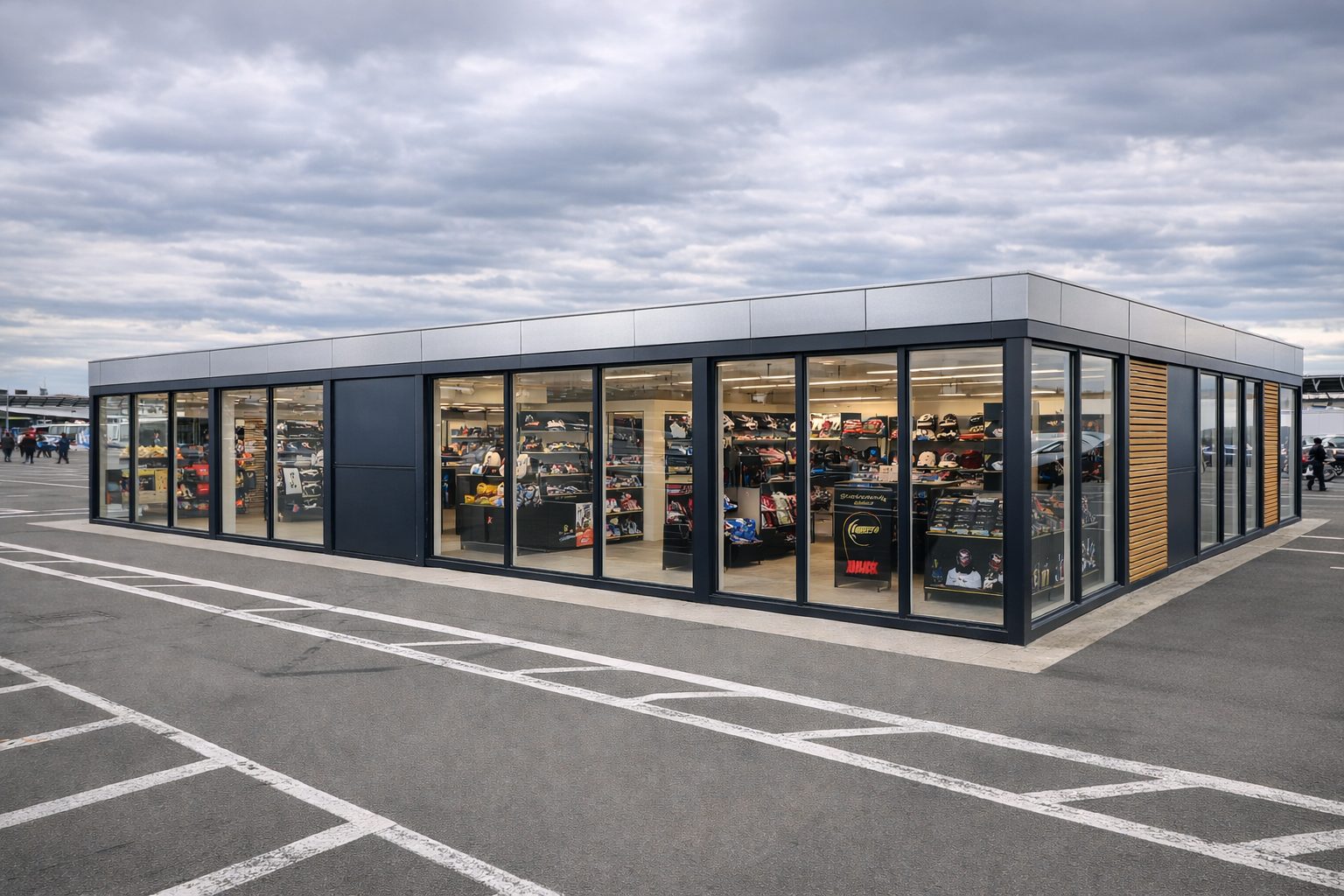
Best for: multi-zone commercial and mixed-use schemes

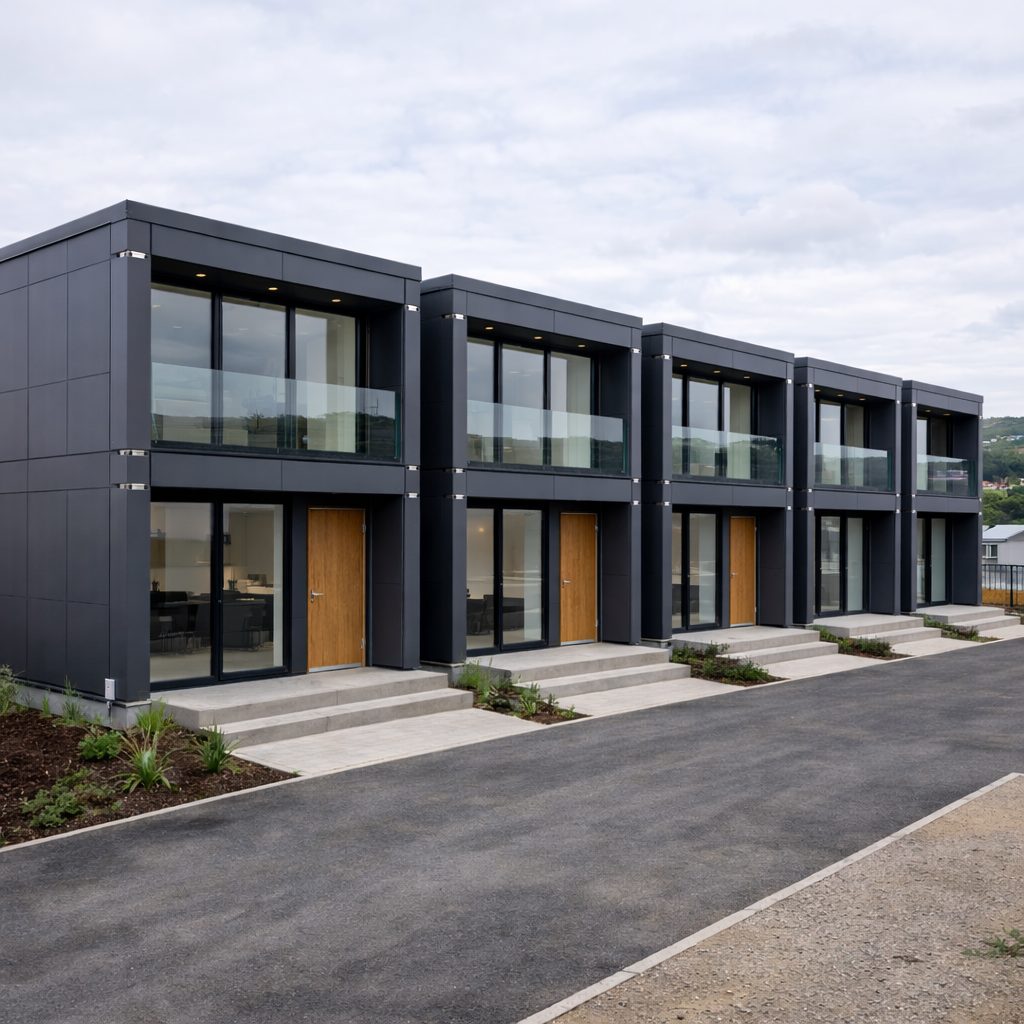
Best for: linked office and support zones

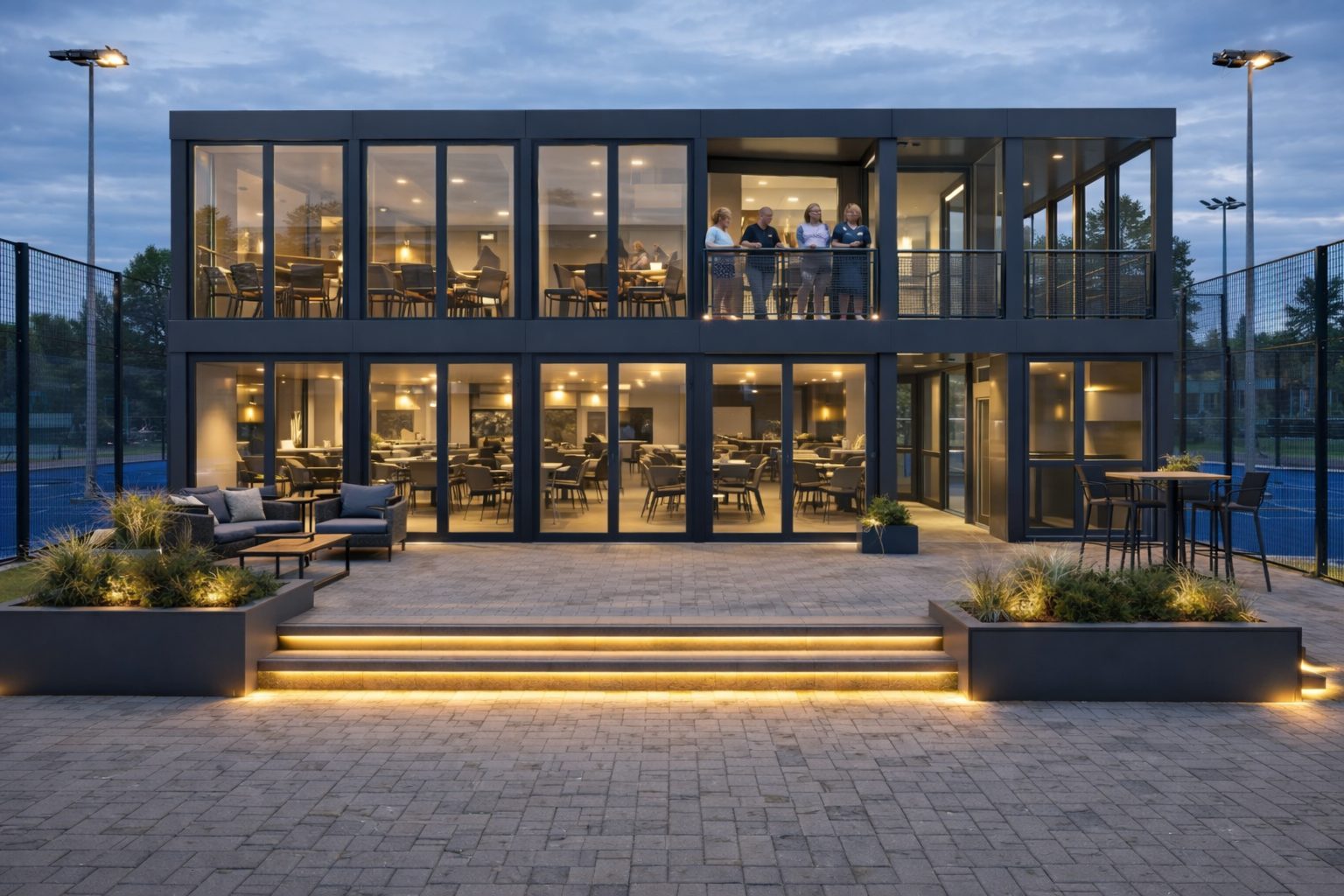
Best for: premium customer-facing zones

Best for: controlled and operational spaces

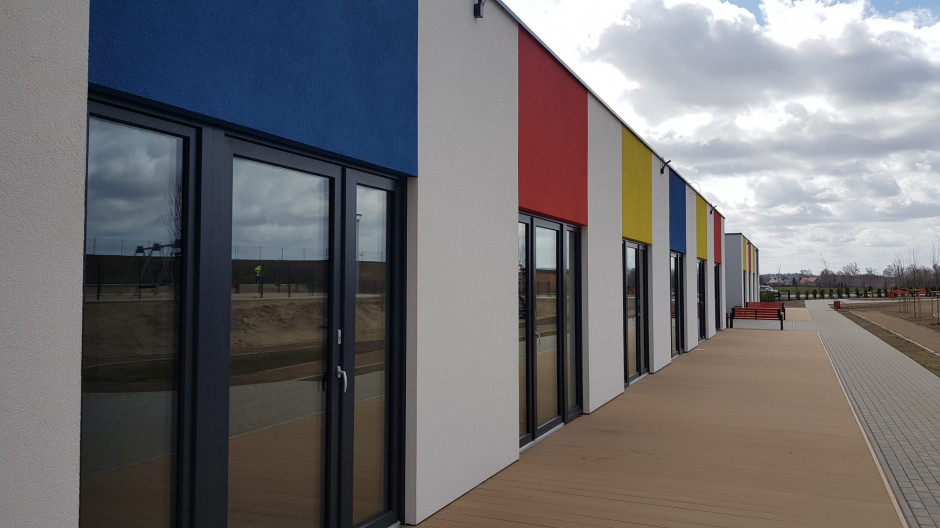
Best for: coordinated premium finish across methods
| Visual strategy | Why it matters on hybrid projects | Best fit | Watch-outs |
|---|---|---|---|
| Unified premium envelope | Keeps multiple methods reading as one complete building | Commercial and public-facing schemes | Requires early facade strategy |
| Different zones behind one facade language | Lets different structural logics coexist without visual confusion | Mixed-use and complex briefs | Needs interface detailing discipline |
| Premium front-of-house + practical back-of-house | Improves business fit by matching cost and finish to user visibility | Showrooms, hospitality, clinics | Do not let the transition feel accidental |
| Mixed internal planning with coherent exterior | Supports complex functions without looking improvised | Commercial and healthcare projects | Needs strong design governance |
How hybrid modular systems should be sequenced
Before hybrid modular systems are fixed, project teams should be clear on responsibilities, sequencing, interfaces and duty-holder roles. For current UK pre-construction responsibilities, review the HSE CDM guidance alongside project-specific technical advice.
Brief conflict check
Confirm whether the project genuinely has conflicting priorities that justify hybrid modular systems.
Zone-by-zone strategy
Decide which areas of the building need which method and why.
Interface planning
Resolve structural, envelope, services and finish interfaces before manufacture or procurement advances too far.
Method-specific production
Each part of the project uses its own appropriate production logic without losing overall programme control.
Integrated site sequence
Installation order is coordinated so the combined system behaves like one organised project rather than separate packages.
Unified handover
The building must still hand over as one coherent asset, even if multiple methods created it.
Hybrid modular systems let different parts of the building use different priorities
Front-of-house vs back-of-house
Premium customer-facing spaces can use a different facade and spatial logic from practical support areas.
Mixed structural needs
Some areas can prioritise repetition while others prioritise span, access, or public-facing quality.
Finish quality by business value
Allocate higher finish investment where users see it most, not uniformly where it adds little value.
Programme strategy
One part of the building can prioritise faster off-site completion while another remains more bespoke.
Facade coordination
The finished building can still read as one coherent asset even if different systems sit behind the envelope.
Use-case-specific specification
Clinical, office, showroom, admin and support spaces can each use the most suitable delivery logic inside one project.
Hybrid modular systems size logic should follow building zones, not one rigid module idea
One main system plus one supporting route
Best when a primarily modular building needs one secondary method to solve a specific challenge.
Multi-zone building strategy
Strong when public-facing, operational, and support areas need different design and construction logic inside one scheme.
Layered multi-method schemes
Useful where the project becomes too compromised under one structural or delivery route, but only with strong governance.
| Configuration question | Why it matters | Hybrid implication |
|---|---|---|
| Do different parts of the building need different strengths? | Hybrid only wins when the differences are real | Case for hybrid strengthens |
| Can interfaces be resolved clearly? | Poor interface planning destroys hybrid value | Must be coordinated early |
| Would one pure method already solve it? | If yes, hybrid may be unnecessary | Use simpler route |
| Can the whole building still feel coherent? | Users judge the final result, not the method mix | Needs strong design governance |
Hybrid modular systems are strongest when finish level matches business value by zone
Support-space finish
Best for practical spaces where durability and efficiency matter more than premium presentation.
Mixed premium + practical finish
A strong route where front-of-house must feel high quality while operational spaces remain practical and cost-aware.
High-value customer-facing finish
Best where the business case depends on premium appearance but not every part of the building needs the same level of investment.
| Finish posture | Best for | Why it suits hybrid modular systems |
|---|---|---|
| Operational | Back-of-house and support zones | Keeps budget aligned with practical use |
| Balanced mixed finish | Commercial and mixed-use projects | Matches finish investment to business visibility |
| Premium front-of-house | Showrooms, hospitality, high-value public zones | Supports premium perception without over-specifying the whole building |
Where hybrid modular systems are usually strongest
Commercial buildings
Strong where front-of-house image and back-of-house practicality both matter.
Showrooms and marketing suites
Useful where customer-facing quality must coexist with efficient support space delivery.
Healthcare and clinics
Good when clinical zones, admin areas and public reception spaces need different design and delivery logic.
Education complexes
Useful where teaching spaces, circulation areas and specialist zones need different responses.
Hospitality-led mixed briefs
Strong when premium guest-facing areas sit beside more practical support spaces.
Public and civic projects
Useful where permanence, quality, and controlled delivery need to be balanced carefully.
Sports and leisure
Works when club, reception, service and support spaces create different priorities within one scheme.
Complex multi-zone schemes
The clearest fit where the project genuinely behaves like more than one building problem.
Reference visuals for coordinated mixed-method delivery

Hybrid modular systems are strongest when one building contains more than one design problem
Commercial • Healthcare • Showrooms • Mixed-use • Public-facing projects

Linked commercial layout

Premium customer-facing zone

Controlled clinical zone

Unified premium finish
How compliance should be talked about on hybrid modular systems projects
Hybrid modular systems should be described with scoped, project-specific compliance language. The right question is not whether hybrid is automatically compliant. The right question is how the exact project scope, use, jurisdiction, and interface responsibilities are being resolved. For current UK reference material, review the UK Building Regulations guidance and use the Planning Portal guidance when checking planning and consent context.
England, Wales, Scotland, and Northern Ireland do not share one identical route.
Hybrid modular systems need clearer scope boundaries because multiple methods meet inside one project.
Fire, access, energy and envelope logic must be resolved in relation to each zone and the building as a whole.
Do not imply that “hybrid” alone solves compliance. The project-specific route still has to be evidenced properly.
What usually affects hybrid modular systems pricing most
Pricing should be assessed against the real conflicts the project is solving. Hybrid modular systems are not priced just by square metre; they are priced by how much compromise they remove and how much interface control they require.
Commercial reality: the cost of the wrong single-system choice can be higher than the cost of a well-planned hybrid route if the wrong approach causes redesign, weak finish quality, poor user experience, or avoidable programme drag.
| Pricing driver | Why it matters on hybrid schemes | Commercial effect |
|---|---|---|
| Number of methods combined | More interface points increase coordination burden | Can raise design and delivery complexity |
| How different the zones are | The bigger the difference between zones, the more hybrid may add value | Can improve overall fit but needs stronger planning |
| Facade unification strategy | The building still needs to read as one coherent asset | Can affect premium finish cost |
| Programme overlap and sequence | Incorrect sequencing can remove the benefit of going hybrid | Can create cost risk if unmanaged |
| Whether one pure system would have worked | Hybrid only makes sense if it removes real project weakness | Wrong-fit hybrid can waste cost |
Do not price hybrid as complexity alone
The right commercial test is whether hybrid modular systems remove bigger compromises elsewhere.
Hybrid can save wrong-fit cost
A better system split can avoid redesign, underperformance, or poor business fit later.
Coordination costs are real
Hybrid modular systems need stronger planning and scope control than a simpler route.
Early review protects value
A system review before quoting usually protects both commercial fit and delivery logic.
A typical real-world case where hybrid modular systems outperform a pure route
Imagine a project with a premium customer-facing frontage, practical back-of-house support areas, and one zone that needs more structural freedom than the others. A purely volumetric solution may feel too repetitive or visually weak. A purely steel-led solution may lose some speed or factory-efficiency advantages in repeated zones. Hybrid modular systems let the project keep the strongest part of each route without forcing the whole building into the weakest compromise.
Wrong pure-route risk
One method may solve one zone well but weaken the building elsewhere.
Hybrid advantage
Hybrid modular systems allow the building to stay commercially strong across all zones instead of over-optimising one at the expense of the rest.
Buyer takeaway
If the project feels like two or three different building problems at once, hybrid modular systems deserve serious consideration.
Hybrid modular systems are usually chosen when the project is too important to force into the wrong single method
Early-stage projects are still welcome. If the brief is not fully fixed, KC can review the project before you commit to a route, which reduces the risk of pricing the wrong system too early.
Consider simpler routes first
If the project is short-term, highly repetitive, or already solved by one method, hybrid modular systems may be unnecessary.
Buy when business fit matters more than simplicity
Hybrid modular systems make most sense when the project is valuable enough that wrong-fit simplification would weaken the final result.
Run a system comparison first
If you are still unsure whether the project needs hybrid, compare routes before treating complexity as the answer by default.
Frequently asked questions about hybrid modular systems
These answers are here to reduce avoidable misfit, not to push hybrid modular systems where a simpler route would be stronger.
What are hybrid modular systems?
Hybrid modular systems combine multiple construction or delivery methods so a project can balance speed, structure, finish quality and design flexibility within one coordinated solution.
When are hybrid modular systems better than single systems?
Hybrid modular systems are often stronger when projects have conflicting priorities such as premium appearance, structural span, and programme speed that one pure method cannot satisfy cleanly.
Do hybrid modular systems increase complexity?
Yes, but controlled complexity can reduce larger compromises. The key is proper coordination of interfaces, sequence, scope boundaries and responsibilities.
Are hybrid modular systems always more expensive?
Not automatically. Hybrid modular systems can add complexity, but they can also remove inefficient compromises that would cost more in redesign, delay or wrong-fit construction.
Can hybrid modular systems still look premium?
Yes. Hybrid modular systems can support premium results because they allow different parts of the building to use the most appropriate structural and envelope strategy.
Should hybrid modular systems be the default choice?
No. They are strongest when the brief genuinely contains conflicting priorities. If one system solves the project cleanly, a simpler route is often better.
Simple rules to decide whether hybrid modular systems really fit
If one system solves it cleanly, hybrid weakens
Hybrid modular systems should not be used just because they sound more advanced.
If priorities conflict, hybrid strengthens
The more the project needs conflicting things at once, the stronger the hybrid case becomes.
If zones differ strongly, hybrid strengthens
Different user groups, finishes, or structural demands often support hybrid modular systems.
If interface control is weak, hybrid weakens
Poor coordination can destroy the benefit of going hybrid.
If premium + practical must coexist, hybrid strengthens
Hybrid modular systems are often strong where premium appearance and practical support spaces sit together.
Need help? Route onward
If the brief still feels uncertain, compare routes before choosing a more complex delivery strategy.
Go to the right next page, not just the next click
If hybrid modular systems are not clearly the best fit yet, move to the most relevant sibling or downstream page rather than forcing a decision too early.
Volumetric modular systems
Use when repeated modules and early design freeze solve the project cleanly.
Modular steel frame system
Use when the scheme is really steel-led rather than mixed-method.
Modular timber system
Use when warm architectural tone and hospitality fit drive the brief.
Modular offices
Move to the solution page if the office use case is already fixed.
Modular clinics
Strong downstream route when the healthcare use case is already clear.
Request a quote
Best route if the project is live and system qualification is needed now.
Let KC review whether hybrid modular systems are actually the right route for your project
Send your use case, target programme, site constraints, and where the project feels conflicted. We will help qualify whether hybrid modular systems improve the result or whether a simpler route is stronger.
Early-stage enquiries are fine. You do not need a fully locked design before asking KC to review the route.
Ready to discuss a hybrid modular systems project?
Share the building use, zone differences, finish priorities, site location, and where the brief still feels conflicted. That helps KC guide the right system route and commercial response more accurately.
Call KC
Speak directly with the team about system suitability, complexity level, and project posture.
01782 561 110Email the brief
Send plans, zoning notes, dimensions, or conflicting design priorities for a more accurate review.
[email protected]Request a quote
Use the quote form when the scheme is live and needs technical routing plus commercial response.
Start Quote RequestThis is why hybrid building systems are often chosen during modular system selection UK processes.