Modular Classroom Regulations UK: BB93, BB101, BB103, BB104 and Building Regulations
A plain-English guide for school business managers, estates teams, academy trusts, local authorities and specifiers who need to understand DfE compliant modular classrooms without mixing education guidance with healthcare HBN or HTM content.
Short answer: what does DfE compliant mean for a modular classroom?
DfE compliant modular classrooms should be designed to meet the applicable education guidance, Building Regulations and project evidence requirements for the agreed brief. It is not a standalone badge. The school should confirm the required standards, approval route, room use, occupancy, evidence pack and commissioning before ordering.
In practice, modular classroom regulations UK checks usually combine Building Control, fire strategy, acoustics, ventilation, energy performance, accessibility, area guidance and project-specific structural evidence. A temporary classroom, a permanent modular school building and a specialist SEND building may all need different evidence.
Use this guide to separate statutory Building Regulations from DfE guidance and contractual employer requirements. Healthcare HBN and HTM guidance should stay on a separate healthcare compliance page, because it answers a different procurement question.
Snippet-ready answer table for modular classroom regulations UK
Query
Direct answer
modular classroom regulations UK
Schools normally need a coordinated Building Regulations, education-guidance and project-evidence pack rather than a single certificate.
DfE compliant modular classrooms
This should mean designed to meet the applicable education and Building Regulations requirements for the agreed project brief, with evidence supplied.
modular classroom Building Regulations
Building Control checks the project against relevant Approved Documents. Planning permission is separate and may also be needed.
BB93 classroom acoustics
BB93 supports acoustic design and performance standards in school buildings and links to the acoustic section of Approved Document E.
BB101 classroom ventilation
BB101 supports ventilation, thermal comfort and indoor air quality in schools and is used for school ventilation under Approved Document F.
BB103 school design
BB103 gives mainstream school area guidance. It helps shape room schedules, but it is not a fixed modular classroom product size.
BB104 SEND classroom
BB104 gives SEND and alternative-provision area guidance. It should be applied to the actual support needs and room use.
Modular classroom regulations UK matrix
The table below separates law, guidance, evidence and project triggers. It avoids the common mistake of treating DfE compliant modular classrooms as a one-line product claim.
Requirement
What it governs
Typical project evidence
When it applies
Building Regulations and Building Control
Legal compliance route for building work, including structure, fire, energy, access, ventilation, sanitation and workmanship.
Building Control submission, design drawings, calculations, product data, inspections and completion evidence.
Usually required where a modular classroom is constructed, extended, materially altered or used as a school building.
Part B and school fire strategy
Means of escape, warning, compartmentation, external fire spread, access and firefighting assumptions.
Fire strategy, escape travel distances, fire door schedule, alarm/emergency lighting specification and product fire classifications.
Applies to education buildings as part of Building Regulations, with school-specific fire risk and occupancy decisions made by the design team.
Part E and BB93 classroom acoustics
Acoustic conditions in schools, including noise control and reverberation expectations for teaching spaces.
Acoustic design note, product acoustic data, services-noise review and post-completion test plan where required.
BB93 classroom acoustics apply where the room is a teaching or school space and the brief requires school acoustic performance.
Part F and BB101 classroom ventilation
Ventilation, thermal comfort and indoor air quality for school buildings.
Ventilation strategy, BB101 design checks, MVHR or natural-ventilation calculations, commissioning certificate and O&M data.
BB101 classroom ventilation is relevant when designing teaching spaces, specialist rooms and high-occupancy areas.
Part L energy performance and SBEM
Thermal fabric, services efficiency, carbon emissions and energy-performance evidence.
U-value schedule, thermal bridge assumptions, services data, SBEM assessment and EPC/SBEM outputs where applicable.
Applies to new non-domestic school buildings and many extensions, subject to project type and Building Control route.
Part M accessibility and inclusive circulation
Accessible approach, entrances, internal circulation, sanitary accommodation and inclusive use.
Used where the project includes SEND, alternative provision, nurture, hygiene, therapy or higher support needs.
Project-specific structure and commissioning
Structural safety, foundations, movement, lifting, transport, service performance and handover evidence.
Structural calculations, foundation loads, lifting plan, commissioning certificates, air/water/electrical test records and O&M manuals.
Applies to every serious school project. The evidence changes by module system, site and agreed scope.
DfE Employer’s Requirements
Contractual design, information, performance and delivery requirements for DfE-funded or framework projects.
Project brief, technical manual checks, schedule of accommodation, derogations register and information-delivery plan.
Applicable where the contract or funding route requires DfE Employer’s Requirements. They should not be presented as universal law for every private school project.
Modular classroom Building Regulations and Building Control
Modular classroom Building Regulations approval is project-specific. The same classroom module can require different evidence depending on use, location, occupancy, size, services and whether the school is adding a temporary building, a permanent extension, a specialist suite or a multi-room block.
In search terms, modular classroom Building Regulations means the Approved Document and Building Control evidence for the actual school project, not a generic certificate. A modular classroom Building Regulations pack usually covers fire, energy, ventilation, access, structure, drainage, services and commissioning.
Building Regulations approval is separate from planning permission. A school may need both. Early discussions should confirm the Building Control route, the fire strategy, whether the works are new-build or extension works, the service connections, the foundation design and who is responsible for final completion evidence.
Safe claim wording: replace unqualified “fully DfE compliant” statements with “designed to meet the applicable education and Building Regulations requirements for the agreed project brief,” then state the evidence supplied.
BB93 classroom acoustics
BB93 classroom acoustics matters because poor acoustic conditions can damage teaching quality, speech intelligibility and pupil concentration. A modular classroom specification should consider internal reverberation, noise from services, external noise, sound insulation and flanking transmission at junctions, doors, windows and service penetrations.
For a simple general classroom, the evidence may be a product data sheet plus acoustic design note. For music, SEND, drama, dining, science or multi-room schemes, the school may need a fuller acoustic review and a test plan. BB93 classroom acoustics should always be tied to the actual room type, not a generic classroom label.
BB101 classroom ventilation, thermal comfort and indoor air quality
BB101 classroom ventilation covers more than background airflow. It links ventilation, thermal comfort and indoor air quality. A compliant design may need natural ventilation, mechanical ventilation, MVHR, purge ventilation, acoustic louvres, overheating review, controls strategy and commissioning records.
Schools should confirm pupil numbers, staff numbers, room use, hours of operation, opening-window strategy, external noise constraints and whether specialist equipment changes heat gains. BB101 classroom ventilation evidence should be coordinated with Part F, Part L, acoustic design and the building’s M&E strategy.
BB103 school design and BB104 SEND classroom guidance
BB103 school design helps mainstream schools plan area ranges, space types and net capacity. It should not be used as a single square-metre answer for every modular classroom. A realistic brief must distinguish net teaching area, support space, circulation, plant, storage, WCs and gross internal area.
BB104 SEND classroom guidance applies where the brief includes SEND or alternative provision. These projects often need more support area, inclusive circulation, hygiene provision, therapy, calm rooms, storage and staff support. BB104 SEND classroom planning should reflect the setting and needs, not just pupil count.
DfE Employer’s Requirements are contractual, not universal law
DfE Employer’s Requirements are highly relevant for DfE-funded or framework projects where the contract requires them. They include technical manuals, schedule tools, information requirements and supporting documents. However, they should not be presented as universal law that applies identically to every private school, nursery or independent procurement route.
The correct compliance language is therefore conditional: identify the client, funding route, contract requirements, Building Control route, school type and room schedule first. Then decide which DfE documents, Approved Documents, employer requirements and test evidence need to sit inside the specification.
What evidence should a school ask KC to supply?
The evidence pack matters more than a broad compliance phrase. For DfE compliant modular classrooms, schools should ask what will be supplied before order, before manufacture, before delivery and at handover.
For DfE compliant modular classrooms, the safest buyer question is not “is it compliant?” but “which applicable education requirements are covered, and what evidence will KC provide for this project?”
Design-stage evidence
Room schedule, layout drawings, fire strategy, acoustic/ventilation assumptions, access strategy and Building Control submission documents.
Technical evidence
Structural calculations, foundation loads, U-values, SBEM or energy information, product data, fire classifications and M&E design notes.
Installation evidence
Lifting plan, delivery/access plan, inspection records, service connection checks and site-specific method statements.
Which KC classroom route fits the compliance brief?
Different product routes can support different school outcomes. The right route depends on temporary or permanent use, specification level, room type, location, programme and evidence expected.
KC route
Best fit
Compliance evidence focus
Relevant link
Temporary ISO frame classrooms
Rapid temporary classrooms, bulge intake, decant or hire/buy routes.
Building Regulations, fire/access/ventilation evidence, basic area schedule, services and handover checks.
This guide handles modular classroom Building Regulations and education compliance. Use the other classroom guides for budget, route selection and space planning.
Modular classroom cost UK
Use the cost guide for route pricing, hire/buy assumptions, exclusions and cost per m².
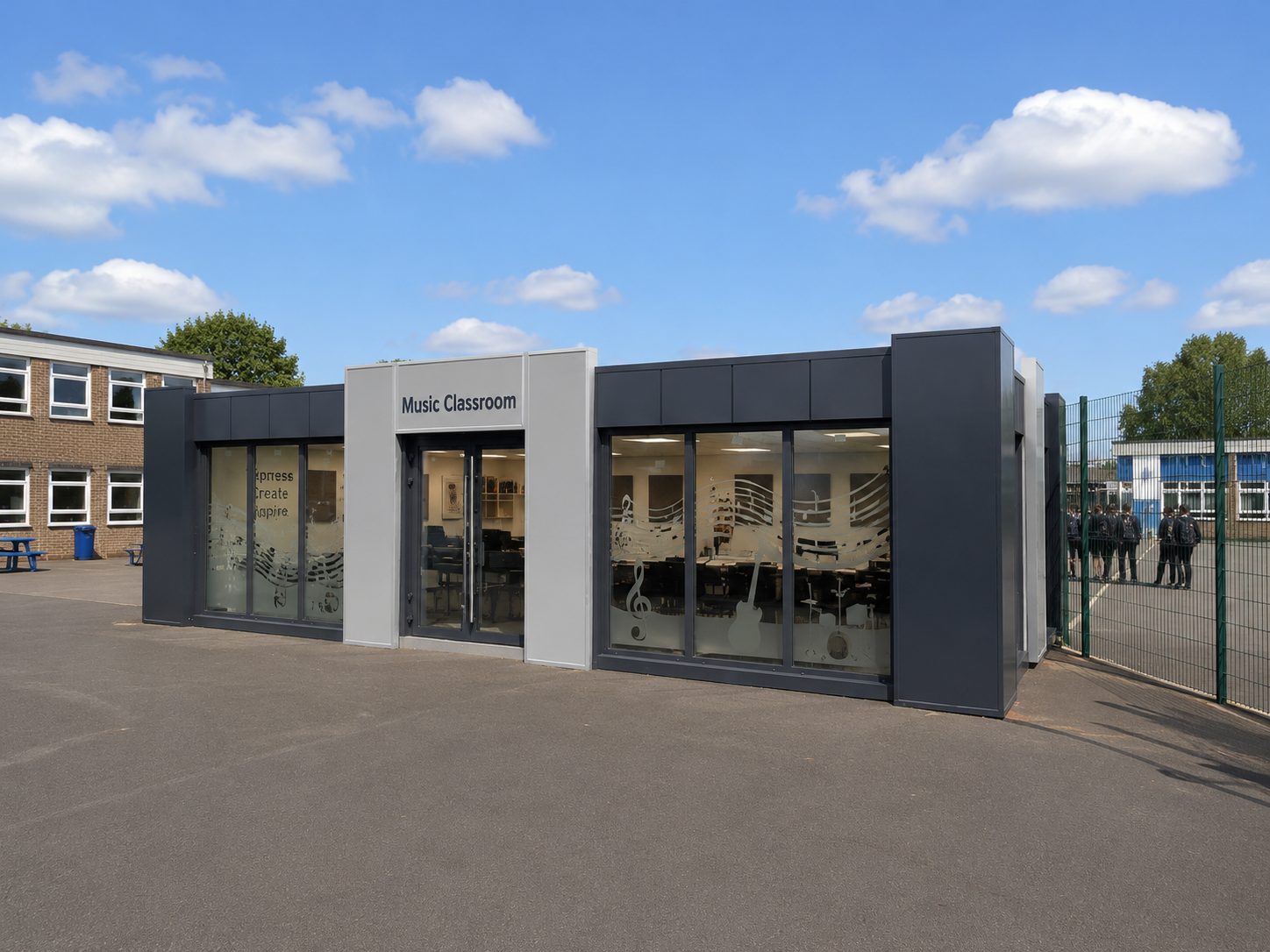
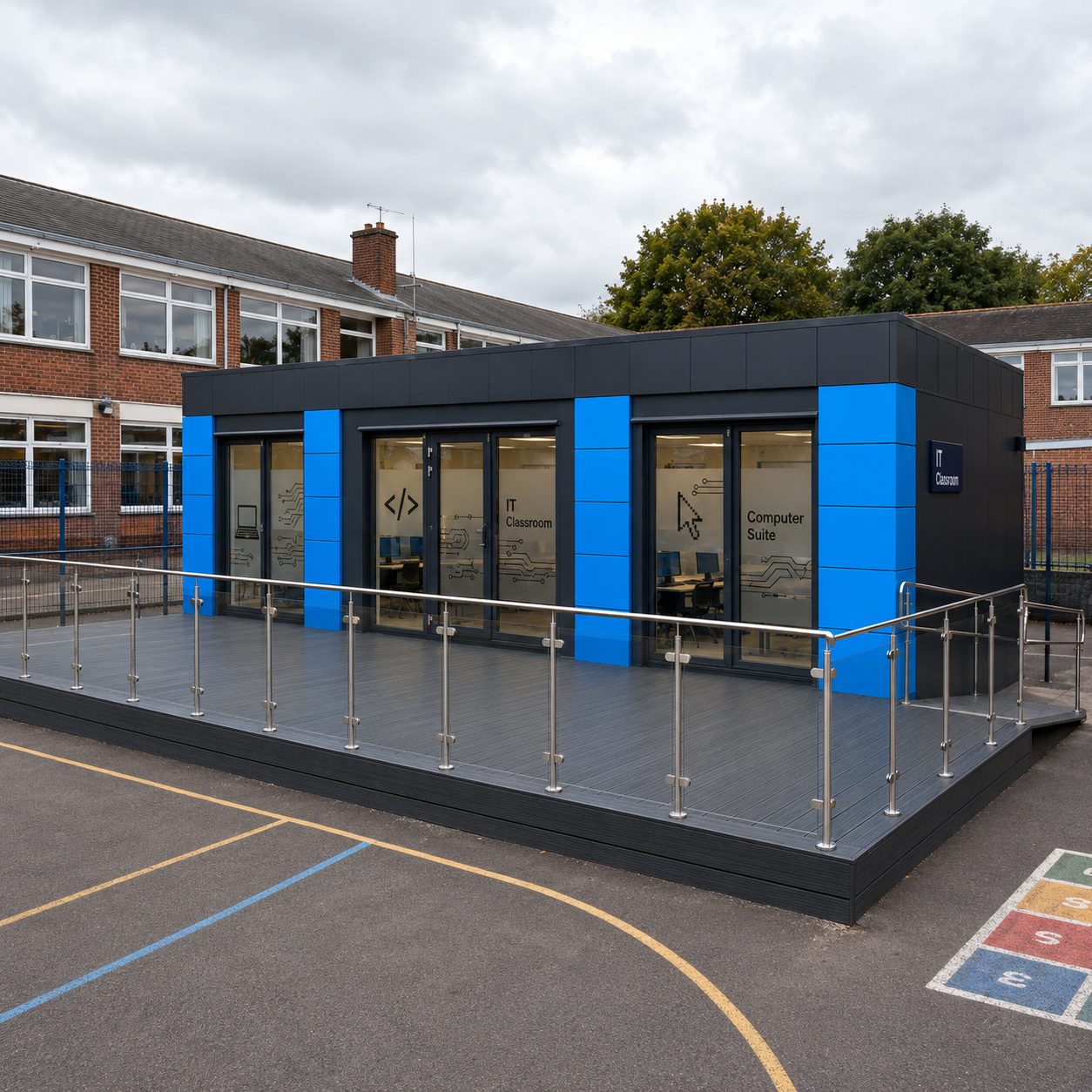
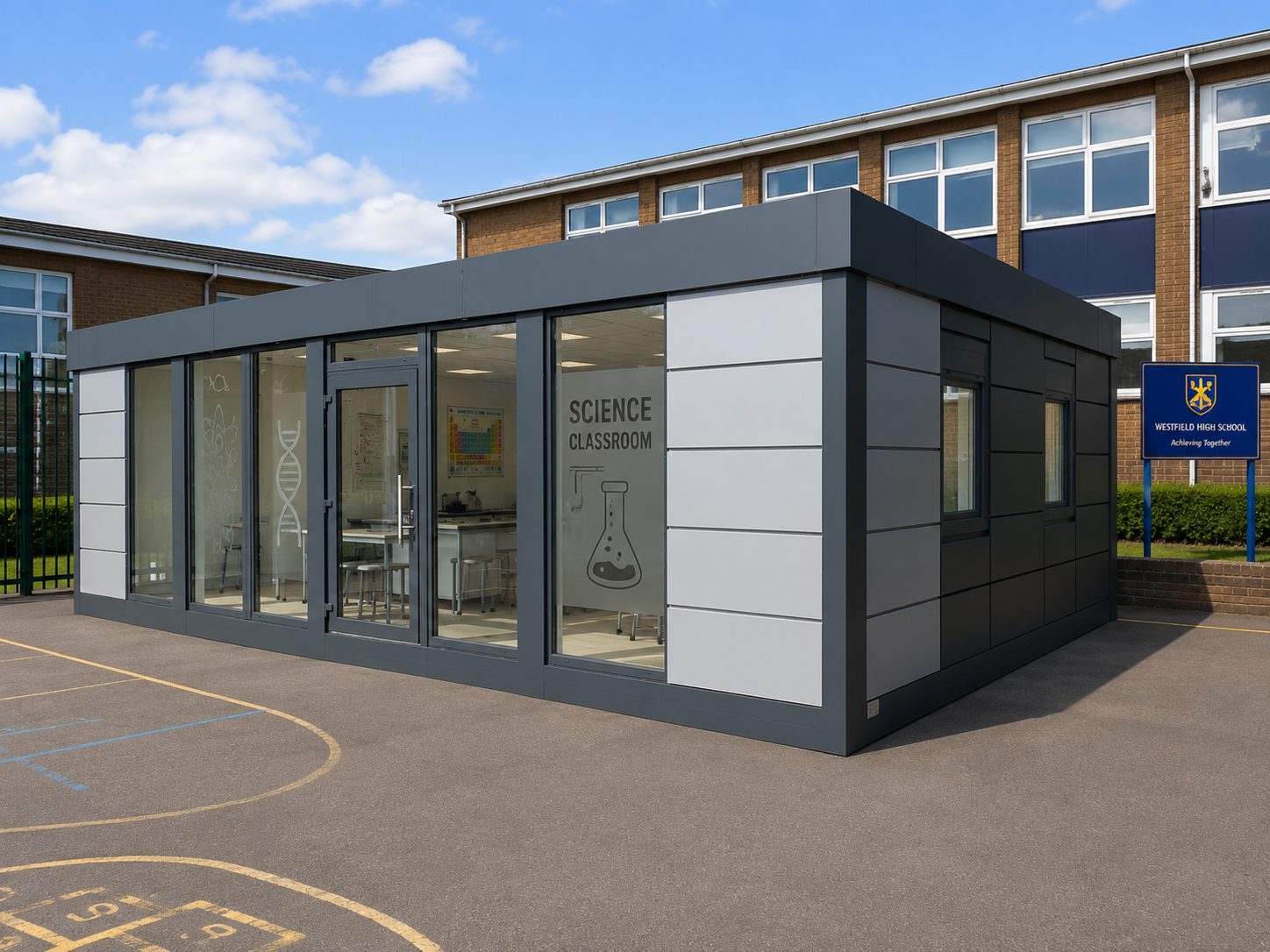
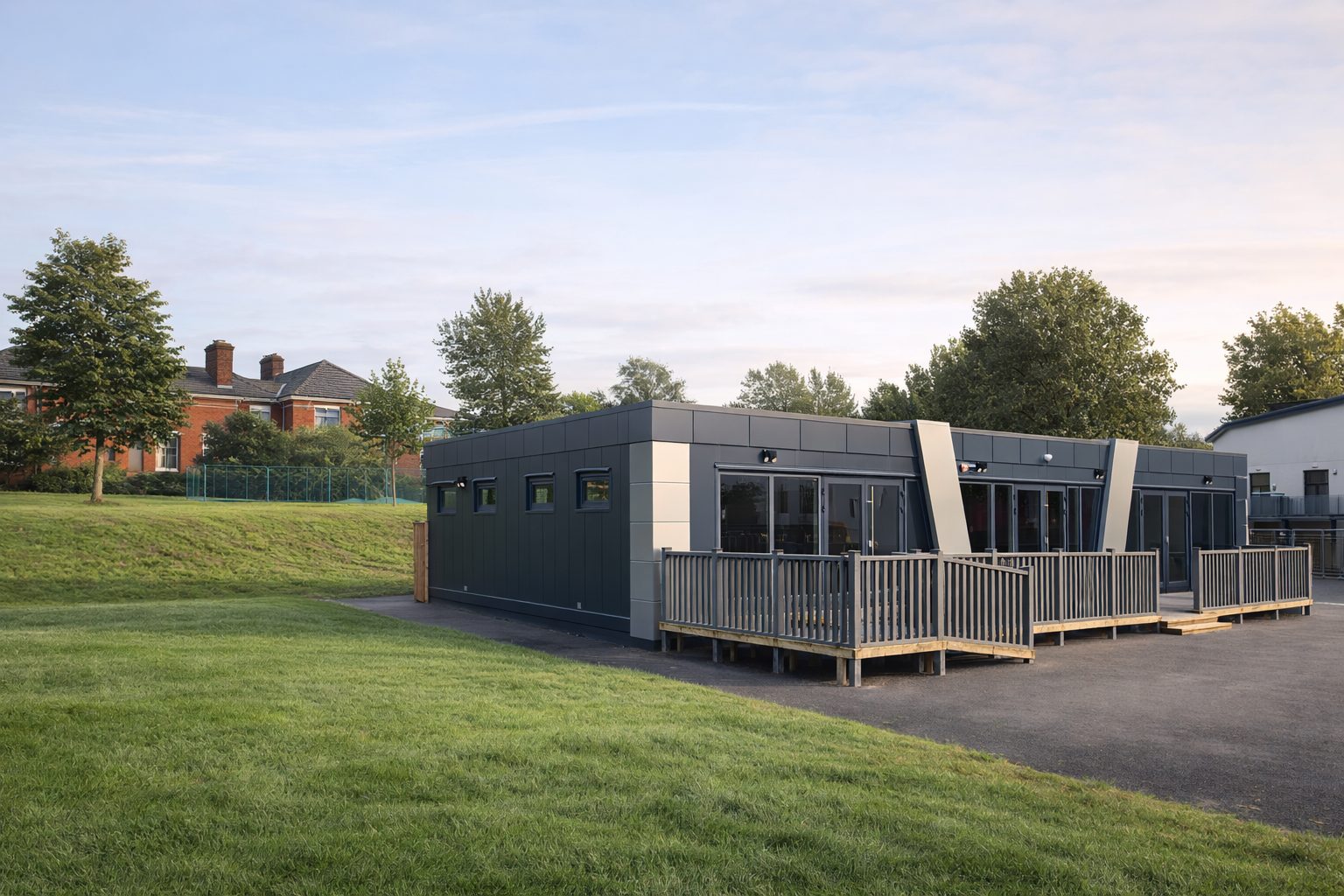
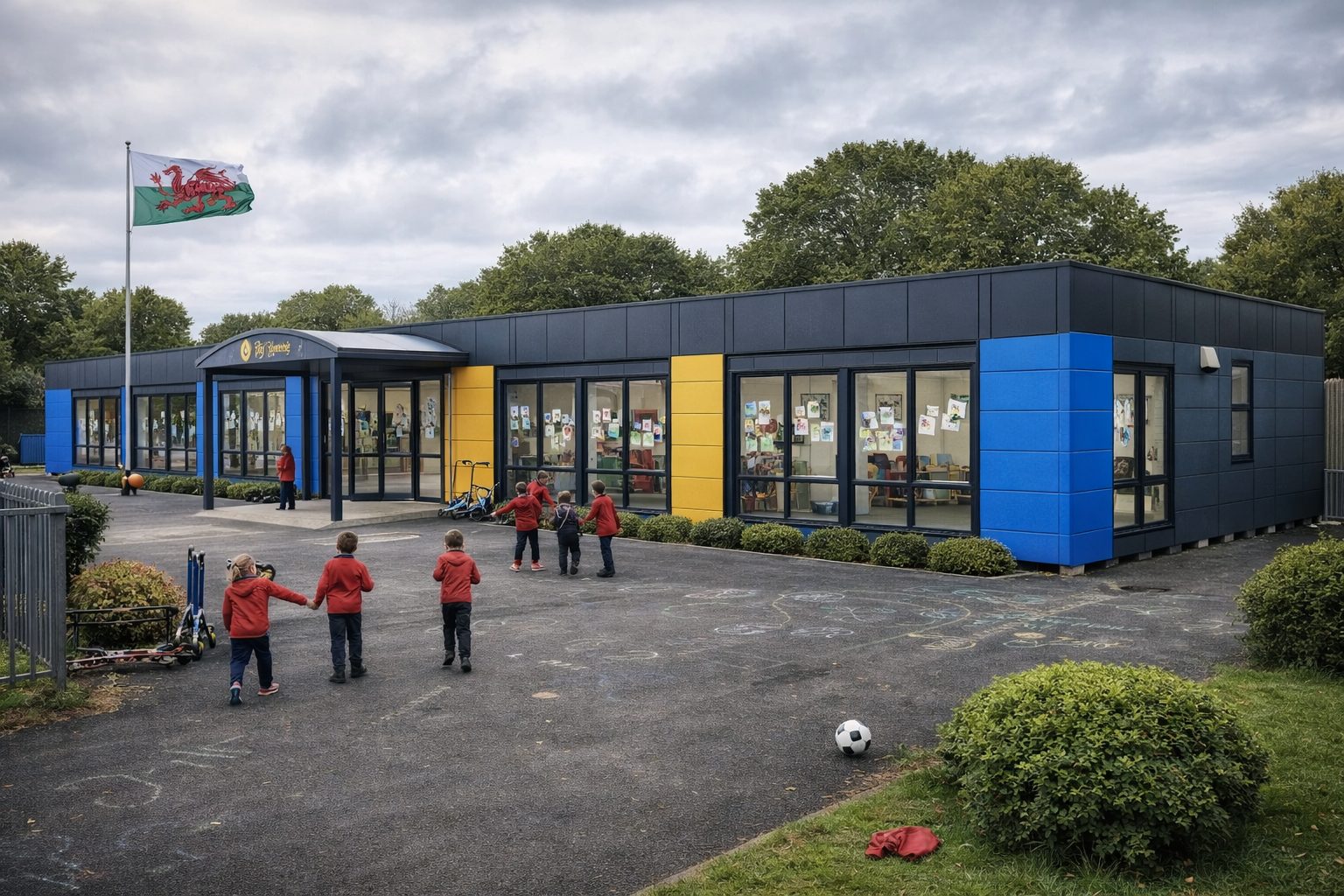
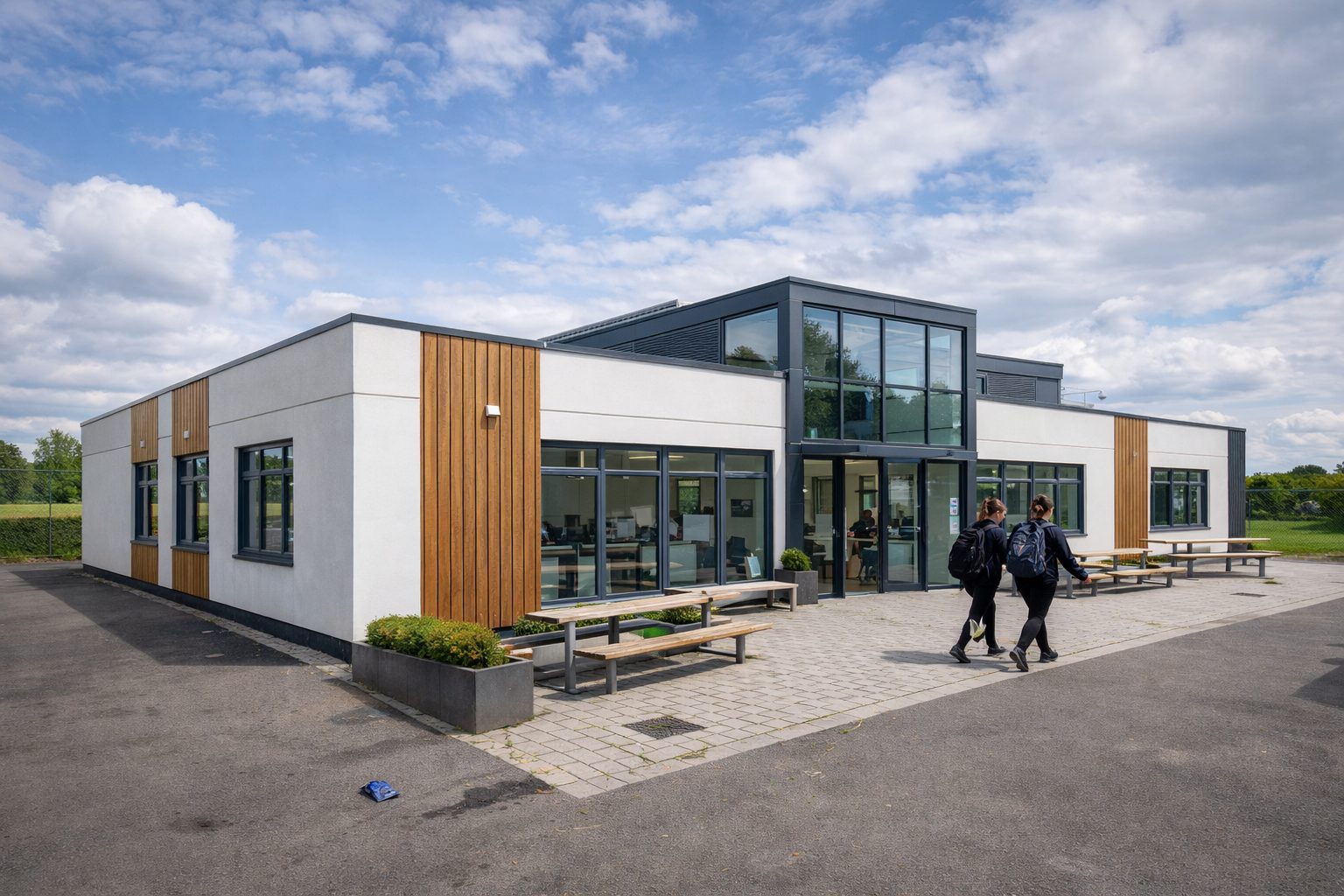
A focused selection of KC classroom and school-building images. Captions explain the compliance planning point; they are not fixed case-study claims.
A modular classroom regulations UK brief should connect Building Regulations, education guidance, evidence and approval routes before specification is finalised.DfE compliant modular classrooms are project-specific, not a single product badge.Specialist teaching rooms need early coordination of acoustics, ventilation, services and fire strategy.Repeatable modular school buildings still need project-specific Building Control evidence.BB103 school design guidance informs area planning for mainstream school accommodation.Bespoke classroom routes need a coordinated evidence pack covering use, occupancy, layout and performance.Long-term education buildings need specification decisions tied to handover evidence and maintenance strategy.
External references used for this guide
This education-only guide uses school and Building Regulations sources. Healthcare HBN and HTM content should be handled on a separate healthcare compliance page.
What does DfE compliant mean for a modular classroom?
DfE compliant modular classrooms should mean the building is designed to meet the applicable education guidance, Building Regulations and project requirements for the agreed brief. It is not a standalone badge. The buyer should ask what evidence will be supplied for acoustics, ventilation, fire, access, energy, structure and commissioning.
Are modular classroom regulations UK rules different from normal buildings?
The core Building Regulations route is not removed because the building is modular. Modular classroom Building Regulations approval still needs a project-specific Building Control route, relevant Approved Document evidence and any school-specific guidance required by the client or funding route.
Does BB93 classroom acoustics apply to modular classrooms?
Yes, BB93 classroom acoustics is relevant where the building is a school teaching space. The specification should consider reverberation, indoor ambient noise, services noise and flanking paths, then match the correct room type and project brief.
Does BB101 classroom ventilation apply to modular classrooms?
BB101 classroom ventilation is relevant to school ventilation, thermal comfort and indoor air quality. The evidence may include natural ventilation design, mechanical ventilation with heat recovery, overheating checks, commissioning records and controls information.
Is BB103 school design statutory?
BB103 school design is DfE area guidance for mainstream schools. It helps shape area schedules and space planning, but it should be applied flexibly to the actual school type, curriculum, occupancy and project brief.
When should BB104 SEND classroom guidance be used?
BB104 SEND classroom guidance should be considered for SEND and alternative provision projects. It is especially relevant where the brief includes hygiene rooms, therapy, quiet rooms, sensory spaces, wheelchair access, support staff or complex support needs.
Do modular classroom Building Regulations replace planning permission?
No. Building Regulations approval is different from planning permission. A school project might need both, and the correct route depends on location, use, programme, building size and local authority requirements.
Can KC say a classroom is fully DfE compliant?
Safer wording is that a classroom is designed to meet the applicable education and Building Regulations requirements for the agreed project brief. KC should then list the actual evidence supplied, rather than relying on an unqualified compliance claim.
Do DfE Employer’s Requirements apply to every modular classroom?
No. DfE Employer’s Requirements are important on DfE-funded or framework projects where the contract requires them. They should not be described as universal law for every independent school, private nursery or non-DfE procurement route.
What should a school ask for before ordering a modular classroom?
Ask for a room schedule, specification, approval assumptions, Building Control strategy, fire strategy, acoustic and ventilation evidence, access strategy, structural calculations, service connections, commissioning records and handover documentation.
Need a classroom compliance brief checked?
Send KC your site, room schedule, intended use, pupil numbers, preferred route and any employer requirements. KC can then discuss the evidence needed for Building Regulations, education guidance and handover.
Written by Rafal Cierocki, Sales Director. Reviewed by Krzysztof Cichowicz, Director. Last reviewed 16 July 2026. Education compliance wording should be verified against the agreed project brief, modular classroom Building Regulations route and current DfE/GOV.UK guidance before use in a tender or order.