Modular Timber System
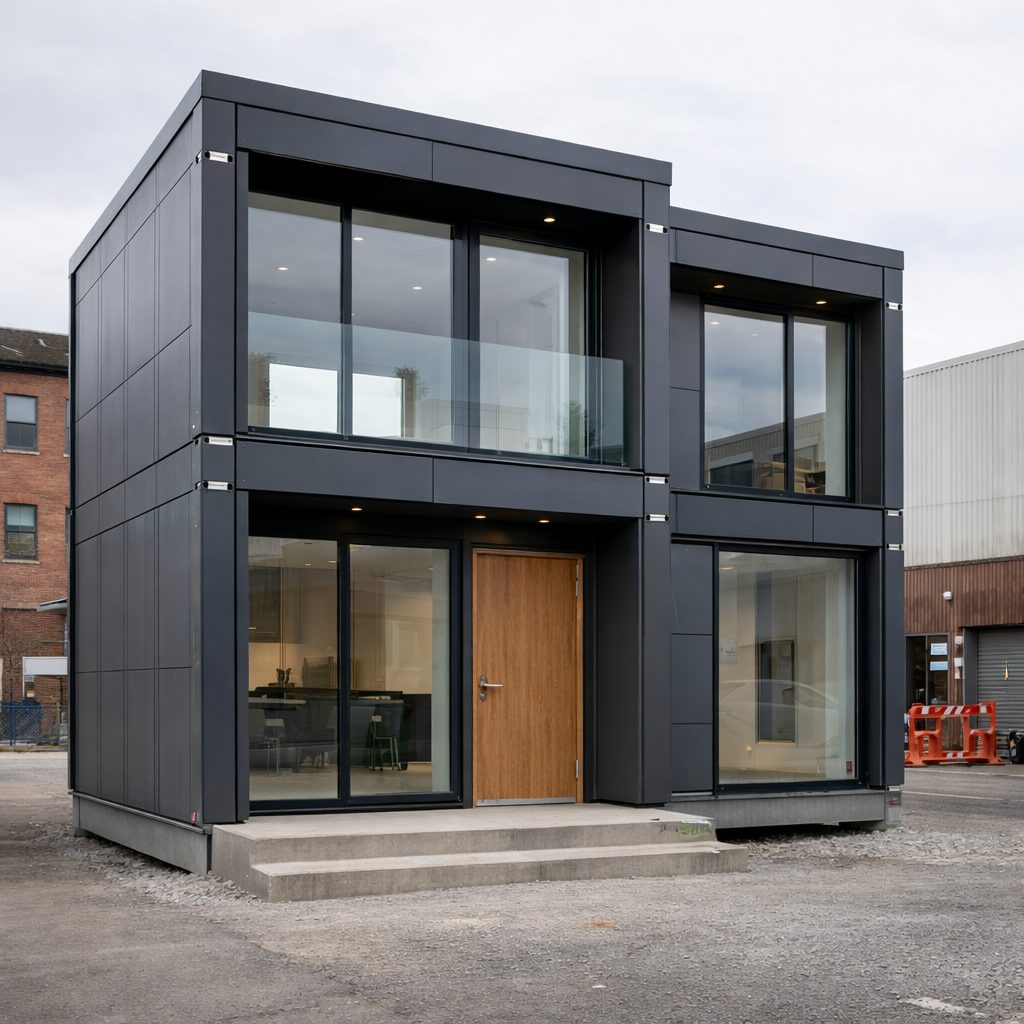
System Guide
Modular Timber System
KC Modular Buildings delivers the modular timber system under the LARK product line — built with C24 structural timber, Rockwool insulation (100–300mm) and triple-glazed windows. Specifically, the LARK system achieves energy rating A with U-values of 0.16–0.18 W/m²K (walls) and a 75-year design life.
▴ C24 Structural Timber
■ Residential & Leisure
◆ 75-Year Design Life
★ TUV / NCC Certified
Leisure Route
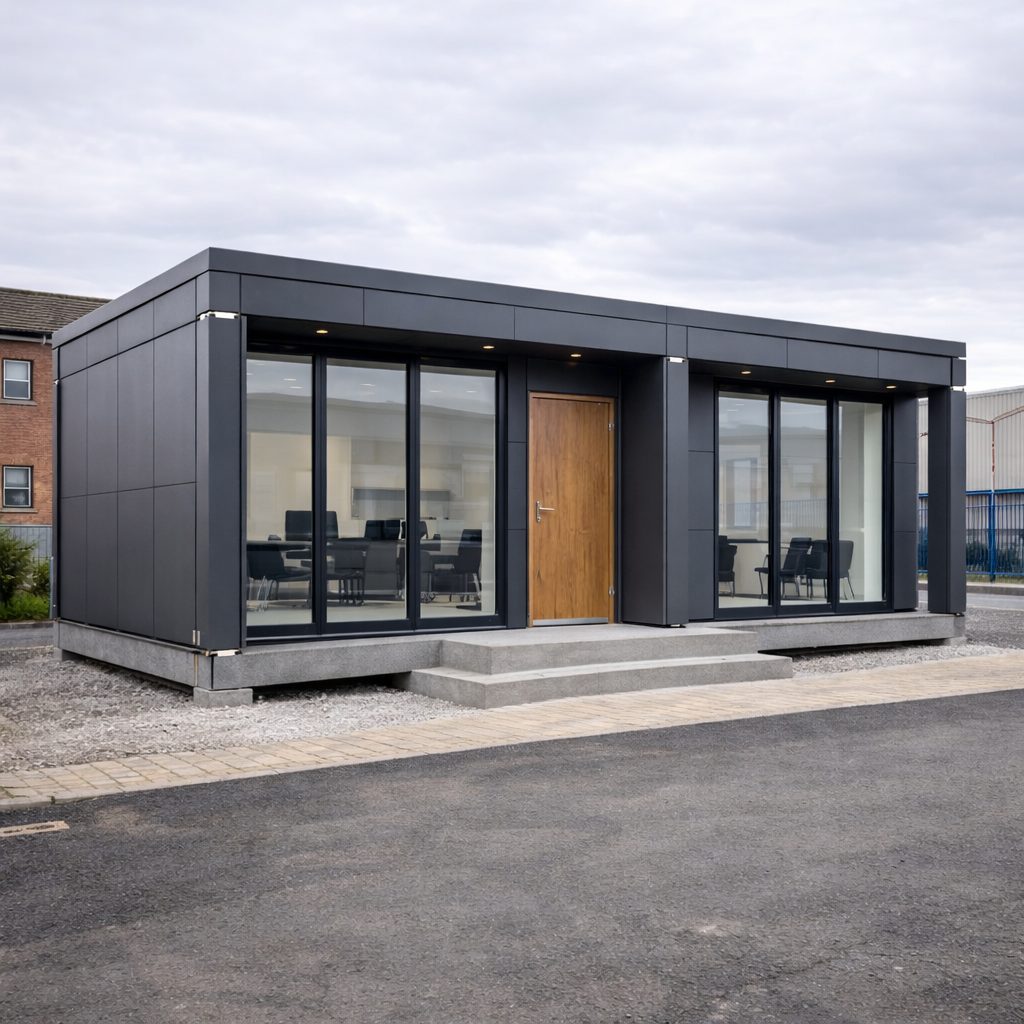
Lodges, Holiday Accommodation and Modular Homes
KC Modular Buildings delivers the LARK timber system for lodges, holiday parks and modular homes. Furthermore, Rockwool insulation and triple-glazed windows achieve energy rating A across all leisure builds.
Sector Flexibility
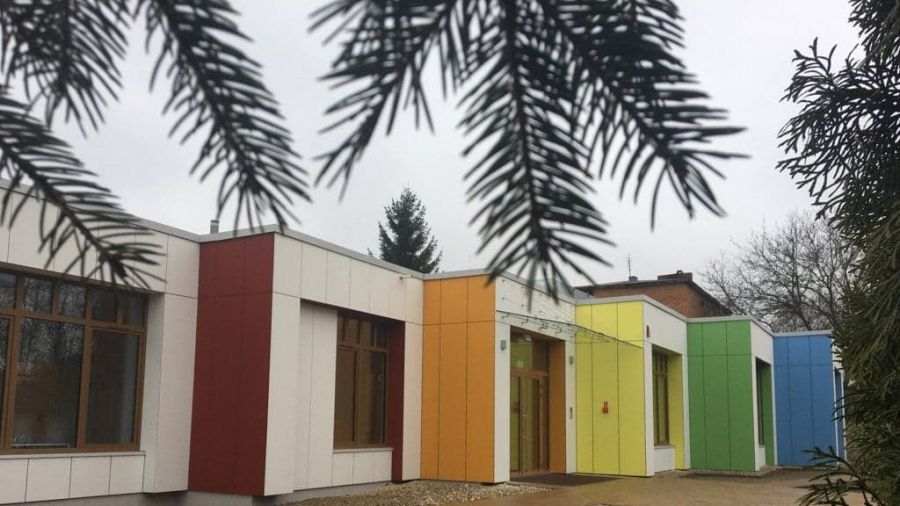
Nurseries, Residential and Public-Facing Buildings
KC Modular Buildings delivers the LARK timber system for early years settings, residential annexes and selected public-sector buildings. Specifically, the timber frame supports Part L 2021 compliance and DDA-accessible layouts as standard.
◆ Why Choose KC Modular
Modular Timber Expertise Backed by ISO 14001, ISO 9001 and 75-Year Design Life
KC Modular Buildings delivers the modular timber system under the LARK product line — with C24 structural timber, Rockwool insulation and TÜV/NCC certification. Specifically, every LARK build achieves energy rating A and completes 90% of construction in the factory before site delivery.
Furthermore, KC Modular Buildings holds ISO 14001 environmental management certification — confirming that sustainability performance forms part of the manufacturing process, not just the marketing narrative.
⛪
Factory Built
KC Modular Buildings completes 90% of every LARK timber build in the factory — including structural assembly, insulation, internal fit-out, electrical and sanitary installation. Specifically, this factory-first approach reduces on-site programme time to days for most single-unit projects.
Furthermore, offsite manufacture reduces on-site waste by up to 90% compared with traditional timber construction.
☘
Sustainability Performance
KC Modular Buildings holds ISO 14001 environmental management certification — confirming that sustainability forms part of the manufacturing process on every LARK project. Specifically, Rockwool insulation (100–300mm) and triple-glazed windows achieve energy rating A as standard.
Furthermore, Part L 2021 energy compliance integrates into every LARK timber build without additional specification effort.
☖
Residential Appeal
KC Modular Buildings delivers the LARK timber system for modular homes, holiday lodges and leisure accommodation where warm internal character and natural architectural language matter to the brief. Specifically, TÜV and NCC certification confirms the LARK system meets BS3632 and EN 1647 residential standards.
Furthermore, full internal fit-out — including kitchen, bathroom and climate control — completes in the factory before delivery.
⚑
UK-Wide Capability
KC Modular Buildings delivers and installs LARK timber system buildings across England, Wales and mainland Scotland. Specifically, UK islands, Northern Ireland and selective mainland Europe projects receive quotation on a per-project basis.
Furthermore, Constructionline Bronze membership and SSIP/Acclaim accreditation confirm KC Modular Buildings meets UK procurement requirements across all regions.
How It Works
How the Modular Timber Construction Process Works
KC Modular Buildings coordinates structure, envelope, thermal build-up, transport logistics and on-site sequencing for every modular timber system project at the design stage. Specifically, the LARK system follows a four-stage process from engineering sign-off to completed installation.
Furthermore, KC Modular Buildings confirms all four stages — design, manufacture, delivery and installation — before production begins. As a result, programme certainty starts at the point of order, not at the point of site arrival.
1
Design and Timber Engineering
KC Modular Buildings coordinates the C24 timber structure, Rockwool insulation build-up, thermal strategy and intended use at the design stage. Specifically, the engineering team confirms wall, roof and floor U-values before production drawings receive final approval.
Furthermore, Part L 2021 compliance and DDA accessibility integrate into the design package as standard on applicable project types.
2
Factory Manufacture
KC Modular Buildings completes 90% of every LARK timber build in the factory — including structural assembly, insulation, internal fit-out, electrical and sanitary installation. Specifically, factory conditions deliver repeatable quality under ISO 9001 quality management across every unit produced.
Furthermore, full internal fit-out — kitchen, bathroom, flooring and climate control — completes before the unit leaves the factory.
3
Transport and Delivery
KC Modular Buildings delivers LARK timber system buildings across England, Wales and mainland Scotland on standard road transport. Specifically, the lighter timber frame structure reduces transport weight compared with steel-led systems — simplifying route planning and crane requirements on constrained sites.
Consequently, delivery cost and logistics complexity reduce for most single-unit and small multi-unit programmes.
4
Installation and Weathering
KC Modular Buildings installs the LARK timber unit onto prepared foundations, connects services and completes the external envelope. Specifically, the installation team weathers the building, seals all junctions and commissions electrical and sanitary systems on site.
As a result, site installation time reduces to days rather than weeks for most single-unit LARK projects.
Why this matters: the LARK modular timber system changes the project logic around structure, insulation, envelope build-up and long-term performance. Specifically, KC Modular Buildings coordinates all four stages as a single integrated package — not as separate procurement decisions.
Furthermore, final specification remains subject to engineering design and site conditions on every project.
Best Fit
Where the Modular Timber System Fits Best
KC Modular Buildings delivers the modular timber system under the LARK product line for residential, leisure and selected education projects. Specifically, the LARK system suits briefs where C24 structural timber, warm internal character, lighter transport weight and a 75-year design life align with the project requirements.
Furthermore, the LARK timber system delivers a softer architectural expression than the NOVO steel frame — making it the correct route for lodges, modular homes and early years settings where domestic character matters to the brief. Consequently, KC Modular Buildings confirms LARK, NOVO or MS system suitability at the enquiry stage before any design cost is incurred.
As a result, you receive a system recommendation grounded in structural logic, compliance requirements and programme — not a default material preference.
LARK System — Typical Project Types
✓
Modular homes and small residential developments — BS3632 and EN 1647 certified; TÜV and NCC approved for permanent residential use.
✓
Holiday lodges and leisure accommodation — TÜV/NCC certified; Rockwool insulation and triple-glazed windows achieve energy rating A across all lodge builds.
✓
Garden annexes and residential outbuildings — lighter structural weight and standard road transport simplify delivery and installation on constrained residential plots.
✓
Nurseries and early years education spaces — Part L 2021 energy compliance and DDA-accessible layouts integrate as standard on all applicable LARK education projects.
✓
Low-rise community and hospitality buildings — LARK timber frame delivers the domestic architectural expression required for community centres, café buildings and small hospitality venues.
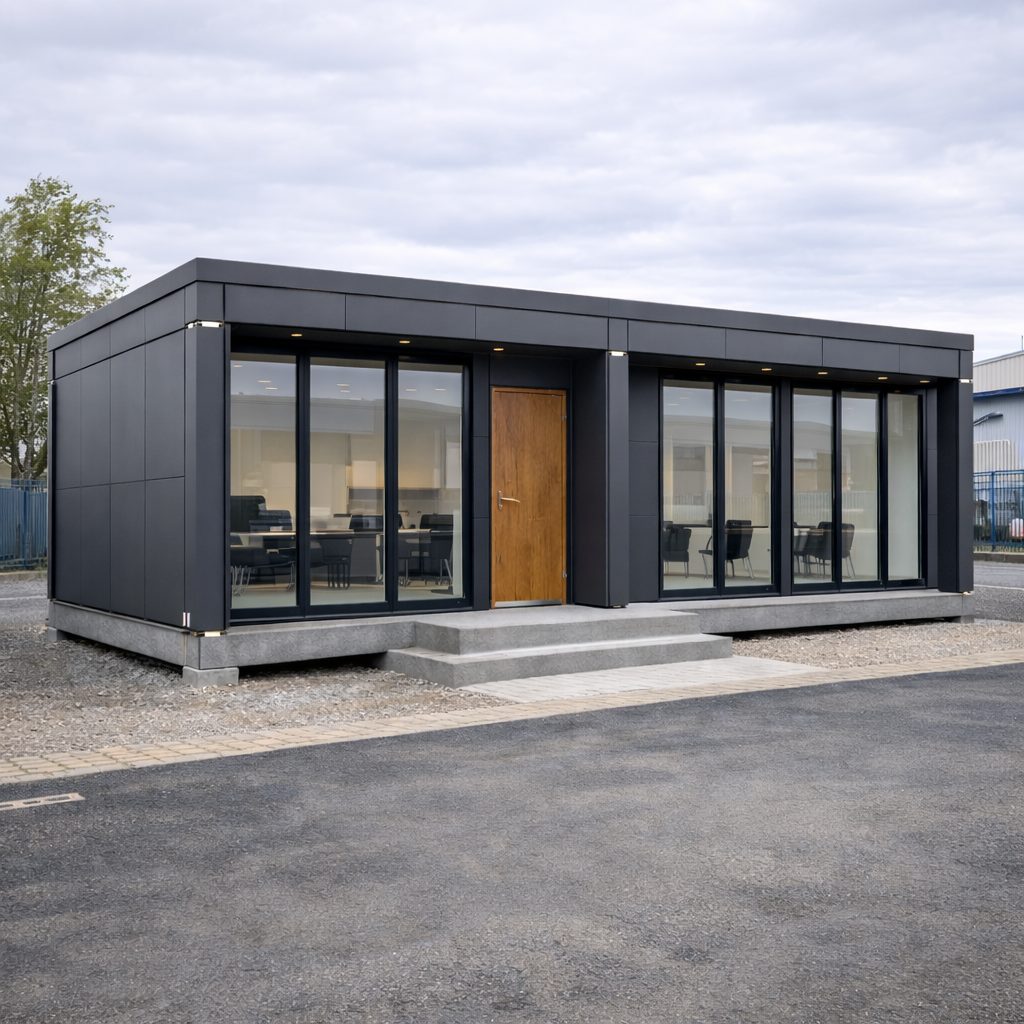
Modular timber system image for the residential sector modular homes solution in Stoke-on-Trent, Staffordshire, used to show external architectural expression in a modular timber context.
LARK System — Key Data
Design life
75 years
Wall U-value
0.16–0.18 W/m²K
Energy rating
A (Part L 2021)
Certification
TÜV / NCC / BS3632
Factory completion
90%
Realistic Fit
Where the Modular Timber System Is Not the Right Route
The LARK modular timber system delivers strong results for residential, leisure and selected education projects. Specifically, KC Modular Buildings operates two alternative systems — NOVO (bespoke steel frame) and MS (ISO frame) — for projects where structural demands, span requirements or commercial durability exceed the LARK timber route.
Furthermore, KC Modular Buildings confirms the correct system at the enquiry stage. As a result, you receive a LARK, NOVO or MS recommendation before any design or quotation cost is incurred.
⚠
Heavier-Duty Structural Demands
KC Modular Buildings recommends the NOVO bespoke steel frame system where the brief involves larger clear spans, higher imposed loads or multi-storey structural requirements. Specifically, the NOVO system handles open-plan spans and multi-storey configurations that exceed the structural capacity of the LARK timber route.
Furthermore, the NOVO system delivers a 50–75 year design life on demanding structural programmes.
⚠
Hard Commercial and Industrial Frames
KC Modular Buildings delivers the NOVO or MS steel system for office, industrial and high-footfall public-facing buildings where structural robustness and long-term durability drive the brief. Specifically, the MS ISO frame suits relocatable commercial and welfare applications with 5–7 week lead times.
Consequently, the LARK timber system does not form part of the KC Modular Buildings recommendation for high-load commercial programmes.
⚠
Briefs Driven by Sustainability Narrative Alone
KC Modular Buildings selects the LARK timber system on structural logic, compliance requirements and programme — not on material preference or marketing narrative. Specifically, ISO 14001 environmental management certification confirms that sustainability performance forms part of the KC manufacturing process across all three systems.
Furthermore, Part L 2021 energy compliance and energy rating A apply to NOVO and MS steel builds as well as LARK timber builds.
⚠
Relocatable and Hire-Led Programmes
KC Modular Buildings delivers the MS ISO frame system for relocatable, hire and hire-to-buy programmes where the building moves between sites over its life. Specifically, the MS ISO frame delivers in 5–7 weeks and supports full relocation without structural compromise — a requirement the LARK timber system does not meet.
Consequently, KC Modular Buildings recommends the MS system for all welfare, site office and relocatable accommodation briefs.
Need a steel frame route instead? KC Modular Buildings confirms NOVO or MS system suitability at no commitment — before any design work begins.
★ Key Benefits
Why KC Modular Buildings Delivers the LARK Timber System
The LARK modular timber system delivers C24 structural timber, Rockwool insulation (100–300mm), triple-glazed windows and energy rating A across residential, leisure and selected education projects. Specifically, TÜV and NCC certification confirms the LARK system meets BS3632 and EN 1647 residential standards.
Furthermore, KC Modular Buildings completes 90% of every LARK build in the factory — delivering programme certainty, repeatable quality and a 75-year design life on every project.
▴
Lighter Structural Route
The LARK C24 timber frame delivers a lighter structural weight than the NOVO steel frame — simplifying transport logistics, crane requirements and foundation design on residential and leisure sites. Specifically, lighter structure reduces delivery cost and site programme time for most single-unit and small multi-unit LARK projects.
Furthermore, standard road transport covers England, Wales and mainland Scotland without abnormal load requirements on most LARK builds.
♦
Strong Thermal Performance
KC Modular Buildings achieves U-values of 0.16–0.18 W/m²K (walls), 0.11 W/m²K (roof and floor) and energy rating A on every LARK timber build. Specifically, Rockwool insulation (100–300mm) and triple-glazed windows (U-value 0.5–0.7 W/m²K) form part of the standard LARK specification.
Furthermore, Part L 2021 energy compliance integrates into every LARK build without additional specification effort from the client.
☖
Residential Character
KC Modular Buildings delivers the LARK timber system for modular homes, holiday lodges and leisure accommodation where warm internal character and natural architectural language form part of the brief. Specifically, TÜV and NCC certification confirms the LARK system meets BS3632 and EN 1647 residential occupancy standards.
Furthermore, full internal fit-out — including kitchen, bathroom, flooring and climate control — completes in the factory before delivery.
⏱
Offsite Programme Control
KC Modular Buildings completes 90% of every LARK timber build in the factory — including structural assembly, insulation, internal fit-out, electrical and sanitary installation. Specifically, factory manufacture under ISO 9001 quality management removes weather dependency and delivers repeatable quality across every unit produced.
Consequently, site installation reduces to days rather than weeks for most single-unit LARK projects.
☘
Environmental Performance
KC Modular Buildings holds ISO 14001 environmental management certification — confirming that sustainability forms part of the manufacturing process on every LARK project, not just the project narrative. Specifically, offsite manufacture reduces on-site waste by up to 90% compared with traditional timber construction.
Furthermore, energy rating A and Part L 2021 compliance confirm LARK thermal performance against measurable UK building standards.
□
Low-Rise Modular Design
KC Modular Buildings delivers the LARK timber system for low-rise residential, leisure and selected community building types where the brief, planning context and structural demands align with a timber-led offsite route. Specifically, the LARK system suits single-storey and selected two-storey applications within the residential and leisure sectors.
Consequently, KC Modular Buildings confirms LARK system suitability at the enquiry stage — before any design or quotation commitment.
Delivery Logic
How KC Modular Buildings Manages LARK Delivery, Installation and Site Readiness
KC Modular Buildings coordinates transport planning, site preparation, envelope protection and installation sequencing for every modular timber system project before the unit leaves the factory. Specifically, the LARK delivery process covers transport route confirmation, foundation interface, weathering strategy and services integration as a single coordinated package.
Furthermore, KC Modular Buildings confirms all site-readiness requirements at the design stage — before production begins and before any delivery commitment is made.
▶
Transport Planning
KC Modular Buildings confirms transport route, access requirements and crane or lifting plan for every LARK delivery before the production schedule is confirmed. Specifically, the lighter C24 timber frame reduces transport weight compared with NOVO steel builds — simplifying route planning on constrained residential and leisure sites.
Furthermore, standard road transport covers England, Wales and mainland Scotland without abnormal load requirements on most LARK single-unit projects.
■
Protection Strategy
KC Modular Buildings confirms the weathering and enclosure strategy for every LARK installation before the unit arrives on site. Specifically, the installation team weathers the building, seals all junctions and protects the timber envelope during the installation sequence to prevent moisture ingress.
Consequently, envelope protection forms part of the KC Modular Buildings installation process — not a separate client responsibility.
◆
Foundation and Set-Out
KC Modular Buildings confirms foundation specification, set-out tolerances and interface details at the design stage for every LARK project. Specifically, the engineering team coordinates foundation interface, level tolerances and structural bearing points before production drawings receive final approval.
Furthermore, groundworks and foundation construction fall outside the KC Modular Buildings scope — the client confirms prepared foundations before delivery is scheduled.
★
Site Integration
KC Modular Buildings installs the LARK timber unit, connects services and completes the external envelope integration on site. Specifically, the installation team coordinates cladding, roofing, access, utility connections and final fit-out as part of the standard KC Modular Buildings installation scope.
As a result, site integration reduces to a single coordinated installation visit for most single-unit LARK projects.
For wider project-readiness guidance, review KC Modular Buildings’ energy performance technical guide → and offsite construction explained →
System Comparison
LARK Timber vs NOVO Steel vs MS ISO Frame
KC Modular Buildings operates three modular systems — LARK (C24 timber frame), NOVO (bespoke steel frame) and MS (ISO frame). Specifically, KC Modular Buildings confirms the correct system at the enquiry stage based on structural demands, sector requirements, programme and commercial priorities.
Furthermore, this comparison sets out where each system fits — so you enter the correct route before any design or quotation commitment.
Current Page
LARK — Modular Timber System
KC Modular Buildings delivers the LARK system for residential, leisure and selected education projects where C24 timber, lighter structural weight and warm architectural character align with the brief. Specifically, the LARK system achieves energy rating A, 75-year design life and TÜV/NCC certification as standard.
Furthermore, LARK lead times run 7–12 weeks for standard lodges and 14–20 weeks for premium residential builds.
◆ You are hereNOVO — Modular Steel Frame System
KC Modular Buildings delivers the NOVO bespoke steel frame system for commercial, healthcare, education and public-sector projects where larger clear spans, multi-storey configurations and structural permanence drive the brief. Specifically, the NOVO system delivers a 50–75 year design life with ISO 1090 and ISO 3834 structural steel certification.
Consequently, NOVO lead times run 10–16 weeks depending on size, complexity and fit-out scope.
View Steel Frame System →Hybrid Modular Systems
KC Modular Buildings delivers hybrid configurations that combine timber, steel and panelised elements within a single project where no single system route covers the full brief. Specifically, hybrid approaches suit complex mixed-use, phased or multi-block programmes where different zones require different structural logic.
Furthermore, KC Modular Buildings confirms hybrid suitability at the enquiry stage — before any design commitment.
View Hybrid Systems →| Feature | LARK (Timber) | NOVO (Steel) | MS (ISO Frame) |
|---|---|---|---|
| Frame material | C24 structural timber | Bespoke structural steel | ISO steel frame |
| Design life | 75 years | 50–75 years | 50–60 years |
| Wall U-value | 0.16–0.18 W/m²K | 0.16–0.18 W/m²K | 0.25–0.38 W/m²K |
| Energy rating | A | A | A |
| Lead time | 7–20 weeks | 10–16 weeks | 5–7 weeks |
| Best fit sectors | Residential, leisure, lodges, education | Commercial, healthcare, education, public sector | Welfare, site offices, relocatable accommodation |
| Certifications | TÜV, NCC, EN 1647, BS3632 | ISO 1090, ISO 3834, ISO 9001 | ISO 9001, ISO 14001, Constructionline |
| Relocatable | Yes – full unit lift | Yes – with crane/transport plan | Yes – designed for repeated relocation |
| Multi-storey | 1–2 storeys | 1–3+ storeys | 1–2 storeys (stackable) |
| Factory completion | 90%+ | 90%+ | 90%+ |
| Insulation | Rockwool 100–300mm | KINGSPAN QuadCore 120–200mm | KINGSPAN QuadCore 120mm |
| Windows | Triple-glazed (U 0.5–0.7) | Triple-glazed (U 0.5–0.7) | Double/Triple-glazed (U 0.5–1.4) |
Specifications reflect standard KC Modular Buildings configurations. Consequently, bespoke projects may exceed these values depending on brief, sector and compliance requirements. Furthermore, all data is subject to final engineering design confirmation.
Not sure which system fits your project?
KC Modular Buildings confirms the correct system route at the enquiry stage — before any design or cost commitment. Specifically, the team reviews your brief, site constraints and programme to recommend LARK, NOVO, MS or a hybrid approach.
Discuss Your Project →
Compliance
How KC Modular Buildings Confirms LARK Timber Compliance at Design Stage
KC Modular Buildings confirms modular timber system compliance at the design stage — before production begins and before any delivery commitment. Specifically, the engineering team confirms structural design, fire strategy, thermal build-up, airtightness detailing, intended use and full project specification for every LARK build.
Furthermore, KC Modular Buildings engineers the LARK wall, floor and roof build-up to achieve a wall U-value of 0.16–0.18 W/m²K and energy rating A as standard. Consequently, moisture control, cladding interfaces, triple-glazed windows and services coordination form part of the standard LARK engineering scope — not client-side responsibilities.
KC Modular Buildings designs every LARK project to comply with Building Regulations Part L 2021, Part B fire safety and Part M accessibility as standard. As a result, fire strategy covers EI 30–45 compartmentation, FD30/FD60 fire doors and full fire alarm integration within the factory build scope.
UK Government Reference Documents
→ Approved Documents collection — Building Regulations full reference, gov.uk
→ Approved Document Part L — Conservation of fuel and power, gov.uk
Industries We Support
Sectors Where KC Modular Buildings Delivers the LARK Timber System
KC Modular Buildings delivers the LARK modular timber system across residential, leisure, education, wellness, commercial and community sectors. Specifically, the KC team confirms the correct system route — LARK, NOVO or MS — at the enquiry stage based on sector requirements, structural demands and programme.
Furthermore, each sector link below connects to the relevant KC Modular Buildings solution page with full specifications, project examples and enquiry options.
⌂
Residential
KC Modular Buildings delivers the LARK timber system for modular homes, eco homes, annexes and low-rise residential schemes. Specifically, LARK residential builds achieve BS3632 certification, energy rating A and a 75-year design life as standard.
Furthermore, C24 timber frame and Rockwool 100–300mm insulation deliver wall U-values of 0.16–0.18 W/m²K — exceeding Part L 2021 requirements.
Explore Modular Homes →
☖
Leisure and Lodges
KC Modular Buildings delivers LARK holiday lodges, glamping pods and leisure accommodation with TÜV, NCC and EN 1647 certification as standard. Specifically, LARK lodges achieve triple-glazed windows (U 0.5–0.7 W/m²K), full furniture packages and turnkey handover.
Consequently, standard lodge lead times run 7–12 weeks from final production drawing approval.
Explore Holiday Lodges →
✎
Early Years and Education
KC Modular Buildings delivers LARK timber classrooms, nursery buildings and education support spaces with Part L 2021 thermal compliance and Part B fire safety as standard. Specifically, LARK education builds provide warm, quiet learning environments with acoustic performance and natural timber character.
Furthermore, DDA / Part M accessibility and Cat 2 bathrooms form part of the standard LARK education specification.
Explore Education Sector →
✚
Wellness and Clinics
KC Modular Buildings delivers LARK timber wellness pods, treatment rooms and clinic spaces where warm architectural character, acoustic privacy and energy efficiency align with the clinical brief. Specifically, LARK wellness builds integrate hygienic FIBO wall panels, soundproofing and GEBERIT sanitary systems.
As a result, LARK wellness units suit oxygen therapy, physiotherapy, counselling and private practice applications.
Explore Healthcare Sector →
☆
Community and Third Sector
KC Modular Buildings delivers LARK timber community halls, men’s sheds, youth centres and charity buildings where budget efficiency, warm character and rapid programme align with the brief. Specifically, LARK community builds achieve 90%+ factory completion — reducing site disruption and programme risk.
Furthermore, KC Modular Buildings supports third-sector organisations with flexible payment structures and phased delivery options.
Explore Community Sector →
⚖
Sports and Leisure Facilities
KC Modular Buildings delivers LARK timber clubhouses, changing rooms, pavilions and sports facility buildings where natural material character, rapid installation and relocatability drive the brief. Specifically, LARK sports builds integrate kitchen, sanitary, accessible WC and storage zones within a single modular unit.
Consequently, LARK sports facilities suit cricket, football, rugby, golf and multi-sport club applications across the UK.
Explore Sports & Leisure →Not sure which sector page fits your project?
KC Modular Buildings confirms the correct system and sector route at the enquiry stage. Specifically, the team reviews your brief, site constraints and programme — then directs you to the correct solution page with full specifications and pricing.
Discuss Your Project →
FAQ
LARK Modular Timber System — Frequently Asked Questions
KC Modular Buildings answers the most common buyer questions about the LARK modular timber system — covering specifications, compliance, lead times, warranties and system selection.
What is the KC Modular Buildings LARK modular timber system?
KC Modular Buildings delivers the LARK modular timber system using C24 structural timber frame, Rockwool 100–300mm insulation and triple-glazed windows. Specifically, the LARK system achieves a wall U-value of 0.16–0.18 W/m²K, energy rating A, BS3632 residential certification and a 75-year design life.
Furthermore, factory completion reaches 90%+ before delivery to site.
Which sectors does the LARK timber system serve?
KC Modular Buildings delivers the LARK timber system across residential, leisure, lodges, education, wellness, community and sports sectors. Specifically, the LARK system holds TÜV, NCC and EN 1647 certification for leisure and BS3632 for residential applications.
Consequently, each sector page on the KC Modular Buildings website provides full specifications, project examples and enquiry options.
How does KC Modular Buildings confirm sustainability for timber builds?
KC Modular Buildings holds ISO 14001 environmental management certification and manufactures 90%+ of every LARK build in a controlled factory environment. Specifically, factory production reduces waste by up to 90% compared with traditional site construction.
Furthermore, KC Modular Buildings sources C24 structural timber from certified suppliers and confirms material traceability for every project.
Does the LARK timber system meet UK Building Regulations?
KC Modular Buildings designs every LARK project to comply with Building Regulations Part L 2021 (thermal performance), Part B (fire safety) and Part M (accessibility) as standard. Specifically, the engineering team confirms structural design, fire strategy, thermal build-up and airtightness at the design stage.
As a result, compliance confirmation happens before production begins — not after delivery.
When does KC Modular Buildings recommend steel instead of timber?
KC Modular Buildings recommends the NOVO bespoke steel frame system where the project requires larger clear spans, multi-storey configurations, higher structural loads or a harder commercial specification. Specifically, the NOVO system holds ISO 1090 and ISO 3834 structural steel certification.
Furthermore, NOVO lead times run 10–16 weeks depending on size, complexity and fit-out scope.
How does KC Modular Buildings help compare timber, steel and ISO frame systems?
KC Modular Buildings reviews every enquiry against all three systems — LARK (timber), NOVO (steel) and MS (ISO frame) — and confirms the correct route at the enquiry stage. Specifically, the team assesses structural demands, sector requirements, programme and commercial priorities before any design or cost commitment.
Consequently, every KC Modular Buildings enquiry receives a confirmed system recommendation — not a generic quote.
What is the lead time for a LARK timber modular building?
Standard LARK lodge lead times run 7–12 weeks from final production drawing approval. Specifically, premium residential LARK builds run 14–20 weeks depending on specification and fit-out scope.
Furthermore, lead time starts after the 40% deposit payment and final production drawing sign-off — not from initial enquiry.
What payment terms does KC Modular Buildings offer for LARK projects?
KC Modular Buildings standard payment terms are 40% deposit on contract, 55% before delivery and 5% within 14 days of installation completion. Specifically, asset finance, hire and hire-to-buy options are available for qualifying commercial, education and public-sector clients.
As a result, clients access flexible procurement routes without requiring full capital outlay at contract stage.
What warranty does KC Modular Buildings provide on LARK timber builds?
KC Modular Buildings provides a 15-year structural warranty on load-bearing elements and a 10-year warranty on timber frames as standard. Specifically, panels and roof carry 5–10 years, windows and doors carry 5 years, and internal workmanship and installation carry 12 months.
Furthermore, KC Modular Buildings warranty terms exceed most competitor offerings on structural and frame elements.
Does KC Modular Buildings deliver LARK timber buildings across the UK?
KC Modular Buildings delivers and installs LARK timber buildings across England, Wales and mainland Scotland as standard. Specifically, UK islands and Northern Ireland are quoted per project based on access, logistics and programme requirements.
Furthermore, selective mainland Europe delivery is available for large bespoke LARK projects — confirmed at the enquiry stage.
Have a question not answered here?
KC Modular Buildings confirms system suitability, compliance, lead times and pricing at the enquiry stage. Specifically, the team reviews your brief and site constraints before any design or cost commitment.
Ask KC Modular Buildings →
Next Step
Discuss Your Modular Timber System Project With KC Modular Buildings
KC Modular Buildings reviews every enquiry against all three systems — LARK (C24 timber), NOVO (bespoke steel) and MS (ISO frame) — and confirms the correct route before any design or cost commitment. Specifically, the team assesses structural demands, sector requirements, programme and commercial priorities at the enquiry stage.
Furthermore, KC Modular Buildings responds to all project enquiries within 1 working day — with a confirmed system recommendation, indicative lead time and outline pricing.
●
England, Wales & mainland Scotland — full delivery and installation
Request a Quote →
Book a Consultation →
Send Email Enquiry →
✓ Response within 1 working day
KC Modular Buildings confirms system suitability, indicative lead time and outline pricing on every enquiry.
Certifications & Memberships
ISO 9001
ISO 14001
ISO 1090
ISO 3834
TÜV
NCC
Constructionline
SSIP / Acclaim