
Benefits
Insulated Storage Container Benefits: Secure, Dry and Practical Space for UK Sites
An insulated storage container can give construction, industrial, trade, agricultural and commercial sites a stronger storage solution than a basic steel box — especially when tools, materials, parts, stock or equipment need better protection from condensation, temperature swings and daily site use.
Quick answer
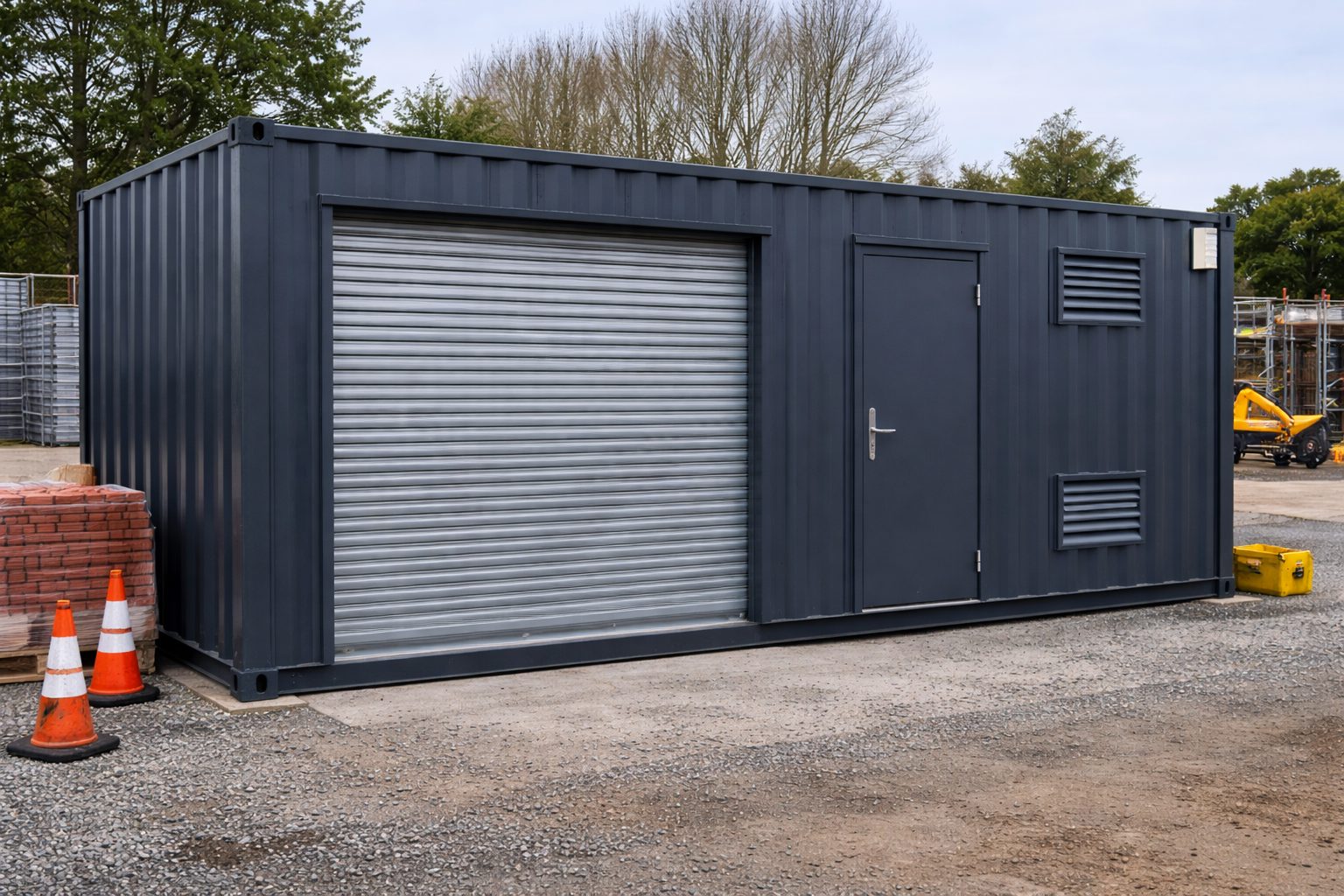
An insulated storage container is a secure container-based building upgraded with insulation, ventilation, access doors and practical fit-out options to protect tools, materials, stock or equipment more effectively than a basic unlined container. The main benefits are better condensation control, improved internal comfort, stronger protection for stored items, flexible relocation, fast installation, security and the option to combine storage with a small workshop, power supply, lighting, racking or branded exterior finish.
Who benefits most from an insulated storage container?
Insulated storage containers are useful when the contents being stored are valuable, moisture-sensitive, frequently accessed, security-sensitive or needed close to the point of work. They are especially useful when standard outdoor storage is too exposed but a full traditional storage building would be excessive.
ConstructionTools, equipment, site materials and secure compound storage
IndustrialParts, racking, light workshop use and operational stores
TradeJoinery, mechanical, electrical, hire, service and maintenance storage
CommercialOverflow stock, seasonal storage and secure back-of-house space
Main benefits of an insulated storage container
1. Better protection from condensation
Insulation and ventilation can help reduce the condensation problems commonly associated with unlined steel containers, especially where tools, packaging, timber, stock or equipment are stored for longer periods.
2. More stable internal conditions
Insulated lining helps reduce sharp internal temperature swings, making the container more suitable for regular daily access and more sensitive stored items.
3. Stronger security than light storage
Steel container construction, roller shutter options, personnel doors, lock upgrades, security bars, access control and alarm wiring can create a robust storage solution for busy sites.
4. Practical workshop and storage combination
A container can be configured as storage only, workshop only, or a combined workshop and secure store with lighting, sockets, racking, benching and separate access zones.
5. Fast deployment compared with traditional buildings
A converted container can usually be positioned on a prepared base faster than a traditional permanent store, subject to specification, availability, access and site conditions.
6. Relocatable asset
Containers can often be moved between sites when project needs change, making them useful for contractors, estates teams, industrial yards and growing businesses.
Insulated storage container decision table
The best specification depends on what you are storing, how often the container will be accessed and whether it will also be used as a workshop or operational base.
| Requirement | Recommended route | Why it helps | Quote detail to send |
|---|---|---|---|
| Basic tool and equipment storage | Insulated secure storage container with personnel door, roller shutter and ventilation. | Improves protection, access and internal conditions compared with a basic container. | Tool value, access frequency, preferred doors, security level and site photos. |
| Construction site store | Heavy-duty storage container with racking, lighting, lock upgrades and forklift/HIAB delivery planning. | Supports site operations while keeping high-value items secure and close to the work area. | Site postcode, access route, ground condition, plant movement and target date. |
| Workshop and storage combined | Partitioned workshop/storage container with electrics, ventilation, workbench and separate access zones. | Creates a usable work area while protecting parts, materials or tools in a secure section. | Equipment list, electrical load, floor finish, workbench needs and ventilation expectation. |
| Moisture-sensitive materials | Insulated container with ventilation strategy, lined walls and controlled internal fit-out. | Helps reduce damp-related issues when the contents are sensitive to moisture or temperature swings. | Stored material type, storage duration, ventilation needs and whether heating is required. |
| Hazardous, chemical or flammable storage | Specialist storage review before container specification. | Hazardous storage can require segregation, fire safety, ventilation, bunding, signage and specialist controls. | Safety data sheets, quantities, hazard classes, site risk assessment and competent adviser input. |
Standard container vs insulated storage container
A standard steel container can be useful for basic storage, but it is not always the right answer when contents are valuable, moisture-sensitive or frequently accessed. Insulation changes the internal environment and makes the unit more suitable for professional daily use.
| Feature | Standard storage container | Insulated storage container |
|---|---|---|
| Moisture and condensation | Can suffer from condensation if not ventilated or lined correctly. | Insulation and ventilation can help create a drier, more stable internal environment. |
| Daily use comfort | Can become very cold or hot depending on season and sun exposure. | More practical for regular access, maintenance work and workshop-style use. |
| Stored contents | Best for robust, low-sensitivity items. | Better for tools, equipment, parts, stock, packaging, timber, consumables and racked storage. |
| Fit-out potential | Usually basic: shell, lockbox and possibly shelving. | Can include lined walls, power, lighting, racking, workbench, roller shutter, ventilation and security upgrades. |
| Professional appearance | Functional but may look basic on customer-facing sites. | Can include RAL colour coating, signage, cladding or branded exterior finish. |
Specification options for an insulated storage container
The right specification should be matched to site use. Over-specifying wastes budget; under-specifying can create condensation, access, security or workflow problems.
Container size and layout
Common routes include 10ft, 20ft and 40ft container formats, with high-cube options where extra headroom is useful. A storage-only layout may be open-plan, while a workshop/storage container may need a partition, workbench area or small office zone.
Access doors
Storage users often need a roller shutter for larger items and a separate personnel door for safe daily access. Door position affects racking, shelving, internal workflow and how the container sits on site.
Insulation and internal lining
Insulated lining helps reduce internal temperature swings and supports better working/storage conditions. The exact build-up should be confirmed around use, budget, stored contents and required finish level.
Ventilation
Ventilation louvres, mechanical ventilation or more controlled air movement may be needed depending on stored contents, occupancy, workshop activity and moisture risk.
Power and lighting
Many storage containers benefit from LED lighting, sockets, external socket provision, industrial sockets, consumer unit, emergency lighting or data/security wiring. Electrical requirements should be declared before quote.
Flooring and racking
Workshop and industrial storage may need heavy-duty floor finishes, resin coating, rubber matting, racking, shelving or benching. Tell KC if forklifts, pallet trucks, free weights, machinery or heavy stock will be used.
Security upgrades
Security options can include stronger doors, anti-jemmy bars, roller shutter upgrades, access control wiring, CCTV points, alarm wiring and external lighting provisions.
Where insulated storage containers work well
| Sector | Typical use | Key design priority |
|---|---|---|
| Construction | Tool stores, materials stores, plant accessory stores and secure compound storage. | Security, site access, ventilation, racking, lighting and relocation potential. |
| Industrial and manufacturing | Parts storage, light assembly, maintenance stores and workshop support. | Power, floor finish, roller shutter, racking and workflow around yard operations. |
| Trade and service businesses | Joinery, mechanical, electrical, hire stock, tools and field service equipment. | Organisation, daily access, moisture control, security and branded exterior finish. |
| Agricultural and rural sites | Equipment, feed-related items, tools and maintenance stores. | Access, ventilation, security, weather exposure and specialist checks for chemicals or fuels. |
| Councils and estates teams | Operational stores, parks equipment, maintenance tools and seasonal materials. | Durability, access control, site location, appearance and long-term maintenance. |
| Events and commercial sites | Seasonal stock, staging equipment, pop-up operations and branded back-of-house stores. | Appearance, relocation, loading access, lighting and secure overnight storage. |
Planning, Building Regulations and safety checks
A storage container can look simple, but the approval position depends on where it is placed, how long it remains, what it is used for, whether it is connected to services, whether it changes land use and whether the local planning authority has specific requirements.
Planning permission and Building Regulations are separate matters. A temporary or relocatable unit does not automatically remove the need to check planning, building control, fire safety, electrical safety, drainage, access or site risk requirements.
Important safety note
Do not use a general insulated storage container for hazardous substances, flammable liquids, chemicals, fuels, gas cylinders, batteries or dangerous goods without specialist review. Those uses may require dedicated hazardous storage design, segregation, fire precautions, ventilation, signage, bunding, risk assessments and competent safety advice.
Common mistakes when buying an insulated storage container
- Choosing a basic container when the contents need moisture or temperature protection.
- Forgetting ventilation and then experiencing condensation problems.
- Ordering the wrong door arrangement for forklifts, pallet trucks or daily staff access.
- Underestimating the value of the stored contents and under-specifying security.
- Not checking whether planning permission, land-use change or landlord consent may apply.
- Leaving electrics, lighting, racking, shelving and heating until after the container is ordered.
- Not sending access photos, ground condition information or the proposed container position.
- Using a general store for hazardous or flammable goods without specialist design review.
Insulated storage container image gallery and SEO metadata
The images below are suitable for a Benefits category article about insulated storage containers, container workshop storage, secure site stores and practical container conversions.
Description: Suitable for construction sites, industrial yards, trade storage and workshop-storage layouts where secure access and ventilation matter.
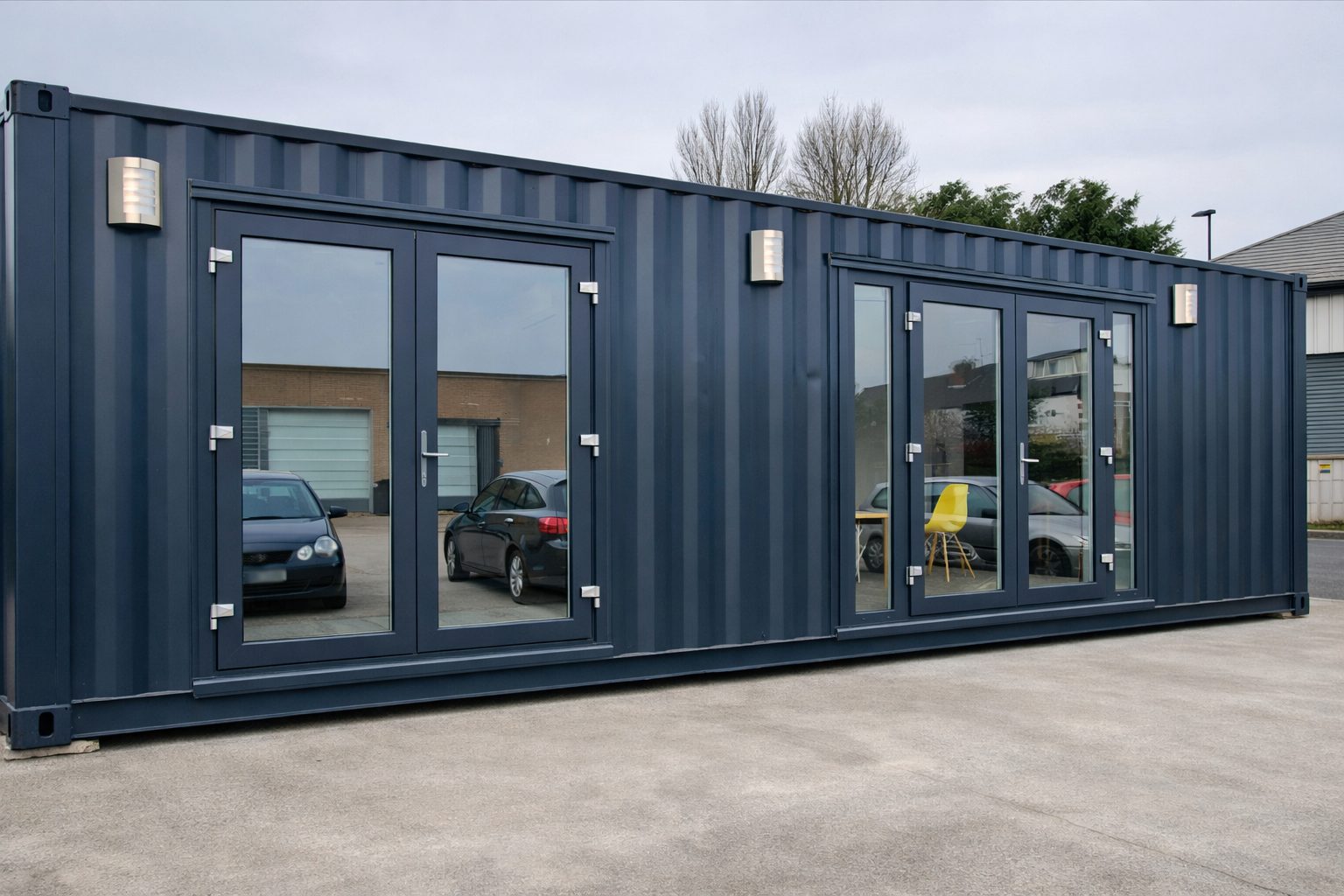
Description: Container conversions can be specified beyond basic storage, including insulated interiors, power, lighting and more professional site presentation.
What KC needs to quote an insulated storage container
To recommend the correct storage-container route, KC Cabins Solutions Ltd needs to understand the use, site, stored contents and required specification. The more detail you send at the start, the more useful the quote review will be.
- Site postcode and delivery location
- Intended use: storage only, workshop only, combined workshop/store, trade store, industrial store or site store
- Preferred size: 10ft, 20ft, 40ft, high-cube or linked container layout
- What will be stored, including approximate value, weight, moisture sensitivity and access frequency
- Whether any hazardous, flammable, chemical, fuel, battery or dangerous substances are involved
- Preferred access: roller shutter, personnel door, double doors, forklift access or pallet-truck route
- Internal fit-out: insulation, lining, ventilation, racking, shelving, workbench, floor finish and partitions
- Power requirements: lighting, sockets, industrial sockets, heating, external power, security system or data
- Security requirements: locks, bars, alarm wiring, CCTV points, access control or external lighting
- Photos of the site entrance, proposed location, ground condition and delivery route
- Whether planning, landlord, leasehold, highways, fire or insurance restrictions are already known
- Target delivery date and whether the unit is purchase, hire or hire-to-buy
Need insulated storage that works on a real site?
Send your site postcode, intended use, storage contents, access photos and preferred size. KC can review whether a basic store, insulated storage container, workshop/storage conversion or wider modular storage solution is the best route.
Helpful official and safety guidance
- GOV.UK: Building Regulations approval
- Planning Portal: Temporary buildings and planning permission
- Planning Portal: Planning permission and Building Regulations approval
- HSE: Warehousing and storage health and safety
- HSE: Storage of packaged dangerous substances
- HSE: Storage of flammable liquids in containers
Frequently asked questions
What is an insulated storage container?
An insulated storage container is a container-based storage unit upgraded with insulation, lining, ventilation and optional fit-out features such as lighting, sockets, racking, roller shutters and personnel doors. It is used where basic steel storage is not suitable enough for the contents, site or access pattern.
What are the main benefits of an insulated storage container?
The main benefits are improved condensation control, better internal conditions, stronger security, flexible relocation, faster deployment than many traditional storage buildings and the option to combine storage with a small workshop, power supply, racking or branded exterior finish.
Is an insulated container better than a standard storage container?
It depends on what you are storing. A standard container can be enough for robust low-sensitivity items. An insulated container is usually better where tools, equipment, parts, stock, packaging, timber or materials need better protection from condensation, temperature swings or frequent access.
Can an insulated storage container include power and lighting?
Yes. A storage container can be specified with LED lighting, sockets, external socket provision, consumer unit, industrial sockets, emergency lighting, security wiring and other electrical options. Electrical requirements should be declared before quote so the correct specification can be reviewed.
Can I use an insulated storage container as a workshop?
Yes, subject to specification. Workshop use may require additional ventilation, power, lighting, floor finish, workbench installation, racking, access planning and safety review. Tell KC what equipment and activity the workshop will support before quote.
Do insulated storage containers need planning permission?
Planning requirements depend on the site, duration, size, use, appearance, whether the container changes land use and the local planning authority position. Temporary or relocatable status does not automatically remove the need to check planning requirements.
Can insulated containers store chemicals or flammable liquids?
Only after specialist review. Hazardous substances, flammable liquids, fuels, gas cylinders, batteries and dangerous goods may require dedicated storage design, segregation, fire precautions, ventilation, signage, bunding, risk assessment and competent safety advice.
What should I send KC for an insulated storage container quote?
Send your postcode, intended use, preferred size, access photos, proposed location, what you will store, security needs, power requirements, door preference, ventilation needs, target date and whether you want purchase, hire or hire-to-buy.
Request an insulated storage container quote
KC Cabins Solutions Ltd supplies insulated storage containers and container workshop/storage conversions for construction, industrial, trade, agricultural, public sector and commercial sites across the UK.
Primary phone: 01782 561110
Mobile: 07443 564 451
Email: [email protected]
Website: www.kcmodularbuildings.co.uk
Scope boundary: This article is general buyer guidance only. It is not planning, Building Regulations, fire safety, hazardous-storage, insurance, structural, electrical or legal advice. Final suitability, specification, price, delivery method, foundation route, electrical works, storage safety, planning position, Building Regulations position and installation programme depend on the site, intended use, stored contents, hazards, ground conditions, access, utilities, local authority position, insurer and project-specific requirements. KC Cabins Solutions Ltd acts as modular building supplier and installation contractor only unless a wider scope is agreed in writing.