UK Guide • Updated for 2026 • Costs • Lead Times • Building Regs
Modular Buildings UK: Costs, Lead Times & Building Regs (2026 Guide)
If you’re comparing modular buildings in the UK for a site office, classroom, clinic or commercial space,
this guide covers realistic budget drivers, typical lead times, and what compliance really means — so you can buy with confidence.
Last updated:
•
Written by:KC Modular Buildings Team
This guide reflects real-world modular procurement considerations: specification, delivery constraints, and compliance routes vary by use-case.
Quick Summary (What Most Buyers Want to Know)
Cost: Modular pricing is driven mainly by size, spec, compliance, and fit-out — not just “£/m²”.
Lead time: Many projects deliver in weeks, but drawings, approvals, groundworks and utilities can add time.
Compliance: Energy, fire safety and accessibility requirements depend on the use-case and occupancy.
Best approach: Choose the right system (ISO frame vs bespoke modular) for your site, budget and lifespan goals.
Why Modular Buildings Are Growing in the UK
UK organisations choose modular to reduce disruption, speed up delivery and improve build consistency.
Most work is completed in a controlled factory environment — then installed on site with minimal downtime.
This makes modular a strong option for public sector and commercial buyers who need space quickly without compromising comfort, durability or finish.
ISO frame systems and bespoke modular buildings suit different budgets, sites and timelines.
What Are Modular Buildings (and How Do They Differ from Portable Cabins)?
A modular building is made from one or more factory-built modules transported to site and installed together.
Depending on the system, modular buildings can be single-storey or multi-storey and finished to a high standard.
Modular buildings vs portable cabins
Portable cabins are often single units used for welfare, offices or storage — fast and practical.
Modular buildings scale more easily (multiple modules), with more layout flexibility and higher spec options.
The right choice usually comes down to lifespan, compliance requirements and how permanent the building needs to feel.
Modular Buildings UK Cost: What You Should Budget For
The cost of modular buildings in the UK depends on size, structural system, insulation level, glazing, fire strategy,
M&E (electrics/heating/ventilation), and how complete the internal fit-out needs to be.
Typical budget ranges (guide only)
Use Case
Typical Spec Level
Budget Guidance
Site offices / welfare
Practical, durable, fast install
Entry to mid spec (project-dependent)
Education / classrooms
Higher insulation + acoustic considerations
Mid to higher spec (project-dependent)
Healthcare / clinics
Hygienic finishes, ventilation, compliance-led
Higher spec (project-dependent)
Commercial offices / sales suites
Design-led finishes, branding, comfort
Mid to higher spec (project-dependent)
Note: Costs vary based on scope (delivery, installation, groundworks, utilities, planning/compliance, external works).
The fastest way to get a precise budget is to price from a clear spec checklist.
Compliance depends on how the building will be used (office, education, healthcare, etc.).
Consider energy performance, fire safety and accessibility early — these can affect design, specification and cost.
Energy performance: insulation and airtightness expectations vary by project and use.
Fire safety: fire-rated options, doors and compartmentation may be required depending on occupancy and layout.
Accessibility: public-facing buildings may require accessible approach, doors, and facilities.
Electrics: UK-compliant installation and certification at handover.
Tell us your use-case and site details — we’ll advise the most suitable specification route.
Best Use Cases for Modular Buildings in the UK
Construction & civil: site offices, welfare units, meeting rooms and drying rooms.
Education: classrooms, staff rooms and specialist teaching spaces.
Healthcare: clinics, consultation rooms and treatment spaces.
Commercial: offices, sales suites, showrooms and project hubs.
Electrical certification and handover documentation
Delivery method, crane/lift requirements, and site access
Warranty, aftercare and response times
FAQs: Modular Buildings UK
Do modular buildings need planning permission in the UK?
Sometimes. It depends on location, intended use, and how long the building will be in place. Confirm with your local authority for your site.
Are modular buildings energy efficient?
They can be very efficient with modern insulation, quality glazing, and a well-designed heating/ventilation setup. Specification determines running costs.
How long do modular buildings last?
Lifespan depends on the structural system, environment and maintenance. Well-built modular buildings are designed for long-term use.
Can modular buildings be relocated?
Many systems can be moved or reconfigured, which helps growing sites and changing requirements.
Get a Fast Quote for Modular Buildings (UK)
Tell us your size, use-case and location — we’ll respond with a clear recommendation and budget guidance.
Garden Room FAQ UK: 50 Common Questions Answered (2025 Guide)
Thinking about adding a garden room to your UK property? You probably have dozens of questions about planning permission, costs, building regulations, installation and more.
In this comprehensive garden room FAQ, we answer the 50 most common questions we hear from UK homeowners, giving you all the information you need to make informed decisions about your garden room project in 2025.
Quick Navigation
Planning Permission & Legal Questions (Q1-8)
Cost & Finance Questions (Q9-13)
Design & Specification Questions (Q14-19)
Installation & Construction Questions (Q20-30)
Usage & Maintenance Questions (Q31-40)
Buying & Supplier Questions (Q41-50)
Planning Permission & Legal Questions
1. Do I need planning permission for a garden room in the UK?
Usually no. Most garden rooms fall under permitted development rights and don’t require planning permission if they meet these criteria:
Maximum 2.5m high (eaves) or 4m (ridge for dual-pitch roof)
Not forward of the principal elevation facing the road
Maximum 50% coverage of garden (including other outbuildings)
At least 2m from boundaries if over 2.5m high
Not used as primary living accommodation
Exceptions: Conservation areas, listed buildings, flats, and some restrictive covenants may require permission.
2. Do garden rooms need Building Regulations approval?
Sometimes. You may need Building Regulations approval for:
Recommendation: Consult Building Control early, even if you think you’re exempt.
3. How close to my boundary can I build a garden room?
Permitted development allows:
Buildings up to 2.5m high can be built on boundaries
Buildings 2.5m-4m high must be at least 2m from boundaries
Check your deeds for any restrictive covenants
Best practice: Leave at least 1m for maintenance access and good neighbour relations.
4. Can I use my garden room as a separate dwelling?
No. Garden rooms under permitted development cannot be used as independent dwellings. They must remain ancillary to the main house (no separate postal address, council tax, or utilities billing).
5. Do I need to tell my neighbours about my garden room?
Legally: Not usually, if it’s permitted development.
Recommended: Yes – good neighbour relations prevent complaints and potential planning disputes. Show them your plans and address any concerns early.
6. Will a garden room affect my home insurance?
Yes. You must inform your home insurer about any new structures. Most insurers will cover garden rooms under your existing policy, possibly with a small premium increase.
Check: Whether your policy covers the garden room structure, contents, and public liability.
7. Can I build a garden room in a conservation area?
More restrictions apply. In conservation areas:
Permitted development rights may be restricted
You likely need planning permission
Materials and design may need approval
Consult your local planning authority before proceeding
8. What about listed buildings?
Always need permission. Any alterations to listed buildings or within their curtilage require Listed Building Consent, even for garden rooms.
Photos don’t tell the full story – visiting a showroom reveals true quality.
43. What questions should I ask suppliers?
Essential questions:
“What’s included in the quoted price?”
“What are the wall, roof, and floor U-values?”
“What warranty do you offer and is it insurance-backed?”
“Can I visit a recent installation or showroom?”
“What’s the timeline from order to completion?”
“Do you handle Building Regulations and electrical certification?”
“What groundwork is required and who arranges it?”
“Can you provide recent customer references?”
44. How much deposit is normal?
Standard payment structures:
Deposit: 10-25% on order confirmation
Stage payment: 30-50% before/during manufacturing
Final payment: 25-40% on completion
Red flag: Requests for more than 25% upfront deposit or full payment before installation.
45. Should I get multiple quotes?
Yes, absolutely. Get at least 3 quotes to:
Compare specifications (not just prices)
Understand market rates
Identify what’s included vs extra
Assess different suppliers’ approaches
Negotiate better terms
Compare like-for-like: Ensure quotes cover identical specifications before comparing prices.
46. What’s the difference between cheap and expensive garden rooms?
Key differences:
Feature
Budget (£10-15k)
Premium (£25-40k)
Insulation
50-75mm basic
100-200mm KINGSPAN
Frame
Timber
Steel or engineered timber
Glazing
Double glazed uPVC
Triple glazed aluminium
Warranty
1-5 years
10-15 years
Year-round use
Limited
Full comfort
Lifespan
10-15 years
30-50+ years
47. Can I customise my garden room design?
Most reputable suppliers offer:
Bespoke sizing to fit your space
Window and door placement options
Cladding colour and material choices
Internal layout configuration
Electrical and heating specifications
Roofing style (flat, pitched, green roof)
KC Modular Buildings specialises in bespoke designs tailored to your exact requirements.
48. What’s the best time of year to buy?
Each season has advantages:
Spring/Summer: Peak season, longer lead times but ideal installation weather
Autumn: Good balance of availability and weather
Winter: Shorter lead times, potential discounts, but weather delays possible
Best strategy: Order in winter/spring for summer installation, or autumn for winter completion.
49. Do garden room companies offer design services?
Most professional companies include:
Free initial design consultation
Site survey and feasibility assessment
2D floor plans and elevations
Material and finish recommendations
Premium services may offer:
3D visualisations and renders
Interior design guidance
Landscape integration planning
50. What happens if I’m not satisfied with my garden room?
Reputable suppliers should:
Conduct thorough handover inspection
Address snagging issues promptly
Provide clear warranty claim process
Respond to concerns within 48 hours
Offer remedial work if needed
Protection: Ensure contract includes clear dispute resolution procedures and warranty terms.
KC Modular Buildings commitment: We don’t consider the job complete until you’re 100% satisfied.
Still Have Questions About Garden Rooms?
Our expert team at KC Modular Buildings is here to answer all your garden room questions. Get in touch for a free, no-obligation consultation and discover how we can create the perfect garden room for your UK property.
Modular vs Traditional Construction: Cost Comparison & ROI Analysis
The modular vs traditional construction debate is heating up in 2025. As UK businesses face rising costs, labour shortages, and tight timelines, modular buildings offer a compelling alternative. But how much cheaper is modular construction really? And is it as durable as traditional builds?
This comprehensive guide compares modular and traditional construction costs, timelines, and quality standards using real 2025 data. You'll discover how modular buildings can save 7–36% on project costs while cutting construction time by 12–35 weeks.
The Cost Myth: Why Modular Seems Expensive (But Isn't)
Many UK businesses assume modular buildings cost more than traditional construction. This misconception stems from higher upfront factory costs and premium manufacturing standards.
However, when you factor in the total cost of ownership—including labour, materials, weather delays, change orders, and financing—modular buildings typically cost 7–36% less than traditional construction.
💡 Key Insight: A 50ft × 28ft modular office costs £126,750 vs £138,000–£199,800 for traditional construction. That's a saving of £11,250–£73,050 before accounting for faster occupancy and reduced financing costs.
Real Numbers: Modular vs Traditional Construction (2025)
Let's break down the actual costs for a typical commercial project:
Cost Category
Modular Building
Traditional Construction
Saving
Design & Approval
£8,000
£12,000
£4,000
Manufacturing/Build
£85,000
£95,000
£10,000
Labour Costs
£18,000
£35,000
£17,000
Materials & Waste
£12,000
£28,000
£16,000
Weather Delays & Overruns
£0
£18,000
£18,000
Change Orders & Rework
£3,750 (3%)
£11,250 (9%)
£7,500
Total Project Cost
£126,750
£199,250
£72,500 (36%)
Source: KC Modular Buildings real project data, 2025. Costs vary by location, size, and complexity.
Where Modular Wins on Cost (5 Key Areas)
1. Labour Efficiency Savings
Modular buildings are 90% factory-completed, dramatically reducing on-site labour. Factory workers are more productive than site teams, and there's no weather downtime. This cuts labour costs by 40–50% compared to traditional construction.
2. Material Waste Reduction
Traditional construction generates 30–50% material waste. Modular manufacturing uses precision cutting and recycling systems, reducing waste to just 5–10%. This saves money and aligns with sustainability goals.
3. No Weather Delays
UK weather is unpredictable. Rain, snow, and frost can halt traditional construction for weeks. Modular buildings are manufactured indoors, eliminating weather delays and keeping projects on schedule.
4. Predictable Pricing & No Change Orders
Modular projects have fixed pricing agreed upfront. Traditional construction often sees 8–15% cost overruns due to design changes, site conditions, and unforeseen issues. Modular eliminates this uncertainty.
5. Faster Occupancy = Faster ROI
Modular buildings are ready 12–35 weeks faster. For commercial projects, this means faster revenue generation, lower financing costs, and quicker return on investment.
Timeline Comparison: Modular vs Traditional Construction
The speed advantage of modular construction becomes crystal clear when you compare week-by-week progress. Here's how the two approaches diverge:
Weeks 1–3: Design & Approval
Modular design is fast-tracked and standardised. Traditional design requires lengthy consultations, planning permission applications, and structural engineering reviews.
Weeks 4–11: Manufacturing
Modular units are manufactured in parallel in our UK factory. Traditional construction is still waiting for planning permission and site preparation.
Weeks 5–16: Planning Permission
Modular manufacturing continues while traditional projects face bureaucratic delays. Many modular buildings qualify for permitted development, skipping planning entirely.
Weeks 12–13: Delivery & Installation
Modular units are delivered and installed. Traditional construction is just beginning site preparation and foundation work.
Weeks 14–17: Handover
Modular buildings are nearly complete and ready for handover. Traditional construction is mid-foundation stage.
Weeks 17–20: Site Prep & Foundations
Modular buildings are operational and generating revenue. Traditional construction is still excavating and pouring foundations.
Weeks 21–36: Construction Phase
Modular buildings are fully operational. Traditional construction is in the structural frame-up phase—15+ weeks behind.
Weeks 37–42: Trades & Systems
Modular buildings are months ahead. Traditional construction is installing MEP (mechanical, electrical, plumbing) systems.
Weeks 43–46: Finishing & Snagging
Modular buildings are months ahead of schedule. Traditional construction is in final finishing stages.
Weeks 47–52+: Delays & Overruns
Modular projects are complete and proven. Traditional construction faces weather delays, labour shortages, and potential overruns.
Final Comparison: The Speed Advantage
The stark contrast is clear: modular construction delivers 12–35 weeks faster than traditional methods. This timeline advantage translates directly into cost savings, faster revenue generation, and reduced financing costs.
When Traditional Construction Costs Less
While modular wins in most scenarios, traditional construction can be more cost-effective in specific situations:
Highly customised buildings with bespoke architectural designs
Very large projects (10,000+ m²) where site labour becomes cheaper
Existing site infrastructure that can be leveraged
Projects with unlimited budgets where speed isn't a priority
For most UK businesses—especially those needing fast, predictable, energy-efficient buildings—modular construction delivers superior value.
Hidden Costs of Traditional Construction
Traditional construction often hides costs that aren't immediately obvious:
❌ Traditional Hidden Costs
Weather delays (£2,000–£5,000/week)
Labour shortages & wage inflation
Design changes (8–15% cost overruns)
Material price fluctuations
Site contamination & unforeseen issues
Extended financing costs
Defect rectification (snagging)
✅ Modular Transparency
Fixed pricing agreed upfront
No weather delays
Predictable timelines
Quality guaranteed by ISO standards
Factory-controlled manufacturing
Minimal financing period
15-year structural warranty
Traditional projects typically experience £24,000–£78,000 in hidden costs (17–39% of budget). Modular eliminates most of these.
Quality Comparison: Modular vs Traditional
Does modular construction compromise on quality? Absolutely not. In fact, modular buildings often exceed traditional construction standards:
Quality Metric
Modular Buildings
Traditional Construction
Structural Lifespan
50–75 years
50–100 years
Warranty Period
15 years structural + 2 years defects
10 years NHBC (varies)
Energy Efficiency
A-rated, U-value 0.11–0.18 W/m²K
B–D rated, U-value 0.20–0.35 W/m²K
Air Permeability
1.57 m³/(h.m²) (excellent)
5–8 m³/(h.m²) (typical)
Quality Control
ISO 9001, 1090, 3834 certified
Variable (site-dependent)
Defect Rate
<2% (factory precision)
5–10% (site variability)
Fire Safety
EN 13501-1 B-s2, d0 compliant
Building Regulations compliant
Modular buildings are manufactured in controlled factory environments with ISO certification, resulting in superior quality and fewer defects than site-built construction.
Modular buildings also generate faster ROI due to earlier occupancy. A commercial modular office can start generating revenue 12–35 weeks earlier, translating to additional income of £40,000–£150,000+ depending on rental rates.
When to Choose Modular vs Traditional
Choose Modular If You Need:
✅ Fast delivery (weeks, not months)
✅ Predictable costs and fixed pricing
✅ Energy-efficient, modern buildings
✅ Minimal on-site disruption
✅ Quality assurance and ISO certification
✅ Flexibility to relocate or expand
✅ Lower total cost of ownership
✅ Sustainable, low-waste construction
Choose Traditional If You Need:
❌ Highly bespoke, one-off architectural designs
❌ Very large projects (10,000+ m²)
❌ Complex site conditions requiring custom solutions
❌ Unlimited budget with no timeline pressure
Industry-Specific Cost Comparisons
Modular Offices vs Traditional Offices
For commercial offices, modular wins decisively. A 50ft × 28ft modular office (1,400 m²) costs £126,750 vs £199,250 traditional—a 36% saving. Plus, modular offices are ready 17 weeks faster, allowing businesses to occupy and generate revenue sooner.
Modular Classrooms vs Traditional Schools
Educational institutions benefit hugely from modular classrooms. A modular classroom block (500 m²) costs £45,000–£65,000 vs £75,000–£95,000 traditional. Schools can expand capacity without lengthy construction disrupting students. Plus, modular buildings meet all DfE (Department for Education) standards and accessibility requirements.
Modular Healthcare vs Traditional Clinics
Healthcare facilities need rapid deployment. Modular medical clinics cost 20–30% less than traditional builds and are ready in 12–16 weeks. They feature hygienic GEBERIT sanitary systems, soundproofing, and medical-grade finishes—perfect for NHS contractors and private clinics.
Modular Welfare Units vs Traditional Site Facilities
Construction contractors rely on welfare units. Modular welfare units (6m × 3m) cost £18,000–£24,000 vs £28,000–£35,000 traditional. They're DfE-compliant, stackable up to 3 storeys, and ready to deploy immediately on-site.
Real Project Example: Pendell Camp Utility Blocks
Here's a real-world case study demonstrating modular advantages:
Project: Pendell Camp Utility Blocks (Surrey County Council)
Requirement: 4 modular utility blocks, 7.25m × 3.45m each, with sedum roofs, triple-glazed UPVC windows, and accessibility compliance (Part M, Category 2)
Q: How much cheaper is modular construction than traditional?
Modular buildings typically cost 7–36% less than traditional construction when accounting for faster delivery, eliminated change orders, and lower maintenance. A 50ft × 28ft office costs £126,750 modular vs £138,000–£199,800 traditional.
Q: How long does modular construction take?
Total timeline is 11–17 weeks (design, manufacturing, delivery, installation). Traditional construction takes 29–46 weeks or longer, depending on planning permission and site conditions.
Q: Are modular buildings as durable as traditional?
Yes. Modular buildings have a 50–75 year structural lifespan with 15-year warranties. ISO 9001, 1090, and 3834 certification ensures consistent quality and superior defect control compared to site-built construction.
Q: What are the hidden costs of traditional construction?
Site conditions, design changes, labour shortages, weather delays, rework, and financing costs typically add £24,000–£78,000 (17–39% of budget). Modular construction eliminates most of these through fixed pricing and factory control.
Q: Can modular buildings be customised?
Yes, but extensive customisation can increase costs and timelines. Standard modular designs offer best value; bespoke designs work better with traditional construction. KC Modular Buildings offers flexible layouts (6×3m to 12×6m) and customisation options.
Q: Are modular buildings energy-efficient?
Yes. Modular buildings are A-rated with U-values of 0.11–0.18 W/m²K, triple-glazed windows, and air permeability of 1.57 m³/(h.m²). They exceed Part L 2021 Building Regulations and feature SCOP 4.5 air-to-air heat pump systems.
Q: What certifications do modular buildings have?
KC Modular Buildings holds ISO 9001 (Quality), ISO 1090 & 3834 (Steel & Welding), ISO 14001 (Environmental), ISO 27001 (Information Security), and is UKAS accredited as a Type C inspection body. All buildings meet Building Regulations, fire safety, and accessibility standards.
Q: Can modular buildings be relocated?
Yes. Modular buildings are designed for flexibility. Units can be relocated, reconfigured, or expanded to accommodate changing business needs. This makes them ideal for growing companies and temporary facilities.
Final Verdict: Modular vs Traditional Construction
For most UK businesses in 2025, modular construction is the clear winner.
Here's why:
Cost: 7–36% cheaper when accounting for total cost of ownership
Speed: 12–35 weeks faster delivery
Quality: ISO-certified manufacturing with superior defect control
Predictability: Fixed pricing, no change orders, no weather delays
Sustainability: 90% less waste, A-rated energy efficiency
Whether you're a commercial developer, construction contractor, educational institution, or healthcare provider, modular buildings deliver superior value, speed, and quality compared to traditional construction.
The question isn't whether modular construction is good enough—it's whether you can afford to wait for traditional construction.
Ready to Explore Modular Solutions?
Get a free cost comparison and timeline estimate for your project. Our experts will show you exactly how much you can save with modular construction.
Category: Modular Construction, Cost Comparison, Building Solutions
All costs and timelines are based on 2025 market data and real KC Modular Buildings projects. Prices vary by location, size, and complexity. Contact our team for a personalised quote.
Industry Standards & Resources
Our modular buildings comply with the latest UK construction standards and regulations. Here are the key industry resources and certifications that ensure quality and compliance:
Imagine this: You’re settled into your cozy flat, indulging in your favorite book or swaying to some tunes, when inspiration strikes – “I need more space!” But fear not, because embracing modular living means you don’t have to drown in mortgage paperwork or dust-ridden renovations. Instead, you simply snap on another module, much like a life-sized LEGO set! 🏡✨
This is not just a whimsical idea; it’s a reality with modular homes. The flexibility and adaptability of modular construction let you craft your dream home, piece by piece. Whether you’re a minimalist or a burgeoning family, modular homes offer the perfect solution to accommodate your evolving lifestyle.
With KC Cabins Solutions Ltd, you can watch your home grow, expand, and transform, without the traditional constraints of conventional building. This innovative approach to housing truly lets you design a life that fits you.
Experience the playful innovation of modular homes designed like interlocking LEGO blocks, creating a vibrant and dynamic neighborhood.
Remember the joy of building LEGO houses as a child? Now, imagine doing that with your own living space! The beauty of modular homes lies in their ability to expand and adapt effortlessly. Like those beloved LEGO blocks, you can add, remove, or reconfigure modules to meet your needs.
Think of it: starting with a snug bed-sit flat, you can easily transition to a spacious abode as life milestones—like weddings and children—come your way. It’s like playing The Sims in real life, except this time, the building blocks are real, and the possibilities are endless.
Modular homes are not only fun to assemble but also incredibly practical. They allow you to bypass the lengthy, often stressful process of traditional home buying or building. With the ability to customize your home, you can create a space that truly reflects your personality and lifestyle.
Discover the advantages of modular living with sleek, energy-efficient homes that make smart living a reality.
In today’s fast-paced world, flexibility is key. Modular homes offer that flexibility, making them a smart choice for modern living. Not only can you build your dream home at your own pace, but you can also do so without breaking the bank.
Financially savvy individuals recognize that their money is better spent on assets that grow with them. Modular homes provide an affordable, customizable solution that avoids the pitfalls of long-term loans and mortgages. Why let your money gather dust in a savings account when it can be invested in a home that evolves with your needs?
Moreover, modular homes are designed with energy efficiency in mind. At KC Cabins Solutions Ltd, each module is crafted to meet high standards of sustainability, ensuring your home is both eco-friendly and economical.
Experience the thrill of rapid modular assembly, where efficiency and teamwork come together to create innovative structures.
One of the standout benefits of modular living is the speed of assembly. Traditional home construction can leave you crashing at your in-laws’ place for months on end. But with modular homes, delivery and assembly can take as little as one day!
Imagine the thrill of seeing your new home come to life almost instantly. Whether you’re upgrading your current space or building anew, the quick turnaround means less time waiting and more time enjoying your new environment.
And here’s the kicker: you can opt for fully furnished modules, so you’re ready to live comfortably from day one. Say goodbye to the hassle of moving furniture and settling in; with modular homes, everything is set up for you.
Embrace the flexibility of modular homes designed to grow and adapt with your changing needs.
One of the most exciting aspects of modular homes is the customization options available. Whether you’re looking for bespoke dimensions, unique internal finishes, or external cladding that stands out, you can tailor your home to suit your specific tastes and needs.
As your life evolves, so can your home. Need an extra bedroom for a growing family? Simply add a module. Want a home office or a studio? There’s a module for that too. It’s the ultimate in personalized living, allowing you to create a space that’s as unique as you are.
At KC Cabins Solutions Ltd, we offer a range of customizable options, ensuring that every module is designed to seamlessly integrate with your existing space. This adaptability is what makes modular living so appealing.
Discover the beauty of sustainable modular design with eco-friendly features that harmonize with nature.
In an age where sustainability is paramount, modular homes offer an eco-friendly alternative to traditional housing. Each module is designed with energy efficiency in mind, incorporating features like high-performance insulation and sustainable materials.
The environmental benefits of modular homes are numerous. They reduce waste, minimize energy consumption, and are built using sustainable practices. This not only benefits the planet but also translates to cost savings for homeowners.
By choosing a modular home, you’re making a conscious decision to reduce your carbon footprint while enjoying all the comforts of modern living. It’s a win-win situation that aligns with the values of today’s environmentally conscious consumers.
Explore the adaptability of modular homes, offering diverse styles and configurations to suit any lifestyle.
Versatility is at the heart of modular living. Whether you’re looking for a temporary structure or a permanent residence, modular homes offer a solution that can be tailored to your specific needs.
From garden rooms and storage tents to bespoke modular buildings, the options are endless. This versatility extends beyond residential use; modular construction is ideal for commercial applications as well, offering businesses a flexible, cost-effective solution for expanding operations.
With a range of products available, KC Cabins Solutions Ltd caters to a diverse clientele, ensuring that every customer finds the perfect modular solution for their needs.
Join the vibrant community of modular enthusiasts, where diverse designs and shared passions create a lively atmosphere.
The modular home movement is more than just a trend; it’s a community of like-minded individuals who value flexibility, sustainability, and innovation in their living spaces. By choosing modular living, you’re joining a network of homeowners who appreciate the freedom to design their homes without limitations.
This community is growing, as more people recognize the benefits of modular construction. Sharing experiences, tips, and inspiration, modular enthusiasts encourage one another to push the boundaries of what’s possible in home design.
At KC Cabins Solutions Ltd, we’re proud to be part of this vibrant community, offering our expertise and support to those looking to embrace modular living.
Dive into the world of modular living, where modern interiors and inviting spaces offer a firsthand experience like no other.
Curious to see the magic of modular living in action? We invite you to explore our showroom, where you can experience the quality and craftsmanship of our modular solutions firsthand.
Our knowledgeable team is on hand to guide you through the process, answering any questions you may have about customization, energy efficiency, or the assembly process. We’re here to help you bring your dream home to life, one module at a time.
Whether you’re ready to make the leap into modular living or simply exploring your options, we’re excited to show you what’s possible with our innovative approach to home design.
Embark on the journey to your dream home, where every step brings you closer to a beautiful modular living experience.
Building your dream home doesn’t have to be a daunting task. With modular living, it’s as simple as planning your ideal space and watching it come to life, much like building with LEGO blocks.
At KC Cabins Solutions Ltd, we’re committed to helping you every step of the way. From initial consultation to final assembly, our team is dedicated to ensuring your experience is seamless and enjoyable.
So why wait? Take the first step toward your dream home today. Reach out for more information, or visit our showroom to see how modular living can transform your space and your lifestyle.
Custom Temporary Buildings: As Quick to Assemble as Popping Popcorn!
Introduction
Picture this: you’re sipping your morning coffee, dreaming about extra space for your booming business. Suddenly, a lightbulb moment! Why not consider bespoke temporary buildings that can be slapped together faster than you can say “modular marvels”? Whether you need a short-term solution or a long-term lair, these adaptable structures are here to save the day—and your budget!
Who says you can’t have quality and speed? These modular buildings are like the fast food of the construction world—except way healthier for your bottom line. Need a sales suite for your latest construction project? No problem! These structures can be assembled quicker than you can navigate through a drive-thru menu.
Even better, they cut through the typical construction delays like a hot knife through butter. No more waiting around for weeks on end—your temporary building could be up and operational in no time, leaving you to focus on what really matters: running your business.
Forget about cookie-cutter solutions. With bespoke temporary buildings, customization is as easy as pie! Want a quirky color or a unique layout? You got it! These buildings are as flexible as a yoga instructor, bending to your specific needs without breaking the bank.
You can have your cake and eat it too with a design that reflects your brand’s identity while staying within budget. Who knew being unique could be so affordable?
These temporary titans are not just about looks and speed; they’re also eco-friendly champs. With energy-efficient designs, you’ll be saving the planet while saving space. It’s like getting a gold star for being a responsible adult—pat yourself on the back!
You’ll find features like optimal insulation, smart energy usage, and sustainable materials. Mother Earth will be smiling as you enjoy your energy-efficient, cost-saving structure.
Whether you need a temporary office, storage space, or a pop-up gallery, these buildings have got you covered. They’re like the Swiss Army knife of structures—versatile, reliable, and always ready for an adventure.
Need to move it? No problem! These buildings can easily be disassembled and transported to a new location, making them a perfect fit for businesses on the move.
These buildings are full of surprises—like finding a $20 bill in an old pair of jeans. Need a quick fix? They’re low-maintenance and easy to repair, ensuring you have minimal downtime. And with a lifespan that rivals your grandma’s antique furniture, these structures are built to last.
Q: How fast can these buildings be constructed?
A: Faster than a cat can knock over a glass of water! With efficient planning and execution, most projects can be completed in a matter of weeks.
Q: Are these buildings environmentally friendly?
A: Absolutely! With energy-efficient designs and sustainable materials, these buildings are as green as a four-leaf clover.
Q: Can I customize the design?
A: Yes, indeed! From quirky colors to unique layouts, customization options are plentiful and affordable.
Q: What if I need to relocate the building later?
A: No worries! These structures are designed for easy disassembly and relocation, making them perfect for businesses on the move.
Conclusion
So, what are you waiting for? Dive into the world of bespoke temporary buildings and watch your space problems disappear faster than your leftover cake at an office party. Ready to transform your space? Give us a call today and let’s build something amazing together!
Reach out now and let’s get your dream space up and running in record time. Because why wait when you can have it all today? Let’s make your space dreams come true with a quick fix that’s as fun to build as it is functional!
Connect with Us on Social Media
Stay updated with the latest from KC Modular Buildings by following us on social media. Join our community to explore innovative modular designs, get exclusive promotions, and see how our products are transforming spaces.
Love our products? Share your experience with your network! Use the share buttons below to spread the word about our portable cabin offices and inspire others to transform their spaces.
Don’t miss out on exciting updates and new product launches. Follow us on social media and be part of our growing community of satisfied customers and industry enthusiasts.
In today’s rapidly changing world, sustainability and energy efficiency have become top priorities in the construction industry. Modular buildings are emerging as a leading solution, offering significant advantages over traditional construction methods. But what makes them stand out? Let’s explore how modular buildings are paving the way for a more sustainable and energy-efficient future.
Reduced Waste: Modular construction significantly minimizes waste. Since components are prefabricated in a controlled factory environment, excess materials are reused, and precise cutting reduces waste.
Eco-Friendly Materials: Many modular buildings use sustainable materials that are both durable and environmentally friendly, reducing the carbon footprint.
Efficient Use of Resources: The factory setting allows for better resource management, leading to less energy consumption during the construction process.
Superior Insulation: Modular buildings often feature advanced insulation techniques, leading to better thermal performance and reduced energy costs for heating and cooling.
Innovative Design: The design flexibility of modular buildings allows for the integration of energy-efficient technologies, such as solar panels and energy-efficient HVAC systems.
Sealed Construction: The precision of factory-built modules ensures tighter construction, reducing air leaks and improving energy efficiency.
Time Efficiency: Modular construction can be completed up to 50% faster than traditional methods, reducing the energy used on-site.
Quality Control: The controlled environment of modular construction ensures consistent quality and adherence to energy-efficient standards, unlike the variability often seen in on-site construction.
Adaptability: Modular buildings can be easily modified, relocated, or expanded, allowing for long-term energy savings and reduced resource consumption.
Commitment to Sustainability: At KC Modular Buildings, we prioritize eco-friendly practices and energy-efficient solutions in all our projects.
Customer Success Stories: Share testimonials from clients who have benefited from the sustainable and energy-efficient features of your modular buildings.
Conclusion
As the demand for sustainable and energy-efficient solutions continues to grow, . With their reduced environmental impact, superior energy performance, and flexibility, they represent the future of construction. At KC Modular Buildings, we are proud to be at the forefront of this movement, providing innovative and sustainable solutions for our clients.
Call to Action
Interested in learning more about how modular buildings can benefit your next project? Contact us today to explore our range of sustainable and energy-efficient solutions.
Modular construction is poised to revolutionize the construction industry, offering numerous advantages that make it a compelling choice for the future. Here’s why:
Efficiency and Speed:
Controlled Factory Environment: Modular units are built in controlled factory settings, minimizing weather-related delays and ensuring consistent quality.
Parallel Construction: Off-site construction and on-site assembly can occur simultaneously, significantly reducing project timelines.
Cost-Effectiveness:
Reduced Labor Costs: Factory-based construction requires fewer on-site workers, leading to lower labor costs.
Material Efficiency: Precision manufacturing minimizes material waste, contributing to cost savings.
Predictable Scheduling: Controlled environments and standardized processes lead to more predictable project timelines and costs.
Quality Control:
Consistent Quality: Factory settings allow for rigorous quality control and standardized building practices.
Reduced Defects: Controlled conditions and advanced manufacturing techniques minimize errors and defects.
Sustainability:
Reduced Waste: Precise manufacturing and efficient material usage minimize construction waste.
Energy Efficiency: Modular buildings can be designed with energy-efficient features and materials.
Reduced Environmental Impact: Less on-site construction activity leads to lower carbon emissions and reduced disturbance to the surrounding environment.
Flexibility and Design:
Customization: Modular units can be customized to meet specific design requirements and preferences.
Rapid Deployment: Modular buildings can be quickly assembled and disassembled, making them ideal for temporary or relocatable structures.
Safety:
Controlled Environment: Factory-based construction reduces exposure to hazardous conditions and accidents.
Standardized Safety Protocols: Controlled environments allow for strict adherence to safety regulations and procedures.
While modular construction is gaining momentum, it’s important to note that it may not be suitable for all projects. Factors such as project scale, local regulations, and specific design requirements should be considered. However, as technology continues to advance and the industry gains experience, modular construction is likely to become an increasingly viable and attractive option for a wide range of building projects.
Thanks to the implementation of a range of modern thermal insulation solutions, the house is cost-effective in operation and environmentally friendly.
ECO timber-frame house is equipped with underfloor heating, a recuperation system, air conditioning with heating, wi-fi controls in each room, electric external blinds, and mosquito nets.
Holiday parks are increasingly looking to invest in smaller, luxury lodges to attract more discerning guests and adapt to the evolving market demands.
Here are five reasons why holiday parks should consider acquiring smaller luxury lodges instead of lower-specification options in 2024:
Targeting a Wealthy buyer clientele:
Luxury lodges appeal to a growing segment of Affluent voyagers willing to pay more for a premium experience.
These guests generally look for elegant and cozy accommodations that offer top-notch amenities and services..
Luxury lodges offer a more intimate and personalized experience, which these consciousness seekers favour.
Enhancing Occupancy Rates:
Smaller lodges can be leveraged more effectively, resulting in increased occupancy rates and improved revenue potential.
They take up less space and can be arranged closer together, making it possible to accommodate more guests in a smaller area.
Furthermore, smaller lodges can be rented out more conveniently on a nightly or weekly basis, contributing to revenue maximization.
Minimizing Maintenance Expenses:
With a reduced footprint, our lodges demand less maintenance and repair work, leading to substantial cost savings for holiday parks, where maintenance typically constitutes a significant expense.
Adjusting to Evolving Trends:
The holiday industry is perpetually changing, with travelers becoming more discerning regarding their accommodation choices.
Luxury lodges are ideally suited to adapt to these evolving trends, providing a chic and contemporary alternative to conventional park home lodges.
Environmental Advantages:
Smaller lodges have a reduced environmental impact when compared to their larger counterparts.
They need less energy for heating and cooling while generating less waste.
Additionally, they can be produced more rapidly and have a lower carbon footprint due to decreased labor and transportation requirements, which further diminishes their environmental impact.
Additional Factors to Keep in Mind:
The Emergence of Glamping:
Luxury mini-lodges are a perfect fit for the glamping trend, which combines the adventure of camping with high-end accommodations. This trend has surged in popularity as travelers seek distinctive and thrilling vacation experiences that include top-notch interiors, state-of-the-art smart technology, and a range of amenities designed for discerning guests.
The Growing Popularity of Staycations:
The COVID-19 pandemic during 2020 and 2021 led to a significant increase in the desire for staycations, as travelers looked for alternatives to overseas trips. Luxury mini-lodges emerged as a convenient and safe option, allowing individuals to enjoy a holiday at home while still experiencing comfort and top-notch amenities.
While larger holiday lodges still hold a position in the market, they are increasingly perceived as outdated and less attractive to many prospective customers. The demand for smaller, more luxurious lodges is anticipated to keep rising in the years ahead.
In conclusion, there are many persuasive reasons for holiday parks to invest in smaller, luxury mini-lodges. These lodges can draw in more selective guests, optimize occupancy rates, reduce maintenance expenses, adjust to evolving trends, and offer environmental advantages.
One of the many frequent questions we get from our clients is in regards to the practicality of the size of our buildings. What is the best size, most economical solution, the best way of assembling modules together, etc? We, therefore, sometimes advise on changes to the building dimensions and/or changes to the floor plan. This is in order to help our clients to undertake more economical decisions regarding building purchase.
We, therefore, decided to shed some light on the idea of connecting modules together. In order to find the simplest possible way of describing the process, we are showing the building assembly in pictures. The example shown is a laboratory, one of our orders in the UK.
In the building industry, you grow every step of the way. The more you learn the better your knowledge and service. Specially designed building joints, a result of many years of tests and gathering experience are in use here. The steel structure is connected together. Wall panels are connected to the structure with the use of specialist construction screws. In order to strengthen the connection and in order to protect the building from damage resulting from meteorological conditions we also use a professional sealant. Sealants are particularly important to use when joining the roof. Additionally, to protect the roof, we use a membrane. This gives an additional water protection layer.
Assembling modules together is often surprising to our clients from an aesthetical point of view. Visually, the neat connection, of assembled modules, is hard to detect. You may have been wondering as to the technicality of the process and the general idea of how it’s made.
It’s not that complicated when you think about it. As you can see, the general idea is simple. It is perfecting the methods in use that is important knowledge. Connection areas which could potentially be visible are hidden with the use of decorative panels, resulting with an aesthetically pleasing contemporary look. Years of practice is letting us deepen the technical knowledge which in return help us to give you a better service and a better product.
Purchasing new portable building will involve dealing with the subject of building control. The subject which may seem daunting at first. After all, a new built is an exciting endeavour and it would be lovely to focus on designing and planning the aesthetical and practical side of a new office/shop/reception area etc. Planning all the fun features is generally preferable pursuit. However, other than fun, with the new building appear certain new responsibilities. We hope to convince you that with the right approach, the subject of building control does not need to be daunting.
There are two
main aspects you need to be aware of regarding building control. First one is the
knowledge on where to find a building control team. The second one is the
knowledge on what the main job of building control is.
You can deal with finding building control team in three different ways. First option is to enquire at your local council. They can provide a building control team for you. Second option would be to use private building control team’s services. Finally, when purchasing a building from us, there is the third option. Because we cooperate with local private building control company, we can provide building control services for you. This option is most frequently chosen by our clients.
Once the choice of building control team is sorted, the rest is quite easy. The rest is mainly to follow the building control team’s advice.
Building control team’s job is focused on safety. The team works in three steps, checking the plans of the building prior assembly followed by physically checking the building after assembly and finally certifying building as safe to use.
In order to make sure that building complies with building regulations, building control team will advise on changes to the building in order to improve its safety. Their inspections are including subjects of fireproofing, fire escapes, ventilation, regulations regarding toilets and more. The requirements are set for particular structures and plenty will depend on the type of building you choose as well as location of the building. First of all, it is important to know how large the structure will be, the distance to other buildings and what will be the use of the new building. Customers coming inside the building as well as number of people working in the building on a daily basis are important factors as well. Building control team needs to determine which requirements need to be met for each building.
Right at the start of the ordering process, we make sure to ask our clients many important questions in regards to the building. This is in order to minimize additional costs and changes. Some of the most important questions are regarding building location and its use. As discussed above, we need to know what is the area around the building as well as the exact building positioning. Modular buildings can be moved to a different location and yet there are certain aspects of building architecture which may need to be adjusted or changed in certain areas. There may be the need for additional fireproofing or additional structural changes, depending on the building use and its location. We will need to take it into consideration whether additional safety requirements are to be dealt with.
Building control team will advise on the requirements. Prior building assembly the team will advise looking at the building plans. After the building assembly, building control team will visit the building site and advise whether the requirements have been met. At this point, the team may still advise on small additions to be added to the building, items such as mirrors in the toilets, glass manifestation etc., depending on the building. Items such as these can be added after the building assembly.
Finally, building control team certifies the building as safe to use under UK standards.
As you can see, the subject of building control doesn’t need to be daunting. You will have the assistance of our team and/or building control team’s through the whole process. If you feel that you would like to know more, we advise you to read through building regulation requirements or inquire at building control office.
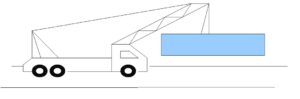
In order to unload your newly purchased modular building, we will require a crane. There are generally two crane types which we recommend using. It’s either the HiAb crane or a static crane.
The following link will take you to a video showing an example of unloading one of our modular buildings. In the video, our crew is unloading the building with the use of a HiAb crane https://www.youtube.com/watch?v=zKLDKpIYg-4
During the process of unloading, the building is lifted as a whole and set in the correct position. If the building is large, it will consists of more parts. Each part of the building is then lifted separately, placed next to one another and joined together by our crew. We recommend using a HiAb crane over other types because HiAb is most convenient to use as well as its a cost-effective option.
Prior to the building assembly you will be sent some information, particularly regarding the weight of your modular building. This is in order to help you choose which type of crane is required. We will always advise further if needed.
Unloading of one of our modular buildings
As you can see at the photo above, during unloading, a crane is equipped with a hoist lifting belt and a spread beam. These are used together in order to lift and unload a modular building. Spread beam can be supplied by the crane company or by us in some cases. Spread beam we provide, can be used in order to lift the building depending on its weight. This beam can be used up to a maximum of 4000 kg load. If the maximum load is higher, the modular building must be unloaded with the use of a crane company’s spread beam.
Other than the need for a HiAb crane, sometimes, there may be need for a static crane use instead. Most often, static crane is required in places with difficult access. Static crane may also be needed if the building is particularly heavy or large. When it comes to the process of unloading, static crane, similar to a HiAb, is equipped with a hoist lifting belt and a spread beam in order to unload a modular building. The price of a static crane use is in fact higher in comparison to a HiAb. If situation requires it though, the use of a static crane may be unavoidable.
We hope that today we brought to you the process of unloading and assembling modular building a little bit closer.
The final option of modular building foundation which we will be discussing today is a plastic building base. It is a less popular option for the building foundation and it is often referred to as a summer house base or a shed base.
Its use is less popular but there are advantages to using it and this is why we would like to discuss it as an option. The reason why plastic building base is a less popular choice in comparison to other building foundation methods is mainly the fact that it is more suitable to use under very small buildings.
The local authority control team will advise if the surface present is suitable for construction. In comparison with traditional structures, portable buildings are less invasive which equals with less hassle in terms of planning permission. Preassessment of groundwater and soil may still in some cases be required. It is detrimental to know the type of ground surface you are planning to build on. Consequently, the first advice we give when it comes to the use of plastic building base is to check if the surface present is suitable. The better your knowledge concerning existent surface the better the chance of undertaking the right decision regarding the type of foundation.
Any potential groundwater issues need to be taken into consideration and addressed if needed. In regards to plastic building base, a correct drainage may help with water reduction in contact with the building. Plastic building base can be filled with pea gravel in order to produce a French drain which redirects water from the area. There are plenty of other solutions as well.
We always stress about the ground level. Plastic building base, as any other foundation, needs to be in level in order to avoid deterioration of the building. If the foundation is not level, parts of the buildings such as door and window frames may go out of alignment. This could then lead to issues with opening and closing windows and doors. It could also lead to leakages inside the building.
Plastic building base is often advertised as suitable to use under summerhouses, garden playhouses, bike stores, pavilions and more. We usually recommend it under smaller buildings. You can find this type of base as parking grids as well. Often present by recreation grounds, playgrounds and more. It is used to reinforce car park ground surface in order to make it easier to manage and care for the parking grounds.
When the ground surface is reinforced there will be less danger of potential issues caused by harsh weather conditions through the year, particularly by rainfalls.
Finally, plastic building base is often advertised as an eco-friendly solution. This is often based on its production process being focused on the use of recycled plastic. We recommend for everyone who considers any type of foundation to look into it more and ask questions. That way, you will find the right type of foundation which is suitable to your needs.
We have been discussing some of the foundation types suitable for the portable building. Today we would like to inspire with possibilities of extending design of the building into an innovative finish of the exterior space focusing on the foundation. No matter what type of foundation you decide to choose, there are different finishes you can try in order to upgrade the design of the building to your needs.
Examples above are showing three main types of foundation most frequently chosen by our clients – concrete slab, concrete blocks, and jackpads/easypads. Aesthetically, the concrete slab will give you more finishing options, while the latter two will look similar to each other, in terms of leaving empty gaps under the building, hence will require other methods and materials in order to cover those gaps. Various types of cladding, with their numerous designs, include; ceramic tiles, bricks, and clinker bricks, stone, wood, and metal. An option of using flowers and plants is an additional excellent strategy to upgrade your building’s design. Below you may find examples of different cladding types.
PORCELAIN AND CERAMIC TILES
Tiles can be used successfully as a concrete slab finish. Tile designs range from traditional through natural looking to technologically advanced, clean and modern designs. Porcelain and ceramic are diverse materials which can be molded into varied shapes. Colors of ceramic dye, as well as methods of painting ceramics, are extremely diverse. Because color and shape of the tile can vary greatly it makes tiles an exciting method of foundation finish. If you are feeling adventurous, why not ask an experienced designer or artist to design an innovative, one-off series of tiles, designed just for your building.
BRICKS AND CLINKER BRICKS
Other than given examples here, bricks are also presented on the picture of a concrete slab foundation example at the top of this article. It is a choice often made by our clients as a foundation finish which makes bricks the most popular option for the foundation design. There is a variety of different colors and sizes of bricks you can choose from as well as the option of going for clinker bricks. If you want to go for the simplicity of bricks, it is a quick decision leaving you with a simple choice of color and size. Clinker bricks present us with a greater diversity of designs. If you are feeling adventurous and you will decide on the use of clinker bricks, you can choose from within varied styles retaining some of the visual aesthetic of a brick at the same time.
STONE
Stone is a type of material considered to be timeless and elegant. Concrete slab foundation is suitable for the use of stone. Variety of colors and sizes of stones makes it exciting material to go for as a foundation finish. Stone is a natural material as well and it comes in many forms. Being natural material makes stone unique. The form of a stone will need a skilled hand to lay it out. It is, therefore, one of the most expensive materials out of those we discuss. If you are going for the simplicity and elegance, the stone is a material to go for.
WOOD
Wooden cladding can be a powerful material choice, in terms of its possibilities. It can be used for all; concrete slab, concrete blocks and jackpads/easypads foundation finish. The versatility of shapes wood can be formed into opens up many solutions for us. Forms, sizes, and shades of wood can be used as modern, innovative designs as well as natural, rustic, unrefined styles.
It is worth considering the building surroundings in order to decide whether we use wood as an extension of the natural landscape neighboring the building or if we decide to use wood as an innovative contrast to the metal cladding of the building design. Wood may prove to be the option just right for us.
METAL
Metal cladding is one of the most if not the most diverse option to choose as a foundation finish. We can use metal cladding to cover all of the different foundation types discussed above. Design options of metal cladding are vast and could possibly give you the most contemporary finish. Aesthetically, metal cladding could serve as a solid extension of the design of a portable building already present. Portable building cladding is made of galvanized steel. Metal cladding foundation finish could also be treated as a separate external architectural element and an upgrade to current architecture of the building. Metal is associated with technology. In order to decide on the type of metal cladding, we need to look closely at colors and shapes already present within the building architecture design. If we strive for the unique finish, we may want to consider to ask an experienced designer or an architect for advice.
FLOWERS AND PLANTS
Flowers and plants can also be used as a finish to all the above foundation types. There are numerous planter designs which could be positioned on the outside of the building as a decorative and functional architectural element. We could also incorporate plants within building architecture by constructing additional fixture for plants onto building cladding. Plants can be used not only in planters, pots and on walls themselves. Plants can be planted straight into the ground and through this create an extension of the landscape surrounding the building. We will be discussing separately the subject of plants in another article.
All the methods discussed above can be mixed and matched together, depending on your needs. As an example, we can imagine mixing metal cladding with plants. There is also a possibility of extending present metal cladding with the mixture of metal and wood. Options are multiplied by the number of designs in each type of cladding material section.
As discussed in previous articles, there are several ways of preparing the ground under a modular building. Out of the list of four, concrete base and concrete blocks have already been discussed. We are left with the last two, which are as follows; jakpads/easypads and plastic building base (often referred to as a summer house base or shed base).
Our focus goes to jackpads/easypads for the current article. Let us start by clarifying that jackpads and easypads are almost identical products made by different brands. In our opinion, both are ok to use. We do not tend to advise on brands but rather on product types. Jackpads/easypads are ready to use when bought off the shelf, similar to concrete blocks in this sense.
During the process of designing a modular building for a client, we discuss various options for ground preparation choice under a building and it is up to our client to choose his/her preference. When it comes to the use of jackpads/easypads, ground surface already present needs to be firm, so that there is no probability of a building settlement. In most cases the surface present is concrete. Jackpads/easypads layout is prepared by an architect and a client is provided with the layout drawings in order to prepare the surface prior to modular building arrival.
Some of our clients are not keen on using jackpads/easypads because of aesthetic reasons. Jackpads/easypads are similar in use to concrete blocks, leaving us with much the same aesthetic outcome. This means empty gaps under the building, as you may see on the photos of examples provided. If a client sees those gaps as an issue, it could be resolved with the use of metal cladding. We will discuss more options for upgrading the aesthetics of the modular building foundation in another article.
An additional advantage of jackpads/easypads use is the possibility of combining them together with a concrete slab. It is particularly useful if there is a need for access ramp construction and/or the outside staircase. Jackpads/easypads are therefore one of the most flexible and convenient ways of preparing the surface under a modular building.
Possible options as a ground base preparation under a modular building are as follows;
– concrete base
– concrete blocks
– jackpads/easypads
– plastic building base (often referred to as a summer house base or shed base)
We discussed concrete base as a ground base preparation option in one of our recent articles. Today we will be discussing concrete blocks. The main advantage of concrete blocks over the concrete base is the fact that they are ready to buy and use off-the-shelf. It means that you don’t need to worry about extensive preparation and drying process.
Our team will advise whether concrete blocks are sufficient to use as a ground base under our building. Our architect assesses the size of the building and gives advice on the type of foundation needed. As part of planning permission process, the local council will advise whetherthe ground surface present is suitable for construction. The nature of our buildings is not permanent but portable which means that in most cases there is no need for additional ground surface tests.
Important information you need to know about concrete blocks is how to lay them down. This will be drawn out by our architect during the designing process. A contractor can then lay downconcrete blocks for you. If you have some experience with this type of work, you could potentially lay them downyourself.A level of concrete blocks is most crucial and will be checked by our team prior to modular building assembly so that it can be slightly adjusted if needed.
When concrete blocks are in use though, you are left with empty spaces under the building. Some clients are not keen on an overall aesthetical look of the building exterior when they are left with those empty spaces within the foundation of the building. For every problem, there is a solution though. You can get rid of those empty spaces. The simplest way to do that is with the use of cladding, particularly metal cladding. Another option could be with the use of plants. In a separate article, we will be discussing more extensively some of the possibilities of making the exterior of the building look more appealing.
With one click, you can find all about our previous realizations and see what we have been up to till now. We would like to share it with you. In order to see our map of realizations, you could simply click here http://efektmaps.com/ or alternatively while visiting our website ( https://kcmodularbuildings.co.uk/ ) open “Realizations” tab.
After opening map of our previous orders, you can view them collectively or separately. When you hover over a realization marked on the map, you will be able to find out details on the location of the cabins. You are also able to get an idea of what type of business, a particular cabin was used for, as well as some information on the clients. Each realization is accompanied by a photo of the cabin which can hopefully give you an idea of the design options. You can clearly distinguish what type of designs different clients settle on. This means that if you are thinking of ordering a cabin from us, our realizations could hopefully serve as a spark for your idea of the design to consider. It is worth remembering that options are many and design is your decision driven by your requirements. We adjust design to your needs. There are certain preferences and classical choices within certain groups of clients which may at times seem similar. If you take a closer look, your imagination into possibilities will open up. Have a look at examples of our orders in Germany, which are variable. Have a look at our clients in the UK which you can locate and see in real life if you wish. Have a look at other locations as well to get an idea where we’ve been. Most importantly though, with our help, you will hopefully be inspired to create your own perfect design of a modular building.
There is a site preparation requirement prior delivery of a modular building. This requirement is ground base preparation. The purpose of this is mainly to level the ground/surface present. During the process of ordering and designing a building, we advise each client on the subject of ground base preparation. The client decides on the type of base he/she wants to choose so that architect can advise on what is needed. Depending on the size and the type of the building chosen, we will always advise on the options. There are different types of ground base preparation under construction of a modular building. We would like to discuss some of the most popular choices among our clients as well as discuss our own preferences;
– concrete base
– concrete blocks
– jackpads/easypads
– plastic building base (often referred to as summer house base or shed base)
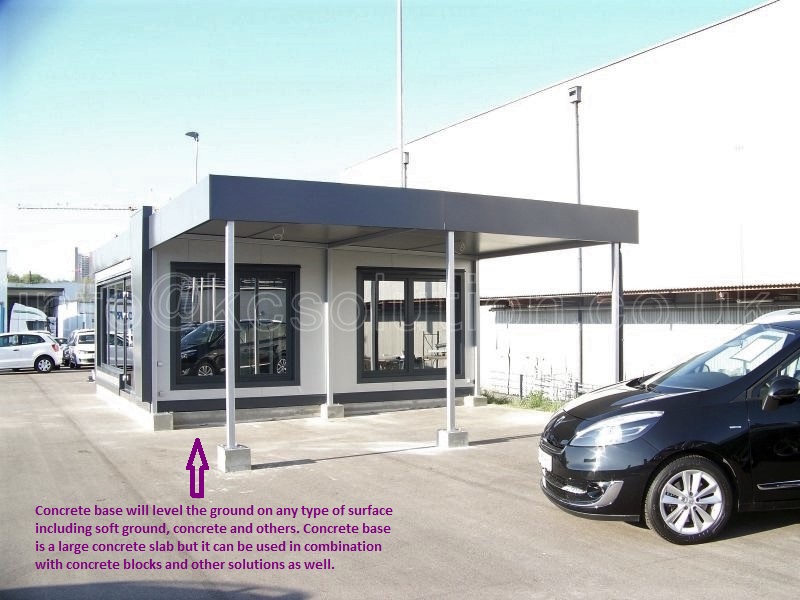
Today, we will talk about concrete base which can be used as a ground base preparation under our portable cabins. The concrete base is our favorite choice of ground base preparation and we often recommend it to our clients. The main reason for that is the reliability of concrete base. We need to remember that weight of an empty building is spread out evenly at first, but as soon as we put furniture in, some areas within the building interior will be holding more weight and naturally putting more stress onto the foundation. This is completely natural but if for any reason, the foundation is not leveled properly, we may start noticing problems such as difficulties with shutting windows and doors. Particularly if the construction is to be undertaken on a soft ground, large slab of concrete base will prevent building foundation settlement on any of the sides resulting in preventing mentioned problems. If prepared in the right manner, the conrete base is a very stable and safe ground. When the ground base is looked at, discussed with our architect and prepared in the right manner, all potential problems with building settlement will be avoided.
Our architect will advise not only on the size and depth of the concrete slab needed but also on the class of the concrete to be used. Our client can then choose a local contractor to prepare ground base under the building and after that, we can deliver our portable building on site.
It is important to remember that you need to allow extra time for preparation of a concrete base. A contractor will use reinforcing metal mesh to hold the concrete together and then pour the concrete in, leveling the ground. Concrete will then start drying. Not only the job itself takes time but drying takes time as well, depending on the size of the building. A typical concrete base will dry for about two weeks but as already mentioned, a drying process is dependent on different factors. Particularly when low temperatures are present, we may be forced to wait longer.
There is another reason why our clients often choose concrete base instead of other ground base preparation options. While some may say concrete is not an aesthetically appealing material, when using it as your base you will not have to worry about gaps left under the structure.
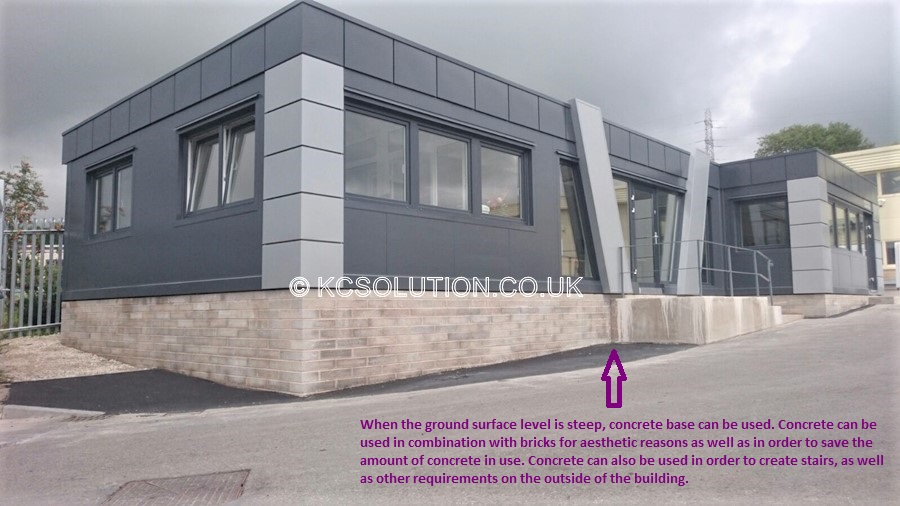
If required there is also a possibility to construct concrete base together with concrete stairs and/or disable ramp. Other design ideas and requirements on the outside of the building can also be fulfilled with the use of concrete slabs if needed.
A concrete base may seem slightly more difficult in terms of preparation when compared to other available ground base preparation methods. It is definitely more time-consuming. When prepared in the right manner though, a concrete base is a safe, long-term ground base solution. It allows you to design outside of the building as you may require and it may even turn out to be irreplaceable at times.
Even though a concrete base is a versatile and safe option it is of course not the only option and there are many who will want to fight against it. We will, therefore, be discussing other ground base preparation options in future articles.
Today, we would like to invite you to look around our office. Many clients ask us about our location because they would like to visit and talk about the possible purchase of a cabin.
While considering to buy a portable cabin, first thing clients often would like to know is what are their options. This means seeing what our cabins look like. Visiting our website is the quickest way to see examples of cabins we provide. Often the next step for a client is to see one of our cabins in reality. Our office often serves as a quick example of one of the cabins of our design simply because its easy for clients to access and possible to have a proper look around. We hope that viewing our office through google maps is a good way to give you a glimpse of the real 3D experience of our cabins before you even come here. Looking around our office through google maps, we hope, is beneficial to your idea of what to expect. It can serve as a preview before meeting with us.
Alternatively, you can open google maps and type in the search box “KC Cabins Solutions”, which will provide you with our address, telephone and an option to look around the office. Click on the first photo featured, below the address line, and have a browse.
Do not hesitate, give us a call and meet us in person. In the meantime, you can look around our office virtually. When you come over, we will explain how it’s been made and answer any questions you may have. After listening to your needs and expectations, we can create our proposed design. During your visit here, you will be able to look around in real life and consider any more possible questions regarding our portable cabins.
Starting from the process of decision making through manufacturing and finally constructing the building, here’s a quick overview of the construction process of a modular building which comes alive in few quick and simple steps.
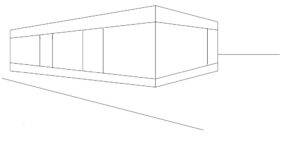
1. After discussing your needs for a modular structure with our team, it is agreed what will be the chosen design of the building. Decisions are being made in regards to chosen color, shape and size as well as any additional requirements of the space, such as toilet, kitchenette, canopy and more. Ready designs may be chosen from our website and discussed with each client on a case to case basis. A client can also present us with his idea of the space by producing a quick handmade sketch and we will advise on what we can offer. To make sure the chosen building is designed to match your needs it is crucial that we are informed of all the requirements during this process.
2. All individual modules are then manufactured under factory conditions. Once modules are pre-engineered, the building is ready to be transported.
3. Modules are then transported from the factory site to the building site by a lorry.
4. Once delivered modules can be put in place. Decisions on how modules are put together are dependent on the required size of the structure. Modules are positioned either end to end (creating longer structures) or side by side (creating wider structures). It gives many possible options to our clients. A modular building may be constructed from as little as one module (which will mean it will be relatively small) and up to as many modules as needed (creating larger structure).
5. Modules are placed in position with the use of a mobile crane or hi-ab. The construction period is much shorter than in case of traditional structures. Once crane positioned individual modules in place our crew will make sure all the modules are joined together in a safe way. The building crew will also finish off by fulfilling any additional requests form our client.
6. Examples of additional jobs could be installing a toilet, kitchenette, canopy or floor panels. Those jobs are done on site. After that, the building is ready to be taken over by our client.
If you’re considering installing a modular building, either on a temporary or permanent basis, then why not see whether a secondhand modular building can provide what you need? As the UK’s leading supplier of new and used modular buildings, we can think of many reasons why opting for a secondhand building may be better for you and your business.
Here are some of the benefits of taking the secondhand option.
Cost Effective
Given the laws of supply and demand, you may think that the secondhand modular buildings market may be no cheaper than the new buildings market. However, this is not generally the case, and significant savings are often available in choosing a refurbished rather than a new building.
A Focus on Sustainability
The green buzzword shouts ever more loudly in the ears of businesses nowadays. If you work in a larger company, it’s becoming increasingly standard to see the words ‘reduce, reuse, recycle’ in an ever broader company policy. As the procurement manager, if you can save money and improve your division’s green credentials within the company, it has to be a win-win situation.
Fully Kitted Out
A new modular building involves a substantial initial cost and, once you add in the interior furnishings, security provisions and facilities, the price really begins to stack up. However, if you choose a refurbished, fully furnished secondhand modular building – where any damaged items have been replaced prior to sale – you can make huge savings on all those little extras.

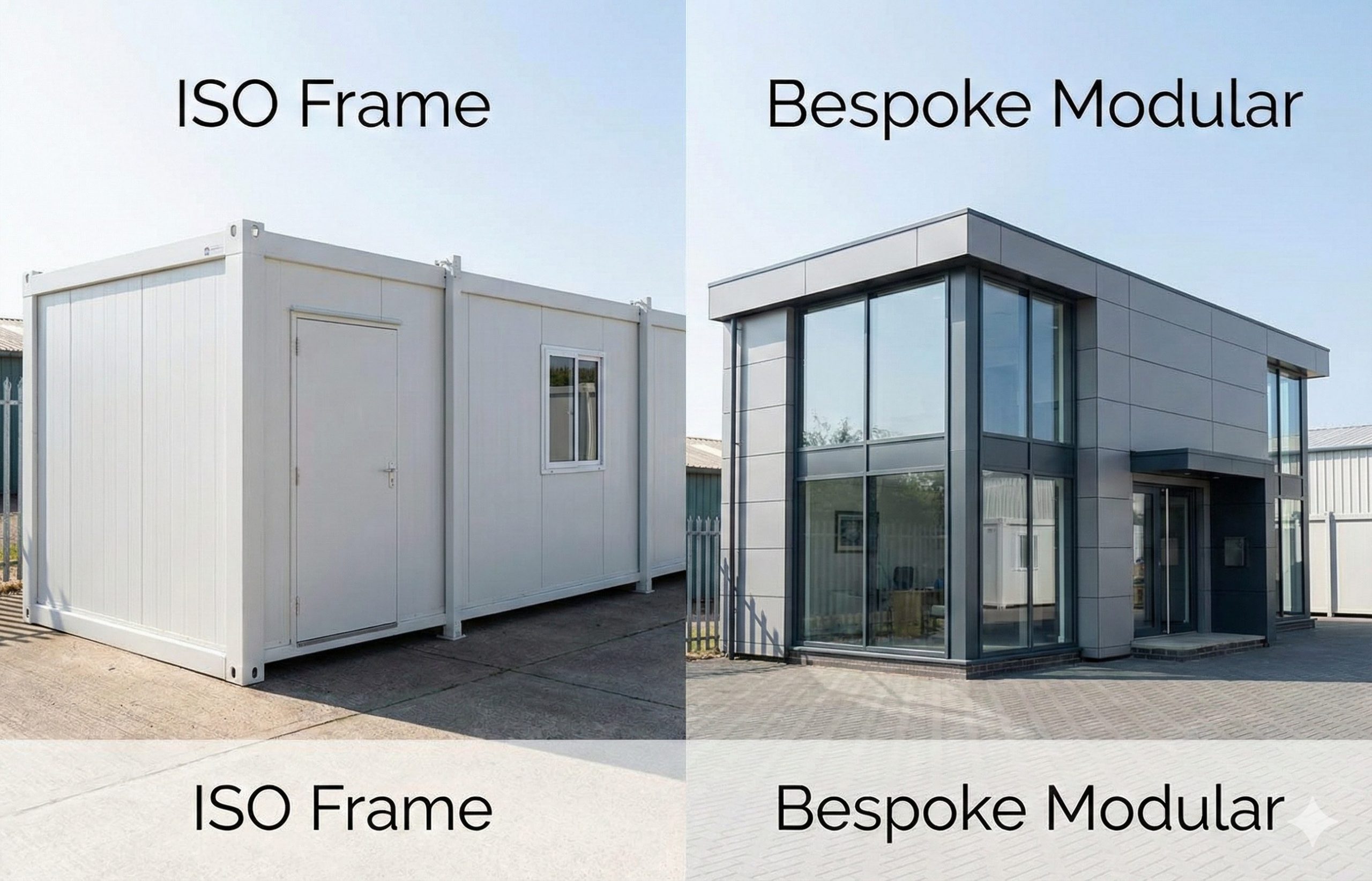
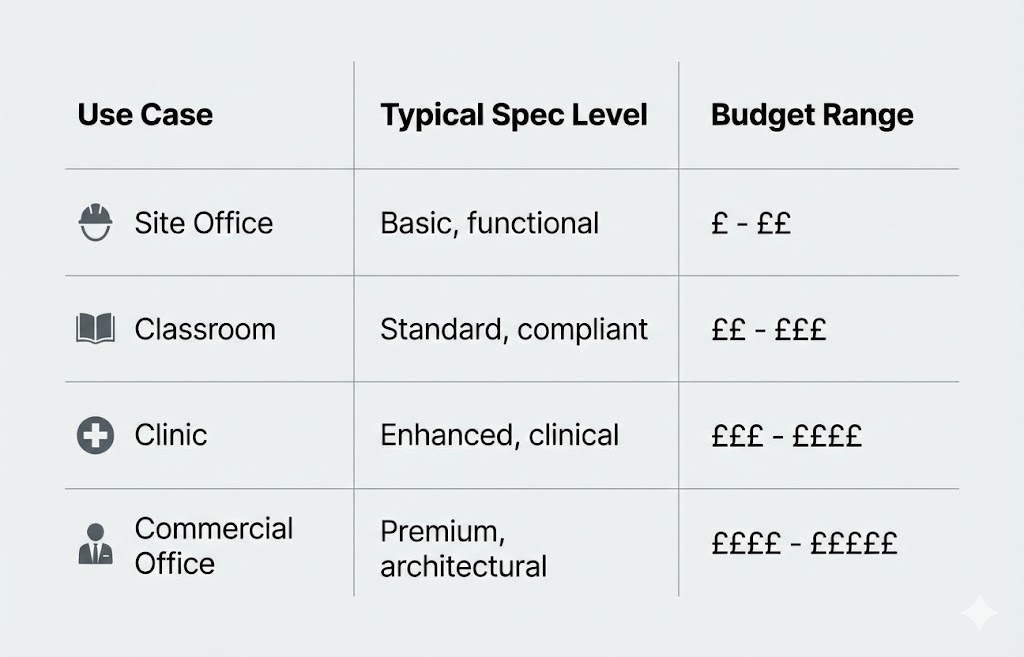
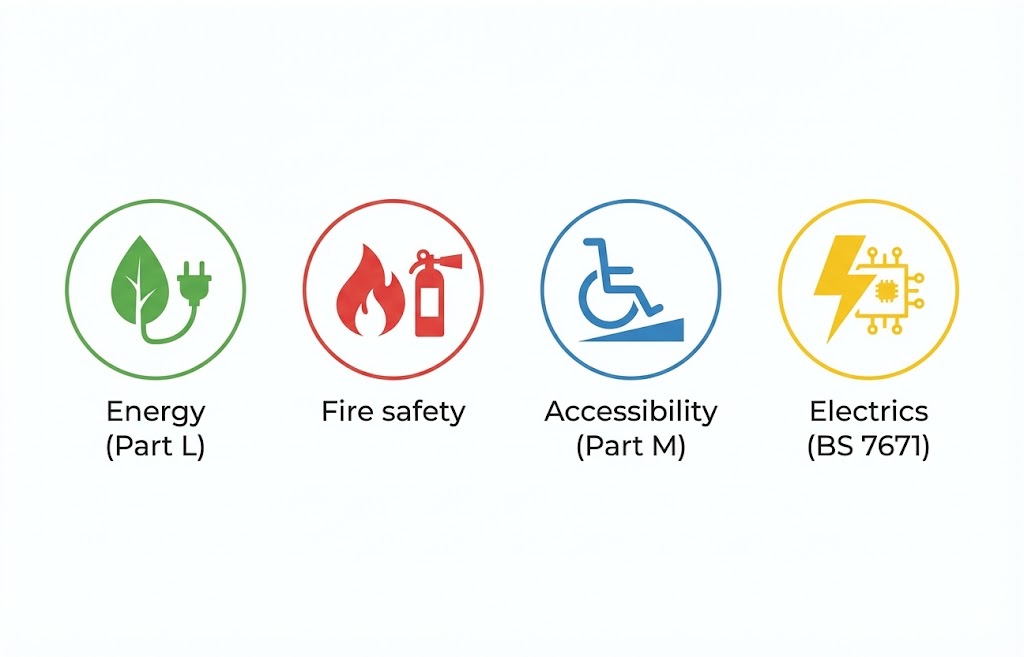
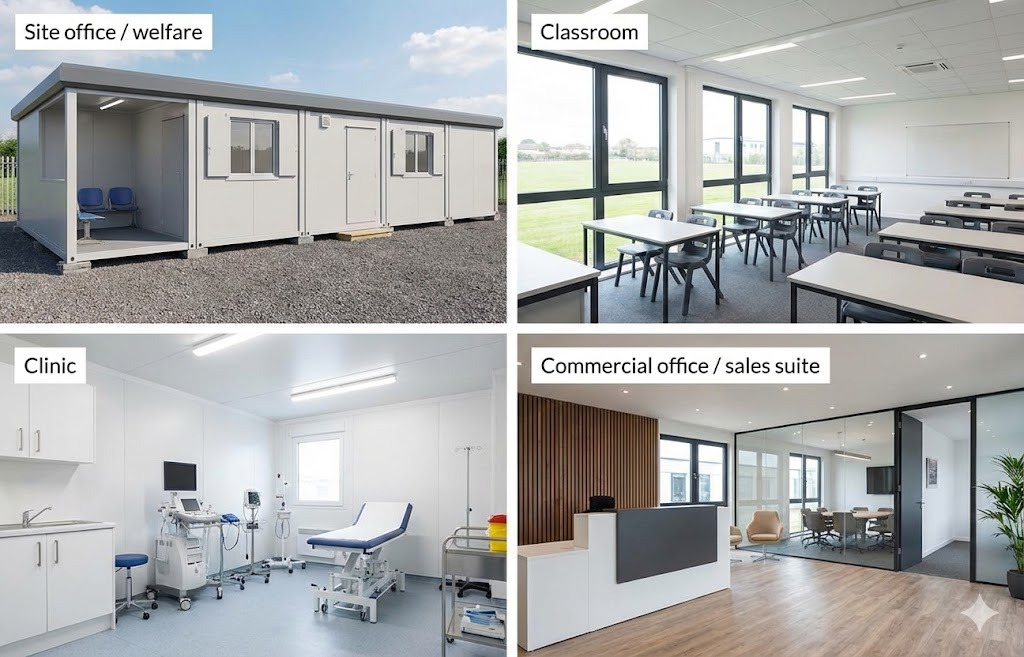


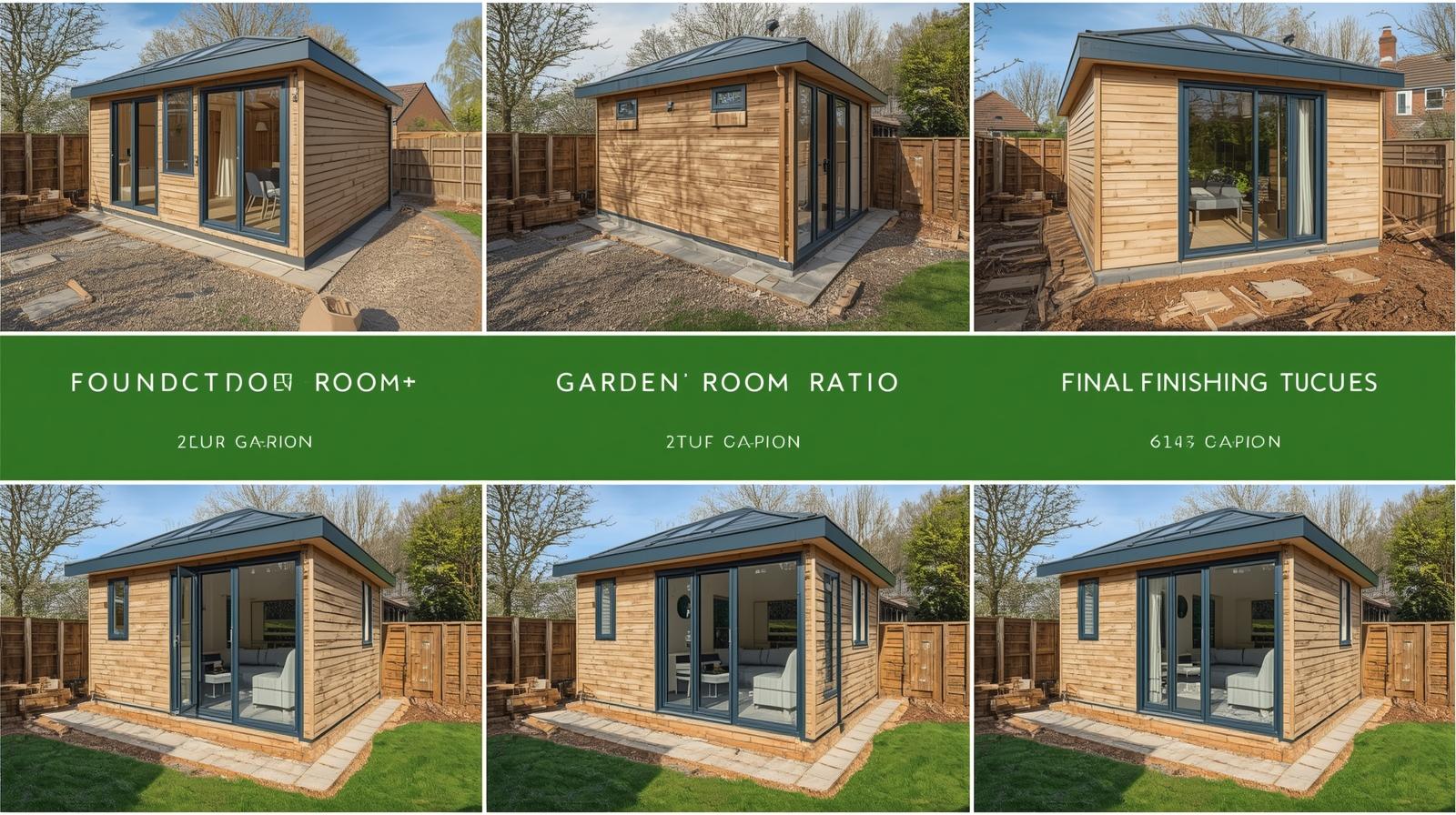
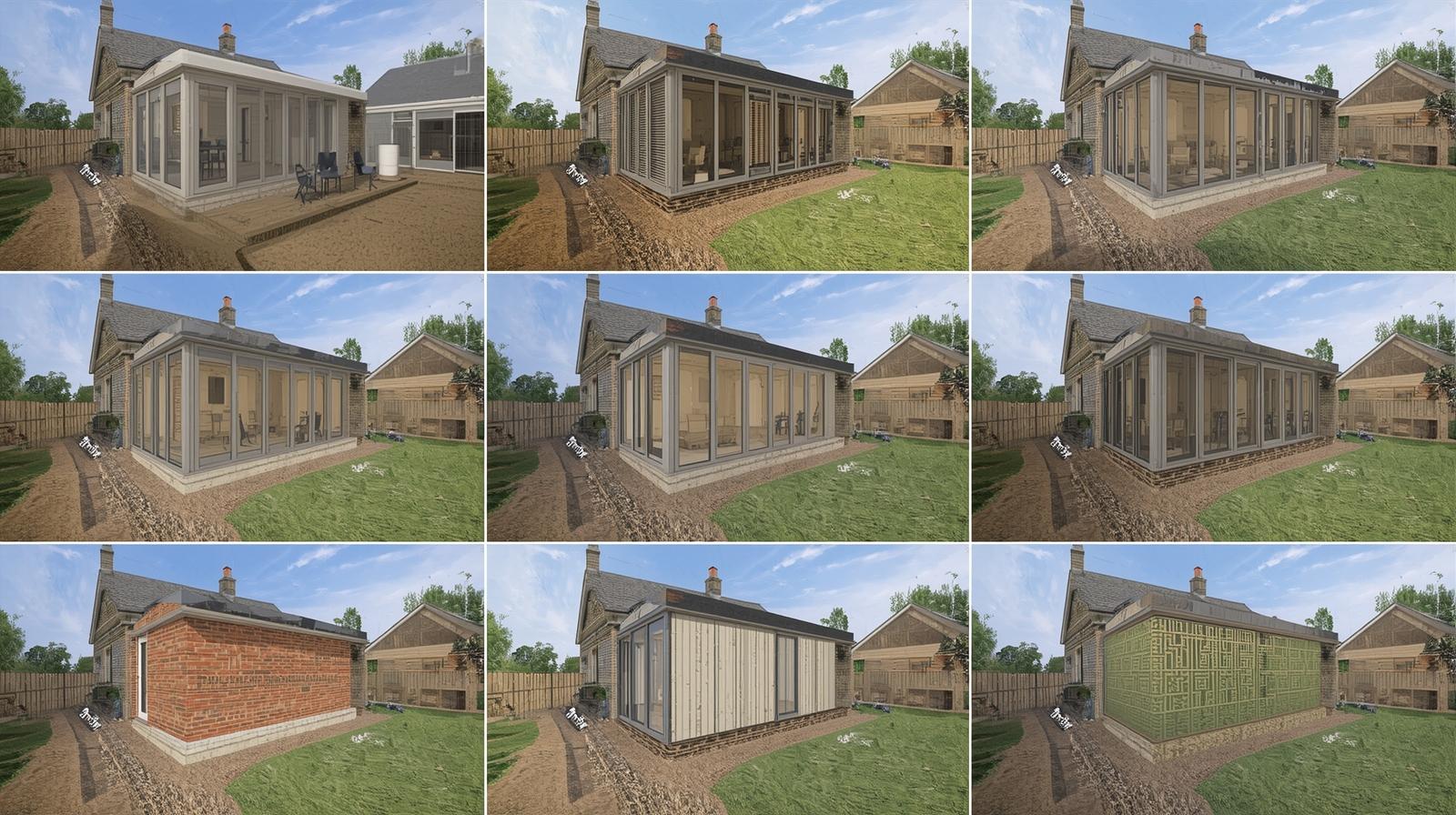
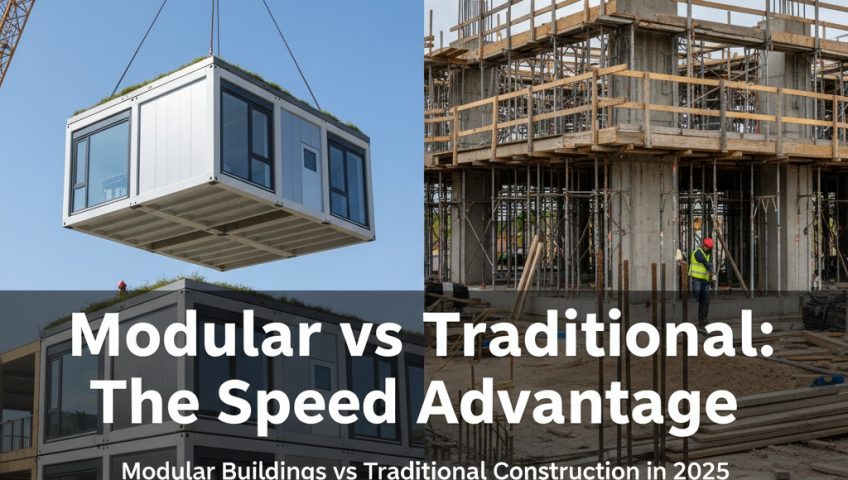
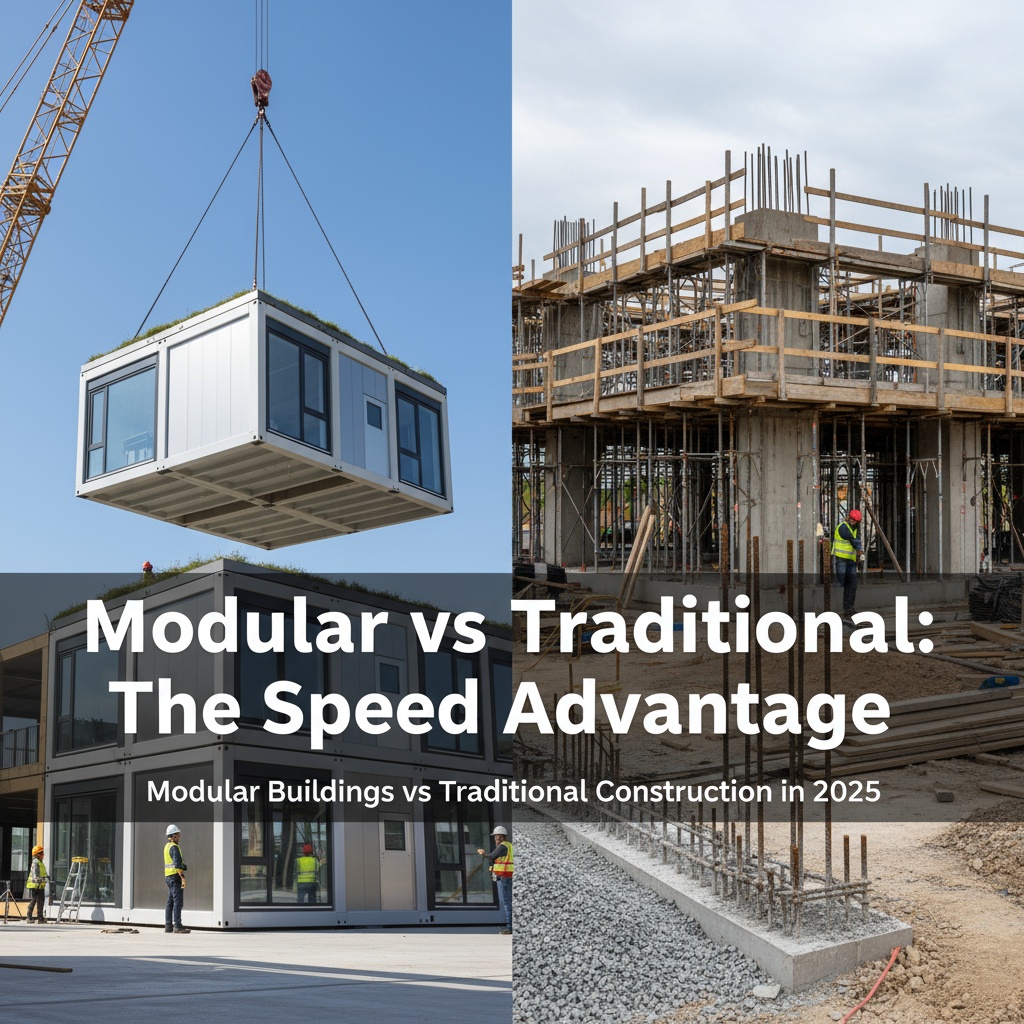
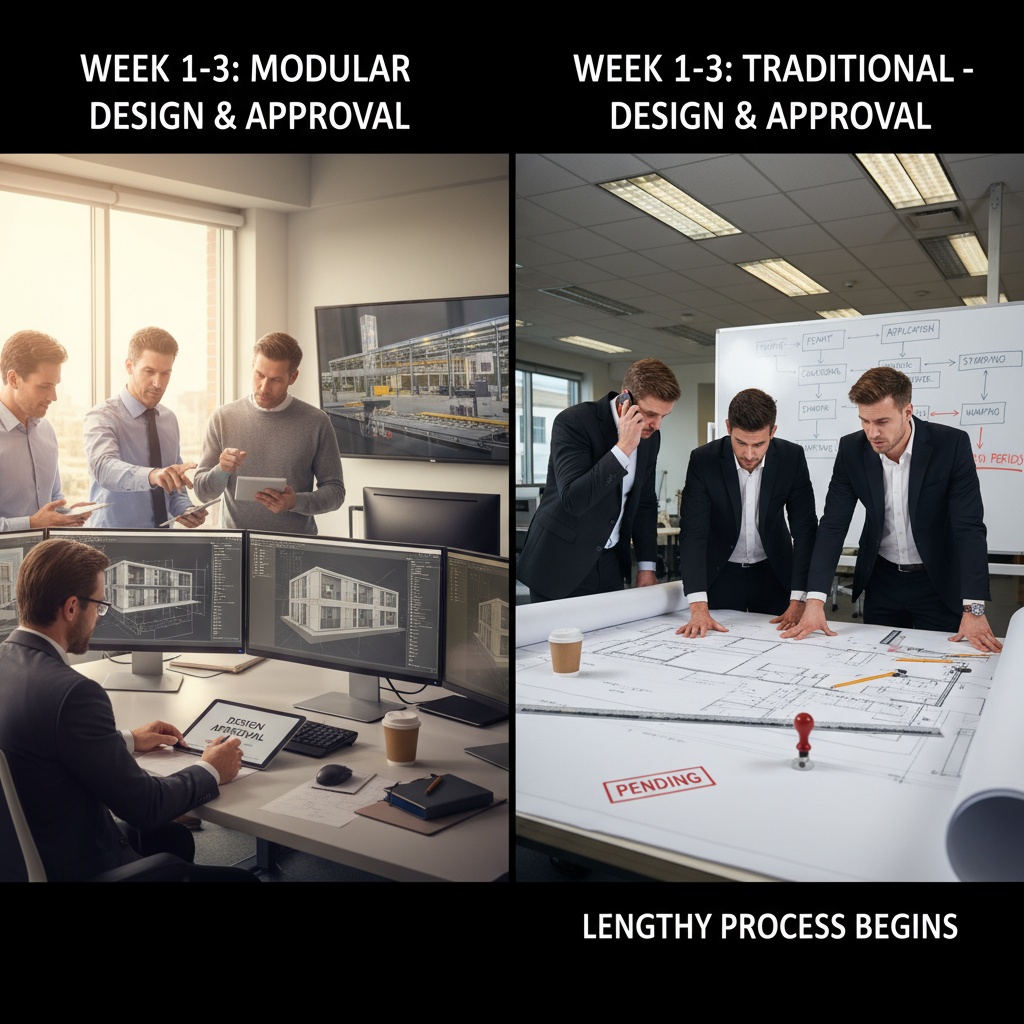
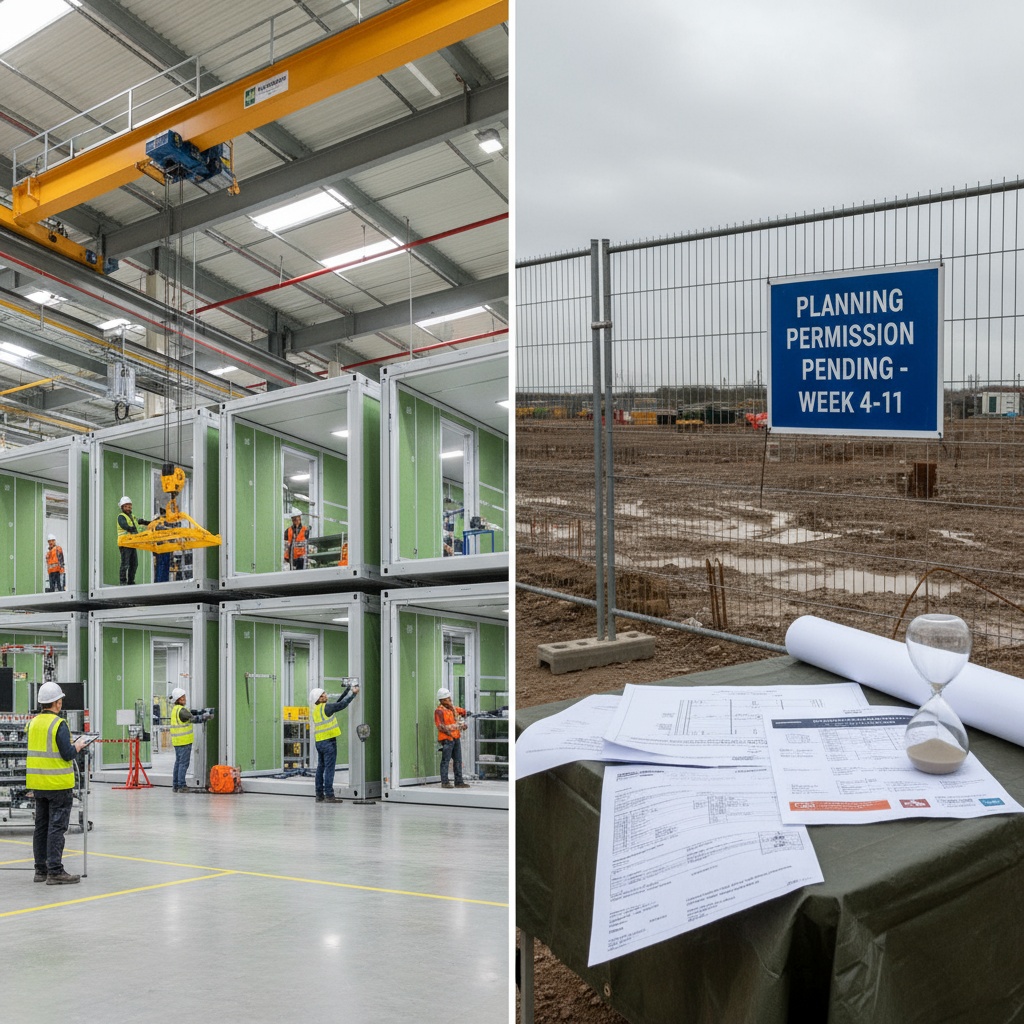
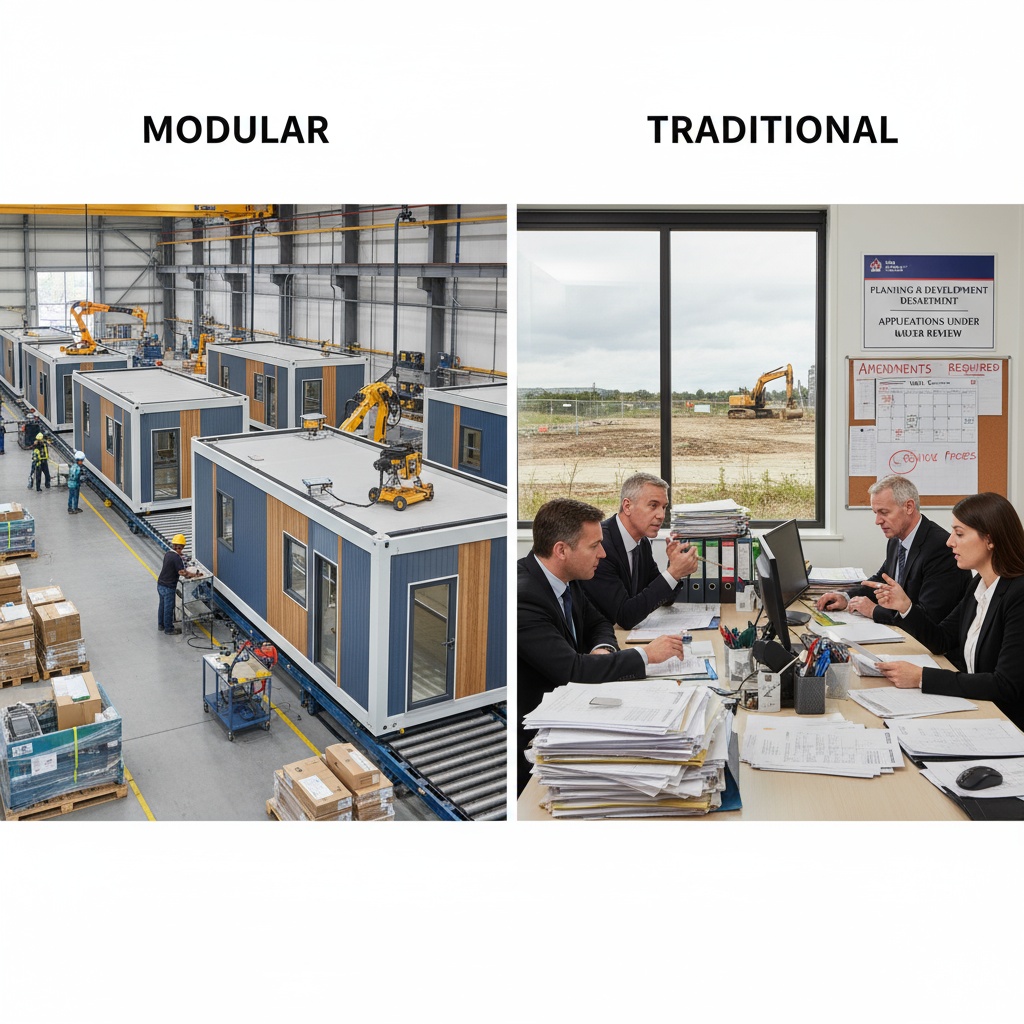
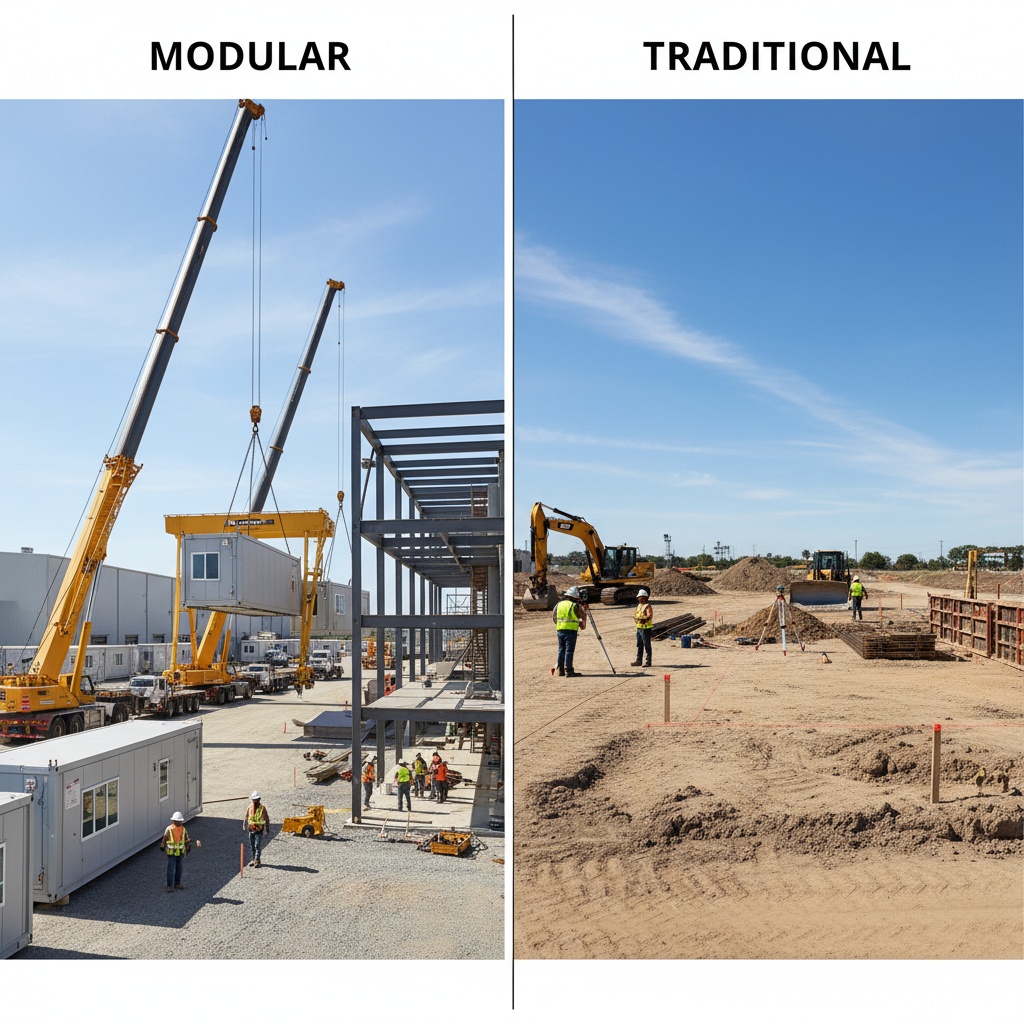
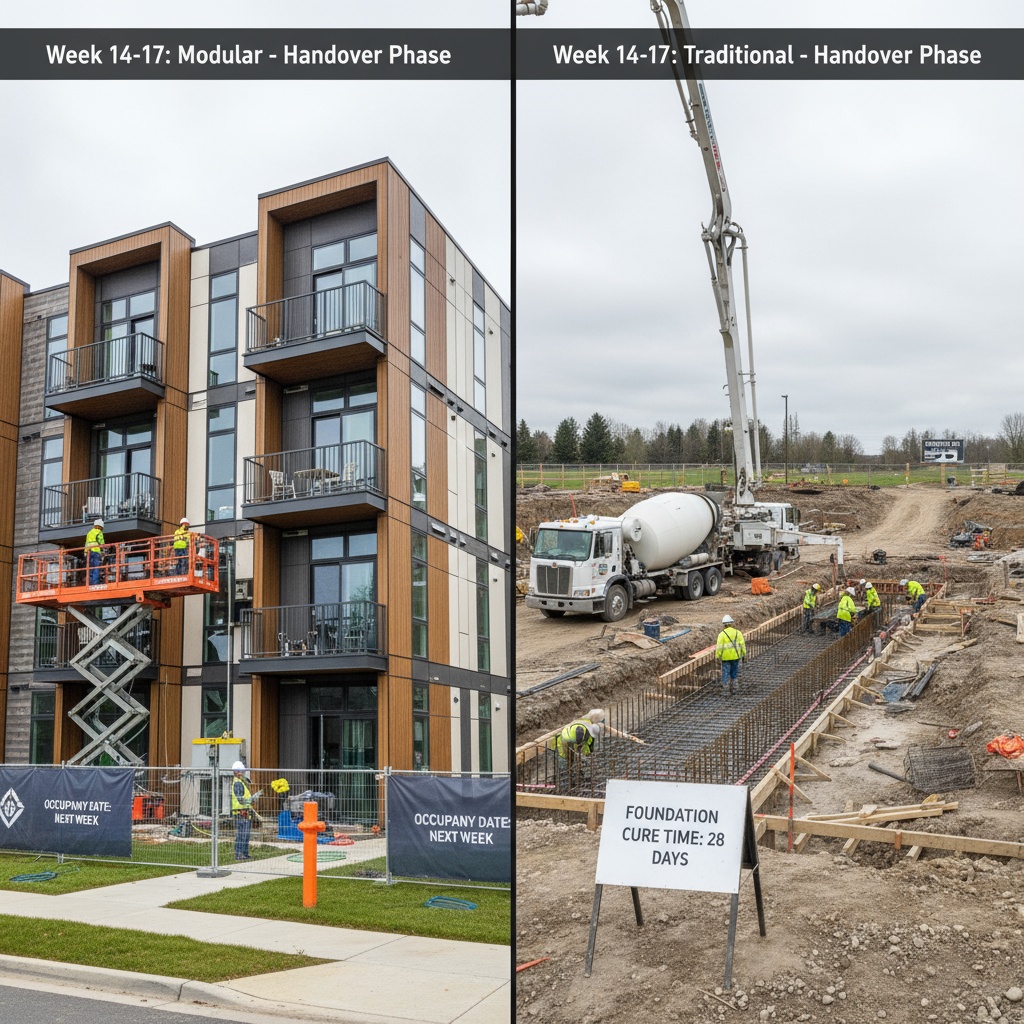
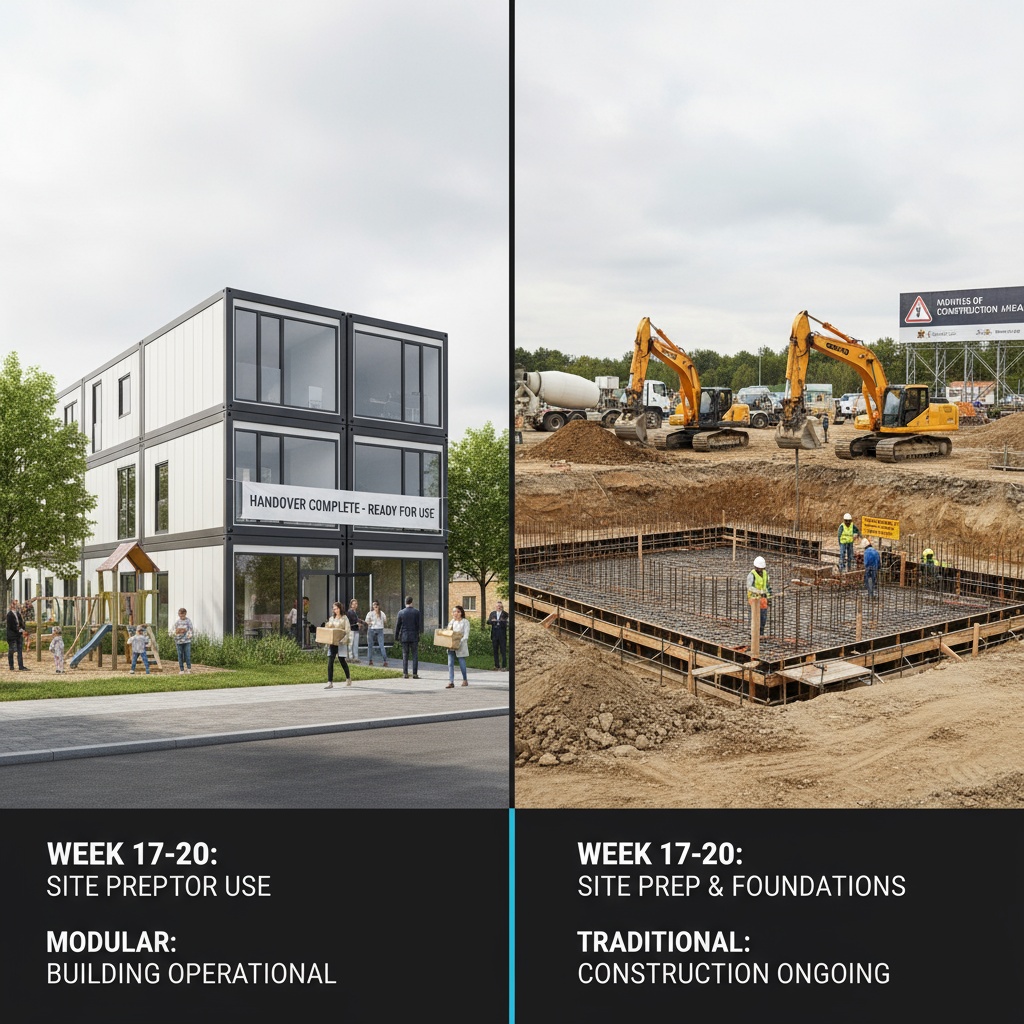
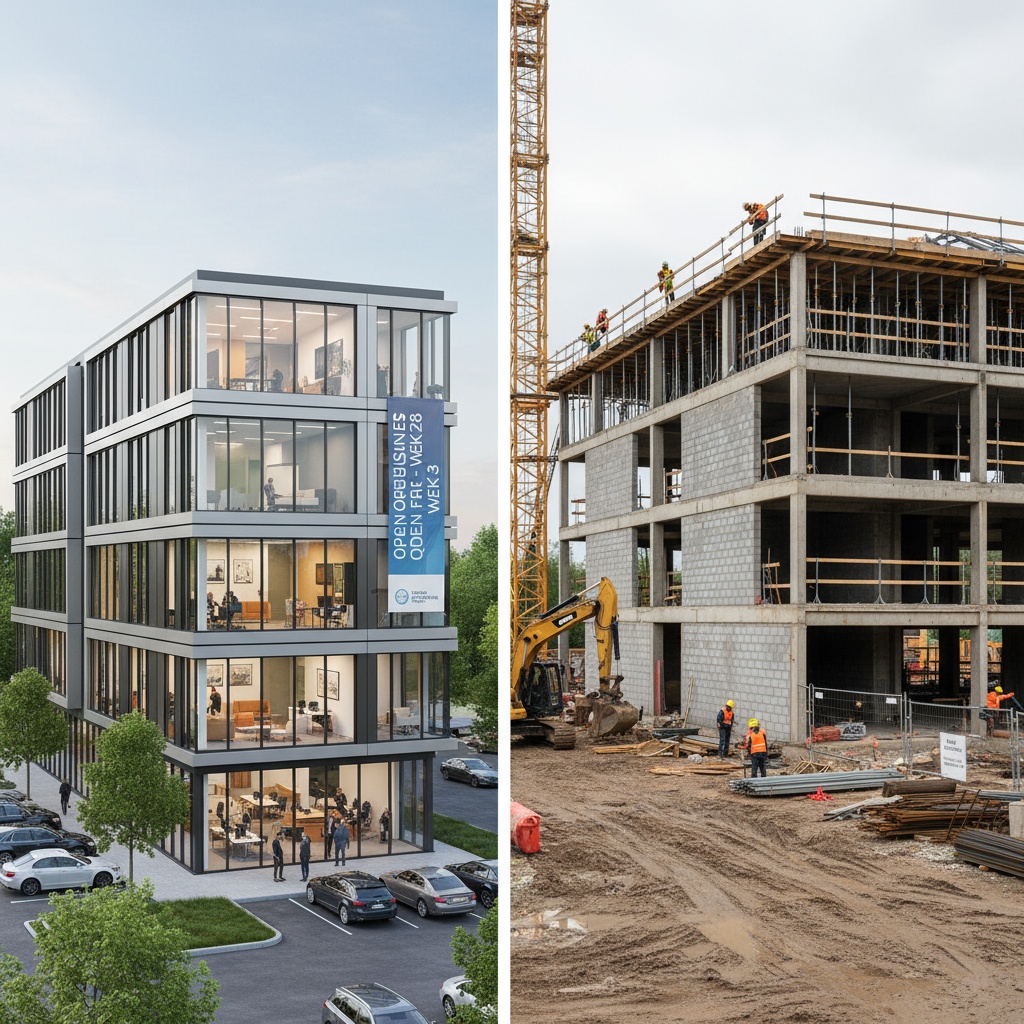
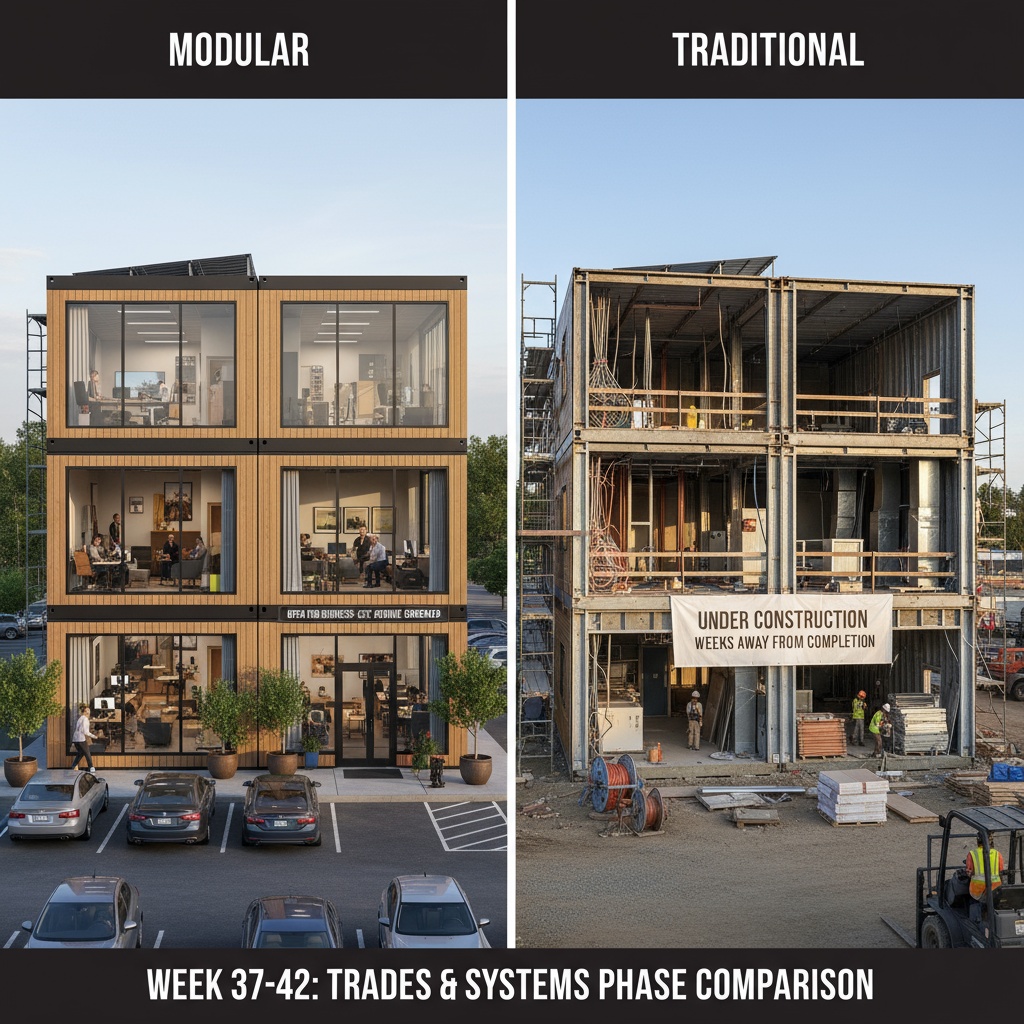
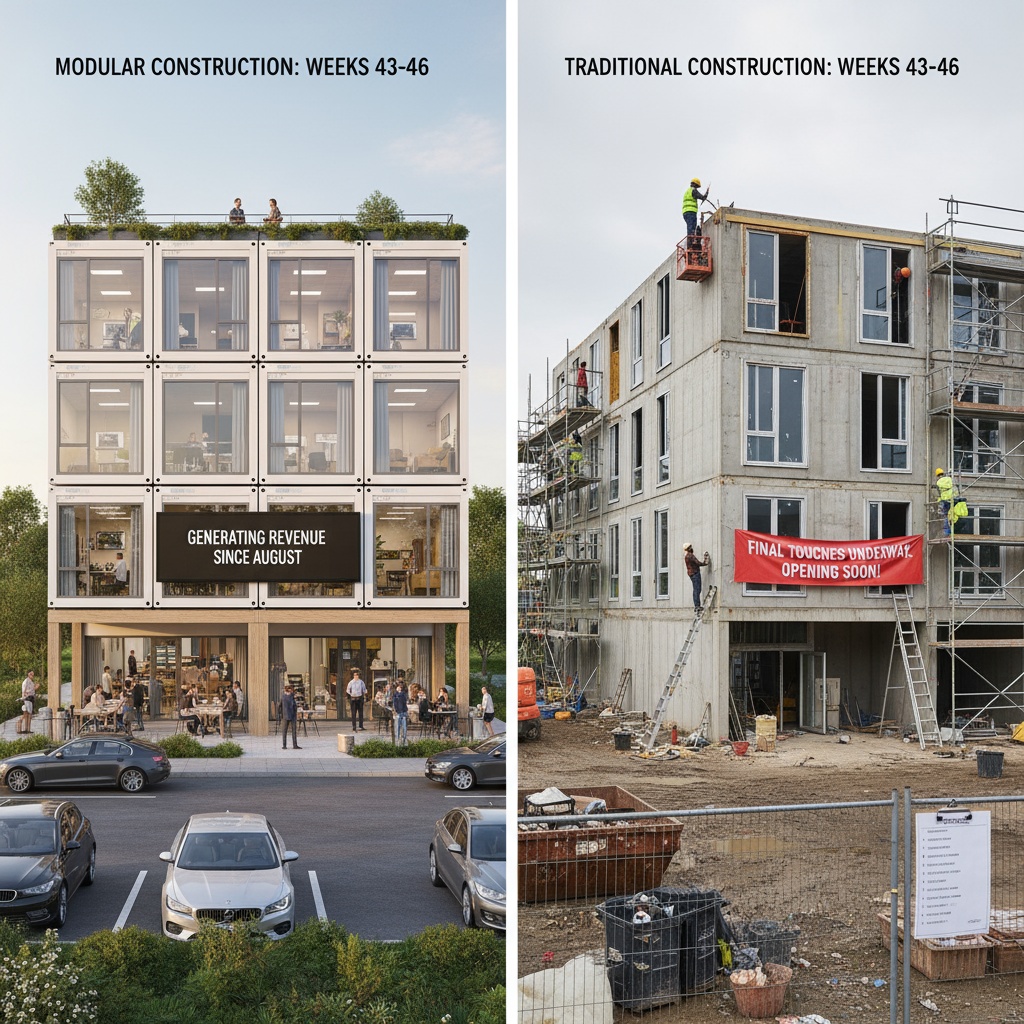
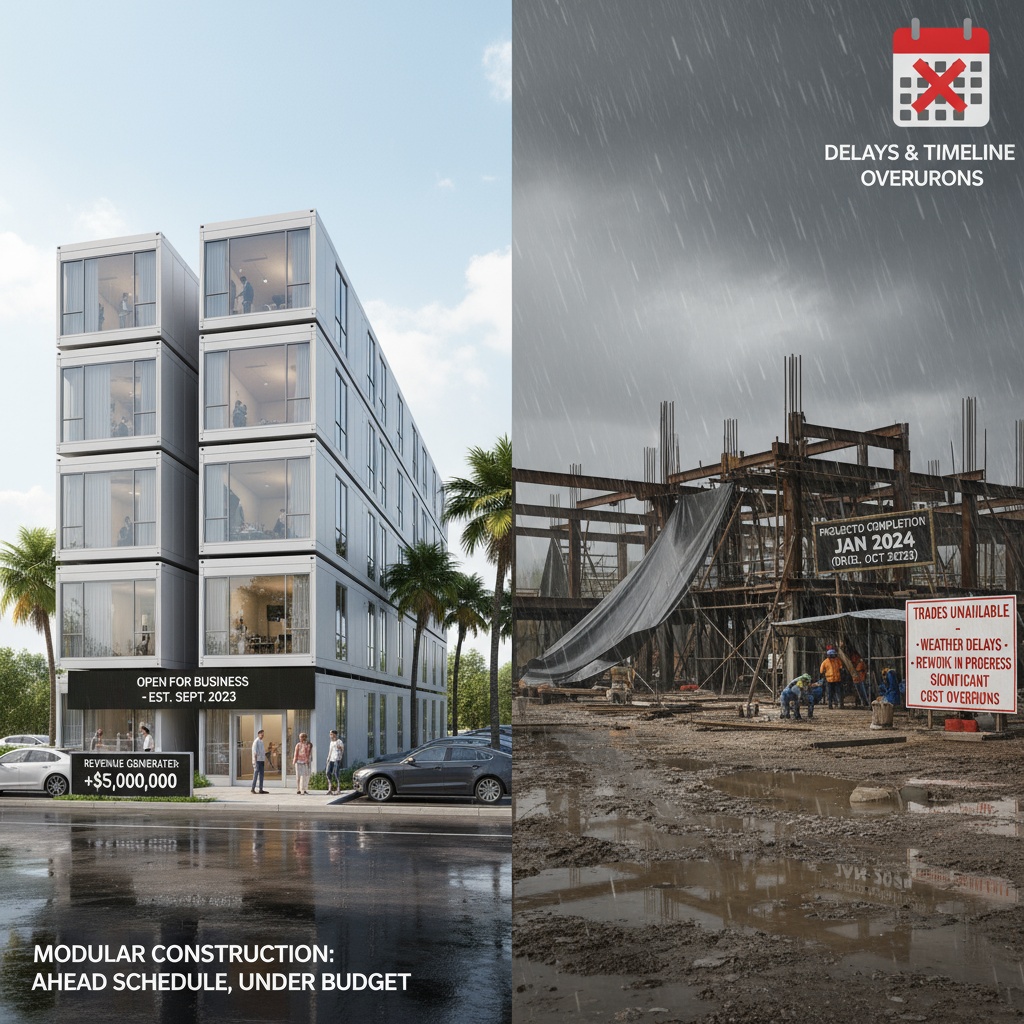
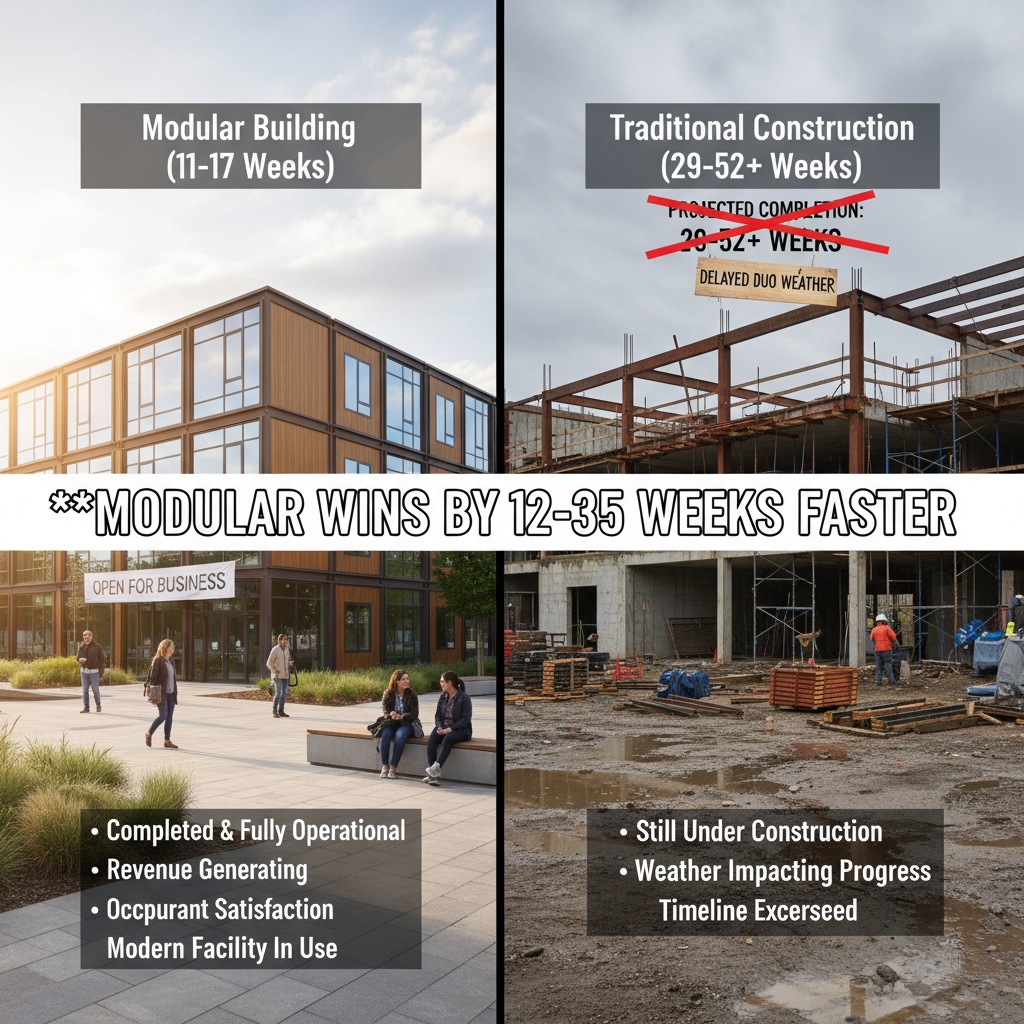
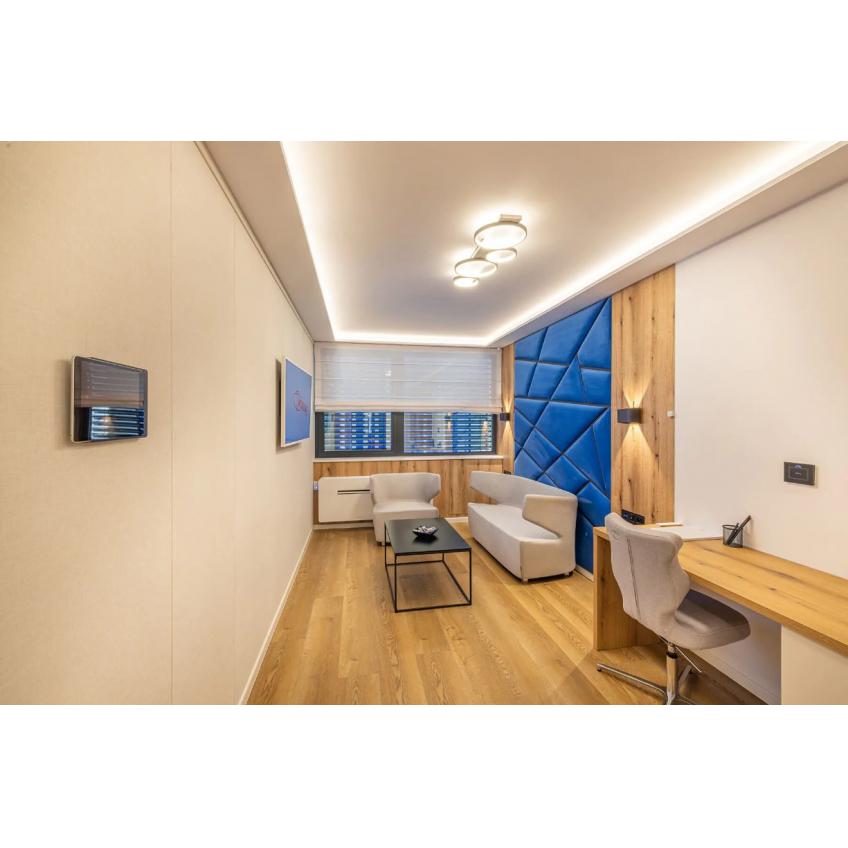
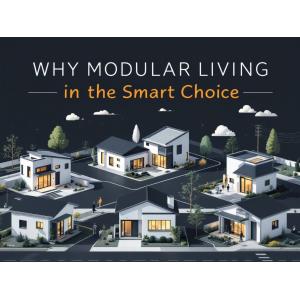
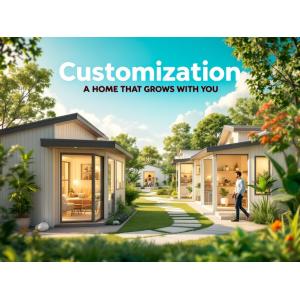
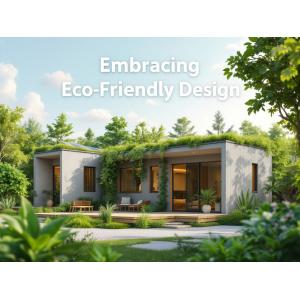
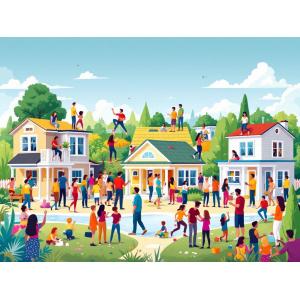
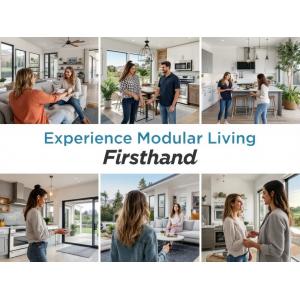
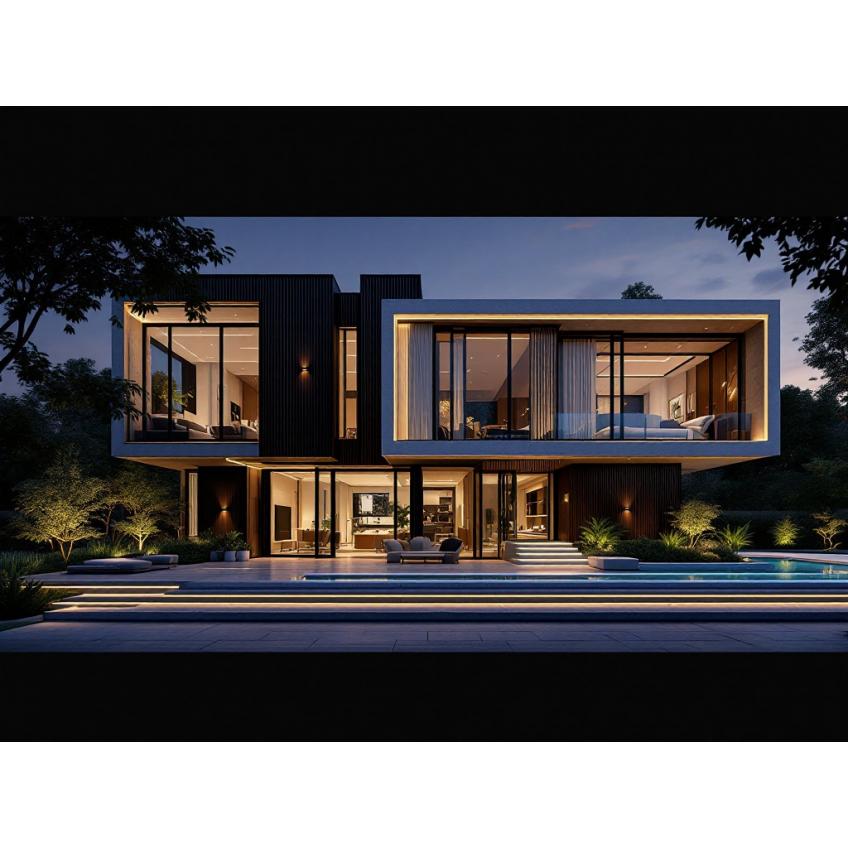

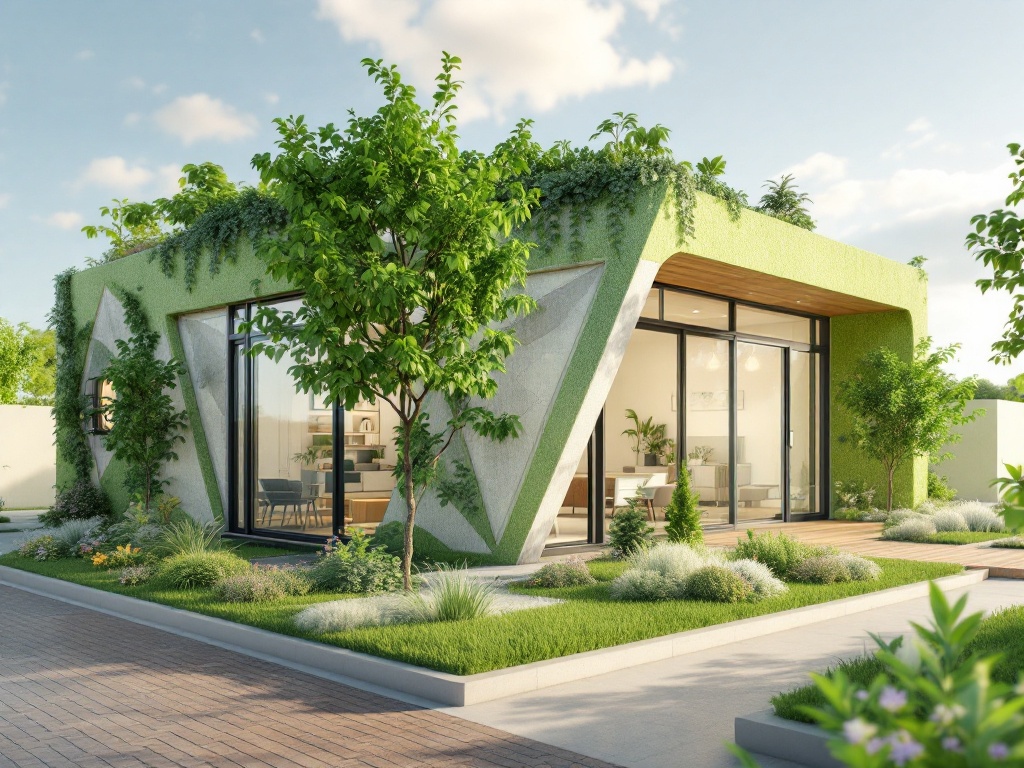
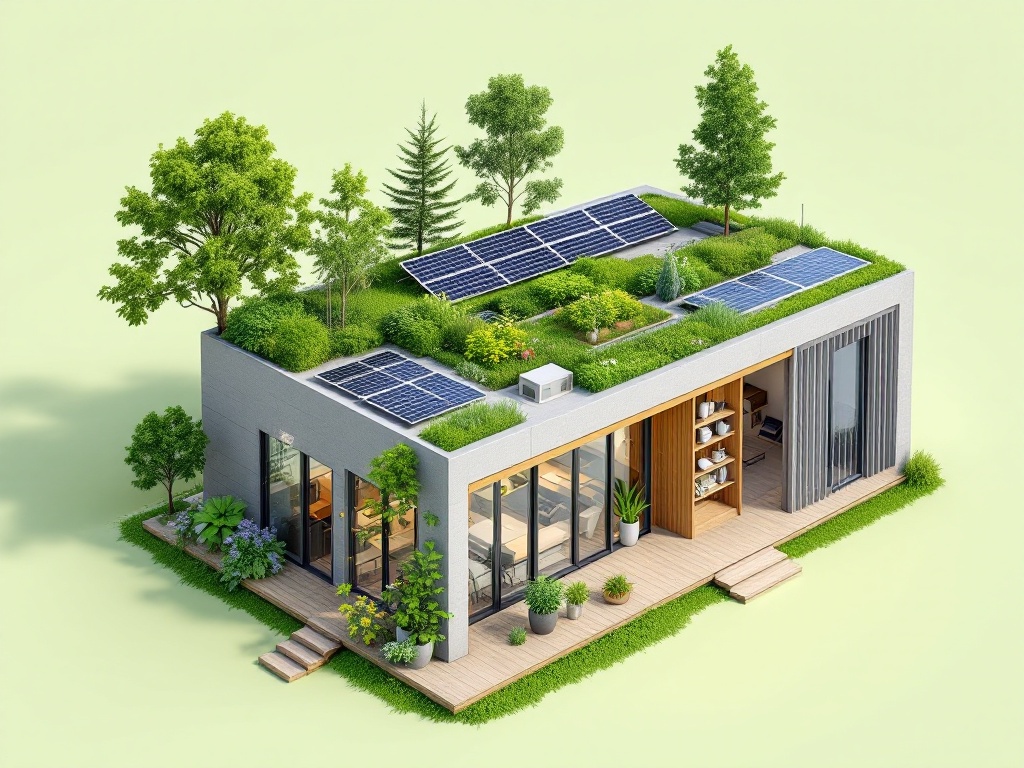

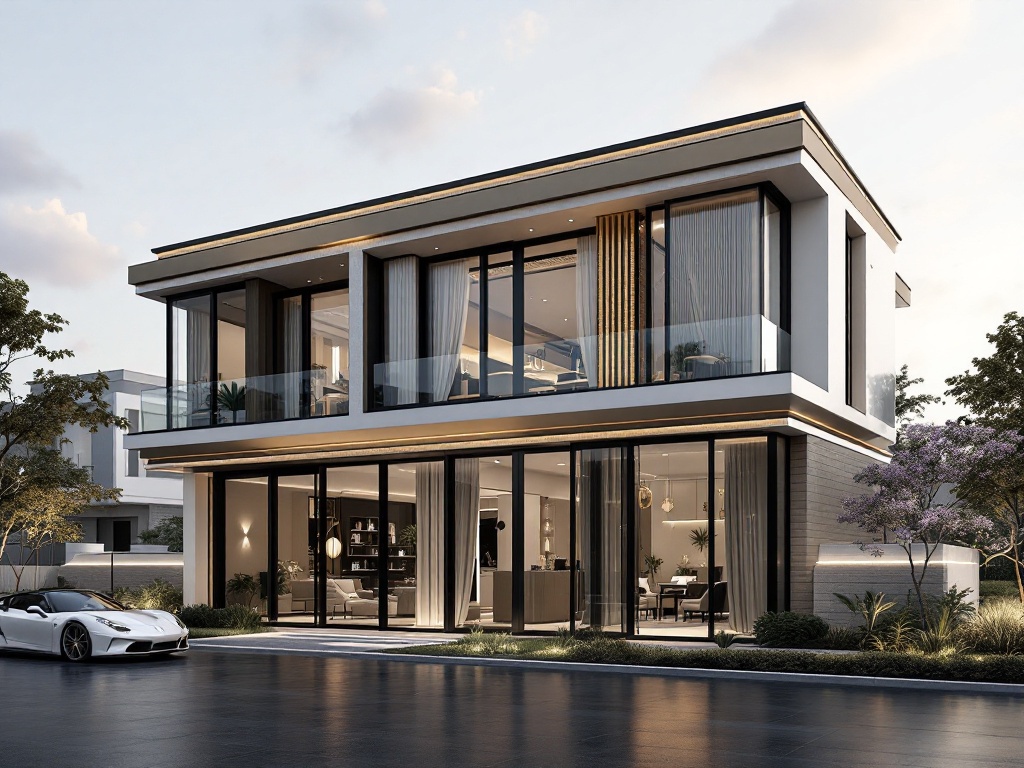
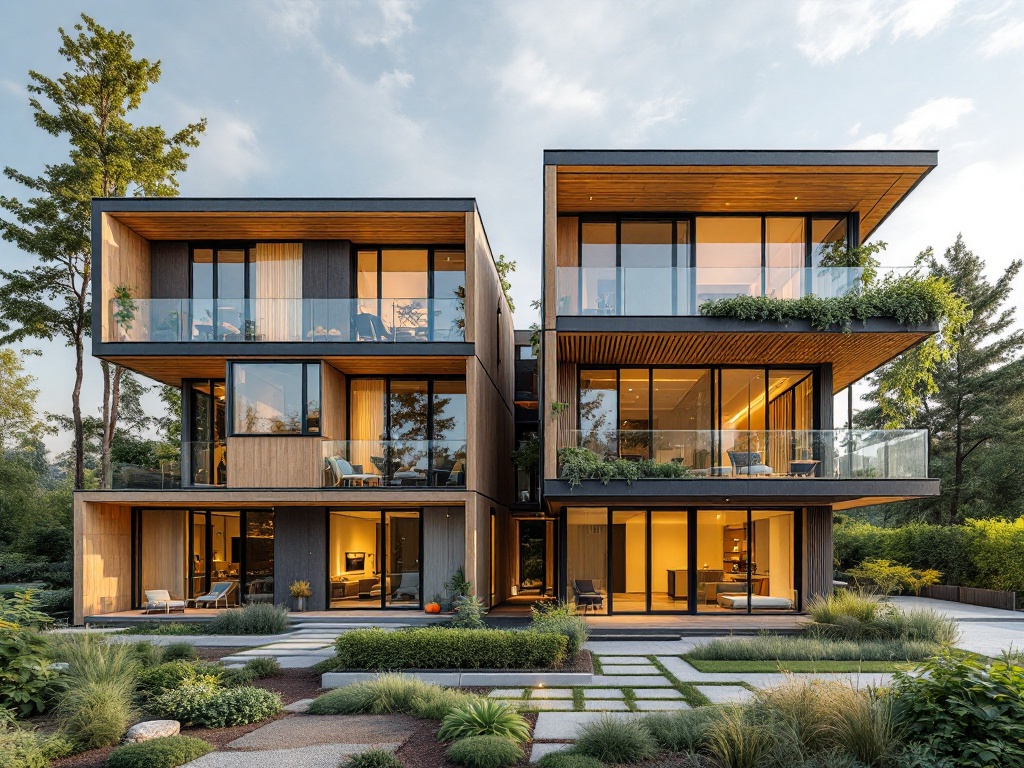
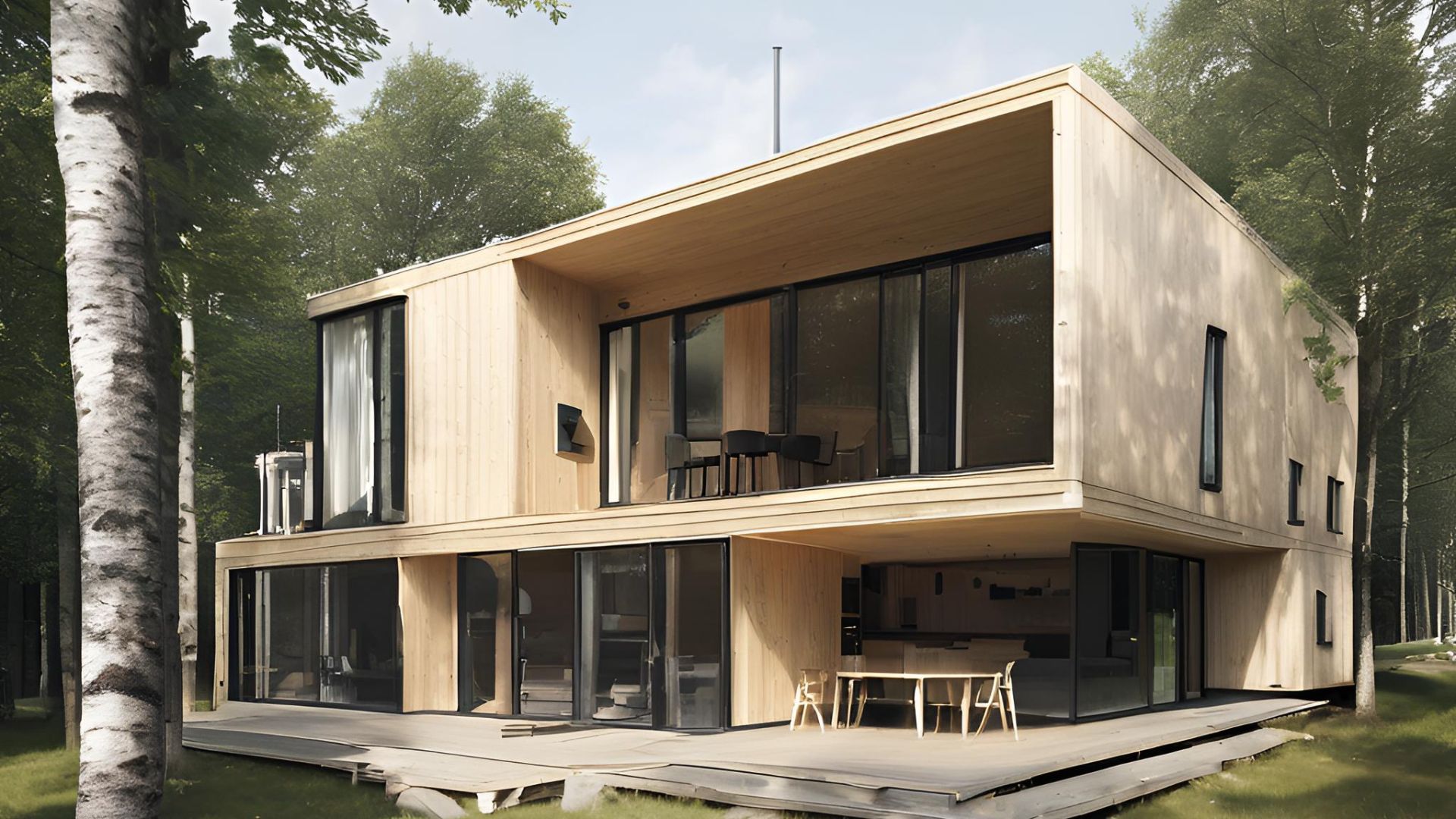 Modular construction is poised to revolutionize the construction industry, offering numerous advantages that make it a compelling choice for the future. Here’s why: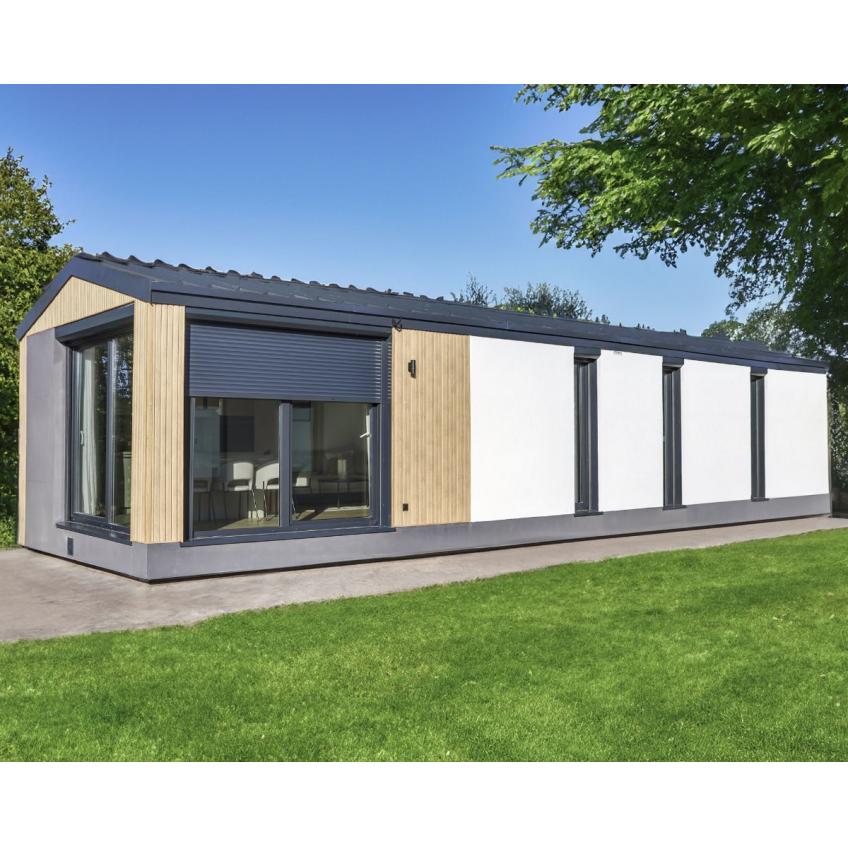
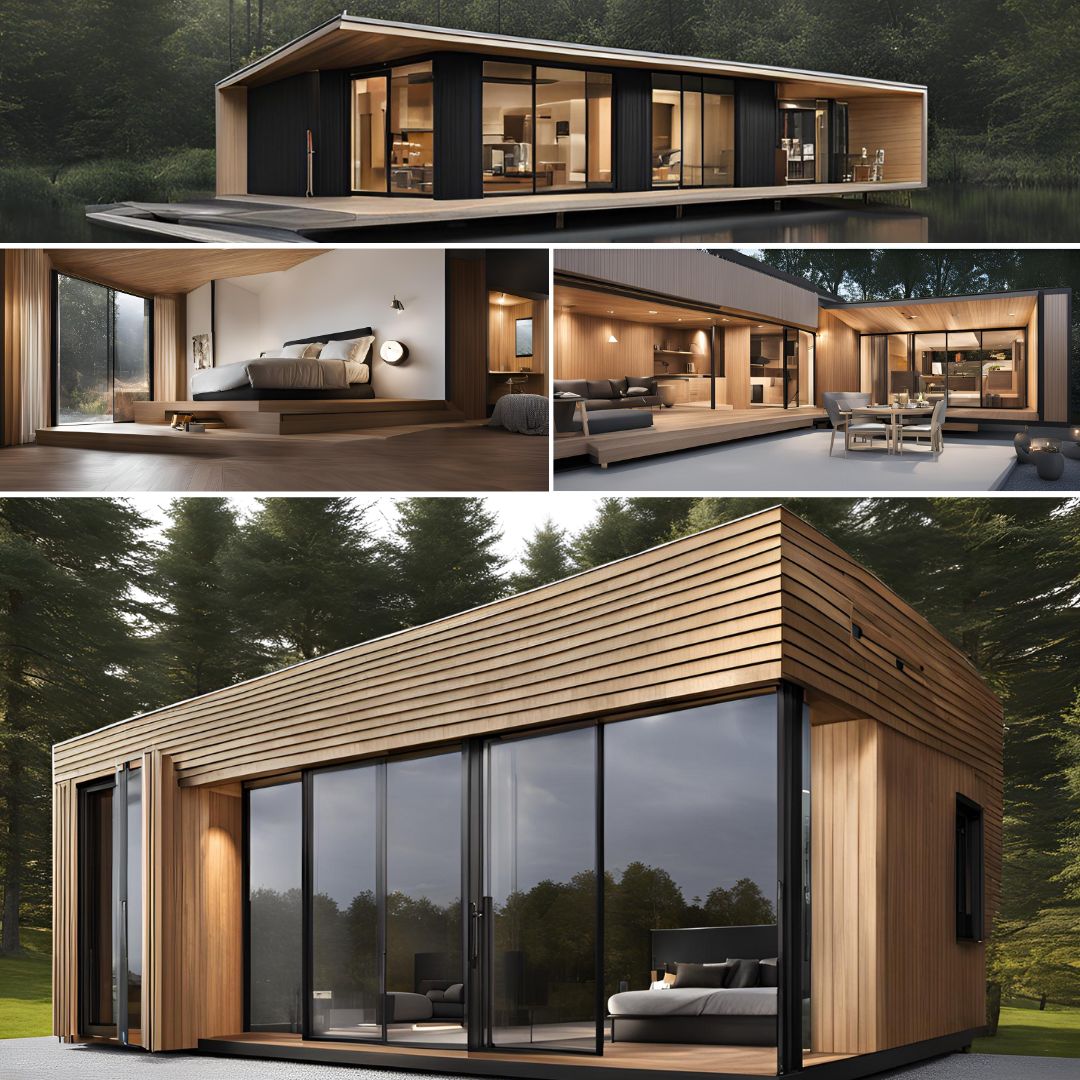


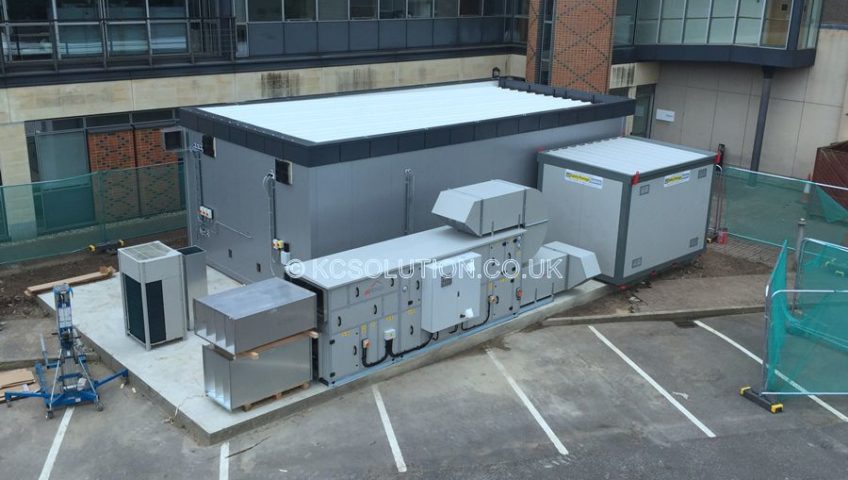
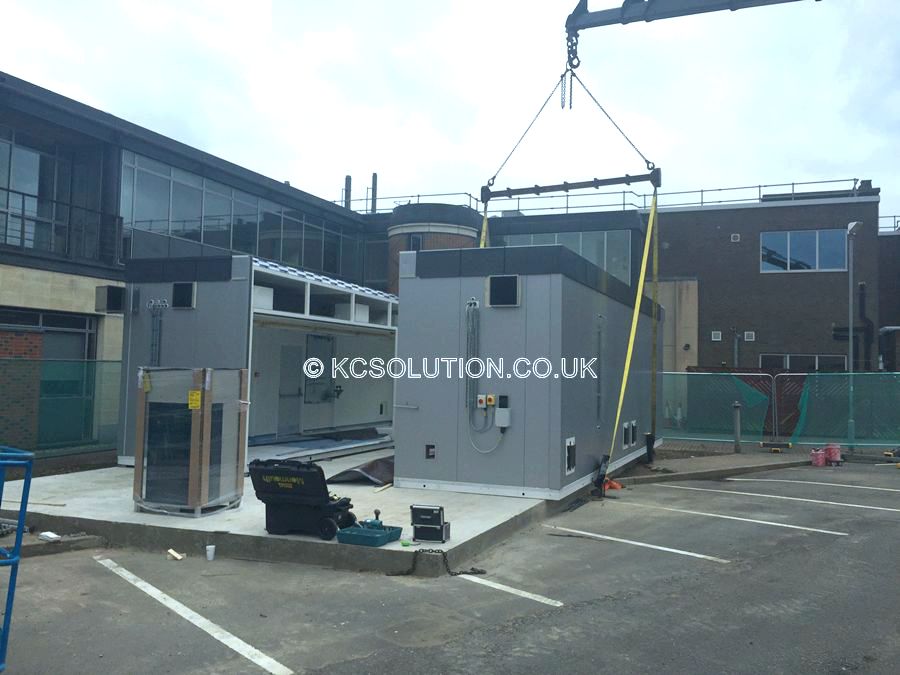
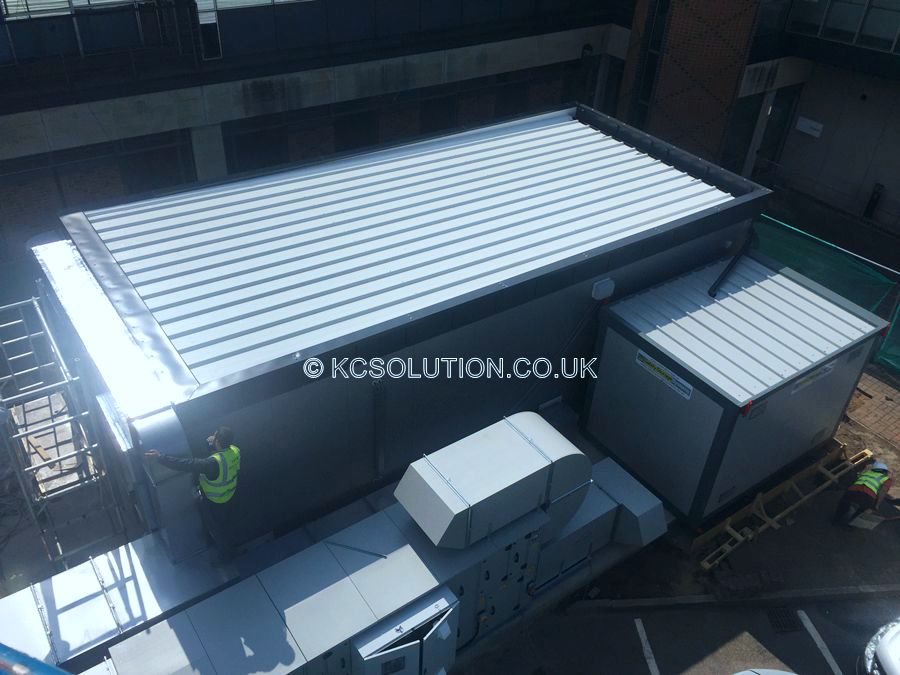


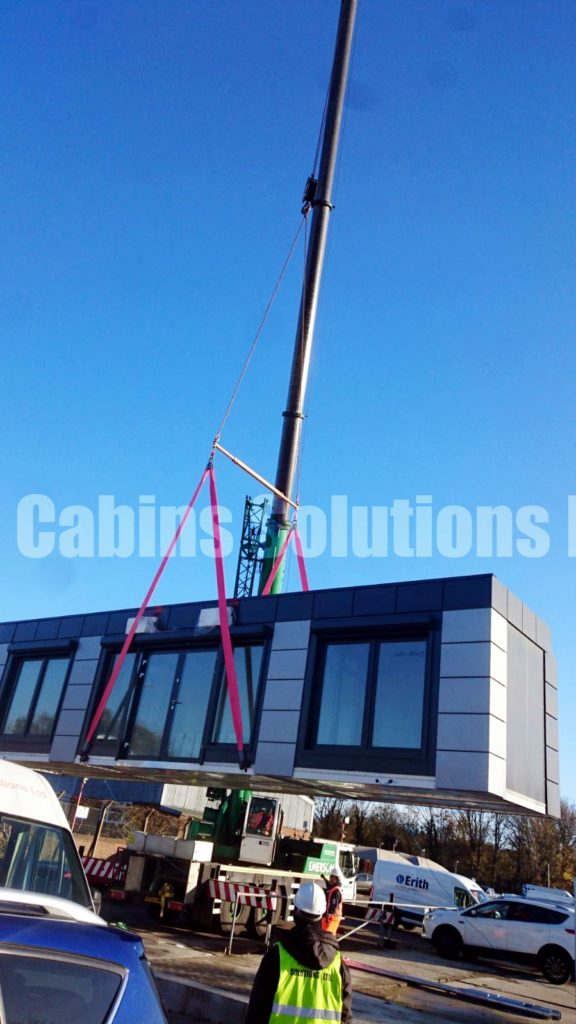




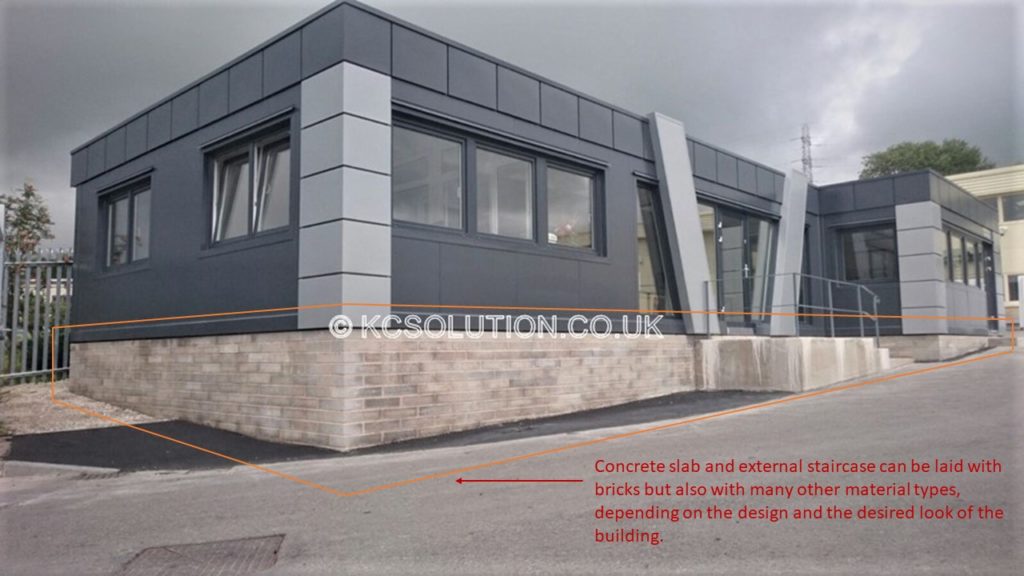
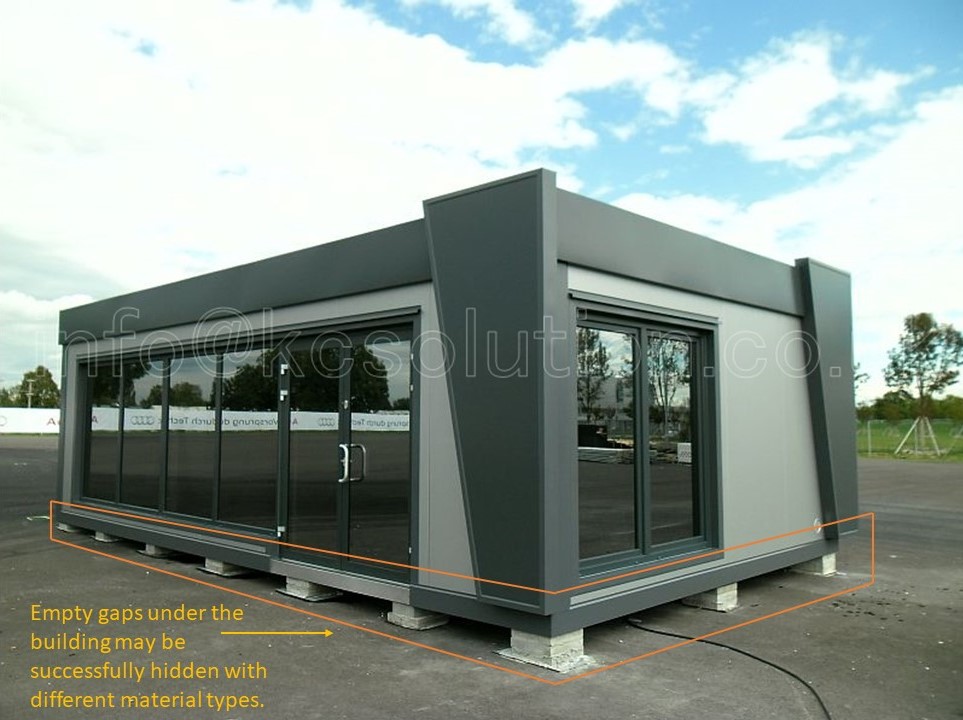
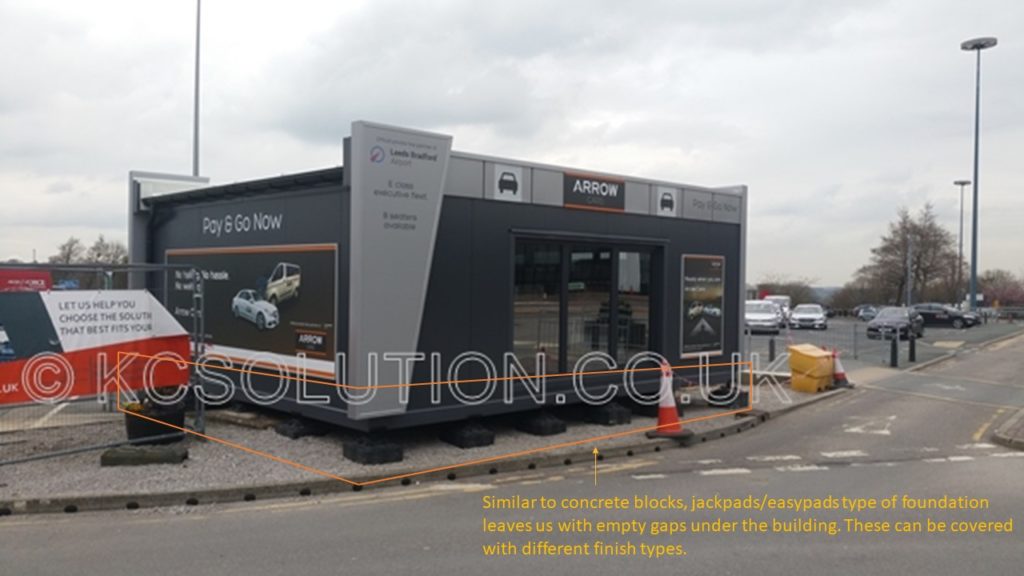





 Other than given examples here, bricks are also presented on the picture of a concrete slab foundation example at the top of this article. It is a choice often made by our clients as a foundation finish which makes bricks the most popular option for the foundation design. There is a variety of different colors and sizes of bricks you can choose from as well as the option of going for clinker bricks. If you want to go for the simplicity of bricks, it is a quick decision leaving you with a simple choice of color and size. Clinker bricks present us with a greater diversity of designs. If you are feeling adventurous and you will decide on the use of clinker bricks, you can choose from within varied styles retaining some of the visual aesthetic of a brick at the same time.










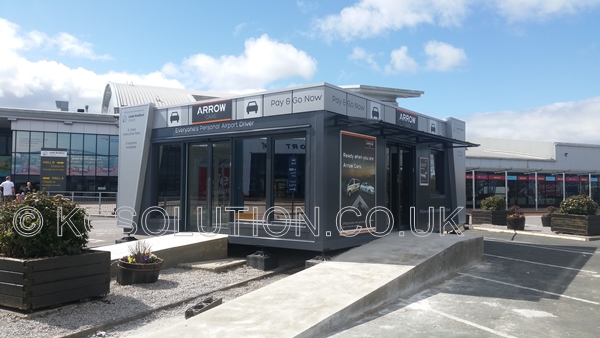
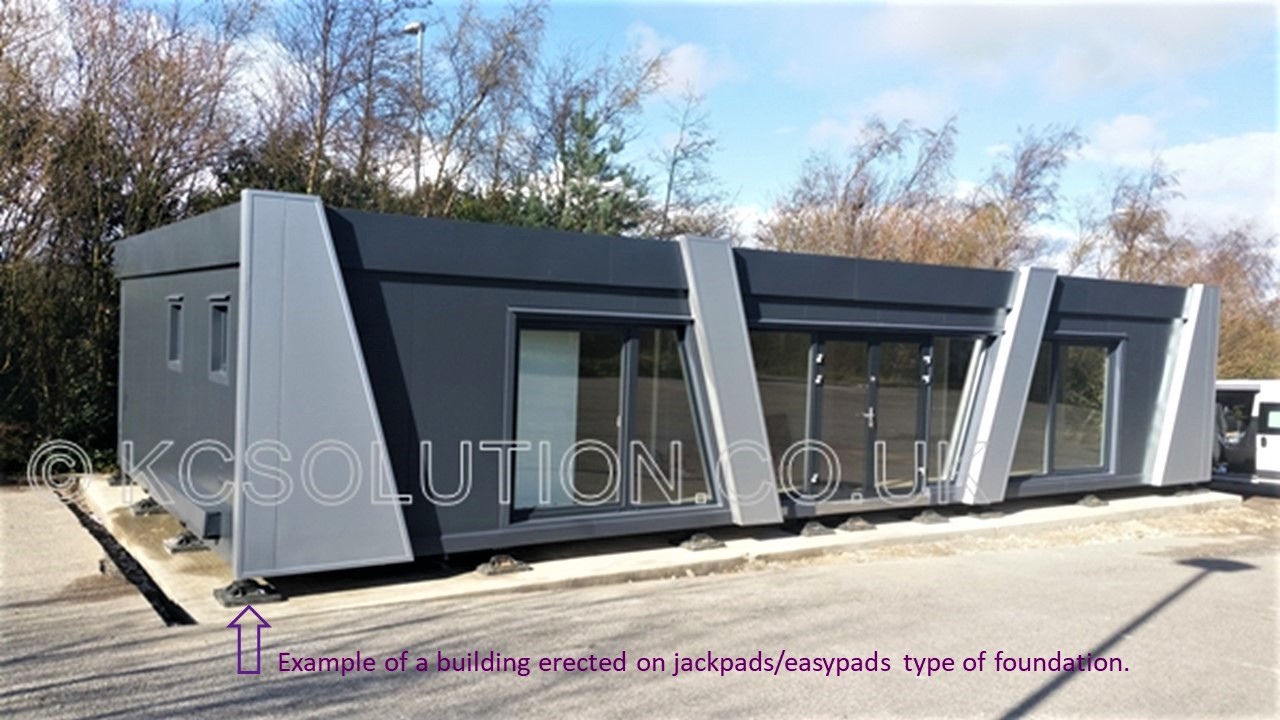 Our focus goes to jackpads/easypads for the current article. Let us start by clarifying that jackpads and easypads are almost identical products made by different brands. In our opinion, both are ok to use. We do not tend to advise on brands but rather on product types. Jackpads/easypads are ready to use when bought off the shelf, similar to concrete blocks in this sense.
 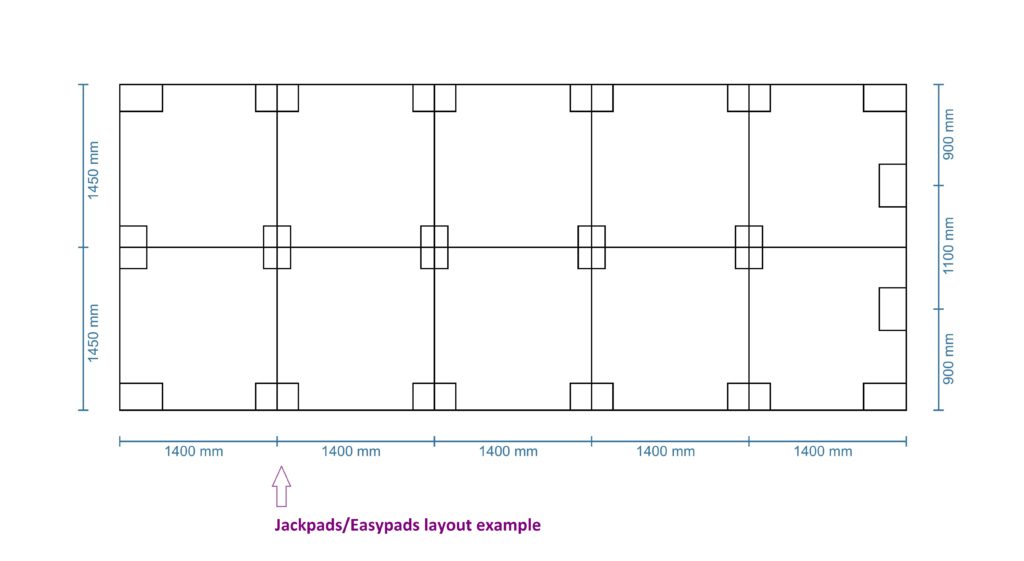 Jackpads/easypads layout is prepared by an architect and a client is provided with the layout drawings in order to prepare the surface prior to modular building arrival.
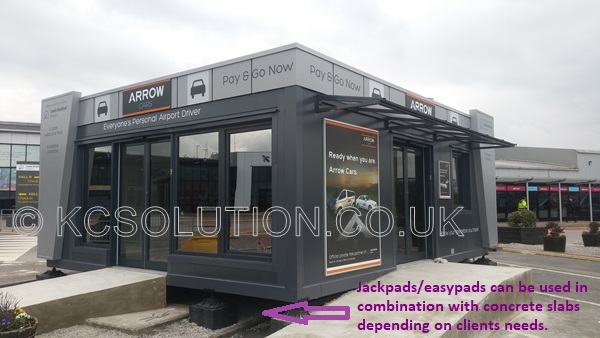 An additional advantage of jackpads/easypads use is the possibility of combining them together with a concrete slab. It is particularly useful if there is a need for access ramp construction and/or the outside staircase. Jackpads/easypads are therefore one of the most flexible and convenient ways of preparing the surface under a modular building.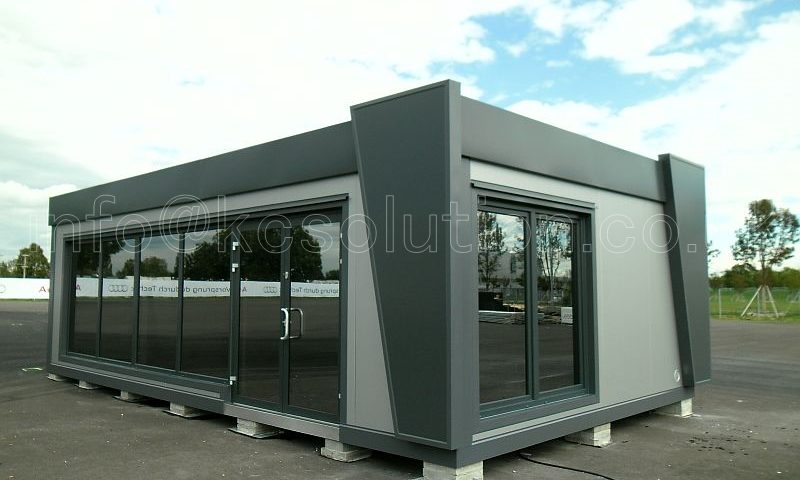
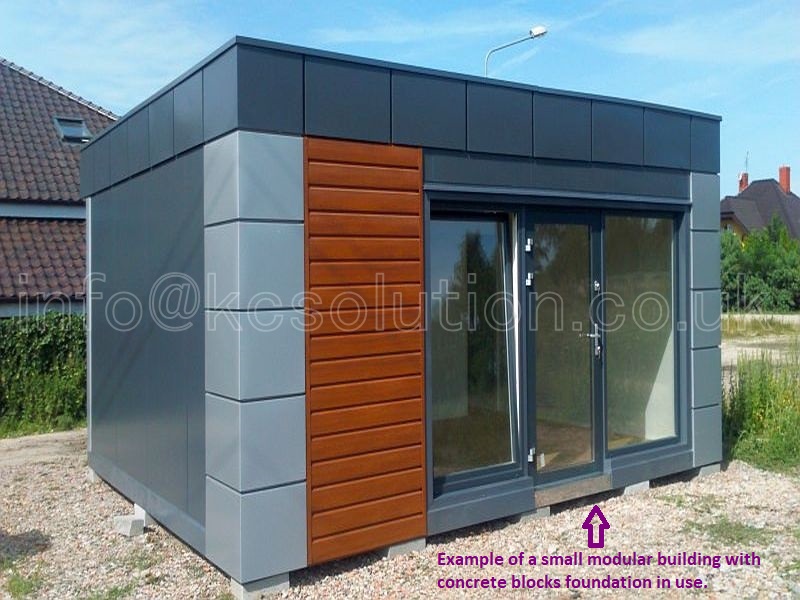
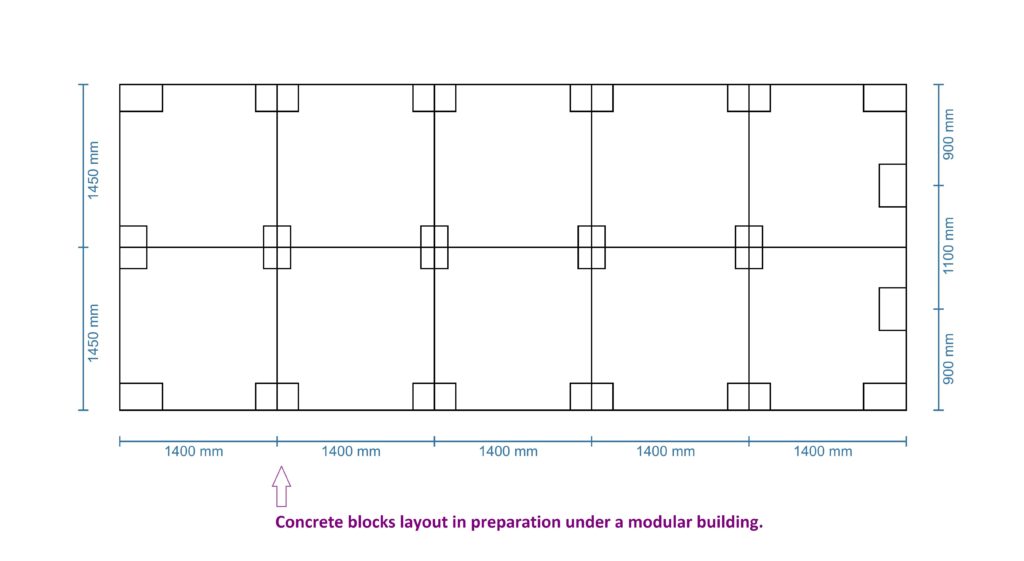
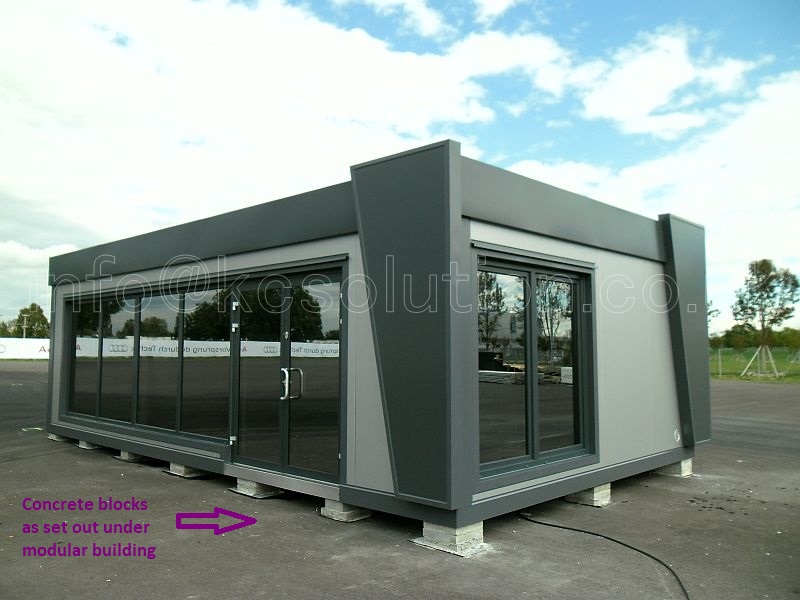

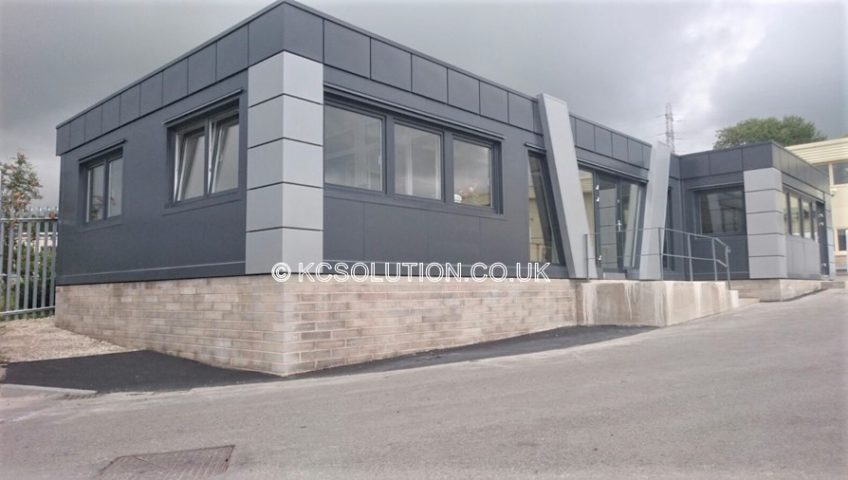
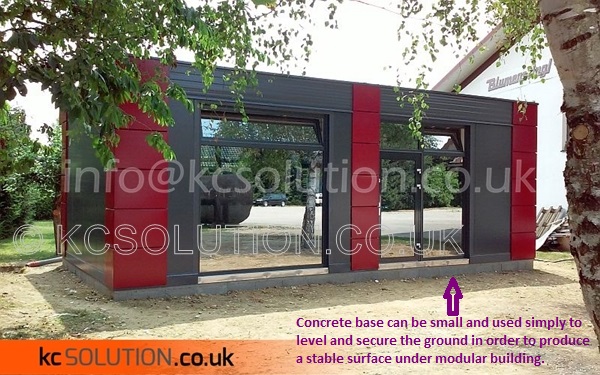 We need to remember that weight of an empty building is spread out evenly at first, but as soon as we put furniture in, some areas within the building interior will be holding more weight and naturally putting more stress onto the foundation. This is completely natural but if for any reason, the foundation is not leveled properly, we may start noticing problems such as difficulties with shutting windows and doors. Particularly if the construction is to be undertaken on a soft ground, large slab of concrete base will prevent building foundation settlement on any of the sides resulting in preventing mentioned problems. If prepared in the right manner, the conrete base is a very stable and safe ground. When the ground base is looked at, discussed with our architect and prepared in the right manner, all potential problems with building settlement will be avoided.